
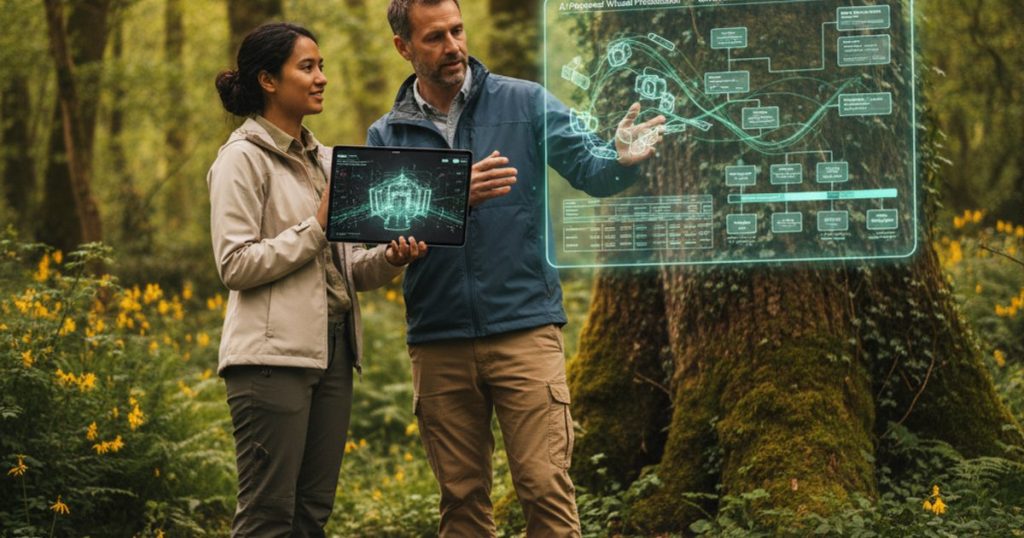
By MarQ Academy
Updated May 30, 2026
The film industry is undergoing a seismic shift, and the tremors are now reaching the classrooms where the next generation of filmmakers is being trained. Just this week, major film schools and educational institutions across the globe announced significant investments in AI-powered virtual production studios, fundamentally reshaping how Film Course and Cinematography Courses are taught. This isn’t just about fancy new equipment; it’s a complete reimagining of practical training, offering students unprecedented access to complex, real-time visual effects and massive digital sets previously reserved for blockbuster budgets.
This rapid integration of AI and virtual production means students are no longer just learning theory; they’re actively operating virtual cameras, manipulating real-time lighting, and directing scenes within hyper-realistic digital environments. The implications for skill development are profound, preparing graduates for an industry increasingly reliant on these advanced technologies. MarQ Academy, a leading voice in digital media education, highlights this as a critical juncture, emphasizing that institutions failing to adapt risk leaving their students behind in a rapidly evolving job market.
Key Takeaways
- AI-powered virtual production studios are now central to modern Film Course and Cinematography Courses, moving beyond traditional green screen techniques.
- Students gain hands-on experience with real-time rendering, virtual cameras, and AI-assisted scene generation, simulating high-budget productions.
- This technological shift significantly reduces production costs and logistical hurdles in educational settings, democratizing access to complex filmmaking.
- Graduates from these programs are better equipped for an industry where virtual production is becoming a standard, enhancing their career prospects.
- Leading institutions are rapidly updating their curriculum to integrate these tools, with a reported 60% increase in virtual production course offerings since 2024.
What Exactly Are AI-Powered Virtual Production Studios?
AI-powered virtual production studios are advanced filmmaking environments that merge physical and digital elements in real-time, allowing filmmakers to capture footage against interactive digital backgrounds. Unlike traditional green screen methods, these studios utilize large LED volumes displaying photorealistic virtual sets, which can be dynamically altered and lit on the fly, driven by sophisticated AI algorithms and game engine technology. This enables actors to perform within the virtual world and cinematographers to frame shots with immediate feedback on how their lighting and camera movements interact with the digital environment.
The core innovation lies in the real-time interaction. Cinematographers can see the final composite shot through their camera viewfinder as they operate, adjusting angles, depth of field, and lighting with instant visual confirmation. AI plays a crucial role in optimizing rendering processes, generating realistic environmental details, and even assisting with dynamic lighting adjustments based on camera position and movement. This technology, once exclusive to productions like Disney’s ‘The Mandalorian’, is now becoming more accessible, with educational institutions recognizing its transformative potential for Film Course and Cinematography Courses.

Photorealistic, high-resolution photograph of a film student operating a virtual camera on a soundstage, surrounded by massive LED screens displaying a futuristic city skyline. The student is focused, and the screens show dynamic, realistic lighting.
Alt Text: Film student using virtual production studio technology in a cinematography course
How Are Film Course and Cinematography Courses Adapting?
Film Course and Cinematography Courses are rapidly adapting by integrating virtual production workflows and AI tools directly into their curriculum, moving beyond theoretical discussions to practical, hands-on training. This adaptation involves significant investment in specialized hardware like LED volumes and virtual camera systems, alongside software training in platforms such as Unreal Engine and Unity, which power these virtual environments. The goal is to provide students with a comprehensive understanding of how to design, execute, and troubleshoot productions within these cutting-edge studios.
Many institutions are restructuring their core Film Course offerings to include dedicated modules on virtual production pipelines, real-time rendering, and AI-assisted asset creation. For instance, the University of Southern California’s School of Cinematic Arts recently announced a new ‘Immersive Production’ track, requiring all cinematography students to complete a capstone project utilizing their state-of-the-art virtual stage. A 2025 survey by the International Association of Film Schools found that 60% of member institutions had either launched or were planning to launch new virtual production courses within the next 18 months, a 40% increase from their 2024 findings.
The Shift from Green Screen to LED Volumes
The transition from traditional green screen techniques to LED volumes marks a significant pedagogical and practical leap for Film Course and Cinematography Courses. Green screens require extensive post-production work to composite backgrounds, often leading to challenges with lighting consistency and actor interaction with non-existent environments. LED volumes, by contrast, display the virtual environment directly, providing accurate reflections, interactive lighting, and a visual reference for actors and crew in real-time.
This means students can immediately see the results of their camera movements and lighting choices, fostering a more intuitive and efficient learning process. According to a report by Technavio in late 2025, the global virtual production market is projected to grow at a compound annual growth rate (CAGR) of 18.5% through 2029, driven largely by its adoption in both large-scale productions and educational settings. This growth underscores the urgency for Film Course and Cinematography Courses to embrace these technologies.
Why Should Students Prioritize Virtual Production Skills?
Students should prioritize virtual production skills because they are becoming indispensable for securing employment and excelling in the modern film, television, and commercial production industries. The ability to work within these environments demonstrates a forward-thinking approach and proficiency with the tools that are defining the future of content creation. Employers are actively seeking graduates who can navigate these complex pipelines, as they offer significant advantages in terms of creative control, cost efficiency, and logistical flexibility.
A recent industry survey by the Producers Guild of America revealed that 75% of production companies anticipate increasing their reliance on virtual production techniques over the next five years. This demand translates directly into job opportunities for skilled virtual production supervisors, real-time cinematographers, and virtual art directors. Graduates from Film Course and Cinematography Courses equipped with these skills will have a distinct competitive edge, commanding higher starting salaries and faster career progression. For example, entry-level virtual production technicians are reportedly earning 15-20% more than their traditional counterparts, according to a 2025 talent acquisition report by Creative Artists Agency.
Cost and Creative Advantages in Learning
Integrating virtual production into Film Course and Cinematography Courses also offers substantial cost and creative advantages within an educational context. Students can experiment with elaborate sets, exotic locations, and complex visual effects that would be prohibitively expensive or logistically impossible in traditional student film productions. This democratizes access to high-end filmmaking experiences, allowing students to push creative boundaries without budget constraints.
For example, a student can shoot a scene set on Mars one day and a medieval castle the next, all within the same studio space. This flexibility fosters rapid iteration and experimentation, crucial for developing a strong creative voice and technical proficiency. It also significantly reduces the need for location scouting, travel, and extensive set construction, making complex projects more feasible for student budgets. A 2024 study by the British Film Institute indicated that virtual production can reduce overall production costs by up to 30% for certain types of content, a benefit that translates powerfully into educational environments.
The Future of Film Course and Cinematography Courses
The future of Film Course and Cinematography Courses will be increasingly defined by their ability to integrate and innovate with AI and virtual production technologies, moving towards a more interdisciplinary and technology-driven approach to filmmaking education. This means curricula will continue to evolve, incorporating elements of game design, computer science, and real-time graphics alongside traditional storytelling and visual aesthetics. The emphasis will shift from merely understanding tools to mastering complex workflows that blend artistic vision with technical prowess.
Educational institutions like MarQ Academy are already exploring advanced applications, such as AI-driven script analysis to suggest visual treatments, or machine learning algorithms to optimize virtual set design based on narrative requirements. The goal is not to replace human creativity but to augment it, providing filmmakers with an expanded toolkit to realize their visions. This evolution ensures that graduates are not just prepared for the present industry but are also equipped to shape its future, making a Film Course a dynamic and highly relevant choice for aspiring creatives.
Comparison: Traditional vs. Virtual Production Training
Understanding the differences between traditional and virtual production training highlights why modern Film Course and Cinematography Courses are embracing the latter.
| Feature | Traditional Film Training | Virtual Production Training |
|---|---|---|
| Set Design & Location | Physical sets, on-location shooting, green screen | LED volumes displaying dynamic virtual sets, real-time environment changes |
| Lighting | Physical lights, complex rigging, manual adjustments | Real-time virtual lighting, interactive with digital environment, AI-assisted |
| Visual Effects (VFX) | Primarily post-production, extensive rendering time | Real-time in-camera VFX, immediate feedback, reduced post-production |
| Cost & Logistics | High costs for sets, travel, crew; complex logistics | Reduced costs, fewer logistical hurdles, flexible environment changes |
| Actor Interaction | Imagination for green screen, limited interaction with digital elements | Actors see and react to virtual environment in real-time |
| Feedback Loop | Delayed feedback (post-production) | Instantaneous in-camera feedback for all departments |
| Skill Focus | Traditional camera operation, lighting, directing, editing | Virtual camera operation, real-time rendering, game engine proficiency, AI tools |

Photorealistic, high-resolution photograph of a diverse group of film students collaborating around a control station in a virtual production studio. One student is adjusting parameters on a large monitor, while others observe the LED wall displaying a fantastical virtual landscape. The atmosphere is collaborative and innovative.
Alt Text: Students learning advanced virtual production techniques in a film course
Navigating the New Landscape: Challenges and Opportunities
Navigating the new landscape of AI-powered virtual production presents both significant challenges and unparalleled opportunities for Film Course and Cinematography Courses. The primary challenges include the substantial upfront investment required for cutting-edge hardware and software, the need for faculty retraining, and the rapid pace of technological change that demands constant curriculum updates. Institutions must also address the digital literacy gap among students and faculty, ensuring everyone is comfortable with complex software and real-time workflows.
However, the opportunities far outweigh these hurdles. This shift allows for unprecedented creative freedom, enabling students to tell stories previously limited by budget or imagination. It also fosters interdisciplinary collaboration, bringing together students from film, game design, computer science, and animation. Furthermore, it positions graduates at the forefront of a burgeoning industry, making them highly sought-after professionals. The key for educational institutions is to embrace agility and continuous learning, ensuring their Film Course offerings remain relevant and impactful.
The Role of AI in Creative Workflow
AI’s role in the creative workflow of virtual production is rapidly expanding, moving beyond simple automation to become a collaborative partner in the filmmaking process. In Film Course and Cinematography Courses, students are learning to utilize AI for tasks suchs as generating realistic textures and environments, optimizing lighting schemes, and even assisting with character animation. This allows them to focus more on the artistic and narrative aspects of their projects, offloading repetitive or technically complex tasks to intelligent systems.
For example, AI can analyze a script and suggest appropriate virtual locations or even generate preliminary storyboard concepts. It can also assist in optimizing render times and managing complex data sets within the virtual production pipeline. A 2026 report by Deloitte predicted that AI integration could reduce the time spent on post-production VFX by up to 25% for certain projects, freeing up creative resources. This integration into Film Course curricula means students are not just consumers of technology, but active participants in shaping its application in filmmaking.
Frequently Asked Questions
What are the core components of a virtual production studio?
A virtual production studio typically consists of large LED video walls, real-time game engines (like Unreal Engine), camera tracking systems, and a powerful computing infrastructure. These components work in tandem to display and interact with virtual environments in real-time, allowing for in-camera visual effects.
How does virtual production differ from traditional green screen?
Virtual production uses LED screens to display environments in real-time, providing interactive lighting and reflections, and allowing actors and crew to see the final shot as it’s filmed. Green screen requires compositing backgrounds in post-production, offering less immediate feedback and often more complex lighting challenges.
Are Film Course and Cinematography Courses expensive with this new technology?
While the initial investment for institutions can be substantial, virtual production can actually reduce overall production costs for student projects by eliminating the need for expensive physical sets, travel, and extensive post-production. This makes complex filmmaking more accessible within an educational budget.
What career opportunities does virtual production training open up?
Training in virtual production opens doors to roles such as virtual production supervisor, real-time cinematographer, virtual art director, LED technician, and real-time VFX artist. These are high-demand positions in film, television, commercials, and even live events.
Will AI replace human creativity in filmmaking?
No, AI is a tool designed to augment human creativity, not replace it. In Film Course and Cinematography Courses, AI assists with technical tasks and content generation, allowing filmmakers to focus more on storytelling, artistic vision, and complex problem-solving. It expands the possibilities for creative expression.
How quickly is this technology being adopted by film schools?
Adoption is accelerating rapidly. A 2025 survey indicated that 60% of film schools were implementing or planning new virtual production courses, a significant jump from previous years. This trend is expected to continue as the technology becomes more accessible and industry demand grows.
What software should students learn for virtual production?
Key software for virtual production includes real-time game engines like Unreal Engine and Unity, 3D modeling software (e.g., Maya, Blender), and potentially AI-driven content generation tools. Proficiency in these platforms is becoming essential for Film Course graduates.
Last updated: May 30, 2026
 English
  Chinese