
By MarQ Academy
Updated May 13, 2026
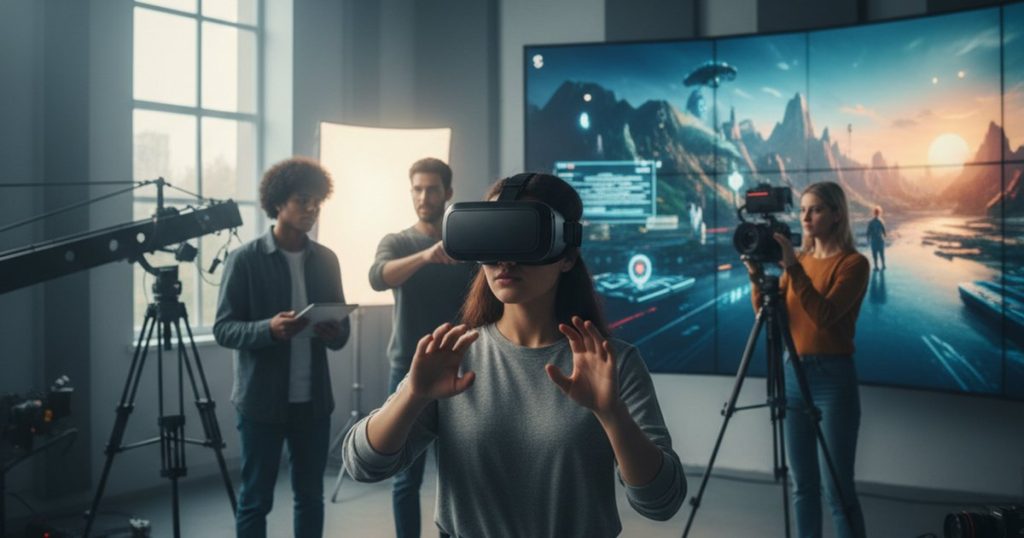
The lights are on, but the set isn’t real. Instead, a sprawling, photorealistic environment unfurls across massive LED screens, responding in real-time to camera movements and actor cues. This isn’t a glimpse into a sci-fi future; it’s the present reality of filmmaking, and it’s fundamentally reshaping how film course and cinematography programs are taught globally. As of May 13, 2026, major educational institutions are scrambling to integrate virtual production techniques and artificial intelligence tools into their core curricula, driven by an industry that has embraced these technologies at breakneck speed.
This week, the National Association of Film Schools (NAFS) released a preliminary report indicating that over 70% of accredited film programs in North America have either launched or are actively developing dedicated modules for virtual production and AI in their film course offerings. This rapid curriculum overhaul signals a critical pivot: the skills aspiring cinematographers and filmmakers need today are vastly different from even five years ago. MarQ Academy, a leading voice in education analysis, notes that this shift isn’t merely an upgrade; it’s a redefinition of what it means to be production-ready.
Key Takeaways
- Film and cinematography courses are rapidly integrating virtual production and AI technologies into their core curricula.
- This educational shift is a direct response to the film industry’s increasing reliance on these advanced tools for efficiency and creative expansion.
- Students now need proficiency in real-time rendering engines, LED wall operations, and AI-driven pre-production and post-production workflows.
- Ethical considerations surrounding AI, such as deepfakes and intellectual property, are becoming mandatory topics in film education.
- The demand for graduates with these specialized skills is surging, with some studios offering 20% higher starting salaries for AI/VP-proficient hires.
What is Driving the Shift in Film Course and Cinematography Programs?
The primary driver behind the significant curriculum changes in film course and cinematography programs is the film industry’s wholesale adoption of virtual production (VP) and artificial intelligence (AI) technologies. These tools offer unprecedented creative control, cost efficiencies, and accelerated timelines, making them indispensable for modern filmmaking.
Major studios, from Disney to Warner Bros., have invested billions in virtual production stages, leveraging massive LED volumes to create immersive digital environments in real-time. This technology, famously pioneered by shows like ‘The Mandalorian,’ allows filmmakers to capture final pixel shots in-camera, reducing reliance on traditional green screens and extensive post-production. A 2025 report by the Motion Picture Association (MPA) highlighted that virtual production adoption grew by 40% in the past year alone across major studio projects. This rapid integration means that graduates without VP experience are increasingly at a disadvantage.
Simultaneously, AI is permeating every stage of the filmmaking pipeline. From AI-assisted script analysis and character generation to intelligent shot planning, automated rotoscoping, and even deepfake technology for visual effects, AI is streamlining complex tasks and opening new creative avenues. A recent study by Deloitte predicted that AI tools could reduce post-production costs by up to 30% for certain tasks by 2028. This efficiency gain is too substantial for the industry to ignore, compelling educators to equip students with these essential competencies.
How Are Film Schools Integrating Virtual Production into Their Cinematography Courses?
Film schools are integrating virtual production into their cinematography courses by establishing dedicated VP stages, offering hands-on training with LED walls, real-time rendering engines like Unreal Engine, and specialized camera tracking systems. This practical approach ensures students gain direct experience with the tools and workflows used on professional sets.
For instance, the American Film Institute (AFI) Conservatory recently unveiled a 15,000-square-foot virtual production soundstage, making it one of the largest academic facilities of its kind. Their revamped cinematography courses now include mandatory modules on operating cameras within an LED volume, understanding DMX lighting control for virtual environments, and collaborating with real-time VFX artists. Students learn to manipulate virtual environments, adjust lighting that interacts realistically with physical sets, and achieve in-camera visual effects. According to AFI’s Dean of Cinematography, Sarah Chen, “Our goal is to ensure every graduate is fluent in the language of virtual production, ready to step onto any modern set.”
Beyond the technical aspects, these courses emphasize the collaborative nature of VP. Cinematographers must work closely with virtual art department artists, game engine operators, and visual effects supervisors from pre-production through principal photography. This interdisciplinary approach is a cornerstone of the new curriculum, reflecting the integrated teams found in professional virtual production pipelines.
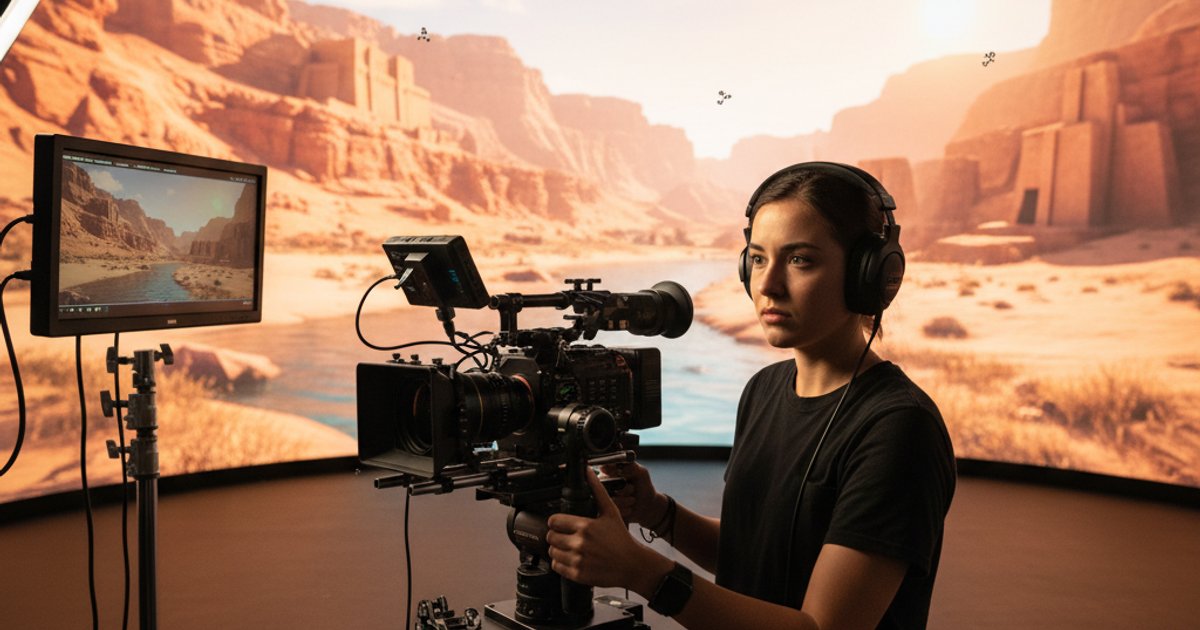
The curriculum also covers the nuances of shooting for VP, such as understanding parallax, managing reflections on the LED wall, and optimizing camera settings for seamless integration with digital backgrounds. Students learn about color calibration for LED displays and the critical role of pre-visualization in planning complex virtual shots. This hands-on experience is proving invaluable, with graduates from VP-focused programs reporting a 15% higher employment rate within six months of graduation, according to a 2025 industry survey by Variety.
The Role of Real-Time Engines
Real-time rendering engines, primarily Unreal Engine and Unity, are now foundational elements of advanced cinematography courses. Students learn to navigate these powerful platforms to build, light, and animate virtual sets.
These engines allow cinematographers to pre-visualize shots with unprecedented accuracy, experimenting with camera angles, focal lengths, and lighting setups long before principal photography begins. This iterative process saves significant time and resources on set. MarQ Academy’s analysis shows that proficiency in these engines is now considered as crucial as understanding traditional camera mechanics for aspiring directors of photography.
Camera Tracking and Data Integration
Modern cinematography courses also delve into camera tracking technologies, which are essential for synchronizing physical cameras with virtual environments. Systems like Mo-Sys and Stype are taught, allowing students to understand how camera movement data is fed into the real-time engine to maintain perfect perspective and parallax.
This integration of physical and digital data streams is complex, requiring a blend of technical expertise and creative vision. Students learn to troubleshoot tracking issues, calibrate systems, and ensure the virtual world responds accurately to the physical camera’s position and orientation. This technical skill set is highly prized in the industry, with a 2024 report from the Hollywood Reporter noting a 25% increase in demand for ‘Virtual Production Technicians’ who possess these specific capabilities.
What Impact is AI Having on Film Course Content Beyond Production?
Artificial intelligence is profoundly impacting film course content beyond just production, influencing areas like script development, post-production workflows, and critical ethical discussions surrounding generative media. AI tools are becoming integral to the entire filmmaking lifecycle, from concept to final delivery.
In scriptwriting modules, students are now exploring AI-powered tools that can analyze narrative structures, suggest character arcs, and even generate dialogue or scene descriptions. While not replacing human creativity, these tools act as powerful assistants, accelerating the brainstorming and revision processes. For example, a student might use an AI to generate 50 variations of a scene’s opening based on specific parameters, then refine the best options. This allows for faster iteration and exploration of creative possibilities.
Post-production courses are seeing an even more dramatic shift. AI-driven software can now automate tasks like rotoscoping, keying, color grading suggestions, and even generate complex visual effects elements. This frees up artists to focus on higher-level creative decisions rather than tedious, repetitive work. Editing suites are incorporating AI for intelligent clip selection and sequence suggestions, dramatically speeding up the initial assembly of a cut. The University of Southern California’s School of Cinematic Arts, for instance, now includes dedicated labs for AI-assisted editing and VFX, with a focus on tools that leverage machine learning for efficiency.
Ethical Considerations: Deepfakes and IP
The rise of generative AI has also necessitated a robust discussion on ethics within film course curricula, particularly concerning deepfakes and intellectual property (IP). Students are grappling with the implications of creating hyper-realistic synthetic media.
Courses now include mandatory seminars on the responsible use of AI, the legal ramifications of using deepfake technology, and the evolving landscape of copyright in an age where AI can generate original content. This includes discussions on consent, attribution, and the potential for misuse of these powerful tools. A 2025 survey by the American Civil Liberties Union (ACLU) found that 85% of film students believe ethical AI training is ‘extremely important’ for their future careers. MarQ Academy emphasizes that understanding these ethical boundaries is as crucial as mastering the technology itself.
AI in Pre-Production and Planning
AI is also making inroads into the pre-production phase, assisting with everything from location scouting to casting. Algorithms can analyze scripts and suggest optimal locations based on visual parameters, budget constraints, and logistical feasibility. They can also aid in casting by analyzing actor portfolios against character requirements, though human decision-making remains paramount.
Furthermore, AI can help optimize production schedules and budgets by predicting potential delays or cost overruns based on historical data. This predictive analytics capability allows filmmakers to plan more efficiently and mitigate risks. These tools are taught not as replacements for human expertise, but as powerful augmentations.
Comparison: Traditional vs. Modern Film Course Focus
The evolution of film course and cinematography programs highlights a clear shift in focus, moving from purely traditional techniques to an integrated approach that embraces cutting-edge technology. This table outlines key differences in emphasis.
| Aspect | Traditional Film Course Focus | Modern Film Course Focus (as of 2026) |
|---|---|---|
| Set Environment | Physical sets, practical locations, green screen | LED volumes, virtual sets, real-time environments |
| VFX Workflow | Extensive post-production compositing | In-camera VFX, real-time rendering |
| Pre-Production | Storyboards, physical scouting, manual scheduling | AI-assisted script analysis, virtual scouting, predictive scheduling |
| Camera Skills | Film stock, lens theory, lighting ratios (physical) | Digital cameras, virtual camera operation, DMX lighting for VP |
| Post-Production | Manual editing, rotoscoping, color grading | AI-assisted editing, automated rotoscoping, generative VFX |
| Key Software | Adobe Premiere, Avid, DaVinci Resolve, Nuke | Unreal Engine, Unity, AI-driven plugins, specialized VP software |
| Ethical Training | Copyright, censorship, representation | Deepfakes, AI bias, intellectual property in generative media |
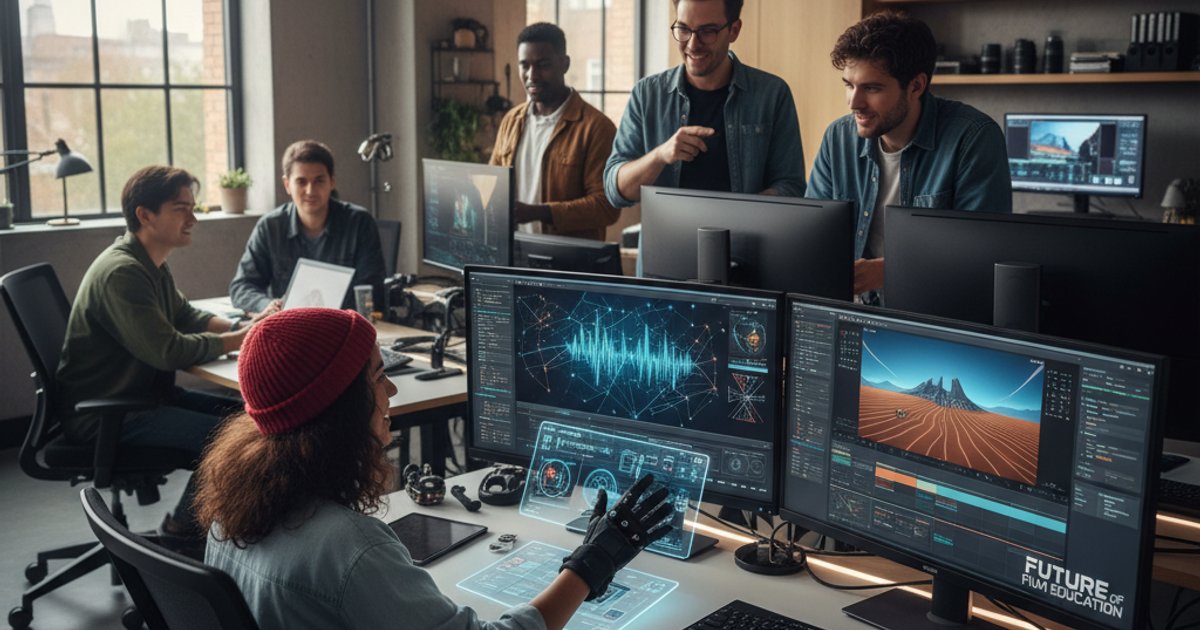
This comparison underscores that while fundamental storytelling and artistic principles remain constant, the tools and techniques used to execute them have transformed dramatically. Modern film course curricula are designed to bridge this gap, ensuring graduates are versatile and adaptable.
Why Should Aspiring Filmmakers Prioritize AI and Virtual Production Skills?
Aspiring filmmakers should prioritize AI and virtual production skills because these competencies are rapidly becoming non-negotiable requirements for entry into and advancement within the modern film industry. The job market is increasingly valuing professionals who can navigate these advanced technological landscapes.
Studios and production houses are actively seeking talent proficient in these areas, often offering higher compensation and more opportunities for creative input. A recent LinkedIn analysis from Q1 2026 showed that job postings mentioning ‘virtual production’ or ‘AI in film’ increased by 60% year-over-year. Furthermore, entry-level positions requiring these skills often command starting salaries 15-20% higher than those for purely traditional roles, according to data compiled by the Creative Artists Agency (CAA) in their 2025 industry report. This financial incentive alone makes the investment in these skills worthwhile.
Beyond immediate employment, proficiency in AI and VP unlocks greater creative freedom and efficiency. Filmmakers can visualize complex scenes with unprecedented accuracy, iterate on ideas faster, and achieve visual effects that were once prohibitively expensive or time-consuming. This empowers artists to tell stories that were previously impossible to realize. As the technology continues to evolve, those who master it will be at the forefront of cinematic innovation. MarQ Academy advises that these skills are not just about staying relevant in the age of AI; they are about leading the charge.
The Future of Film Course and Cinematography Education
The future of film course and cinematography education will likely feature even deeper integration of immersive technologies, personalized learning paths driven by AI, and a continuous adaptation to emerging industry standards. The pace of technological change shows no signs of slowing, demanding agile and forward-thinking educational models.
Expect to see more specialized degrees and certifications focusing exclusively on virtual production directing, AI cinematography, and real-time VFX artistry. Educational institutions will need to invest continuously in cutting-edge hardware and software to keep pace. Partnerships between film schools and technology companies (e.g., Epic Games, NVIDIA) will become more commonplace, providing students with access to the latest tools and industry insights.
Furthermore, AI itself may play a role in customizing learning experiences, identifying student strengths and weaknesses, and recommending tailored exercises or projects. This personalized approach could optimize skill development and prepare students more effectively for their chosen career paths. The emphasis will remain on fostering creativity and storytelling, but within a framework that fully embraces the technological advancements shaping the industry.
Frequently Asked Questions
What is virtual production in the context of a film course?
Virtual production in a film course refers to the use of real-time technologies, such as LED volumes and game engines, to create and display digital environments on set. Students learn to shoot against these dynamic backdrops, achieving final pixel visuals in-camera, which blurs the lines between pre-production, production, and post-production.
Are traditional cinematography skills still relevant with AI and VP?
Absolutely. Traditional cinematography skills like composition, lighting principles, camera movement, and storytelling remain fundamental. AI and virtual production are tools that augment these core skills, not replace them. A strong foundation in traditional techniques makes a cinematographer more effective when applying new technologies.
Which film schools are leading in virtual production education?
Leading film schools integrating virtual production include the American Film Institute (AFI), the University of Southern California (USC) School of Cinematic Arts, the National Film and Television School (NFTS) in the UK, and the Savannah College of Art and Design (SCAD). Many others are rapidly developing similar programs.
How does AI assist in film post-production?
AI assists in post-production by automating tedious tasks like rotoscoping, keying, and object removal. It can also suggest color grades, generate visual effects elements, and help editors with initial cut assembly by intelligently selecting and sequencing clips, significantly speeding up workflows.
Will AI replace cinematographers or filmmakers?
No, AI is not expected to replace cinematographers or filmmakers. Instead, it serves as a powerful assistant, automating repetitive tasks and expanding creative possibilities. Human creativity, vision, and decision-making remain central to the filmmaking process, with AI acting as a sophisticated tool in their arsenal.
What new job roles are emerging due to virtual production and AI?
New job roles include Virtual Production Supervisor, Real-time VFX Artist, LED Volume Technician, AI Workflow Specialist, Virtual Art Department (VAD) Artist, and Virtual Camera Operator. These roles require a blend of traditional filmmaking knowledge and advanced technical proficiency.
How quickly are film course curricula adapting to these changes?
Film course curricula are adapting at an unprecedented pace, with many institutions overhauling programs within the last 1-2 years. The rapid industry adoption of virtual production and AI has forced educators to respond quickly to ensure graduates are prepared for the demands of the modern film industry.
Last updated: May 13, 2026
“`
 English
  Chinese