
By MarQ Academy
Updated May 9, 2026
You’ve spent countless hours glued to YouTube, devouring tutorials on camera angles, editing hacks, and the latest visual effects. You’ve even shot a few short films on your phone, perhaps with surprising results. But here’s the stark reality: the leap from enthusiastic amateur to industry-ready professional in Malaysia’s competitive media landscape demands more than just passion and a Wi-Fi connection. The film and digital media industry, projected to grow by 12% in Southeast Asia by 2027 according to a 2024 PwC report, isn’t just looking for talent; it’s looking for trained, experienced talent.
This is where a dedicated film making school, like MarQ Academy, a leading digital film production academy in Malaysia, steps in. It’s not just about learning; it’s about mastering a craft, building a network, and gaining the practical experience that separates the dreamers from the doers. Aspiring filmmakers, videographers, and content creators need to understand that while free online resources offer a starting point, they rarely provide the structured curriculum, hands-on experience, and industry connections crucial for a sustainable career in film and video production.
Key Takeaways
Last updated: May 9, 2026
- Professional film courses offer structured, hands-on training and industry-standard equipment, which online tutorials cannot replicate.
- MarQ Academy provides a dual-certificate program, including a UK Advanced Diploma and Sijil Kemahiran Malaysia, enhancing career prospects.
- Mentorship from seasoned professionals and real-world project experience are vital for developing practical skills and a strong portfolio.
- Networking opportunities within a film making school are invaluable for future collaborations and job placements in Malaysia’s media industry.
- Investing in a professional film education accelerates skill acquisition and career readiness, offering a significant advantage over self-taught methods.
Why Choose a Professional Film Making School Over Self-Taught Methods?
Choosing a professional film making school provides a structured, comprehensive education that online tutorials simply cannot match, equipping students with the practical skills and industry knowledge essential for a successful career. While self-learning offers flexibility, it often lacks the depth, hands-on experience, and direct mentorship that a dedicated program delivers, leaving significant gaps in a filmmaker’s technical and creative development.
The allure of free online content is undeniable, especially for those just starting out. However, the Malaysian film industry, which saw local box office revenue rebound by 60% in 2023, demands a level of expertise and professionalism that casual learning struggles to provide. A professional film course, particularly one focused on practical application, accelerates skill development and ensures graduates are job-ready from day one.
The Importance of Hands-On Training and Equipment Access
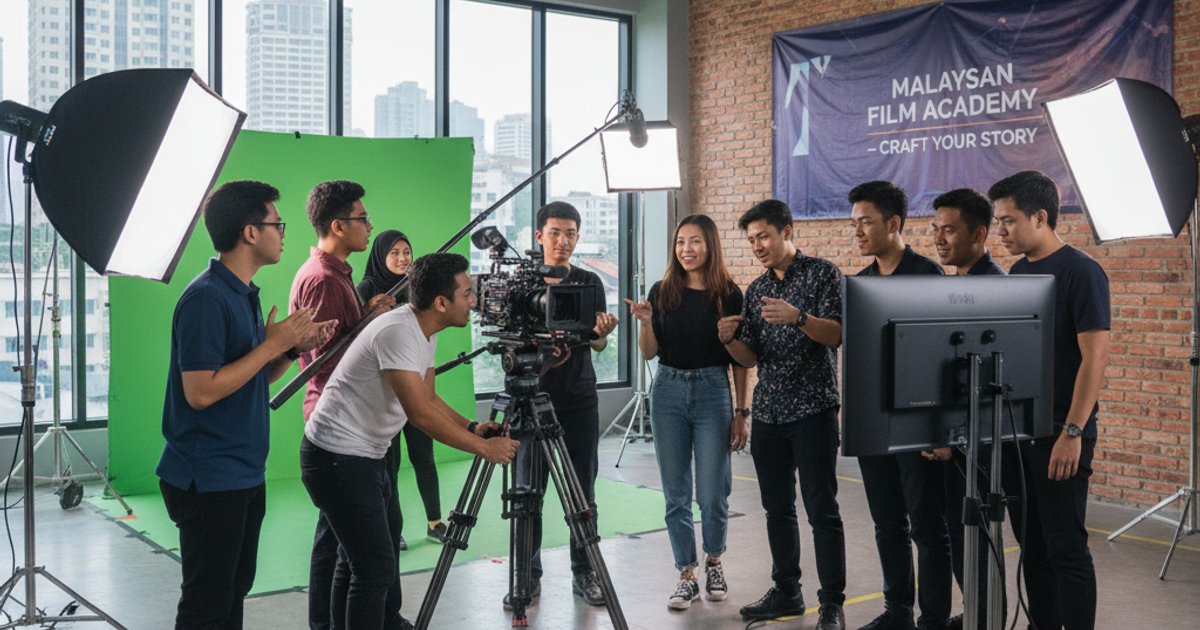
Hands-on training, a cornerstone of effective film education, allows students to physically operate industry-standard cameras, lighting, and sound equipment, building muscle memory and problem-solving skills in real-time. MarQ Academy, for example, provides students with access to professional-grade gear, including RED Digital Cinema cameras, Arri lighting kits, and Avid Media Composer editing suites, which are often prohibitively expensive for individual learners.
This direct interaction with equipment is critical. Learning theory from a video is one thing; troubleshooting a flickering light on set or calibrating a professional camera under pressure is another entirely. A 2023 survey by the Malaysian Digital Economy Corporation (MDEC) indicated that 78% of media employers prioritize candidates with practical experience using specific industry tools.
Real Production Experience and Portfolio Building
Real production experience, gained through structured projects and collaborative assignments, is paramount for students to understand the entire filmmaking pipeline, from pre-production planning to post-production delivery. These experiences culminate in a robust portfolio, which is the single most important asset for any aspiring filmmaker seeking employment in Malaysia’s vibrant media sector.
At a film making school, students work on multiple projects, often simulating real-world scenarios, which allows them to experiment, make mistakes in a supportive environment, and refine their craft. This structured approach ensures that by graduation, students have a diverse body of work demonstrating their capabilities in various roles, from cinematography to video editing.
What Does a Digital Film Production Course Cover?
A comprehensive digital film production course covers the entire spectrum of filmmaking, from foundational storytelling principles to advanced post-production techniques, ensuring graduates possess a well-rounded skill set for diverse roles in the industry. This holistic approach contrasts sharply with the fragmented knowledge often acquired through self-directed online learning, which rarely connects the dots across different filmmaking disciplines.
MarQ Academy’s Digital Film Production course, for instance, is designed as a dual-certificate program, offering both a UK Advanced Diploma and Sijil Kemahiran Malaysia (SKM), a nationally recognized vocational qualification. This dual certification not only validates a student’s skills on an international level but also enhances their employability within Malaysia, where SKM is highly valued by employers.
Cinematography Courses and Visual Storytelling
Cinematography courses delve deep into the art and science of visual storytelling, teaching students how to use camera movement, lighting, and composition to evoke emotion and convey narrative. This includes mastering various camera systems, understanding lens choices, and applying advanced lighting techniques that go far beyond basic exposure settings.
Students learn about color theory, visual grammar, and how to collaborate effectively with directors and gaffers to achieve a cohesive visual style. This specialized knowledge is crucial for anyone aiming to become a director of photography or a skilled camera operator in the Malaysian film industry.
The Art of Video Editing and Visual Effects
The art of video editing transforms raw footage into a compelling narrative, requiring not just technical proficiency with software but also a keen understanding of pacing, rhythm, and storytelling structure. Professional programs teach industry-standard software like Adobe Premiere Pro, DaVinci Resolve, and Avid Media Composer, alongside the critical decision-making processes that shape a film’s final form.
Visual effects (VFX) training introduces students to techniques for creating and integrating computer-generated imagery (CGI) and motion graphics, an increasingly vital skill in modern film and advertising. This includes green screen compositing, 3D modeling, and animation, preparing students for roles in post-production houses that serve both local and international clients.
How Does Industry Mentorship Shape Future Filmmakers?
Industry mentorship provides invaluable real-world insights, practical advice, and networking opportunities that are crucial for navigating the complexities of the film and media production landscape, offering guidance that generic online content cannot replicate. These direct connections with seasoned professionals help students understand current industry trends, best practices, and the unwritten rules of the trade, accelerating their career growth.
Mentors often share their experiences, offer constructive criticism on student projects, and even facilitate introductions to other professionals, opening doors that would otherwise remain closed. This personalized guidance is a significant differentiator for students attending a dedicated film course or self-taught path.
Networking Opportunities and Career Guidance
Networking opportunities within a film making school are unparalleled, connecting students with peers, alumni, and visiting industry professionals, forming a vital support system and potential collaboration network for future projects. These connections often lead to internships, freelance gigs, and full-time employment after graduation, especially in a close-knit industry like Malaysia’s.
Career guidance services, including resume building, interview preparation, and job placement assistance, are also a standard offering at reputable academies. MarQ Academy, for instance, actively helps students prepare for the job market, leveraging its industry connections to facilitate successful transitions from student to professional.
Comparing Learning Paths: Professional Course vs. Self-Taught
Understanding the fundamental differences between a professional film course and self-taught methods is crucial for aspiring filmmakers to make an informed decision about their educational journey. While self-learning offers flexibility and cost savings, it often falls short in providing the structured curriculum, hands-on experience, and industry validation that a professional program delivers.
| Feature | Professional Film Course (e.g., MarQ Academy) | Self-Taught (Online Tutorials, etc.) |
|---|---|---|
| Curriculum Structure | Comprehensive, sequential, industry-aligned modules | Fragmented, self-directed, often lacks foundational depth |
| Equipment Access | Industry-standard cameras, lighting, editing suites | Limited to personal budget, often consumer-grade |
| Hands-on Experience | Mandatory practical projects, simulated sets, collaborative work | Optional, self-initiated, often lacks real-world constraints |
| Mentorship & Feedback | Direct guidance from experienced professionals, personalized critiques | Minimal or no direct feedback, reliance on online communities |
| Industry Networking | Built-in opportunities with peers, alumni, and professionals | Requires proactive, independent effort; often challenging to initiate |
| Certification/Validation | Recognized diplomas (e.g., UK Advanced Diploma, SKM) | No formal accreditation, relies solely on portfolio |
| Career Guidance | Dedicated services for job placement, portfolio review | Self-reliance for job search and career development |
This table highlights that while self-learning can kickstart a passion, a professional film making school provides a more robust and efficient pathway to a career. For those wondering about the what a film course prepares you for, it’s the holistic development and industry readiness.
What Are the Career Prospects After a Film Course in Malaysia?
Graduates of a professional film course in Malaysia can expect diverse and promising career prospects across various sectors of the media industry, including film, television, advertising, and corporate video production. The skills acquired, from cinematography to video editing and brand design, are highly transferable and in demand as content creation continues its exponential growth.
The Malaysian creative industry contributed approximately RM31 billion to the national GDP in 2022, indicating a robust ecosystem for skilled professionals. A formal qualification from a reputable institution like MarQ Academy significantly boosts employability and opens doors to specialized roles.
Diverse Roles in Film and Media Production
A professional film course prepares students for a multitude of roles within the creative industries, extending far beyond just directing or producing. Graduates can pursue careers as cinematographers, video editors, visual effects artists, sound designers, scriptwriters, production managers, and even digital content creators for social media platforms.
The demand for skilled professionals in these areas is consistently high, particularly with the rise of streaming services and the increasing need for high-quality video content from businesses. A 2024 report by the Malaysia Communications and Multimedia Commission (MCMC) noted a 15% increase in demand for digital content specialists over the past two years.
AI Technology in Media Production: The Future is Now
AI technology in media production is rapidly transforming workflows, from automated editing and content generation to advanced visual effects and personalized content delivery. A forward-thinking film making school integrates these emerging technologies into its curriculum, preparing students for the future of the industry.
MarQ Academy, for instance, includes modules on AI tools for video analysis, generative AI for concept art, and machine learning for optimizing post-production processes. This ensures graduates are not just proficient in traditional techniques but also adept at leveraging cutting-edge innovations, making them highly competitive in a rapidly evolving job market. This proactive approach is part of the fastest way to learn filmmaking in today’s landscape.
Frequently Asked Questions
What qualifications do I need to enroll in a film course at MarQ Academy?
To enroll in MarQ Academy’s Digital Film Production course, applicants typically need a SPM/O-Level qualification with at least 3 credits or an equivalent. Specific entry requirements may vary, so it’s always best to check their official website or contact their admissions team directly for the most accurate information.
How long does a typical digital film production course last?
MarQ Academy’s Digital Film Production course is a dual-certificate program designed to be completed within a specific timeframe, often around 18-24 months. This duration allows for comprehensive coverage of practical and theoretical aspects, culminating in a UK Advanced Diploma and Sijil Kemahiran Malaysia.
What kind of equipment will I be using at MarQ Academy?
Students at MarQ Academy gain hands-on experience with industry-standard equipment, including professional-grade digital cinema cameras (e.g., RED Digital Cinema), advanced lighting setups (e.g., Arri), and professional audio recording gear. They also utilize high-end editing suites equipped with software like Adobe Premiere Pro, DaVinci Resolve, and Avid Media Composer.
Is a film degree worth it in Malaysia’s job market?
Yes, a film degree or advanced diploma from a reputable institution like MarQ Academy significantly enhances career prospects in Malaysia. Employers in the film, TV, and digital media sectors often prioritize candidates with formal training, practical experience, and a strong portfolio, all of which are hallmarks of a professional film education.
Can I get financial aid or scholarships for a film course?
Many educational institutions in Malaysia, including MarQ Academy, offer various financial aid options, scholarships, or payment plans to eligible students. It is highly recommended to inquire directly with the academy’s admissions or finance department for details on available assistance and eligibility criteria.
What is the difference between a film making school and a video production school?
While often used interchangeably, a film making school typically focuses on cinematic storytelling, narrative structures, and the artistic aspects of feature films and documentaries. A video production school, on the other hand, might emphasize broader commercial applications like corporate videos, advertisements, and digital content, though there’s significant overlap in technical skills. MarQ Academy covers both, offering a comprehensive digital film production curriculum.
How does MarQ Academy integrate AI technology into its curriculum?
MarQ Academy integrates AI technology by teaching students how to utilize AI tools for various aspects of media production, including automated video editing, generative AI for concept design and storyboarding, AI-driven visual effects, and data analysis for content optimization. This ensures graduates are prepared for the evolving technological landscape of the industry.
The media landscape in Malaysia is dynamic, demanding professionals who are not just passionate but also highly skilled and adaptable. While the internet offers a wealth of information, it cannot replicate the immersive, hands-on, and mentored learning environment of a dedicated film making school. MarQ Academy, with its dual-certificate program and focus on practical, industry-relevant skills, offers a clear pathway for aspiring filmmakers and digital content creators to turn their passion into a thriving career. The future of storytelling is here, and it demands more than just a good Wi-Fi connection; it demands expertise.
 English
  Chinese