
By MarQ Academy
Updated May 9, 2026
The dream of telling stories through a lens, of crafting visual narratives that move audiences, is more accessible than ever before. But while countless free online tutorials promise to teach you the basics of video production, the reality of building a sustainable, professional career in Malaysia’s dynamic film and media industry demands far more than just surface-level knowledge. It requires a dedicated film course, a structured environment where practical skills are honed, industry connections are forged, and real-world experience is gained.
MarQ Academy, a leading film making and digital film production academy in Malaysia, understands this critical distinction. They focus on equipping students with the creative and technical mastery needed to thrive in film, video production, cinematography, video editing, visual effects, brand design, and even the emerging field of AI technology in media production. This isn’t just about learning software; it’s about mastering the craft, understanding the business, and building a portfolio that opens doors.
Key Takeaways
Last updated: May 9, 2026
- Professional film courses offer structured, hands-on training and mentorship, unlike fragmented online tutorials.
- Industry-standard equipment and real-world production experience are crucial for developing practical skills.
- Dual-certificate programs, like MarQ Academy’s, provide internationally recognized qualifications and local accreditation.
- Networking with industry professionals and peers is a significant advantage for career advancement.
- A strong, diverse portfolio built in a professional setting is essential for securing employment in Malaysia’s competitive media landscape.
- Specialized training in areas like AI in media production future-proofs careers.
Why Professional Training Outperforms Self-Learning for Aspiring Filmmakers
Relying solely on free online tutorials for a career in film making or digital video production is a fundamentally flawed strategy for anyone serious about the industry. While platforms like YouTube offer a wealth of information, they lack the structured curriculum, hands-on mentorship, and industry-standard equipment access that a dedicated film course provides. A professional institution ensures a holistic understanding of the craft, from pre-production planning to post-production finesse, covering both the technical and artistic aspects comprehensively.
The fragmented nature of online learning often leaves significant gaps in knowledge, particularly in areas like collaborative production workflows, legal aspects of filmmaking, and advanced problem-solving on set. Moreover, without direct feedback from experienced professionals, aspiring filmmakers can develop bad habits or miss crucial industry best practices. This can severely hinder their ability to secure paid work and progress in their careers.
What Does a Film Making School Offer That Online Tutorials Can’t?
A dedicated film making school provides an immersive environment designed to transform passion into profession, offering resources and experiences that are simply unattainable through self-directed online learning. These institutions bridge the gap between theoretical knowledge and practical application, preparing students for the rigorous demands of the film and media industry in Malaysia.
Here’s the thing—the value of a professional environment extends far beyond just information. It’s about the ecosystem, the guidance, and the opportunities that are meticulously cultivated to ensure student success. MarQ Academy, for instance, integrates these elements into every aspect of its curriculum, ensuring graduates are not just skilled, but also industry-ready.
Hands-On Training and Equipment Access
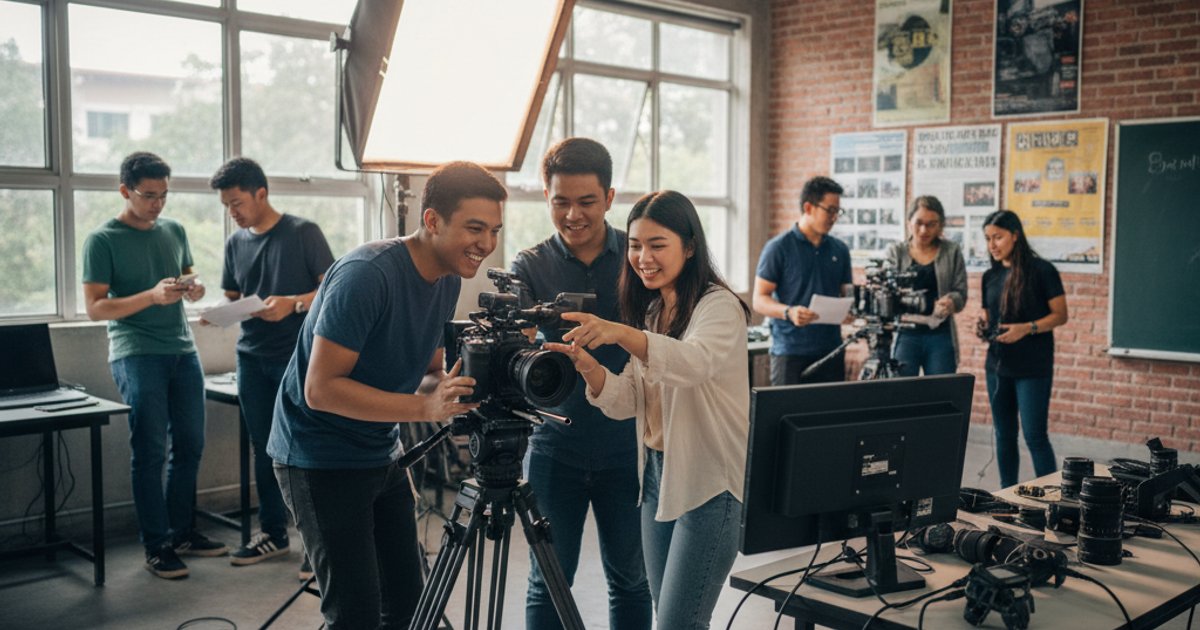
Practical experience with professional-grade equipment is non-negotiable for anyone entering the film and video production industry. Online tutorials might show you how to use a particular camera, but they can’t put a Blackmagic URSA Mini Pro or an ARRI Alexa Mini in your hands, allowing you to experiment with different lenses, lighting setups, and camera movements under expert supervision. This direct interaction builds muscle memory and problem-solving skills that are vital on a real set.
MarQ Academy ensures students have access to industry-standard cameras, lighting rigs, sound recording equipment, and editing suites, mirroring the tools used by top production houses in Kuala Lumpur and beyond. According to a 2024 survey by the Malaysian Digital Association, 78% of production companies prioritize candidates with demonstrable experience using professional equipment, highlighting the importance of this hands-on training.
Industry Mentorship and Networking
Learning from seasoned professionals who have navigated the complexities of the Malaysian film industry is an invaluable asset. Mentors provide personalized feedback, share real-world insights, and guide students through challenging projects, helping them refine their craft and avoid common pitfalls. These relationships often extend beyond the classroom, evolving into crucial professional connections.
Networking opportunities within a film school are unparalleled. Students collaborate on projects, forming creative partnerships that can last a lifetime, and meet guest lecturers, industry veterans, and potential employers. A 2023 report by FINAS (National Film Development Corporation Malaysia) indicated that over 60% of entry-level positions in the local film industry are filled through referrals and professional networks, underscoring the power of these connections.
Structured Curriculum and Dual Certification
A comprehensive, structured curriculum ensures students develop a well-rounded skill set, covering everything from foundational principles of storytelling and visual composition to advanced techniques in cinematography, video editing, and visual effects. This systematic approach guarantees that no critical area is overlooked, providing a robust educational foundation.
MarQ Academy offers a dual-certificate program, allowing students to earn both a UK Advanced Diploma and a Sijil Kemahiran Malaysia (SKM). This dual accreditation is a significant advantage, providing internationally recognized qualifications alongside local industry validation. The SKM, in particular, is highly valued by Malaysian employers as it signifies practical competency and adherence to national skill standards, giving graduates a competitive edge in the local job market.
How Does a Film Course Build a Strong Portfolio and Career Path?
The ultimate goal of any aspiring filmmaker is to create compelling work and secure a fulfilling career. A professional film course is specifically designed to facilitate this, providing the framework, resources, and guidance necessary to build an impressive portfolio and navigate the complexities of the industry.
Building a portfolio isn’t just about accumulating projects; it’s about showcasing diverse skills, demonstrating creative vision, and proving your ability to deliver high-quality work under professional conditions. This is where a structured learning environment truly shines, pushing students to excel and produce their best work.
Real Production Experience and Portfolio Development
Throughout their studies, students at a film making school actively participate in numerous short films, documentaries, commercials, and other video production projects. These aren’t just academic exercises; they are opportunities to apply learned skills, collaborate with peers, and build a diverse portfolio of work that reflects their capabilities and creative voice. Each project adds a tangible piece to their professional showcase.
This hands-on experience is critical. It simulates real-world production challenges, from managing budgets and schedules to troubleshooting technical issues on set. A strong portfolio, featuring well-produced and varied projects, is the single most important tool for securing employment in the film and media industry. Employers want to see what you can actually do, not just what you know in theory.
Career Guidance and Industry Placements
Navigating the job market in the creative industries can be daunting, but film schools often provide dedicated career services, including resume building, interview preparation, and job placement assistance. They leverage their industry connections to help students find internships and entry-level positions, providing a crucial stepping stone into the professional world.
MarQ Academy, for instance, has established relationships with various production houses, advertising agencies, and media companies across Malaysia, facilitating internships and job opportunities for its graduates. This direct pipeline to employment is a significant advantage, reducing the time and effort students spend searching for their first professional role. The fastest way to learn filmmaking and get hired is often through these established pathways.
What About AI and Emerging Technologies in Digital Production?
The media landscape is constantly evolving, with artificial intelligence (AI) rapidly transforming various aspects of film and digital production. A forward-thinking film making school must integrate these new technologies into its curriculum, preparing students for the future of the industry.
AI is no longer a futuristic concept; it’s a present-day tool that is reshaping workflows, enhancing creative possibilities, and creating new job roles. Ignoring this shift would be a disservice to aspiring professionals.
Integrating AI into Media Production
AI technology is revolutionizing tasks from scriptwriting and pre-visualization to de-aging actors and generating visual effects, streamlining workflows and opening up new creative avenues. Understanding how to effectively use AI tools for tasks like automated video editing, content generation, and data-driven audience analysis is becoming an essential skill for modern digital producers.
MarQ Academy recognizes this paradigm shift and incorporates training in AI technology for media production, ensuring its graduates are not just proficient in traditional techniques but also adept at leveraging cutting-edge tools. This specialization positions them at the forefront of innovation, making them highly attractive to employers seeking future-ready talent.
This table illustrates the stark differences between self-learning and a professional film course:
| Feature | Self-Learning (Online Tutorials) | Professional Film Course (e.g., MarQ Academy) |
|---|---|---|
| Curriculum Structure | Fragmented, self-directed, inconsistent | Structured, comprehensive, industry-aligned |
| Equipment Access | Limited to personal gear, often consumer-grade | Access to industry-standard, professional equipment |
| Mentorship & Feedback | Minimal or non-existent, relies on community forums | Direct, personalized feedback from experienced professionals |
| Networking Opportunities | Limited to online communities, often informal | Extensive, formal industry connections and peer collaboration |
| Portfolio Development | Self-initiated, often lacks professional polish | Guided, project-based, professional-grade portfolio |
| Certification | No formal certification | Internationally recognized diplomas, local SKM |
| Career Guidance | None | Dedicated career services, job placement assistance |
| Emerging Tech Training | Hit-or-miss, depends on individual research | Integrated training in AI, VFX, and other advanced tools |
What are the Career Prospects for Digital Film Production Graduates in Malaysia?
Malaysia’s creative content industry is experiencing robust growth, driven by increasing demand for local and international productions, digital marketing content, and streaming services. Graduates from a reputable digital film production academy are well-positioned to capitalize on these opportunities.
The industry isn’t just about feature films; it encompasses television, commercials, corporate videos, animation, and the rapidly expanding digital content space. This diversity offers a wide array of career paths for skilled professionals.
Diverse Job Roles and Industry Growth
Graduates can pursue various exciting roles, including Cinematographer, Video Editor, Director, Producer, Visual Effects Artist, Motion Graphics Designer, Colorist, Sound Designer, and Digital Content Creator. The Malaysian government’s initiatives, such as the Digital Content Fund, continue to stimulate local production, creating a consistent demand for skilled talent.
According to the Malaysia Digital Economy Corporation (MDEC), the creative content industry contributed RM31 billion (approximately USD 6.6 billion) to the national GDP in 2023, growing by 8.5% year-on-year. This growth trajectory indicates a healthy and expanding job market for qualified professionals in film and video production.
Here’s a snapshot of potential career paths and their average entry-level salaries in Malaysia (as of early 2026, indicative figures):
| Job Role | Description | Average Entry-Level Salary (MYR/month) |
|---|---|---|
| Assistant Director | Assists the director, manages set logistics and schedules. | 2,500 – 3,500 |
| Junior Video Editor | Assembles raw footage, adds effects, sound, and graphics. | 2,200 – 3,000 |
| Assistant Cinematographer | Supports the Director of Photography, handles camera setup. | 2,000 – 2,800 |
| VFX Artist (Junior) | Creates visual effects for film, TV, and digital media. | 2,800 – 3,800 |
| Digital Content Creator | Produces video content for social media, marketing, etc. | 2,400 – 3,200 |
| Production Assistant | Entry-level role, assists with various production tasks. | 1,800 – 2,500 |
Frequently Asked Questions
What is a Film Making School?
A film making school is an educational institution that provides structured training in the art and craft of film and video production, covering areas like directing, cinematography, editing, screenwriting, and visual effects. These schools offer comprehensive curricula, hands-on experience with professional equipment, and mentorship from industry experts to prepare students for careers in the media industry.
How long does a Digital Film Production course take at MarQ Academy?
MarQ Academy’s Digital Film Production course is typically a comprehensive program designed to be completed within a specific timeframe, often ranging from 18 to 24 months for a dual-certificate program. This duration allows for in-depth theoretical learning, extensive practical application, and portfolio development, ensuring graduates are fully prepared for the industry.
What kind of equipment will I use at MarQ Academy?
Students at MarQ Academy gain access to and hands-on experience with industry-standard professional equipment, including high-end digital cinema cameras (e.g., Blackmagic, Sony FX series), professional lighting kits, sound recording devices, grip equipment, and state-of-the-art editing suites featuring software like Adobe Premiere Pro, DaVinci Resolve, and After Effects. This ensures graduates are familiar with tools used in real-world productions.
Is a Sijil Kemahiran Malaysia (SKM) recognized by employers?
Yes, the Sijil Kemahiran Malaysia (SKM) is a nationally recognized vocational qualification highly valued by Malaysian employers. It certifies that an individual has demonstrated practical competency and specific skills according to national occupational skills standards. For film and digital production, an SKM signifies that a graduate possesses the hands-on abilities required for various technical roles in the industry.
Can I pursue a career in visual effects (VFX) after this course?
Absolutely. MarQ Academy’s curriculum includes modules on visual effects, equipping students with foundational and advanced skills in areas like compositing, motion graphics, and 3D animation. Graduates can pursue entry-level VFX artist roles in post-production houses, animation studios, or advertising agencies, contributing to film, television, and digital media projects.
Does MarQ Academy help with job placement after graduation?
Yes, MarQ Academy provides career guidance and assistance with job placement for its graduates. They leverage their network within the Malaysian film and media industry to connect students with internship opportunities and potential employers, helping them secure their first professional roles. This support is a key advantage over self-learning.
How does AI technology fit into a film course?
AI technology is increasingly integrated into modern film production workflows, from pre-production (e.g., script analysis, virtual set design) to post-production (e.g., automated editing, visual effects generation, content optimization). A contemporary film course, like MarQ Academy’s, teaches students how to utilize these AI tools to enhance creativity, streamline processes, and stay competitive in an evolving industry, preparing them for future job demands.
In a world saturated with digital content, standing out requires more than just a passion for cameras or editing software. It demands a rigorous, professional education that provides hands-on experience, industry connections, and a deep understanding of both traditional craftsmanship and emerging technologies like AI. MarQ Academy, a beacon for aspiring filmmakers in Malaysia, offers precisely that—a pathway to transform raw talent into a thriving career in the dynamic world of film and digital production.
 English
  Chinese