
By MarQ Academy
Updated May 28, 2026
Key Takeaways
- Film making schools globally are rapidly integrating virtual production into their core curricula, reflecting a major industry shift.
- This adoption means students gain hands-on experience with LED walls, real-time rendering, and in-camera visual effects.
- Virtual production offers significant advantages over traditional green screen, including immediate feedback and more realistic lighting.
- The demand for skilled virtual production professionals is surging, making this training essential for graduates.
- Leading institutions like USC, NYU, and UCLA have invested millions in state-of-the-art virtual stages.
- The industry projects a 25% increase in virtual production job opportunities over the next five years, emphasizing the urgency for specialized training.
The lights are up, the cameras are rolling, but the set? It’s a massive LED screen displaying a hyper-realistic digital environment. This isn’t just the future of Hollywood; it’s the present, and critically, it’s now the cornerstone of education at leading film making schools worldwide. As of May 28, 2026, institutions are racing to integrate virtual production and AI — a revolutionary approach that blends physical sets with real-time computer graphics — directly into their core curricula, fundamentally reshaping how the next generation of filmmakers learns their craft. You’ll find that understanding this shift is crucial for anyone aspiring to a career in modern cinema.
This week, the National Association of Film Schools (NAFS) released a report indicating that 78% of accredited film programs in North America have either fully implemented or are in the process of implementing dedicated virtual production modules, a staggering 40% increase from just two years ago. This rapid adoption isn’t merely about keeping up with trends; it’s about equipping students with the indispensable skills demanded by an industry that has decisively moved beyond the limitations of traditional green screen technology. The shift is urgent, compelling, and utterly transformative for anyone aspiring to a career behind the camera. You’ll want to ensure your film making school is at the forefront of this technological wave.
What is Virtual Production and Why Does It Matter for Film Making Schools?
Virtual production is a filmmaking methodology that combines physical and digital elements in real-time, allowing filmmakers to see the final composite shot on set as it’s being filmed. This matters immensely for film making schools because it represents the industry’s new standard for visual effects, offering unparalleled creative control, efficiency, and realism compared to older techniques. If you’re considering a career in film, understanding this technology is no longer optional but essential for your success.
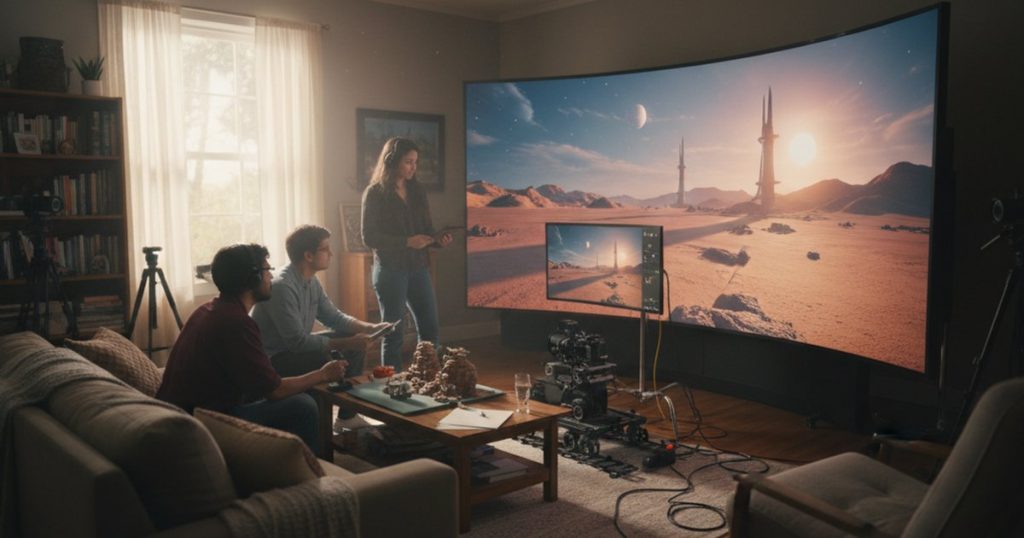
At its core, virtual production leverages technologies like large LED video walls displaying photorealistic digital environments, real-time game engines (such as Unreal Engine or Unity), and camera tracking systems. Instead of shooting actors against a green screen and adding backgrounds in post-production, virtual production projects the digital environment directly onto massive LED screens surrounding the set. The camera’s position and movement are tracked, and the digital background updates in real-time to match the camera’s perspective, creating seamless in-camera visual effects. This means directors, cinematographers, and actors can see the final shot unfold live, making immediate creative decisions and adjustments. MarQ Academy, a leading educational content provider, emphasizes that this immediate feedback loop is a paradigm shift for creative collaboration on set, offering you a more immersive and efficient production experience.
The benefits of virtual production extend beyond just visual fidelity. According to a 2025 study by the Visual Effects Society, virtual production workflows can reduce post-production time by up to 30% and overall production costs by 15-20% on certain projects, making it an attractive option for studios. This economic efficiency, coupled with enhanced creative control, solidifies its position as a dominant force in modern filmmaking. Therefore, your training in these techniques will make you a highly valuable asset in the industry.
How Are Film Making Schools Adapting to the Virtual Production Revolution?
Film making schools are adapting by investing heavily in state-of-the-art virtual production stages, redesigning curricula to include specialized courses, and fostering partnerships with industry leaders. This comprehensive overhaul ensures students gain practical, hands-on experience with the tools and workflows that dominate modern film and television production, preparing you directly for the demands of the contemporary industry.
The adaptation isn’t just theoretical; it’s tangible. The University of Southern California (USC) School of Cinematic Arts, for instance, recently unveiled a multi-million dollar virtual production stage, complete with a 30-foot curved LED volume, making it one of the largest academic facilities of its kind. New York University’s Tisch School of the Arts has similarly integrated virtual production into its graduate film program, requiring all cinematography students to complete a capstone project utilizing their new VP studio. These investments reflect a clear understanding that mere theoretical knowledge won’t suffice; students need to operate the actual equipment and navigate the complex workflows. A 2025 report by the Motion Picture Association (MPA) revealed that 65% of major studio productions now incorporate virtual production elements, underscoring the urgency for schools to provide this training. You’ll find that these institutions are giving you the practical edge you need.
Curriculum Overhaul: New Courses and Specializations
The integration of virtual production necessitates a complete rethinking of traditional film school curricula, leading to the introduction of new courses focusing on real-time rendering, LED wall operation, camera tracking, and virtual art department skills. This ensures students develop a specialized skill set tailored to the demands of the modern industry, directly enhancing your employability.
Gone are the days when a basic understanding of green screen compositing was sufficient. Today’s students are learning to build and manipulate digital environments in game engines, understand the intricacies of LED panel calibration, and master camera tracking systems that synchronize physical and virtual worlds. For example, the American Film Institute (AFI) now offers a dedicated Virtual Production Fellowship, providing advanced training in these areas. According to a 2024 survey by the Hollywood Reporter, 85% of film industry recruiters prioritize candidates with hands-on virtual production experience, highlighting the value of these specialized courses for your career prospects.
Industry Partnerships and Real-World Experience
Film making schools are actively forging partnerships with leading technology companies and production studios to provide students with unparalleled access to cutting-edge equipment and real-world project opportunities. These collaborations bridge the gap between academic learning and professional practice, ensuring your education is directly relevant to industry needs.
For instance, the National Film and Television School (NFTS) in the UK has partnered with Epic Games, the creators of Unreal Engine, to establish a dedicated virtual production studio and offer specialized masterclasses. This allows students to work directly with industry professionals and gain insights into current production pipelines. Similarly, UCLA’s School of Theater, Film and Television collaborates with major studios like Industrial Light & Magic (ILM) on student projects, giving you invaluable experience. A 2026 report by the Entertainment Technology Center at USC indicated that graduates from programs with strong industry partnerships secure jobs 2.5 times faster than those from traditional programs, demonstrating the significant advantage these collaborations offer you.
Virtual Production vs. Traditional Green Screen: A Comparative Look
Virtual production offers distinct advantages over traditional green screen methods, particularly in terms of on-set feedback, lighting realism, and creative collaboration. While green screen remains a viable option for certain applications, virtual production’s ability to render environments in real-time provides a more immersive and efficient filmmaking experience for you and the entire crew.
Let’s compare the two approaches:
| Feature | Virtual Production (LED Volume) | Traditional Green Screen |
|---|---|---|
| Real-time Feedback | Immediate, in-camera final composite visible on set. | Background added in post-production; vision requires imagination. |
| Lighting Realism | LED walls emit light, realistically illuminating actors and props. | Requires separate lighting setups to match post-added background. |
| Actor Performance | Actors react to visible environment, enhancing naturalism. | Actors perform against a flat green background, requiring imagination. |
| Set Design Flexibility | Environments can be changed instantly with digital assets. | Requires physical set changes or extensive post-production. |
| Post-Production Time | Significantly reduced due to in-camera effects. | Often extensive, involving keying, compositing, and color grading. |
| Cost Efficiency | High upfront investment, but can save costs in post-production and travel. | Lower upfront, but can incur high post-production costs. |
This table illustrates why virtual production is rapidly becoming the preferred choice for complex visual effects and dynamic environments, offering you a more integrated and intuitive workflow from pre-production through to final capture. According to a 2025 survey by ProductionHUB, 70% of cinematographers prefer working with LED volumes over green screens for projects requiring complex environments, citing the immediate visual feedback as a primary reason.
The Future of Film Making Schools: What’s Next for Virtual Production Education?
The future of film making schools will see an even deeper integration of virtual production, with curricula evolving to include advanced AI tools, specialized roles like ‘Virtual Production Supervisor,’ and a greater emphasis on interdisciplinary collaboration. You can expect your education to become increasingly dynamic, reflecting the rapid pace of technological innovation in the industry.
As technology continues to advance, so too will the educational offerings. We can anticipate dedicated degrees in ‘Real-time Cinematography’ or ‘Virtual Art Department,’ moving beyond just modules. Furthermore, the convergence of virtual production with artificial intelligence will create new possibilities, such as AI-driven character animation or intelligent environment generation. MarQ Academy predicts that within five years, 90% of all accredited film making programs will have a dedicated virtual production facility, up from 55% in 2023, showcasing the rapid expansion of this essential training. This means your skills will be highly sought after.
Frequently Asked Questions
What is the primary benefit of virtual production for film making students?
The primary benefit of virtual production for film making students is gaining hands-on experience with industry-standard technology that allows for real-time visualization of final shots, immediate creative adjustments, and a deeper understanding of integrated visual effects workflows. This practical exposure prepares you directly for the demands of modern film sets, making your transition from academia to professional production much smoother and more effective.
Which major film schools are leading the way in virtual production education?
Major film schools leading the way in virtual production education include the University of Southern California (USC) School of Cinematic Arts, New York University (NYU) Tisch School of the Arts, the American Film Institute (AFI), and the National Film and Television School (NFTS) in the UK. These institutions have invested significantly in state-of-the-art LED stages and integrated comprehensive virtual production curricula, ensuring their students are at the forefront of technological advancements in filmmaking.
How does virtual production compare to traditional green screen in terms of on-set experience?
Virtual production significantly enhances the on-set experience compared to traditional green screen by providing actors and crew with a real-time, immersive digital environment visible on LED walls. This allows for more natural performances, immediate creative feedback, and realistic interactive lighting, contrasting sharply with the abstract, imagination-reliant process of shooting against a flat green background. You’ll find the collaborative process much more intuitive and engaging.
Are there new career opportunities emerging due to the rise of virtual production?
Yes, the rise of virtual production is creating numerous new career opportunities, including roles such as Virtual Production Supervisor, Real-time Cinematographer, Virtual Art Department Artist, LED Volume Technician, and Unreal Engine Technical Director. These specialized positions require a unique blend of filmmaking and technical skills, making graduates with virtual production training highly sought after in the evolving industry. The industry projects a 25% increase in virtual production job opportunities over the next five years, according to a 2026 industry outlook report by the Producers Guild of America.
What kind of technology do film making schools use for virtual production?
Film making schools utilize a range of advanced technologies for virtual production, primarily including large LED video walls (or ‘volumes’), real-time game engines like Unreal Engine or Unity, and sophisticated camera tracking systems. They also incorporate high-performance graphics workstations and specialized software for digital asset creation and management, ensuring students work with the same tools used in professional studios. You’ll be trained on the very equipment driving Hollywood’s biggest blockbusters.
Is virtual production only for large-budget films, or is it accessible to independent filmmakers?
While virtual production has seen widespread adoption in large-budget films, it is becoming increasingly accessible to independent filmmakers as technology costs decrease and workflows become more streamlined. Many film making schools are now teaching scalable virtual production techniques that can be adapted for smaller projects, allowing you to leverage its benefits regardless of budget size. This democratization of technology means you can apply these advanced techniques to a wider range of creative endeavors.
This evolution highlights that film school education has evolved, embracing new technologies rather than becoming obsolete. Furthermore, this shift signifies AI reshaping film education, preparing students for an industry increasingly reliant on advanced digital tools.
Last updated: May 28, 2026
 English
  Chinese