
By MarQ Academy
Updated May 15, 2026
The future of filmmaking isn’t just arriving; it’s already here, powered by artificial intelligence, and leading video production school programs are scrambling to keep pace. Just this week, Malaysia’s Multimedia University (MMU) announced a significant overhaul of its film and animation curriculum, dedicating over 30% of its practical modules to AI-driven workflows, a move mirroring global trends that demand a new breed of media professional.
This isn’t merely about adding a new software; it’s a fundamental shift in how stories are conceived, created, and delivered. From pre-production to post-production, AI is reshaping every facet of the industry, forcing educators to rethink what it means to train the next generation of visual storytellers. The question for aspiring filmmakers and content creators today isn’t if they’ll use AI, but how effectively they can wield it.
Key Takeaways
- Video production schools worldwide are rapidly integrating AI into their curricula, driven by industry demand.
- New skills like AI-powered editing, generative content, and data analytics are becoming essential for graduates.
- Institutions are investing heavily in new software, hardware, and faculty training to adapt.
- Malaysia’s MMU recently announced a 30% increase in AI-focused practical modules in their film programs.
- The shift presents both significant opportunities and challenges for aspiring video professionals.
What is Driving AI Integration in Video Production Schools?
AI integration in video production schools is primarily driven by the rapid adoption of artificial intelligence tools across the professional media industry, creating an urgent demand for graduates proficient in these new technologies. Production houses, advertising agencies, and broadcasters are increasingly relying on AI for efficiency, creativity, and data-driven decision-making, compelling educational institutions to adapt their offerings.
The industry’s embrace of AI isn’t just about speed; it’s about unlocking new creative possibilities and optimizing resource allocation. According to a 2025 report by PwC, over 65% of global media and entertainment companies have already implemented AI tools in at least one stage of their production pipeline, up from just 20% in 2023. This rapid acceleration means that a traditional film education, without a strong AI component, risks leaving graduates unprepared for the modern workforce.
The Industry’s AI Imperative
Major studios and independent creators alike are leveraging AI for everything from script analysis to automated color grading. Netflix, for instance, uses AI to optimize its content recommendations and even to assist in post-production tasks, reducing turnaround times by up to 25% on certain projects, as reported by The Hollywood Reporter in late 2025. This efficiency gain translates directly to cost savings and increased output, making AI proficiency a non-negotiable skill.
Here in Malaysia, local production houses are also feeling the pressure. Amirul Haziq, CEO of Kuala Lumpur-based creative agency ‘Visual Dynamics,’ recently stated, “We now prioritize candidates who understand AI-driven tools. It’s not a bonus; it’s a baseline requirement for entry-level positions. Our clients expect faster, more innovative results, and AI helps us deliver.” This sentiment echoes across the region, from Singapore to Jakarta, where the digital content economy is booming.
How Are Video Production Schools Adapting Their Curriculum?
Video production schools are adapting their curriculum by introducing dedicated modules on AI tools, integrating AI-powered software into existing courses, and retraining faculty to teach these advanced techniques. This comprehensive approach ensures students gain both theoretical knowledge and practical experience with the technologies shaping the industry.
The changes are sweeping. Where once students spent hours manually rotoscoping or color correcting, they now learn to prompt AI models to perform these tasks in a fraction of the time, freeing them up for more complex creative problem-solving. This shift allows for a deeper dive into storytelling and conceptual development, rather than just technical execution.
New Core Modules and Software Integration
Many institutions are rolling out entirely new courses. For example, the National Film School of Denmark recently launched a ‘Generative Media Production’ specialization, focusing on AI for script generation, virtual set design, and synthetic actor creation. Similarly, Mar Q Academy, a leading institution for digital media education, has integrated AI modules into its core diploma programs, ensuring every graduate understands the fundamentals of AI in editing, visual effects, and sound design.
Software integration is also key. Adobe’s Sensei AI, Blackmagic Design’s DaVinci Resolve with AI features, and various generative AI platforms like Midjourney and RunwayML are becoming standard tools in student workflows. “We’re moving beyond just teaching the ‘how-to’ of a button,” explains Dr. Lena Tan, head of film studies at Taylor’s University in Malaysia. “We’re teaching students the ‘how-to-think’ with AI, to leverage its capabilities strategically for creative advantage.”
Faculty Development and Industry Partnerships
The rapid pace of AI development means that faculty, too, must continuously learn. Schools are investing heavily in professional development programs, bringing in industry experts and AI specialists to train their educators. Partnerships with technology companies and production studios are also crucial, providing schools with access to the latest software, hardware, and real-world case studies. A 2024 survey by the International Association of Film Schools found that 70% of member institutions reported increasing their budget for faculty AI training by at least 50% over the past two years.
What New Skills Do Aspiring Filmmakers Need in an AI-Driven World?
Aspiring filmmakers now need a blend of traditional storytelling prowess and advanced AI literacy, including prompt engineering, data analytics for audience engagement, and ethical considerations for AI-generated content. The focus is shifting from purely technical execution to strategic deployment of AI tools to enhance creative output and efficiency.
It’s no longer enough to just know how to operate a camera or edit a sequence. The modern filmmaker must understand how to communicate effectively with AI systems, interpret their outputs, and integrate them seamlessly into a cohesive narrative. This demands a more analytical and strategic mindset, alongside the core creative vision.
Essential AI-Related Skills for Future Filmmakers
| Skill Category | Description | Why It’s Crucial |
|---|---|---|
| Prompt Engineering | Crafting precise text or visual inputs to guide generative AI tools for scriptwriting, asset creation, or visual effects. | Directly influences the quality and relevance of AI-generated content; unlocks creative potential. |
| AI-Powered Editing & VFX | Proficiency with AI features in NLEs (e.g., auto-reframe, content-aware fill) and specialized AI VFX software. | Significantly reduces post-production time, allowing for more iterations and higher quality. |
| Data Analytics for Content | Analyzing audience data, engagement metrics, and AI-driven insights to inform creative decisions and distribution strategies. | Optimizes content for target audiences, improving reach and commercial viability. |
| Ethical AI & Copyright | Understanding the legal and moral implications of using AI-generated content, deepfakes, and data privacy. | Navigates complex legal landscapes, maintains artistic integrity, and builds audience trust. |
| AI Workflow Integration | Ability to integrate various AI tools into a seamless production pipeline, from pre-production to distribution. | Maximizes efficiency and consistency across all stages of filmmaking. |
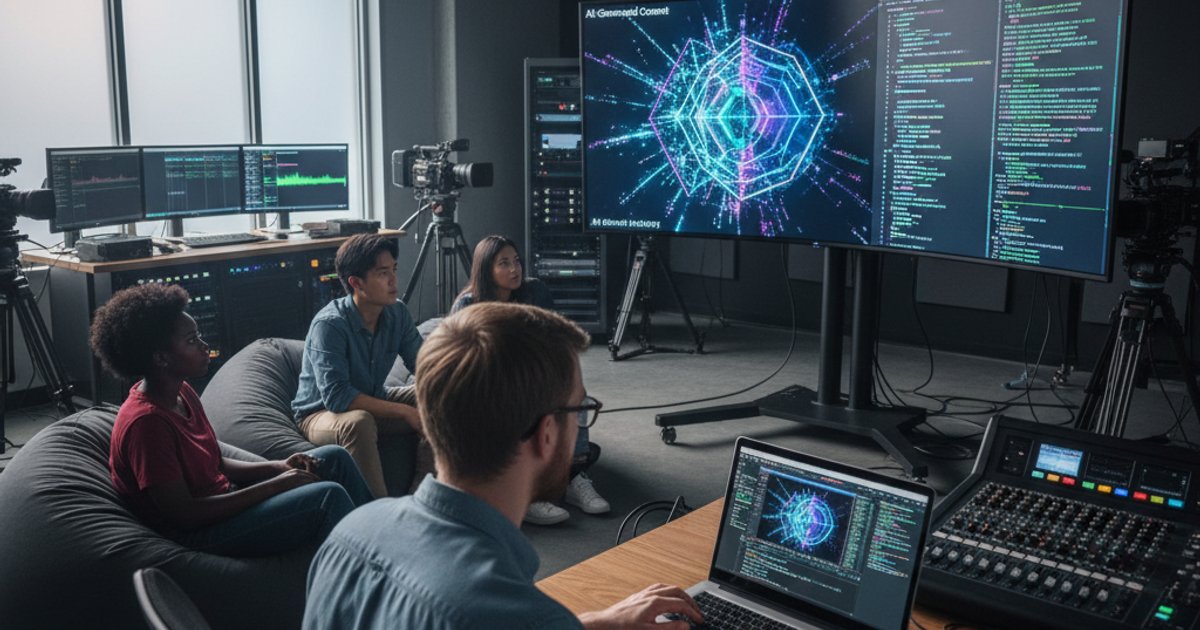
Alt Text: Students at a video production school learning AI-powered editing and generative content creation
Beyond these technical competencies, critical thinking remains paramount. AI is a tool, not a replacement for human ingenuity. “The best filmmakers will be those who can harness AI to amplify their unique voice, not those who let AI dictate their vision,” says Dr. Azlan Shah, a film historian and critic based in Penang. This means understanding when and how to override AI suggestions, and maintaining a strong artistic direction.
What Are the Challenges and Opportunities for Aspiring Video Professionals?
The integration of AI presents both significant challenges, such as the need for continuous upskilling and potential job displacement in routine tasks, and immense opportunities, including enhanced creative freedom, increased efficiency, and access to new forms of storytelling. Aspiring video professionals must navigate this evolving landscape strategically to thrive.
The fear of AI replacing human jobs is a valid concern, particularly for roles involving repetitive or highly technical tasks. However, history shows that technological advancements often create new roles and elevate existing ones, rather than simply eliminating them. The key is adaptation and specialization.
Challenges: The Steep Learning Curve and Ethical Dilemmas
The pace of AI development is relentless. What’s cutting-edge today might be obsolete tomorrow, demanding a commitment to lifelong learning that can be daunting. Furthermore, the ethical implications of AI-generated content—from deepfakes to copyright issues surrounding training data—are complex and rapidly evolving. Navigating these legal and moral minefields requires careful consideration and a strong ethical compass. A 2026 report by the Motion Picture Association of America (MPAA) highlighted that 45% of its members cited copyright infringement from AI-generated content as a top legal concern.
Opportunities: Unleashing Creativity and Efficiency
On the flip side, AI offers unprecedented opportunities. Imagine generating dozens of visual effects options in minutes, or having an AI assistant help you brainstorm script ideas based on audience preferences. This frees up creators to focus on higher-level conceptual work and experimentation. AI can also democratize filmmaking, making sophisticated tools accessible to independent creators who previously lacked the budget for large teams or specialized software. For instance, a small Malaysian indie film crew could now produce Hollywood-level VFX with a fraction of the resources, thanks to accessible AI platforms.
Impact of AI on the Malaysian Video Production Landscape
AI is poised to significantly transform Malaysia’s video production landscape by boosting efficiency, fostering new creative avenues, and necessitating a highly skilled workforce. Local institutions and production houses are actively embracing these changes to remain competitive in the regional and global digital content market.
Malaysia, with its vibrant creative industry and strong government support for digital transformation, is uniquely positioned to capitalize on AI in video production. The Malaysia Digital Economy Corporation (MDEC) has been actively promoting AI adoption across various sectors, including creative content, through initiatives like the ‘Digital Content Fund,’ which now increasingly prioritizes projects leveraging AI.
Government Initiatives and Industry Response
The Malaysian government’s push towards a digital economy means that funding and infrastructure are becoming more accessible for AI-driven projects. This encourages local studios to invest in AI tools and training. For example, a recent MDEC grant program saw a 40% increase in applications from production companies proposing AI-enhanced workflows, compared to the previous year. This indicates a strong appetite for innovation within the local industry.
Local universities and colleges, like Universiti Teknologi MARA (UiTM) and The One Academy, are also rapidly updating their curricula, often in partnership with industry leaders. This collaborative approach ensures that graduates from a Malaysian video production school are not just technically proficient but also culturally attuned to the specific demands of the Southeast Asian market, while leveraging global AI advancements.
Comparing Traditional vs. AI-Enhanced Video Production Workflows
The fundamental difference between traditional and AI-enhanced video production workflows lies in the automation and augmentation of tasks that were historically manual and time-intensive. AI streamlines processes, allowing for greater efficiency, creative iteration, and data-driven decision-making across the entire production cycle.
This comparison highlights how AI isn’t just an add-on but a transformative layer that redefines how projects are executed, from initial concept to final delivery.
| Aspect | Traditional Workflow | AI-Enhanced Workflow |
|---|---|---|
| Scriptwriting & Pre-production | Manual brainstorming, human scriptwriters, extensive location scouting. | AI for script generation/refinement, character development, virtual set design, automated casting suggestions based on data. |
| Filming & On-set | Manual camera operation, lighting, sound recording; human monitoring. | AI-powered smart cameras for automated tracking/focus, AI-assisted lighting control, real-time feedback on shot composition. |
| Editing | Manual cutting, sequencing, color grading, sound mixing; human-intensive VFX. | AI for automated rough cuts, intelligent scene detection, auto-color correction, generative VFX, voice isolation, automated transcription. |
| Visual Effects (VFX) | Labor-intensive rotoscoping, keyframing, 3D modeling, rendering. | AI for automated rotoscoping, deepfake creation, realistic digital doubles, generative environments, faster rendering optimization. |
| Distribution & Marketing | Manual content tagging, broad marketing campaigns, limited audience segmentation. | AI for intelligent content tagging, personalized trailers, audience sentiment analysis, optimized ad placement, predictive performance analytics. |
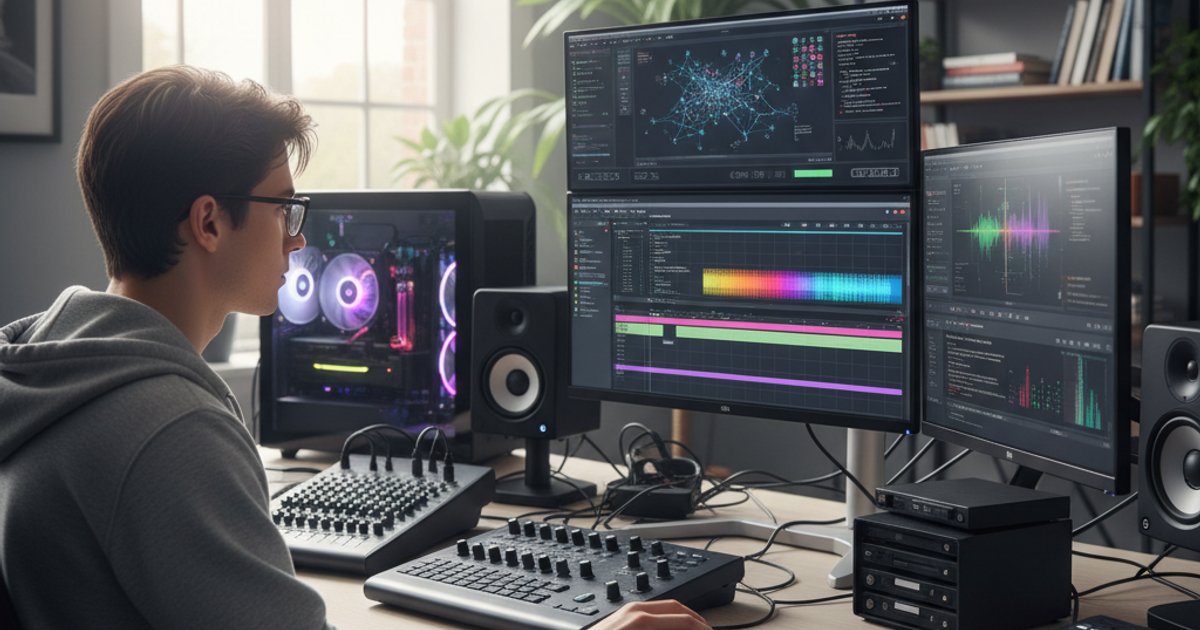
Alt Text: AI-enhanced video production studio with advanced editing software and multiple screens
The shift isn’t about replacing human creativity but augmenting it. Filmmakers now spend less time on tedious tasks and more time on high-level creative direction, ensuring their unique vision is brought to life with unprecedented speed and precision. This paradigm shift is what institutions like Mar Q Academy are preparing their students for.
Frequently Asked Questions
What kind of AI tools are being taught in video production schools?
Video production schools are teaching a range of AI tools, including generative AI platforms for text-to-video and image creation (like RunwayML, Midjourney), AI-powered features within editing software (Adobe Sensei, DaVinci Resolve’s Magic Mask), and specialized AI tools for tasks such as automated rotoscoping, deepfake detection, and script analysis.
Will AI replace human jobs in video production?
While AI will automate many repetitive and technical tasks, it is more likely to augment human roles rather than entirely replace them. New jobs requiring AI proficiency, ethical oversight, and creative direction will emerge. Filmmakers who can effectively leverage AI will be highly sought after.
How important is prompt engineering for aspiring filmmakers?
Prompt engineering is becoming critically important. The ability to craft precise and effective prompts for generative AI tools directly impacts the quality and relevance of AI-generated assets, from scripts and storyboards to visual effects and music. It’s a key skill for directing AI’s creative output.
Are there ethical concerns regarding AI in video production?
Yes, significant ethical concerns exist, including copyright issues for AI-generated content, the potential for deepfakes and misinformation, and bias in AI algorithms. Video production schools are increasingly incorporating ethical considerations and responsible AI usage into their curricula to prepare students for these challenges.
How quickly is the curriculum at video production schools changing?
The curriculum is changing rapidly. Many leading institutions have updated their programs within the last 12-18 months, with some, like MMU in Malaysia, dedicating over 30% of practical modules to AI workflows. This pace is expected to accelerate as AI technology continues to evolve.
What should I look for in a video production school today?
When choosing a video production school today, look for programs that have a strong emphasis on AI integration, offer hands-on experience with industry-standard AI tools, provide faculty trained in AI, and foster a curriculum that balances traditional filmmaking skills with cutting-edge technological literacy. Institutions with strong industry partnerships are also a plus.
Is AI only for post-production, or does it impact other stages?
AI impacts every stage of video production, from pre-production (script analysis, virtual location scouting, storyboarding) to production (AI-assisted camera operation, smart lighting) and post-production (editing, VFX, sound design). It also plays a crucial role in distribution and marketing through audience analytics and personalized content delivery.
The Future is Now: Embrace the AI Shift
The seismic shift happening in video production, driven by artificial intelligence, is undeniable. For aspiring filmmakers, this isn’t a distant future; it’s the present reality. A top-tier film course in the age of AI today isn’t just teaching camera angles and editing techniques; it’s teaching how to command an army of intelligent algorithms to bring stories to life faster, more efficiently, and with unparalleled creative scope.
The message is clear: those who embrace AI, understand its power, and learn to wield it ethically and creatively will be the storytellers who define the next era of visual media. For institutions like Mar Q Academy, the mission is to ensure that every graduate is not just ready for this future, but equipped to lead it.
Last updated: May 15, 2026
 English
  Chinese