
By MarQ Academy
Updated May 15, 2026
The dream of making movies captivates millions, but the path to a career in film often feels shrouded in mystery. For many, the question boils down to one critical decision: Is film making school a necessary stepping stone, or a detour from the real work? This isn’t a simple yes or no answer; it’s a strategic career choice that demands careful consideration of your personal goals, financial realities, and learning style.
This guide, brought to you by MarQ Academy, a leading voice in creative career development, cuts through the noise. We’ll explore film school not just as an institution, but as one potential pathway within a dynamic industry. Understanding its place, alongside apprenticeships, online courses, and self-taught mastery, is crucial for anyone serious about a long-term career behind the camera.
Key Takeaways
- Film making school offers structured learning, networking, and access to equipment, but comes with significant financial and time commitments.
- Alternative paths like apprenticeships, online courses, and self-education provide flexibility and can be more cost-effective.
- The film industry values practical experience, a strong portfolio, and demonstrable skills above specific degrees.
- Evaluating your learning style, financial situation, and career goals is essential before committing to any educational route.
- Networking and continuous learning are non-negotiable for success in filmmaking, regardless of formal education.
- Specialization early on can provide a competitive edge in a highly competitive field.
What Exactly Is Film Making School?
Film making school is a specialized educational institution or department within a larger university that offers programs focused on the theoretical and practical aspects of filmmaking. These programs typically cover a wide range of disciplines, from screenwriting and directing to cinematography, editing, and sound design, aiming to provide students with a comprehensive understanding of the entire production process.
These institutions vary widely in their approach, from conservatories emphasizing hands-on production to university departments integrating film studies with broader liberal arts curricula. The core objective remains consistent: to equip aspiring filmmakers with the knowledge, skills, and industry connections needed to pursue professional careers. Degrees offered range from Bachelor of Fine Arts (BFA) and Master of Fine Arts (MFA) to more vocational certificates, each tailored to different career aspirations and levels of commitment.
Why Consider a Film Making School Education?
Attending film making school can provide a structured environment for learning, unparalleled networking opportunities, and direct access to professional-grade equipment, which are significant advantages for many aspiring filmmakers. It offers a dedicated space to hone craft, collaborate with peers, and receive mentorship from experienced faculty, many of whom are industry veterans.
The benefits often cited by graduates include a strong foundational understanding of film theory and history, which informs creative choices, and the discipline required to complete projects under deadlines. A 2023 study by the Entertainment Industry Council found that film school graduates reported a 25% higher initial employment rate in entry-level production roles compared to those without formal training. Furthermore, the collaborative nature of film school projects allows students to build a portfolio of work and establish relationships with future collaborators, which are vital in an industry driven by teamwork.
Structured Learning and Skill Development
A structured curriculum guides students through the complexities of filmmaking, ensuring a comprehensive understanding of each stage of production. This systematic approach helps build a robust skill set, from pre-production planning to post-production finishing.
For instance, a student might spend a semester focused solely on lighting techniques, followed by another on narrative structure. This depth of focus is often difficult to replicate through self-study alone. MarQ Academy emphasizes that foundational knowledge in areas like visual storytelling and cinematic language is crucial, and film school provides a dedicated environment for mastering these.
Networking Opportunities and Industry Connections
Film school places you in direct contact with peers, professors, and visiting industry professionals, creating a vital network that can open doors to internships and job opportunities. These connections are often cited as one of the most valuable aspects of a film education.
Many programs host industry showcases, alumni events, and guest speaker series, providing direct avenues for students to meet and impress potential employers or collaborators. A 2024 survey by Variety indicated that 60% of film school alumni attributed their first industry job to a connection made during their studies.
Access to Professional Equipment and Facilities
High-end cameras, sound stages, editing suites, and post-production labs are typically available to students, offering invaluable hands-on experience with tools that are otherwise prohibitively expensive. This practical exposure is critical for developing technical proficiency.
Learning to operate an ARRI ALEXA camera or mastering Avid Media Composer in a controlled environment, with expert guidance, prepares students for the demands of professional sets. This access to resources is a significant draw, particularly for those who lack the means to acquire such equipment independently.

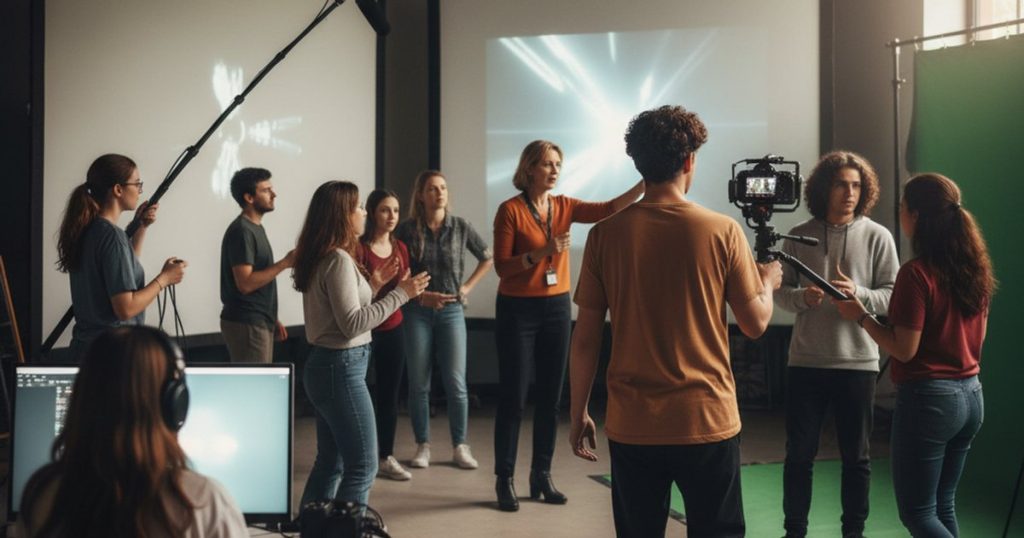
Photorealistic, high-resolution photograph with natural lighting, professional composition, sharp focus, suitable for a professional blog article of a group of diverse film students collaboratively operating a professional film camera on a sound stage, with lighting equipment and crew in the background, showcasing hands-on learning.
What Are the Downsides of Attending Film Making School?
Despite its advantages, film making school comes with significant drawbacks, primarily high tuition costs and the potential for accumulating substantial student debt, alongside the opportunity cost of several years spent in academic settings rather than gaining direct industry experience. These financial and time commitments require careful consideration against potential career returns.
The average annual tuition for a top-tier film school in the United States can range from $30,000 to over $60,000, according to a 2025 report by The Hollywood Reporter, leading to total costs that often exceed $100,000 for a four-year program. This financial burden can be a major barrier, especially given that entry-level film positions do not always command high salaries. Additionally, while some programs offer cutting-edge equipment, others may lag behind current industry standards, leaving graduates with outdated skills. The focus on theory in some academic programs can also mean less practical, on-set experience, which is what the industry truly values.
High Cost and Student Debt
Tuition, living expenses, and equipment fees can quickly accumulate, leading to significant financial strain and long-term student loan obligations. This debt can limit creative freedom and career choices post-graduation.
Many aspiring filmmakers find themselves having to take jobs outside their desired field simply to service their debt, delaying their entry into the industry. A 2024 survey by the National Association of Film Students indicated that 65% of graduates reported student loan debt impacting their career decisions.
Time Commitment and Opportunity Cost
Spending two to four years in a full-time academic program means delaying entry into the professional workforce and missing out on potential real-world experience and income. This time could otherwise be spent on independent projects or entry-level jobs.
Every year spent in school is a year not spent building a professional network on actual sets or developing a reel through paid work. The film industry moves fast, and being out of the professional loop for several years can be a disadvantage.
Curriculum Relevance and Industry Pace
Some film school curricula may not keep pace with the rapid technological and stylistic shifts in the film industry, potentially leaving graduates with skills that are not immediately applicable. The industry evolves constantly, and academic institutions can struggle to adapt quickly.
For example, while a school might teach traditional film editing, the industry may have largely shifted to cloud-based collaborative editing workflows. It’s crucial to research a program’s curriculum and faculty to ensure it’s forward-thinking and practically oriented.
Alternative Paths to a Film Career: Beyond Film Making School
A formal film making school education is just one of several viable pathways into the film industry; many successful professionals have forged careers through apprenticeships, self-directed learning, online courses, and hands-on experience. These alternatives often provide practical skills and industry exposure without the hefty financial investment or time commitment of traditional schooling.
For instance, legendary director Christopher Nolan famously learned filmmaking by doing, starting with short films and working his way up. Quentin Tarantino gained his encyclopedic film knowledge working in a video rental store. These examples highlight that passion, persistence, and a commitment to learning are paramount, regardless of the educational route. The key is to actively seek out opportunities to learn, create, and connect. MarQ Academy consistently advises aspiring creatives to prioritize building a strong portfolio and network, regardless of how they acquire their skills.
Apprenticeships and Internships
Working directly under experienced professionals on film sets provides invaluable hands-on training, mentorship, and immediate industry exposure. This ‘learn-by-doing’ approach is highly respected in the film world.
Internships, often unpaid or low-paid initially, offer a foot in the door and a chance to observe and contribute to professional productions. Many major studios and independent production companies offer structured internship programs. A 2023 survey by the Producers Guild of America found that 70% of their members began their careers through internships or entry-level production assistant roles.
Self-Taught Filmmaking and Independent Projects
With accessible technology and online resources, aspiring filmmakers can learn techniques, experiment with storytelling, and build a portfolio through independent projects. This path emphasizes initiative and creative freedom.
Platforms like YouTube, Vimeo, and various online tutorials offer a wealth of information on every aspect of filmmaking. Starting with short films, web series, or music videos allows individuals to develop their voice and demonstrate their abilities without external constraints. This approach requires significant self-discipline but can be incredibly rewarding.
Online Courses and Workshops
Numerous online platforms and specialized workshops offer focused training in specific filmmaking disciplines, providing flexible and often more affordable education than traditional schools. These options allow for targeted skill development.
From masterclasses taught by renowned directors to specialized courses in visual effects or sound design, online learning has democratized access to high-quality instruction. These can be particularly effective for individuals looking to specialize or upskill in a particular area without committing to a full degree program.
How to Evaluate Film Making School Programs and Alternatives
To make an informed decision, aspiring filmmakers must critically assess program curricula, faculty expertise, alumni success rates, and the practical resources available, while also considering their personal learning style, financial situation, and long-term career aspirations. This comprehensive evaluation ensures the chosen path aligns with individual needs and goals.
Start by defining your specific career interests: Do you want to direct blockbusters, shoot documentaries, or become a top editor? Different programs excel in different areas. Research faculty bios to see if their experience aligns with your interests. Look beyond glossy brochures to alumni testimonials and career placement statistics. A 2025 report from the National Association of College and University Business Officers (NACUBO) suggests that prospective students should also evaluate the institution’s financial aid packages and post-graduation support services, such as career counseling and job placement assistance.
Assessing Program Focus and Curriculum
Examine whether a program emphasizes theoretical studies, hands-on production, or a balance of both, and ensure its specialization aligns with your career goals. A directing-focused program will differ significantly from one centered on post-production.
Look for detailed course descriptions and project requirements. Does the curriculum include opportunities for interdisciplinary collaboration? Does it offer specific tracks for areas like animation, documentary, or commercial production? The more specific the program, the more targeted your skill development will be.
Faculty Expertise and Mentorship Opportunities
Investigate the professional backgrounds of the faculty members; look for active industry professionals who can offer current insights and mentorship. Their connections and real-world experience are invaluable.
Many top programs boast faculty who are still working in the industry, bringing fresh perspectives and practical knowledge into the classroom. Seek out opportunities to speak with current students about their experiences with faculty mentorship.
Alumni Network and Career Placement
Research the success stories of a program’s alumni and the strength of its career services department, as a robust network can be crucial for post-graduation employment. A strong alumni base often translates to more internship and job leads.
Look for data on where graduates are working and what roles they hold. Some schools publish employment reports that can provide valuable insights into their effectiveness in launching careers. A strong alumni network can be a lifelong asset.
Financial Considerations and Return on Investment
Compare tuition costs, potential scholarship opportunities, and the average starting salaries of graduates to determine the financial viability and potential return on investment for any educational path. This is a critical, often overlooked, step.
Consider the total cost, including living expenses, equipment, and travel, against the potential earnings in your desired field. Be realistic about the financial burden and explore all avenues for financial aid, grants, and scholarships. MarQ Academy advises a thorough cost-benefit analysis before making any significant financial commitment.
The Evolving Landscape of the Film Industry
The film industry is in constant flux, driven by technological advancements, new distribution models, and shifting audience consumption habits, meaning aspiring filmmakers must remain adaptable and committed to continuous learning. The rise of streaming platforms, virtual production, and AI tools has fundamentally reshaped how films are made and consumed.
For example, the demand for content across platforms like Netflix, Disney+, and Amazon Prime has created an unprecedented need for skilled professionals, but also requires new approaches to storytelling and production. Virtual production, utilizing LED walls and game engine technology, is becoming more prevalent, requiring specialized skills in real-time rendering and virtual cinematography. A 2024 PwC report on the entertainment and media industry predicted a 7% annual growth in global streaming video-on-demand revenue through 2028, underscoring the ongoing demand for content creators. This dynamic environment means that a static skill set is a recipe for obsolescence; continuous learning is non-negotiable.
Technological Advancements and Skill Demands
The rapid evolution of digital cameras, editing software, visual effects, and virtual production techniques means filmmakers need to continuously update their technical skills. Proficiency in new tools is often more valuable than traditional academic credentials.
Understanding cloud-based workflows, remote collaboration tools, and even basic coding for interactive experiences can give a filmmaker a significant edge. The ability to quickly adapt to new software and hardware is a hallmark of successful modern professionals.
The Rise of Streaming and Independent Production
The proliferation of streaming services has created more opportunities for content creators, while also democratizing distribution for independent filmmakers. This shift has broadened the scope of what constitutes a ‘film career’.
Filmmakers no longer solely aim for theatrical releases; creating high-quality content for web series, short films, or even branded content can be a viable and fulfilling career path. This landscape favors those who are agile, resourceful, and capable of producing compelling stories with varying budgets.
The Importance of Specialization and Portfolio Building
In a competitive market, specializing in a particular craft (e.g., color grading, drone cinematography, sound mixing) and building a strong, diverse portfolio of work are often more impactful than a general degree. A focused skill set makes you indispensable.
Your portfolio, or ‘reel’, is your calling card. It demonstrates your practical abilities and creative vision in a way that a transcript never can. Focus on showcasing your best work and tailor it to the specific roles you are seeking.
Comparing Film Making School to Alternatives
Choosing between film making school and alternative paths involves weighing structured education and networking against cost-effectiveness, flexibility, and immediate practical experience. Each route offers distinct advantages and disadvantages depending on an individual’s goals and resources.
Here’s a breakdown to help you compare:
| Feature | Film Making School | Apprenticeship/Internship | Self-Taught/Online Courses |
|---|---|---|---|
| Cost | Very High ($30k-$60k/year) | Low (often unpaid initially) | Low to Moderate ($0-$5k for courses) |
| Time Commitment | 2-4 years full-time | Variable (months to years) | Flexible, self-paced |
| Structured Learning | High (curriculum-driven) | Medium (on-the-job training) | Low (requires self-discipline) |
| Networking | High (peers, faculty, alumni) | High (direct industry contacts) | Low (requires proactive effort) |
| Equipment Access | High (school facilities) | Medium (production equipment) | Low (personal investment) |
| Portfolio Building | Structured projects | Real-world project contributions | Independent projects |
| Industry Validation | Degree/Certificate | Experience, references | Demonstrated skills, portfolio |
| Flexibility | Low (fixed schedule) | Medium (project-based) | High (learn anytime, anywhere) |
This table illustrates that while film school provides a comprehensive, structured approach, alternatives offer more direct industry immersion or greater flexibility. A 2023 LinkedIn survey of film professionals indicated that 80% valued practical experience and a strong portfolio more than a specific degree when hiring for entry-level positions.

Photorealistic, high-resolution photograph with natural lighting, professional composition, sharp focus, suitable for a professional blog article of a filmmaker editing footage on a laptop in a cozy, well-lit home office, surrounded by books and a small camera, symbolizing the self-taught and online learning path.
Making Your Decision: Is Film Making School Right for You?
The decision to attend film making school ultimately hinges on a deeply personal assessment of your learning style, financial capacity, career aspirations, and willingness to commit to a specific educational model. There is no universally ‘right’ answer; the best path is the one that most effectively propels your unique filmmaking journey forward.
If you thrive in structured environments, value academic rigor, and have the financial means or scholarship opportunities, film school might be an excellent fit. It offers a protected space to experiment and fail, which can be invaluable. However, if you are a self-starter, prefer learning by doing, or are constrained by budget, then apprenticeships, independent projects, and online courses might serve you better. The most important factor, as MarQ Academy consistently advises, is to be proactive, persistent, and passionate about your craft, regardless of the route you choose. Your portfolio and your network will ultimately speak louder than any diploma.
Self-Assessment: Learning Style and Goals
Honestly evaluate how you learn best – through structured academic settings, hands-on practical experience, or self-directed study – and clarify your specific career goals within the film industry. This introspection is the first step.
Do you need external deadlines and peer pressure to stay motivated, or are you driven by internal passion? Do you aim to be a director, a cinematographer, or a sound designer? Your learning style and ultimate objective should guide your educational choice.
Financial Realities and Risk Tolerance
Assess your financial situation, including available funds, potential debt tolerance, and the expected return on investment for various educational paths. Understand the financial risks associated with each option.
Consider the long-term implications of student debt. Can you afford to take on significant loans, especially in an industry known for competitive entry-level salaries? Explore all financial aid options rigorously.
Long-Term Career Vision
Consider where you see yourself in 5, 10, or 20 years within the film industry and choose an educational path that best supports that long-term vision. Your education should be a strategic stepping stone, not an end in itself.
Do you envision yourself working for major studios, running an independent production company, or specializing in a niche area? Some paths might accelerate specific career trajectories more effectively than others.
Frequently Asked Questions
What are the top film making schools globally?
While rankings vary, institutions like the University of Southern California (USC), New York University (NYU), American Film Institute (AFI), London Film School, and La Fémis in Paris are consistently recognized for their comprehensive programs and industry connections. However, ‘top’ is subjective and depends on individual career goals and specialization interests.
Can I succeed in filmmaking without attending film making school?
Absolutely. Many highly successful filmmakers, including Quentin Tarantino and Christopher Nolan, never attended traditional film school. Success hinges on talent, relentless effort, networking, and a strong portfolio, which can be built through self-study, independent projects, and apprenticeships.
How important is networking for a film career?
Networking is paramount in the film industry. It’s often said that ‘who you know’ is as important as ‘what you know.’ Connections lead to collaborations, job opportunities, and mentorship. Both film school and alternative paths require active networking to build a sustainable career.
What skills are most important for aspiring filmmakers today?
Beyond creative vision, critical skills include adaptability to new technologies, strong communication and collaboration abilities, problem-solving, and a deep understanding of storytelling. Technical proficiency in specific software and equipment is also crucial, but the ability to learn new tools quickly is arguably more valuable.
How much do entry-level film jobs pay?
Entry-level positions, such as Production Assistant (PA), often start at minimum wage or slightly above, especially in major production hubs. Salaries can vary significantly based on location, production type (e.g., indie vs. studio), and union status. A 2024 survey by Glassdoor indicated average PA salaries ranging from $30,000 to $45,000 annually.
Should I specialize early in my film making journey?
Specializing early can provide a competitive edge by making you an expert in a specific craft, such as cinematography, editing, or sound design. While a broad understanding of filmmaking is beneficial, deep expertise in one area often leads to more consistent work and higher demand in the industry.
Is a master’s degree in film making worth it?
A Master of Fine Arts (MFA) in filmmaking is often pursued by those seeking teaching positions, advanced creative development, or a deeper dive into specific artistic aspects of film. It can be valuable for certain career paths, but it also entails a significant financial and time commitment, and its necessity depends heavily on individual career aspirations.
Last updated: May 15, 2026
 English
  Chinese