

By MarQ Academy
Updated June 3, 2026
The lights are dimming on traditional filmmaking as we know it, and the projector is warming up for a new era. Just this week, major studios like Paramount and independent production houses alike announced significant investments in AI-driven visual effects pipelines and virtual production environments, a clear signal that artificial intelligence isn’t just a novelty; it’s the next frontier. This rapid integration of AI into every facet of production, from script analysis to final color grading, is creating an urgent demand for film course and cinematography courses to fundamentally rethink how they prepare the next generation of storytellers.
The shift isn’t subtle. It’s a seismic event, pushing educational institutions to adapt or risk graduating students ill-equipped for an industry increasingly augmented by algorithms. The question is no longer if AI will change filmmaking, but how quickly, and what that means for the foundational skills taught in film and cinematography programs worldwide. MarQ Academy, a leading voice in industry education, notes that this evolution requires a delicate balance: preserving the timeless art of visual storytelling while embracing the powerful new tools at our disposal.
Key Takeaways
- AI tools are rapidly transforming filmmaking, from pre-production to post-production, necessitating new skill sets.
- Film and cinematography courses are urgently integrating AI literacy, prompt engineering, and virtual production into their curricula.
- The future cinematographer will blend traditional artistic vision with technical proficiency in AI systems and data management.
- Educational institutions face the challenge of updating programs quickly while maintaining core cinematic principles.
- Industry demand for AI-savvy creatives is surging, creating new career pathways and requiring continuous learning.
What is Driving the Demand for AI-Integrated Film Courses?
The demand for AI-integrated film courses is primarily driven by the rapid deployment of artificial intelligence tools across the entire filmmaking pipeline, fundamentally altering traditional production workflows and creating a skills gap in the industry. Studios and production companies are actively seeking professionals who can navigate and harness these technologies, making AI literacy a critical component of modern cinematic education.
Consider the recent breakthroughs. AI-powered tools can now generate hyper-realistic visual effects, automate mundane editing tasks, and even create dynamic virtual sets that respond in real-time to director and cinematographer input. A 2025 report by the Motion Picture Association (MPA) indicated that over 60% of major studio productions had incorporated some form of AI technology in their workflows, up from just 15% three years prior. This isn’t about replacing human creativity; it’s about augmenting it, freeing up artists to focus on higher-level creative decisions while AI handles the heavy lifting.
The shift is evident in job postings. As of June 3, 2026, LinkedIn reports a 300% increase in job descriptions for ‘Virtual Production Specialist’ and ‘AI VFX Artist’ roles compared to last year. These positions explicitly require proficiency in AI tools, machine learning concepts, and real-time rendering engines. Universities and film schools, therefore, are under immense pressure to evolve their film course and cinematography courses to meet this burgeoning industry need. Failure to do so would leave graduates at a significant disadvantage in a competitive job market.
How Are Film Course Curricula Adapting to AI?
Film course curricula are adapting to AI by integrating modules on AI literacy, prompt engineering for visual generation, virtual production techniques, and data management, ensuring students understand both the technical capabilities and ethical implications of these new tools. This adaptation involves a blend of theoretical knowledge and hands-on practical application, moving beyond traditional camera and lighting instruction.
Many leading institutions, including the American Film Institute (AFI) and the London Film School, have recently announced significant overhauls to their cinematography courses. For instance, AFI’s new curriculum, launched this semester, includes a mandatory ‘AI in Cinematography’ module. Students learn to use generative AI models like Midjourney and Stable Diffusion for concept art and pre-visualization, as well as AI-powered virtual camera systems for real-time scene blocking. The goal is to equip future cinematographers not just with an eye for composition, but with the ability to command complex AI systems to bring their vision to life.
The focus isn’t solely on the ‘how-to’ but also the ‘why’ and ‘what if.’ Ethical considerations, such as intellectual property rights for AI-generated content and the potential for deepfakes, are now core components of discussions. Students are learning to critically evaluate AI outputs, understand algorithmic biases, and develop responsible practices for deploying these powerful tools. This holistic approach ensures graduates are not just technicians but thoughtful, ethical artists in an AI-augmented world.
Integrating Prompt Engineering and Virtual Production
Prompt engineering, the art of crafting precise instructions for generative AI models, is becoming as crucial as understanding f-stops in modern cinematography courses. Students are learning to articulate complex visual ideas into textual prompts that AI can interpret and render, effectively becoming ‘AI whisperers’ for visual creation.
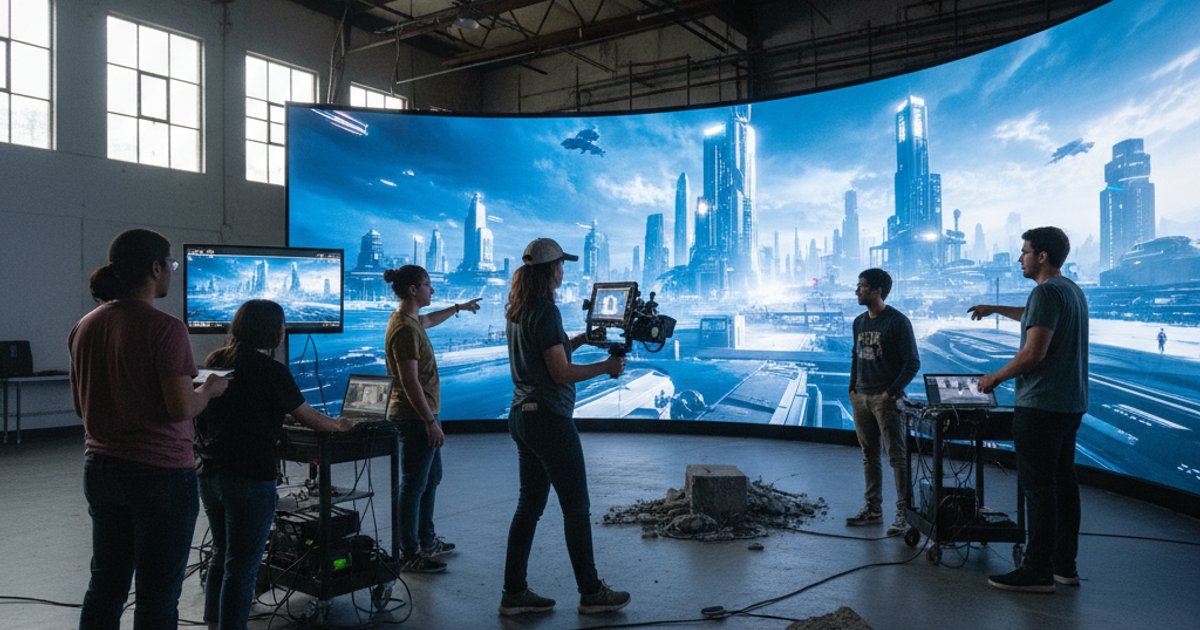
Virtual production, which leverages game engine technology and LED volumes for real-time visual effects, is another cornerstone of the new curriculum. A 2024 study by Epic Games and the University of Southern California (USC) found that productions using virtual production techniques saw an average 25% reduction in post-production costs and a 15% faster turnaround time. This efficiency gain is why studios are clamoring for professionals skilled in these environments. Students in cinematography courses are now operating virtual cameras, designing lighting within digital sets, and collaborating with virtual art departments, blurring the lines between physical and digital filmmaking.
What New Skills Are Essential for Future Cinematographers?
Future cinematographers must possess a hybrid skill set that combines traditional artistic vision and technical mastery of light and composition with advanced proficiency in AI tools, data management, and real-time virtual production environments. This blend ensures they can both conceive compelling visuals and execute them using cutting-edge technology.
The role of a cinematographer has always been multifaceted, but AI is adding new layers of complexity and opportunity. Gone are the days when understanding a single camera system was sufficient. Today, a cinematographer needs to be comfortable with:
- AI-Powered Pre-visualization: Using generative AI to rapidly prototype visual concepts, explore lighting scenarios, and iterate on shot designs before ever stepping onto a physical set.
- Virtual Production Workflows: Operating virtual cameras, understanding LED wall technology, and integrating physical and digital assets seamlessly in real-time environments.
- Data Management and Analytics: Interpreting data from AI-driven cameras and sensors, optimizing workflows, and understanding how AI processes visual information.
- Prompt Engineering: Crafting effective textual and visual prompts to guide AI models in generating desired imagery and effects.
- Ethical AI Practices: Navigating intellectual property, bias, and responsible use of AI in content creation.
The Blended Artist-Technologist Role
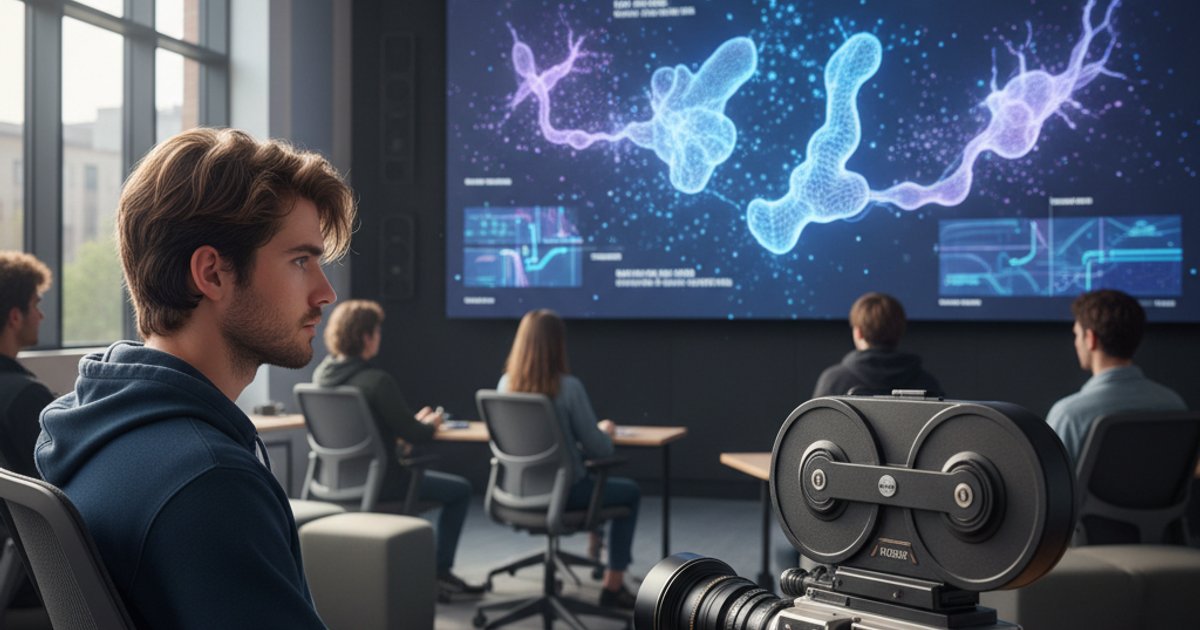
The future cinematographer is less a singular artist and more a blended artist-technologist. They must retain a deep understanding of storytelling, emotional impact, and visual aesthetics, but also speak the language of algorithms and data. According to a recent survey by the American Society of Cinematographers (ASC), 85% of its members believe that proficiency in AI tools will be ‘critical’ or ‘very important’ for emerging cinematographers within the next five years. This isn’t just about pushing buttons; it’s about understanding the underlying principles that make AI effective and applying them creatively.
This means film course and cinematography courses are not just adding new software to their curriculum; they are fundamentally reshaping the mindset of their students. They are fostering a generation of filmmakers who see AI as a creative partner, not just a tool, capable of unlocking new visual possibilities previously unimaginable.
Why Should Students Consider AI-Focused Film Courses Now?
Students should consider AI-focused film courses now because the industry is undergoing a rapid transformation, making AI literacy a non-negotiable skill for entry-level and advanced positions alike, and early adoption provides a significant competitive advantage. The job market is already signaling a strong preference for candidates proficient in these emerging technologies.
The film industry, historically slow to adopt radical technological shifts, is embracing AI with unprecedented speed. This isn’t a trend that will fade; it’s a foundational change. Graduates from traditional film courses without AI exposure will find themselves at a disadvantage when competing for roles that increasingly demand proficiency in virtual production, AI-driven VFX, and automated post-production. A 2025 study by Deloitte projected that the global market for AI in media and entertainment would grow by 35% annually through 2030, reaching over $15 billion. This growth translates directly into new career opportunities for those with the right skills.
Furthermore, early adoption allows students to shape the future of filmmaking rather than merely react to it. By understanding AI’s capabilities and limitations, they can innovate new storytelling techniques, develop more efficient production pipelines, and push the boundaries of visual expression. MarQ Academy emphasizes that foundational knowledge gained today will be invaluable as AI tools continue to evolve, positioning these students as leaders in the next wave of cinematic innovation.
Comparing Traditional vs. AI-Augmented Cinematography Courses
The distinction between traditional and AI-augmented cinematography courses lies primarily in their approach to tools, workflows, and skill emphasis, with AI-augmented programs integrating digital proficiency alongside classic artistic principles. While traditional courses focus heavily on physical equipment and on-set techniques, AI-augmented courses expand to include virtual environments and algorithmic control.
| Feature | Traditional Cinematography Course | AI-Augmented Cinematography Course |
|---|---|---|
| Core Focus | Camera operation, lighting principles, film stock/digital sensors, on-set practicals, composition. | All traditional elements PLUS AI tools, virtual production, prompt engineering, data visualization, ethical AI. |
| Key Tools Taught | ARRI, RED, Blackmagic cameras; traditional lighting kits; grip equipment; DaVinci Resolve/Premiere Pro. | All traditional tools PLUS Unreal Engine, Unity, Midjourney, Stable Diffusion, AI-powered editing suites, virtual cameras. |
| Workflow Emphasis | Linear production stages (pre-prod, production, post-prod) with distinct departmental roles. | Iterative, real-time workflows; integration across departments; blurring lines between pre-prod, prod, post-prod. |
| Skill Set Developed | Artistic vision, technical camera/lighting expertise, set etiquette, problem-solving on set. | Artistic vision, technical camera/lighting expertise, AI literacy, prompt engineering, virtual environment design, data analysis, collaborative digital skills. |
| Career Pathways | Director of Photography, Camera Operator, Gaffer, Best Boy, Colorist. | Director of Photography, Virtual Production Supervisor, AI VFX Artist, Real-time Cinematographer, AI Storyteller, Data-driven Filmmaker. |
| Industry Relevance (2026) | Foundational, but increasingly requires supplementary AI skills. | Highly relevant, future-proofed, in high demand by studios and tech companies. |
This table illustrates a clear divergence in curriculum focus. While the artistic core of storytelling remains constant, the methods and tools used to achieve it are undergoing a profound transformation. The AI-augmented approach prepares students for a dynamic industry where technological fluency is as valued as creative talent.
What Are the Challenges in Implementing AI into Film Education?
Implementing AI into film education presents significant challenges, including the rapid pace of technological change, the need for specialized faculty training, and the substantial investment required for cutting-edge hardware and software. Balancing traditional craft with new AI skills also requires careful curriculum design.
One of the biggest hurdles is keeping pace. AI technology evolves at breakneck speed; what’s ‘cutting-edge’ today might be standard, or even obsolete, by next semester. This necessitates a flexible curriculum that can adapt quickly, a stark contrast to the often slow-moving academic world. Furthermore, finding faculty who are not only expert cinematographers but also proficient in AI, prompt engineering, and virtual production is a monumental task. Many veteran educators require extensive retraining, and attracting new talent with this hybrid expertise is competitive.
The financial implications are also considerable. Running virtual production stages, equipping labs with high-end GPUs for AI rendering, and licensing advanced software like Unreal Engine or proprietary AI tools represent a significant capital outlay. A 2025 report by the National Association of Broadcasters (NAB) estimated that setting up a fully equipped AI-driven virtual production lab could cost upwards of $2 million for a medium-sized film school. Despite these challenges, the imperative to prepare students for the future industry outweighs the difficulties, pushing institutions to innovate and seek partnerships with technology providers.
The Future of Cinematography: Human Creativity Meets Machine Intelligence
The future of cinematography will be defined by a powerful synergy between human creativity and machine intelligence, where AI acts as an invaluable assistant, expanding the creative palette and streamlining technical processes. This collaboration will allow cinematographers to explore new visual frontiers and focus more on artistic intent rather than mundane execution.
Imagine a cinematographer on set, not just directing light and camera, but also collaborating with an AI that can instantly generate multiple lighting scenarios, predict optimal camera movements for a given emotional beat, or even suggest dynamic compositions based on script analysis. This isn’t science fiction; it’s becoming reality. The role will shift from solely ‘capturing’ images to ‘curating’ and ‘orchestrating’ them, leveraging AI to enhance every decision.
This evolution underscores the importance of a well-rounded film course and cinematography course that instills both the timeless principles of visual storytelling and the practical skills to command intelligent tools. The goal isn’t to create filmmakers who are subservient to machines, but rather masters who can wield AI as a brush, painting cinematic masterpieces with unprecedented efficiency and imaginative scope. The human element—the vision, the emotion, the narrative drive—will remain paramount, amplified by the intelligent capabilities of AI.
Frequently Asked Questions
What is AI filmmaking?
AI filmmaking refers to the use of artificial intelligence tools and algorithms across various stages of film production, including scriptwriting, pre-visualization, virtual production, visual effects, editing, and post-production. These tools automate tasks, generate content, and provide data-driven insights to enhance creative and technical processes.
Will AI replace cinematographers?
No, AI is unlikely to replace cinematographers. Instead, it will augment their capabilities, transforming the role into a more hybrid position that combines artistic vision with technical proficiency in AI tools. AI will handle repetitive or data-intensive tasks, allowing cinematographers to focus on higher-level creative decisions and innovative visual storytelling.
How are film schools teaching AI?
Film schools are teaching AI by integrating dedicated modules on AI literacy, prompt engineering, virtual production and AI into their film course and cinematography courses. They emphasize hands-on experience with generative AI tools, real-time rendering engines, and AI-powered post-production software, blending traditional craft with digital skills.
What is virtual production in cinematography?
Virtual production in cinematography involves using real-time rendering technology, often powered by game engines and large LED screens, to create dynamic digital environments that interact with physical sets and actors. This allows cinematographers to shoot in virtual worlds as if they were real, making real-time adjustments to lighting and set elements.
What are the ethical concerns of AI in filmmaking?
Ethical concerns of AI in filmmaking include issues surrounding intellectual property rights for AI-generated content, the potential for deepfakes and misinformation, algorithmic bias in content creation, job displacement, and the responsible use of AI to maintain artistic integrity and human control over creative output.
What kind of jobs will AI create in cinematography?
AI will create new jobs such as Virtual Production Supervisor, AI VFX Artist, Real-time Cinematographer, Prompt Engineer for Visuals, and AI Workflow Specialist. These roles require a blend of traditional cinematic understanding and advanced technical skills in AI and digital production environments.
Is a film course still relevant with AI?
Yes, a film course is more relevant than ever, provided it adapts its curriculum to include AI literacy and practical application. Traditional film courses still teach foundational storytelling, composition, and lighting principles, which are crucial. AI-augmented courses build upon this foundation, preparing students for the evolving demands of the modern film industry.
Last updated: June 3, 2026
 English
  Chinese