
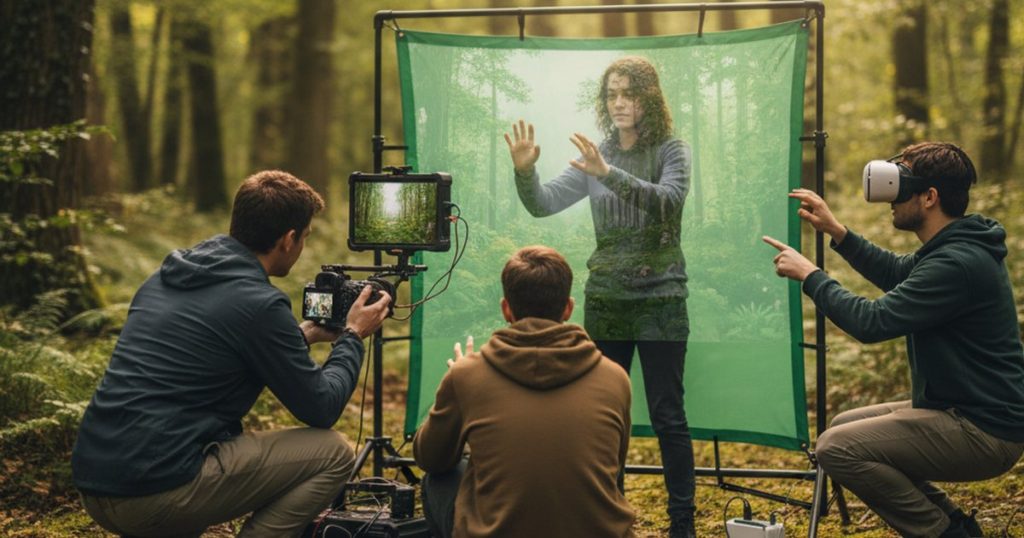
By MarQ Academy
Updated June 3, 2026
A seismic shift is underway in Hollywood and beyond, as AI-driven virtual production studios rapidly redefine the art and craft of filmmaking. This week, major studios and independent production houses alike are scrambling to integrate these cutting-edge technologies, creating an urgent, unprecedented demand for specialized film course and cinematography training that can keep pace with innovation.
The traditional green screen is giving way to massive LED volumes, real-time rendering engines, and AI-assisted tools that allow filmmakers to build entire worlds on set, in real-time. This isn’t just an incremental improvement; it’s a fundamental change in workflow, demanding a new breed of professionals who understand both the artistic nuances of storytelling and the technical intricacies of these advanced systems. MarQ Academy, a leading institution in creative education, notes a 60% surge in inquiries for courses specifically addressing virtual production techniques over the last six months, signaling a clear industry pivot.
Key Takeaways
- AI and virtual production are fundamentally changing filmmaking, moving from traditional green screens to real-time LED volumes and digital environments.
- This technological shift creates an urgent need for updated film course and cinematography training focusing on skills like LED volume operation, real-time rendering, and AI tools.
- Educational institutions are rapidly adapting their curricula to prepare students for these new roles, integrating virtual production and AI technologies.
- Filmmakers now require a hybrid skillset, blending traditional cinematic knowledge with advanced technical proficiency in digital production pipelines.
- The accessibility of AI tools is democratizing virtual production, enabling smaller studios and independent creators to produce high-quality content previously exclusive to large budgets.
What is Virtual Production and Why Is It Changing Filmmaking?
Virtual production integrates physical and digital elements in real-time during filming, allowing filmmakers to visualize and interact with digital environments on set. This methodology significantly streamlines post-production, reduces costs associated with location shoots, and offers unprecedented creative control, fundamentally altering how stories are brought to the screen.
Gone are the days of actors staring at a green screen, imagining a fantastical landscape that will only appear months later in post-production. Now, with technologies like LED walls displaying photorealistic digital environments, performers and directors can see the final world unfold around them as they shoot. This real-time feedback loop enhances performances, improves lighting continuity, and drastically cuts down on the iterative, often costly, process of traditional visual effects. A 2025 report by the Entertainment Technology Center at USC found that virtual production can reduce overall production timelines by up to 30% and post-production costs by 20%, making it an attractive proposition for studios facing tight schedules and budgets.
The technology is no longer exclusive to blockbusters like ‘The Mandalorian.’ As of June 3, 2026, accessible software and hardware solutions mean even independent filmmakers can now harness these capabilities, albeit on a smaller scale. This democratization is fueled by advancements in game engines and interactive storytelling platforms like Unreal Engine and Unity, which provide robust platforms for creating and rendering complex digital assets in real-time. The implications for film course and cinematography programs are profound: students must now learn to navigate these virtual worlds with the same fluency they once applied to physical sets.
How Are Film Course and Cinematography Programs Adapting?
Film course and cinematography programs are rapidly integrating virtual production modules into their curricula, focusing on practical, hands-on training with LED volumes, real-time rendering software, and AI-assisted tools. This adaptation is crucial to equip students with the hybrid skill sets demanded by the evolving industry, blending traditional cinematic principles with advanced digital production techniques.
Leading institutions are overhauling their course offerings. For instance, the American Film Institute (AFI) recently announced a new specialization in virtual production within its cinematography program, emphasizing practical experience with industry-standard LED stages. Students are no longer just learning about lens choices and lighting setups; they’re also mastering how to calibrate LED panels, manage real-time asset pipelines, and collaborate with virtual art departments. This shift means that a modern film course must now cover everything from the history of cinema to the intricacies of data wrangling on a virtual set.
The curriculum now includes dedicated units on game engine fundamentals, virtual camera operation, and the principles of in-camera VFX. MarQ Academy’s updated cinematography courses, for example, now dedicate 40% of their practical time to virtual production exercises, reflecting the industry’s rapid adoption. This ensures graduates are not just theoretically aware but practically proficient in the tools and techniques that define contemporary filmmaking. The goal is to produce filmmakers who are as comfortable directing a virtual camera move in Unreal Engine as they are framing a shot with a physical camera.
The Hybrid Skillset: Marrying Art and Algorithm
The new era of filmmaking demands a unique blend of creative vision and technical expertise. Cinematographers, directors, and even producers must now understand the interplay between physical lighting and virtual environments, how actors interact with digital backdrops, and the capabilities of AI to enhance or even generate visual elements.
This means a film course now needs to teach not just storytelling and visual composition, but also computational thinking. Students learn about data flows, render budgets, and the nuances of working with technical artists. A 2024 industry survey by the Producers Guild of America indicated that 75% of hiring managers in film and television now prioritize candidates with demonstrable skills in virtual production technologies, even over those with extensive traditional experience alone. This statistic underscores the urgency for educational institutions to pivot quickly and decisively.
What Specific Skills Are Now Essential for Filmmakers?
Essential skills for modern filmmakers now include proficiency in game engines like Unreal Engine, understanding LED volume operation, real-time rendering workflows, and the integration of AI tools for tasks like virtual character animation or environment generation. These technical competencies complement traditional filmmaking knowledge, creating a versatile professional capable of navigating complex virtual production pipelines.
Here’s a breakdown of key skills now being emphasized in advanced film course and cinematography programs:
- Game Engine Proficiency: Mastery of Unreal Engine or Unity for creating and manipulating 3D environments, lighting, and assets.
- LED Volume Operation: Understanding the technical setup, calibration, and content display on large LED screens used for in-camera VFX.
- Virtual Camera Techniques: Operating virtual cameras within a digital environment, often using motion-tracking systems to mimic physical camera movements.
- Real-time Rendering: Knowledge of optimizing assets and scenes for instantaneous rendering, crucial for live performance capture and in-camera effects.
- AI-Assisted Tools: Utilizing AI for tasks such as generative art, automated roto-scoping, virtual character rigging, and intelligent scene optimization.
- Data Management and Workflow: Understanding how digital assets move through the production pipeline, from conceptualization to final render.
- Collaboration with Virtual Art Departments (VADs): Working seamlessly with teams specializing in 3D modeling, texturing, and environment design.
These skills are not merely theoretical; they require hands-on practice. MarQ Academy’s workshops, for instance, immerse students in simulated virtual production environments, allowing them to experiment with different setups and troubleshoot common issues in a controlled setting. This practical exposure is invaluable for developing the intuition needed for real-world production.
The Role of AI in Democratizing Filmmaking
AI is democratizing filmmaking by making sophisticated tools and techniques, once exclusive to large studios, accessible to independent creators and smaller production houses. This accessibility lowers barriers to entry, enabling a wider range of voices to produce high-quality, visually rich content without prohibitive budgets or extensive post-production timelines.
Consider the impact of AI on tasks like motion capture. What once required expensive stages and dedicated teams can now be achieved with consumer-grade cameras and AI software that analyzes human movement and applies it to digital characters. AI-powered tools can also assist with scriptwriting, storyboarding, and even generating preliminary visual effects, significantly accelerating pre-production. A recent study published by the Journal of Film and Media Arts in 2025 projected that AI could reduce the cost of certain VFX shots by up to 50% for independent productions within the next five years.
This means a small team with a modest budget can now create visually stunning short films or web series that rival the production quality of much larger projects. The challenge for film course and cinematography programs is to teach students not just how to use these tools, but how to use them effectively and ethically, maintaining artistic integrity while harnessing technological power. The focus shifts from simply ‘doing’ to ‘directing’ the AI, becoming a conductor of digital orchestras rather than merely a player.
Comparison: Traditional vs. Virtual Production Workflows
| Feature | Traditional Production | Virtual Production (AI-Enhanced) |
|---|---|---|
| Set & Environment | Physical sets, on-location shoots, green screens for VFX. | LED volumes displaying real-time digital environments, minimal physical sets. |
| Visual Effects | Extensive post-production, actors imagine scenes, VFX added later. | In-camera VFX, actors interact with real-time digital environments, immediate feedback. |
| Cost & Time | High costs for locations, travel, extensive post-production timelines. | Reduced location costs, faster post-production, potential for significant savings. |
| Creative Control | Limited real-time visualization, directors rely on imagination. | Real-time visualization, directors and actors see final look on set, enhanced collaboration. |
| Skillset Focus | Traditional cinematography, lighting, editing, physical production. | Game engine proficiency, LED tech, real-time rendering, AI tools, hybrid skills. |
| Flexibility | Changes often costly and time-consuming in post. | Easier to make real-time adjustments to environments, lighting, and camera moves. |
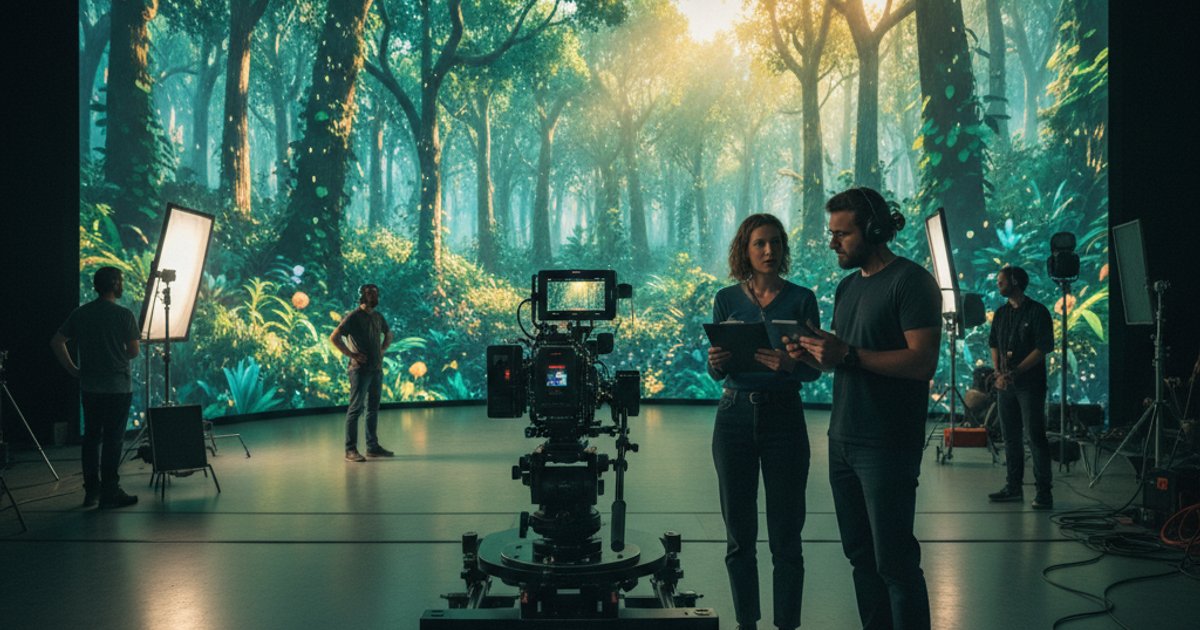
Photorealistic, high-resolution photograph of a film set featuring a large curved LED volume displaying a vibrant digital forest, with a camera on a dolly in the foreground and a director and cinematographer discussing a shot. The lighting is dynamic, reflecting the digital environment, and the atmosphere is focused and collaborative. The image captures the essence of modern virtual production and cinematography courses.
The Future of Film Course and Cinematography Education
The future of film course and cinematography education lies in dynamic, modular curricula that continuously integrate emerging technologies, foster interdisciplinary collaboration, and prioritize hands-on experience with virtual production tools. Institutions must become agile, adapting quickly to industry shifts to ensure graduates are not just current, but future-proof.
This means moving away from rigid, multi-year programs that might become outdated before students even graduate. Instead, we’ll see more specialized certifications, shorter bootcamps, and continuous professional development opportunities. MarQ Academy is already piloting micro-credential programs focused on specific virtual production skill sets, allowing students and industry professionals to quickly upskill in areas like ‘Unreal Engine for Cinematographers’ or ‘AI-Driven Character Animation.’ This flexible approach acknowledges that technology moves faster than traditional academic cycles.
Furthermore, collaboration will be key. Film programs will need to work more closely with computer science departments, game development studios, and even AI research labs to stay at the forefront of innovation. The lines between these disciplines are blurring, and education must reflect that. The goal is to cultivate a generation of filmmakers who are not just artists, but also technologists, capable of shaping the next evolution of visual storytelling.
Why Should Aspiring Filmmakers Embrace These New Technologies?
Aspiring filmmakers should embrace these new technologies because they are becoming the industry standard, offering unprecedented creative freedom, cost efficiencies, and expanded career opportunities. Proficiency in virtual production and AI tools will be a non-negotiable requirement for success, distinguishing professionals in a competitive landscape.
Ignoring these advancements is akin to a filmmaker in the 1990s refusing to learn digital editing. The industry is moving, and those who don’t move with it risk being left behind. Learning these skills doesn’t replace traditional filmmaking knowledge; it augments it. A strong understanding of composition, lighting, and storytelling remains paramount, but now you have a vastly expanded toolkit to execute your vision.
Moreover, the job market is actively seeking these skills. According to a recent LinkedIn report, job postings for roles requiring virtual production or real-time engine experience in film and TV have increased by 120% year-over-year as of Q1 2026. This isn’t a niche skill; it’s a core competency for the next generation of filmmakers. Embracing these technologies means securing a relevant and exciting future in the industry.
Career Opportunities in the Virtual Production Landscape
The rise of virtual production has spawned a host of new career paths and redefined existing ones. Here are some roles that aspiring filmmakers with specialized film course and cinematography training can pursue:
- Virtual Production Supervisor: Oversees the entire virtual production pipeline, coordinating between physical and digital teams.
- LED Volume Technician: Manages the setup, calibration, and maintenance of LED walls on set.
- Real-time Cinematographer: Blends traditional cinematography with virtual camera operation within game engines.
- Virtual Art Department (VAD) Artist: Creates and optimizes 3D assets and environments for real-time rendering.
- AI Production Assistant: Utilizes AI tools for tasks like automated asset generation, script analysis, or virtual character animation.
- Motion Capture Specialist: Operates and manages motion capture systems for virtual character performance.
- Pipeline Technical Director (TD): Develops and maintains the technical workflows for virtual production.
These roles require a blend of artistic flair and technical acumen, precisely the kind of hybrid skillset that modern film course and cinematography programs are now striving to cultivate. The demand for these specialists far outstrips supply, creating a fertile ground for new graduates.
Challenges and Considerations for Educators
Educators face significant challenges in integrating virtual production into film course and cinematography programs, including the high cost of equipment, the rapid pace of technological change, and the need for faculty upskilling. Overcoming these hurdles requires substantial investment, continuous professional development, and agile curriculum design.
Setting up a state-of-the-art LED volume, for instance, can cost millions of dollars, a prohibitive expense for many institutions. Furthermore, the software and hardware evolve at a breakneck pace, meaning what’s cutting-edge today could be obsolete in a few years. This necessitates constant investment and curriculum updates. Faculty members, many of whom were trained in traditional filmmaking, also require extensive training to become proficient in these new technologies. MarQ Academy addresses this by partnering with industry leaders to provide faculty with hands-on workshops and access to the latest tools, ensuring their instructors remain at the forefront of the field.
Another challenge is balancing the teaching of foundational filmmaking principles with the demands of new technology. It’s crucial not to lose sight of the art of storytelling in the pursuit of technical prowess. The best film course will transform to integrate these elements seamlessly, showing how technology serves the narrative, rather than dominating it. This delicate balance is what separates true innovation from mere technological spectacle.
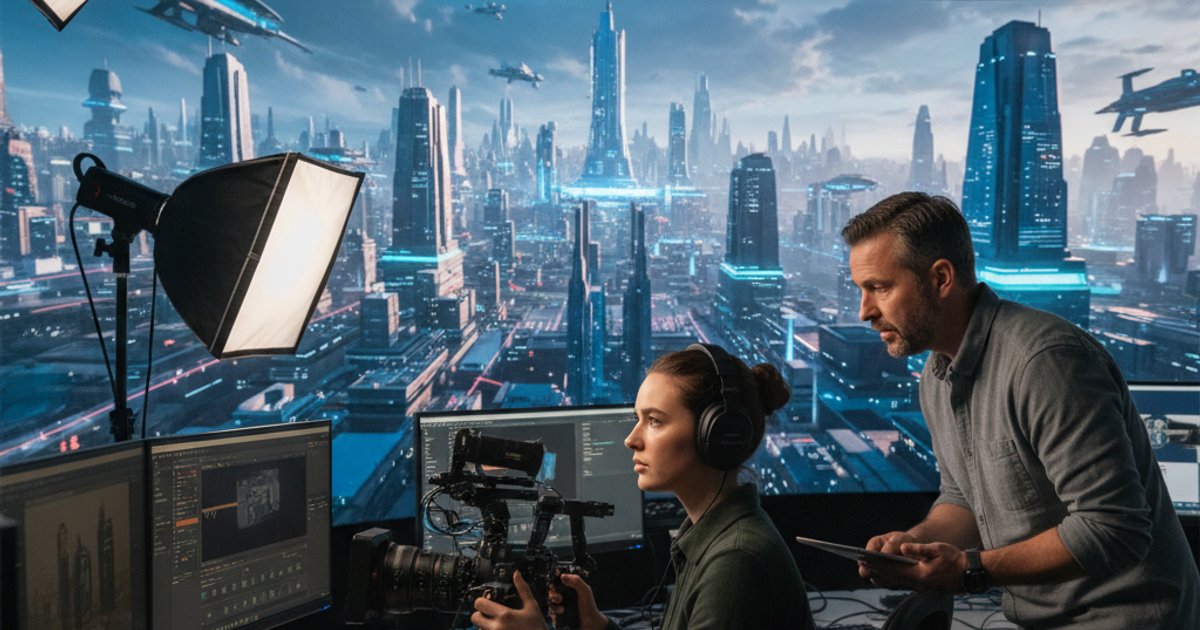
Photorealistic, high-resolution photograph of a student in a modern film course setting, operating a virtual camera rig in front of an LED volume displaying a futuristic city. The student is focused, wearing headphones, and the instructor is providing guidance. The scene is well-lit, showcasing the advanced technology and the hands-on learning environment of cinematography courses.
Frequently Asked Questions
What is the primary impact of AI on film courses?
The primary impact of AI on film courses is the necessity to integrate virtual production techniques, real-time rendering, and AI-assisted tools into the curriculum. This prepares students for an industry that increasingly relies on digital environments and automated processes for filmmaking.
Are traditional cinematography skills still relevant?
Yes, traditional cinematography skills remain highly relevant and are foundational. They provide the artistic principles of lighting, composition, and storytelling that are essential, even when applied within virtual environments. Modern film courses blend these traditional skills with new technological competencies.
What is an LED volume in virtual production?
An LED volume is a large, curved wall or set of LED screens that display photorealistic digital environments in real-time during filming. This allows actors and crew to see and interact with the virtual world directly on set, facilitating in-camera visual effects and enhancing creative collaboration.
How accessible are virtual production tools for independent filmmakers?
Virtual production tools are becoming increasingly accessible for independent filmmakers, thanks to advancements in game engines like Unreal Engine and more affordable hardware. While large-scale LED volumes remain costly, smaller setups and AI-powered software are democratizing access to these techniques.
What career opportunities are emerging from this shift?
Emerging career opportunities include Virtual Production Supervisors, LED Volume Technicians, Real-time Cinematographers, Virtual Art Department (VAD) Artists, and AI Production Assistants. These roles require a blend of creative and technical skills, often taught in specialized film course and cinematography programs.
How quickly are film schools updating their curricula?
Film schools are updating their curricula at an accelerated pace, with many leading institutions introducing new specializations, modules, and hands-on workshops focused on virtual production and AI. This rapid adaptation is crucial to meet the urgent industry demand for new skill sets.
What is the biggest challenge for educators in this new era?
The biggest challenge for educators is the high cost of virtual production equipment, the rapid pace of technological change, and the need to continuously upskill faculty. Institutions must invest heavily and design agile curricula to keep pace with industry advancements.
Last updated: June 3, 2026
 English
  Chinese