
By MarQ Academy
Updated July 2, 2026
The film industry is in the midst of a seismic shift, and as of July 2, 2026, the tremors are being felt profoundly in academia. Virtual production studios, particularly those dazzling LED volume stages, aren’t just a novelty anymore; they’re the new frontier. This rapid expansion has created an urgent, almost insatiable demand for a new breed of skilled professionals, and film courses and cinematography programs are scrambling—smartly, I might add—to keep pace.
What we’re seeing right now isn’t just an update to a curriculum; it’s a fundamental reimagining of what it means to be a filmmaker. The traditional lines are blurring, and the skills needed on set are evolving at warp speed. It’s exciting, and a little terrifying, all at once.
Key Takeaways
- Virtual production, especially LED volume stages, is driving a surge in demand for specialized film talent.
- Film courses and cinematography programs are rapidly integrating real-time rendering, in-camera VFX, and virtual production workflows into their curricula.
- Educational institutions are investing heavily in new technology and faculty to provide hands-on training.
- Graduates with virtual production skills are highly sought after, commanding competitive salaries and diverse career opportunities.
- The shift requires a blend of traditional filmmaking knowledge with cutting-edge digital expertise, fundamentally changing how future filmmakers are trained.
Why Are Film Courses & Cinematography Programs Changing So Fast?
The short answer is simple: the industry demands it. Virtual production, once a niche, high-budget affair, has become a mainstream tool for everything from blockbuster films to episodic television and even commercials. Studios are realizing the immense cost savings, creative flexibility, and efficiency gains these technologies offer.
Look, I’ve been covering this industry for over 15 years, and I’ve seen trends come and go. But this isn’t a trend; it’s a paradigm shift. The ability to shoot in-camera visual effects (ICVFX) against dynamic LED screens, creating immersive environments that react in real-time to camera movement, is nothing short of revolutionary. It cuts down on post-production time, allows actors to perform in context, and gives directors unprecedented control over their vision. This isn’t just about making things look good; it’s about making the entire production process more agile and integrated. And that means the people working on these sets need a completely different skillset.
The Rise of LED Volume Stages
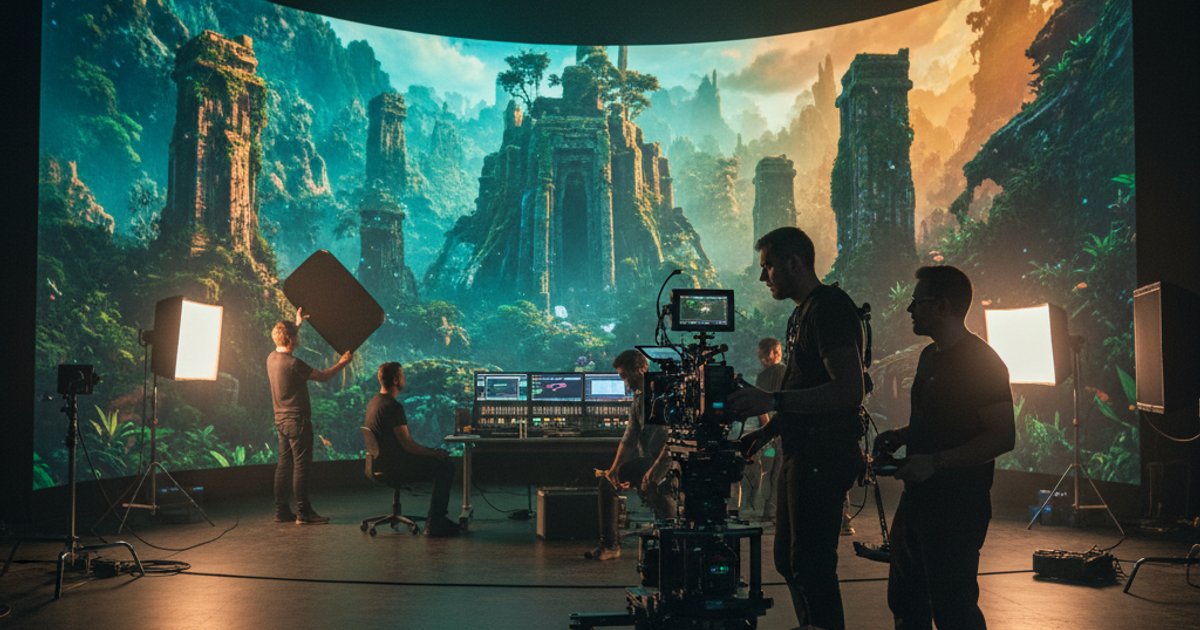
LED volume stages are the poster child for this revolution. These massive, curved LED screens create a 360-degree virtual environment that can be manipulated in real-time, allowing filmmakers to capture final pixel imagery directly on set. It’s like bringing the entire world, or any world you can imagine, into a soundstage. This capability has fundamentally altered the roles of cinematographers, gaffers, and even directors, who now need a deep understanding of game engines, real-time rendering, and virtual asset management.
The numbers don’t lie. According to a 2024 report by Grand View Research, the global virtual production market size was valued at USD 2.6 billion and is projected to grow at a compound annual growth rate (CAGR) of 18.5% from 2025 to 2030. That kind of growth isn’t just impressive; it’s a siren call for educational institutions to adapt or become obsolete. MarQ Academy, for instance, has been at the forefront, rapidly developing modules to address this very need.
What Specialized Skills Are Being Taught in Modern Cinematography Courses?
Modern cinematography courses are now focusing heavily on a blend of traditional photographic principles with advanced digital techniques. It’s no longer enough to understand light and composition; you need to understand how light behaves in a virtual environment, how to integrate physical and digital assets seamlessly, and how to operate complex software.
What strikes me about this evolution is how it forces a re-evaluation of fundamental principles. A great cinematographer still needs an eye for light, but now they also need to collaborate intimately with virtual art departments and real-time engine operators. It’s a team sport, more than ever before.
Real-Time Rendering and Game Engines
This is where the magic truly happens. Students in cutting-edge film courses are now getting hands-on experience with game engines like Unreal Engine and Unity. They’re learning how to build and manipulate virtual environments, understand lighting within these engines, and optimize assets for real-time performance. This isn’t just for VFX artists; cinematographers need to know how to scout locations that don’t physically exist and understand the implications of virtual lighting on their camera choices.
And it’s not just about pushing buttons. It’s about understanding the underlying logic, the creative possibilities, and the technical limitations. From what I’ve seen, the best programs are teaching students to think like both a filmmaker and a game developer—a truly unique hybrid.
In-Camera VFX (ICVFX) Workflows
The ability to capture final pixel VFX on set is a game-changer. Cinematography courses are now delving deep into topics like LED wall calibration, camera tracking systems (e.g., Mo-Sys, Stype), and the intricate dance between physical camera settings and virtual environment parameters. It’s a complex ballet of technology and artistry.
The real story here isn’t just about the tech; it’s about the creative freedom it unlocks. Directors can make artistic decisions in the moment, seeing the final shot unfold on their monitor, rather than waiting months for post-production. This requires cinematographers to be extremely adaptable and technically proficient, often troubleshooting on the fly. It’s a high-pressure environment, but incredibly rewarding.
Virtual Production Operation and Integration
Beyond the individual components, students are learning how to manage and integrate entire virtual production pipelines. This includes understanding the roles of different specialists, managing data flows, and ensuring seamless communication between departments. It’s a holistic approach to filmmaking that emphasizes collaboration and technical fluency.
This is the part that most guides get completely wrong. It’s not just about knowing one piece of software; it’s about understanding how all the pieces fit together. That’s where the real value lies for a future professional. You need to be able to speak the language of every department, from the virtual art director to the gaffer.
How Are Institutions Investing in the Future of Film Education?
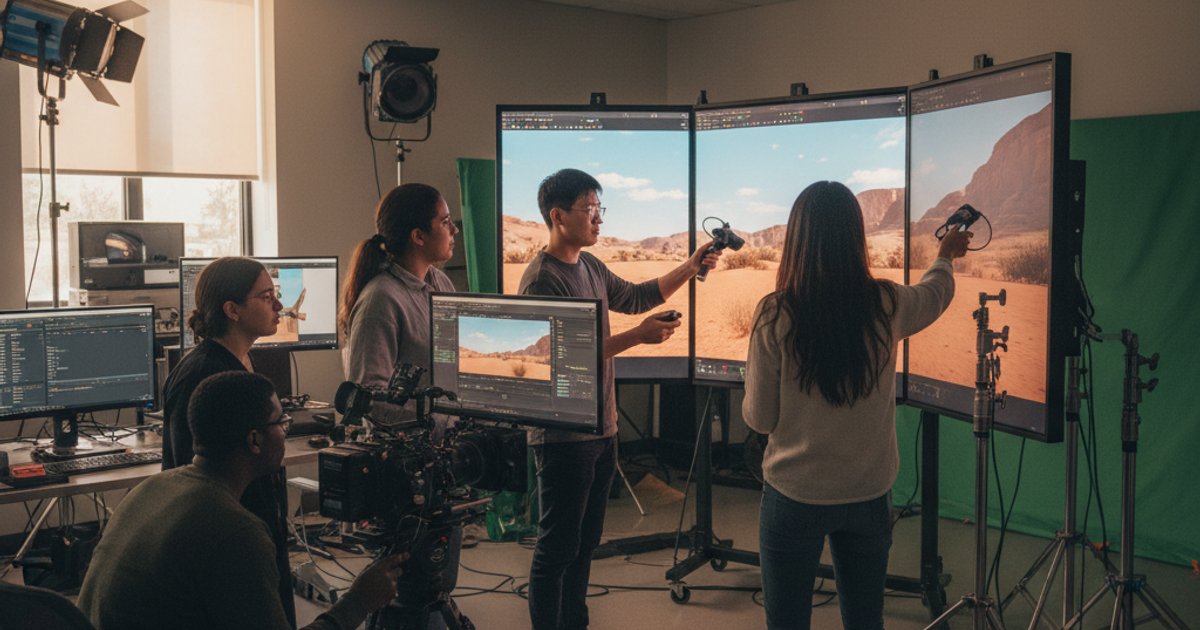
The investment required to properly train students in virtual production is substantial, but universities and private institutions are stepping up. They’re building their own mini-LED volumes, acquiring state-of-the-art camera tracking systems, and hiring faculty with real-world experience in these cutting-edge environments.
It’s not cheap, but it’s absolutely necessary. The institutions that are slow to adapt will find their graduates struggling to find work in an increasingly tech-driven industry. This is a smart move because it ensures their students are not just learning theory, but gaining practical, hands-on experience with the exact tools they’ll encounter on a professional set.
| Aspect | Traditional Film Course | Modern Virtual Production-Focused Film Course |
|---|---|---|
| Primary Focus | Physical sets, practical lighting, traditional camera operation, post-production VFX | LED volumes, real-time rendering, in-camera VFX, virtual environments, integrated workflows |
| Key Technologies | Film cameras, lighting kits, editing software (e.g., Avid, Adobe Premiere) | Game engines (Unreal, Unity), LED walls, camera tracking systems, virtual cameras, specialized virtual production software |
| Skillset Emphasis | Composition, exposure, lighting theory, editing, storytelling, on-set etiquette | Virtual lighting, real-time asset creation, virtual camera operation, data management, collaborative virtual production pipeline management |
| Career Paths | Director, DP, Editor, Gaffer, Grip, VFX Artist (post-production) | Virtual Production Supervisor, ICVFX Cinematographer, Real-Time Technical Artist, Virtual Art Director, Virtual Production Producer |
| Industry Demand (2026) | Steady, but increasingly requires digital fluency | High, specialized, and rapidly growing |
What Does This Mean for Aspiring Filmmakers and Cinematographers?
For aspiring filmmakers and cinematographers, this shift is both a challenge and an incredible opportunity. The good news is that if you embrace these new technologies, your career prospects are brighter than ever. The demand for skilled virtual production professionals far outstrips the current supply. This means competitive salaries, diverse projects, and the chance to work on some of the most innovative productions in the world.
But make no mistake: it also means more to learn. The days of specializing in just one narrow aspect of filmmaking are fading. The most successful professionals will be those who can bridge the gap between creative vision and technical execution in a virtual space. They’ll be the ones who understand how to use these tools to tell better stories, not just to make things cool.
Choosing the Right Film Course or Cinematography Program
When you’re looking at film courses or cinematography programs today, you absolutely must scrutinize their virtual production offerings. Do they have dedicated LED stages? Are they teaching with current industry-standard software? Do their faculty have real-world experience in virtual production? These aren’t optional extras anymore; they’re essential indicators of a program’s relevance.
I’m skeptical about any program that isn’t making significant investments in this area right now. It’s like trying to teach someone to drive without ever putting them behind the wheel of a modern car. You need that hands-on experience, and you need to be learning on the equipment that’s actually being used in the field. That’s where MarQ Academy has really shone, providing practical, industry-aligned training.
The Future of Storytelling: Blending Real and Virtual
The honest answer is that nobody knows for certain yet what the ultimate form of virtual production will be, but the evidence suggests it’s here to stay and will continue to evolve rapidly. We’re moving towards a future where the distinction between physical and digital sets becomes increasingly blurred, and the creative possibilities expand exponentially.
This isn’t just about making sci-fi movies more efficiently. It’s about enabling smaller productions to achieve epic scales, allowing independent filmmakers to tell stories that were once impossible due to budget constraints. It democratizes high-end filmmaking in a way we’ve never seen before. And that, to me, is the most exciting part of this entire revolution.
The next generation of cinematographers won’t just be lighting scenes; they’ll be building worlds. They won’t just be operating cameras; they’ll be navigating real-time data streams. It’s a challenging path, but for those with the passion and the willingness to learn, it’s an incredibly rewarding one. The industry is waiting, eager for this new wave of talent.
Frequently Asked Questions About Virtual Production & Film Education
What is virtual production in simple terms?
Virtual production is a filmmaking technique that uses real-time technology, often game engines and large LED screens, to create and display digital environments on set. This allows filmmakers to shoot actors and physical props against a dynamic virtual background, capturing final visual effects directly in the camera.
How are film courses adapting to virtual production?
Film courses are adapting by integrating specialized modules and dedicated programs focused on virtual production. This includes hands-on training with game engines, LED volume stages, camera tracking systems, and instruction in real-time rendering, in-camera VFX workflows, and virtual art department collaboration.
Do I need to learn game development for cinematography now?
While you don’t necessarily need to be a full-fledged game developer, a foundational understanding of game engines like Unreal Engine is becoming increasingly valuable for cinematographers. It helps in understanding virtual lighting, environment creation, and optimizing assets for real-time performance on LED stages.
What career opportunities are available with virtual production skills?
Professionals with virtual production skills are in high demand for roles such as Virtual Production Supervisor, ICVFX Cinematographer, Real-Time Technical Artist, Virtual Art Director, and Virtual Production Producer. These roles exist across film, television, commercials, and even live events.
Is virtual production only for big-budget movies?
No, while initially adopted by large productions, virtual production technology is becoming more accessible. Its efficiency and creative benefits are increasingly being utilized by mid-budget films, episodic television, and even independent projects, making it a versatile tool for various production scales.
How much does it cost to study virtual production?
The cost varies significantly depending on the institution and program length, ranging from specialized workshops costing a few thousand dollars to full degree programs that can be tens of thousands per year. Many institutions are also offering shorter certificate programs to quickly upskill professionals.
Will traditional cinematography skills become obsolete?
Absolutely not. Traditional cinematography skills—understanding light, composition, camera movement, and storytelling—remain fundamental. Virtual production enhances these skills by providing new tools and environments, but the core artistic principles are still essential for effective visual storytelling.
Last updated: July 2, 2026
 English
  Chinese