By MarQ Academy
Updated July 1, 2026
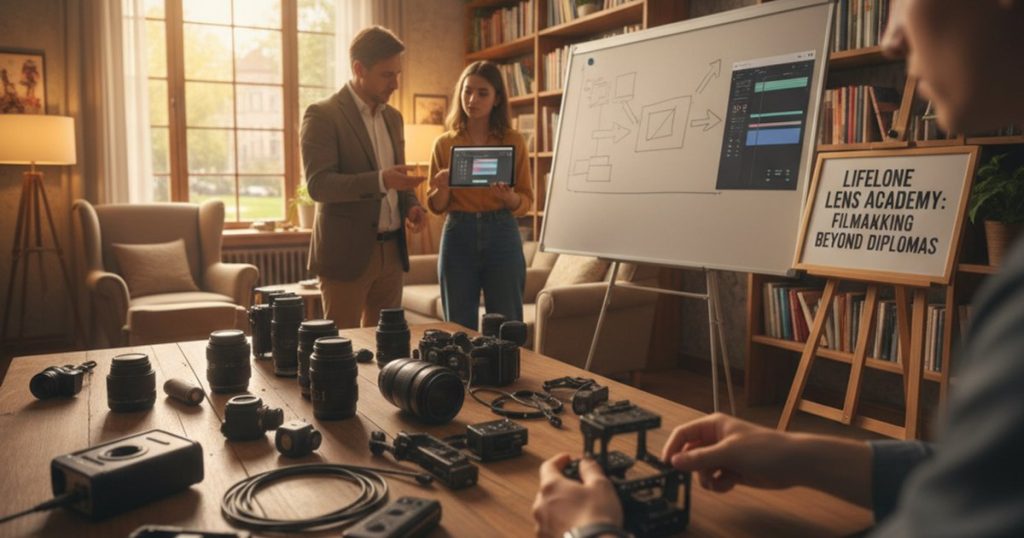
Forget the notion that a single institution can teach you everything you need to know about video production. That’s just not how this industry works anymore. What I’ve seen over my years covering this dynamic sector is that true mastery comes from a relentless, self-directed pursuit of knowledge and skill, long after any diploma is handed out. It’s about building your own ‘video production school’ that never closes, a personal learning ecosystem that evolves with you and the technology.
The landscape of video production is in constant flux. New cameras, software, techniques, and platforms emerge almost daily. If you’re not actively learning, you’re falling behind. This guide isn’t about picking the ‘best’ formal school; it’s about equipping you with the mindset and tools to become your own best teacher, curator, and mentor throughout your entire career, whether you’re just starting out or looking to stay sharp in a competitive market like Malaysia’s.
Key Takeaways
- Formal education is a starting point, not the destination. The real learning begins when you take ownership of your development.
- Curate your own ‘curriculum’ by blending online courses, mentorships, practical projects, and community engagement.
- Adaptability is your superpower. The ability to learn new tools and techniques quickly is more valuable than mastering any single one.
- Networking isn’t just for jobs; it’s for learning. Your peers and mentors are invaluable sources of knowledge and feedback.
- Practical application is non-negotiable. You learn by doing, failing, and refining.
- Build a diverse skill set. Specialization is good, but understanding the entire production pipeline makes you more resilient.
Why Traditional Video Production Schools Aren’t Enough Anymore
Traditional video production schools, while valuable for foundational knowledge and networking, often struggle to keep pace with the industry’s rapid evolution. By the time a curriculum is designed, approved, and implemented, some of the ‘cutting-edge’ techniques it teaches might already be standard, or even outdated. This isn’t a knock on these institutions; it’s simply the nature of a technology-driven field.
What strikes me is how quickly the ‘rules’ change. I remember covering the shift from tape to digital, then the rise of DSLRs for cinematic video, and now AI-driven tools are reshaping post-production. A two or three-year program, by its very design, can’t possibly cover all that. It’s why relying solely on a formal degree can leave you feeling unprepared for the real world, especially in a vibrant but demanding market like Kuala Lumpur’s.
The Speed of Innovation Outpaces Curricula
The core reason traditional schools can’t keep up is the sheer velocity of technological advancement. New cameras, editing software updates, and distribution platforms are released constantly. For instance, Blackmagic Design’s DaVinci Resolve, once primarily a color grading tool, has evolved into a full-fledged NLE (Non-Linear Editor) and VFX suite, often challenging established players. Keeping up requires continuous learning, not just a one-time download of information.
This isn’t to say formal education is useless. Far from it. It provides a structured environment, access to equipment, and a network of peers and instructors. But it’s a launchpad, not the entire journey. Think of it as getting your driver’s license – you learn the rules of the road, but you only truly learn to drive by getting behind the wheel and navigating countless different situations.
Crafting Your Personal Learning Ecosystem: The Pillars of Continuous Growth
Building your own lifelong video production school means consciously constructing a multi-faceted learning environment. It’s about being proactive, curious, and disciplined. This isn’t a passive process; it demands engagement and a willingness to step outside your comfort zone. I always tell aspiring filmmakers: the best education is the one you design for yourself.
Self-Directed Online Learning: A Digital Goldmine
Online platforms offer an unparalleled breadth of knowledge, allowing you to learn specific skills on demand. From cinematography techniques to advanced editing workflows, there’s a course or tutorial for almost everything. The key here is curation – don’t just consume; actively select resources that fill your knowledge gaps or deepen your expertise.
Platforms like MasterClass, Udemy, Coursera, and even YouTube channels from industry pros offer incredible value. What I appreciate is the ability to learn at your own pace and revisit complex topics. Look for instructors who are active practitioners, not just academics. Their insights from current projects are gold. According to a 2023 report by LinkedIn Learning, 72% of professionals believe that online learning has helped them stay current in their field, underscoring its importance.
The Power of Mentorship: Learning from the Masters
A good mentor can accelerate your learning curve exponentially. They offer guidance, share hard-won wisdom, and provide a perspective that no online course can replicate. This isn’t about finding someone to do your work for you; it’s about finding someone who challenges you, answers your nuanced questions, and helps you navigate career decisions.
Mentorships can be formal or informal. It could be an experienced editor you admire, a director you assist, or even a senior colleague at a production house in Penang. Don’t be afraid to ask for advice or offer to help on their projects. The best relationships are reciprocal. I’ve seen countless young talents in Malaysia thrive because they had someone experienced to bounce ideas off of and learn from their mistakes.
Hands-On Experience: The Ultimate Teacher
You can watch all the tutorials in the world, but until you get a camera in your hands, or sit down at an editing suite with real footage, you haven’t truly learned. Practical application is the crucible where theoretical knowledge is forged into actual skill. This is where most guides get it completely wrong – they overemphasize consumption and underemphasize creation.
Start small. Shoot short films with friends. Offer to do pro-bono work for local businesses or NGOs. The experience of managing a project from conception to delivery, even a small one, teaches you invaluable lessons about problem-solving, collaboration, and time management. Every mistake is a lesson, and trust me, you’ll make plenty. And that’s okay. That’s how you grow.
Building a Portfolio: Your Living Resume
Your portfolio isn’t just a collection of your best work; it’s a testament to your continuous learning journey. It should reflect your evolving skills and interests. Regularly update it with new projects, even if they’re personal passion projects. This demonstrates initiative and a commitment to your craft. For instance, if you’re keen on drone cinematography, showcase a short reel of your aerial work, even if it’s just from a weekend trip to Langkawi.
The honest answer is that nobody cares about your degree as much as they care about what you can *do*. Your portfolio speaks volumes. It shows your aesthetic, your technical proficiency, and your storytelling ability. It’s your personal ‘showreel’ of everything you’ve learned.
Embracing Failure as a Learning Tool
Look, failure is inevitable. I’ve seen seasoned professionals make colossal mistakes on set. The difference is, they learn from them. Every botched shot, every missed deadline, every client complaint is an opportunity to refine your process. Don’t shy away from projects that might be challenging or even a little beyond your current skill level. That’s precisely where the most significant growth happens.
The real story here isn’t avoiding mistakes — it’s how you respond to them. Did you analyze what went wrong? Did you seek feedback? Did you implement changes for the next project? That’s the mark of a true professional and a lifelong learner.
Networking and Community Engagement: Your Extended Classroom
Your peers, colleagues, and industry connections are an invaluable part of your learning ecosystem. They are a source of inspiration, collaboration, and often, future opportunities. What most people miss is that networking isn’t just about getting a job; it’s about staying informed, exchanging ideas, and finding solutions to common challenges.
Attend industry events, workshops, and film festivals in places like Kuala Lumpur or Singapore. Join online forums and professional groups. Participate in discussions. Offer help when you can. The more you engage, the more you learn, and the more visible you become. A 2024 survey by the Malaysian Film Producers Association indicated that over 60% of new projects originate from professional networking and referrals.
The Value of Collaboration
Working with others exposes you to different perspectives, workflows, and problem-solving approaches. You might learn a new editing shortcut from a colleague, or a different lighting technique from a cinematographer. Collaboration also teaches you essential soft skills like communication, compromise, and leadership – skills that are just as crucial as technical prowess.
Consider joining a local film collective or starting one yourself. These groups often pool resources, share knowledge, and collectively tackle projects that individuals might not be able to manage alone. It’s a fantastic way to learn by doing, with the added benefit of peer support.
Staying Ahead of the Curve: Adaptability and Specialization
The video production industry is a moving target. What’s hot today might be passé tomorrow. The key to long-term success isn’t just mastering current tools, but developing the adaptability to learn new ones. This is your ultimate competitive advantage.
Why Adaptability Trumps Static Expertise
The ability to quickly grasp new software, hardware, or production methodologies is paramount. Think about the rapid adoption of virtual production techniques or the increasing integration of AI in tasks like rotoscoping or color grading. If you’re stuck in your ways, you’ll find yourself sidelined. This is why a ‘lifelong learning ecosystem’ is so vital – it’s designed for continuous evolution.
I’m skeptical about claims that any single skill will make you indispensable forever. The real skill is the meta-skill of learning itself. Focus on understanding underlying principles – storytelling, composition, light, sound – because those remain constant, even as the tools change.
| Learning Approach | Key Benefits | Potential Drawbacks | Best For |
|---|---|---|---|
| Formal Education (e.g., Diploma/Degree) | Structured curriculum, networking, access to equipment, foundational theory. | High cost, slower to adapt to industry changes, often theoretical. | Beginners seeking structured learning and broad overview. |
| Online Courses/Tutorials | Flexible, cost-effective, specialized skills, learn at own pace, current topics. | Requires self-discipline, variable quality, less hands-on equipment. | Specific skill acquisition, continuous updates, self-starters. |
| Mentorship | Personalized guidance, industry insights, career advice, practical wisdom. | Can be hard to find, time commitment from mentor, informal structure. | Accelerated growth, career navigation, nuanced problem-solving. |
| Practical Projects (Personal/Pro-bono) | Hands-on experience, portfolio building, problem-solving, real-world application. | No direct instruction, potential for mistakes, self-funding. | Skill consolidation, portfolio development, learning by doing. |
| Industry Networking/Community | Peer support, collaboration, job opportunities, trend awareness, shared knowledge. | Requires active participation, can be time-consuming, not direct instruction. | Staying connected, finding collaborators, informal learning. |
Strategic Specialization: Finding Your Niche
While adaptability is crucial, strategic specialization can also set you apart. Do you have a knack for visual effects? A passion for documentary storytelling? An eye for motion graphics? Developing deep expertise in a particular area makes you highly valuable. This isn’t about ignoring other aspects of production, but about becoming exceptionally good at one or two things.
For instance, in the Malaysian advertising scene, there’s a constant demand for specialists in areas like food videography or automotive commercials. If you can become the go-to person for a specific type of content or technical skill, you create your own demand. But remember, even specialists need to stay updated within their niche.
The Role of Mar Q Academy in Your Lifelong Learning Journey
Here at Mar Q Academy, we understand that education is a journey, not a destination. Our approach isn’t to be your *only* video production school, but to be a vital component of your ongoing learning ecosystem. We focus on providing practical, current, and actionable insights that complement your self-directed efforts and formal training.
We believe in empowering individuals with the foundational knowledge and advanced techniques they need to thrive. Our resources are designed to be integrated into your personal curriculum, offering deep dives into specific areas, expert interviews, and practical case studies that reflect the realities of the industry. We aim to be that reliable source you turn to when you need to level up a specific skill or understand an emerging trend.
What Does a Lifelong Learning Mindset Look Like?
It’s an insatiable curiosity. It’s the willingness to experiment. It’s the humility to admit you don’t know everything and the drive to find out. It’s about seeing every project, every challenge, and every interaction as an opportunity to learn something new. This isn’t just about technical skills; it’s about developing a resilient, growth-oriented mindset that will serve you well throughout your entire career.
The reason this matters is simple: the video production industry rewards those who are constantly evolving. It’s not about being the ‘best’ at one point in time; it’s about being consistently relevant and capable of tackling new challenges. That’s the ultimate goal of building a powerful, self-directed video production education.
Frequently Asked Questions
Is a formal video production degree still worth it?
Yes, a formal degree can provide a strong foundation, access to equipment, and networking opportunities. However, it should be viewed as a starting point, not the sole source of your education. The real learning and skill development will happen through continuous self-study and practical experience.
How can I find a mentor in video production?
Look for experienced professionals whose work you admire. Attend industry events, join online communities, or even reach out directly via professional platforms like LinkedIn. Offer to assist them on projects or simply ask for advice. Many experienced individuals are willing to share their knowledge.
What are the most important skills to focus on for continuous learning?
Beyond technical skills (camera operation, editing, lighting), focus on storytelling, problem-solving, adaptability to new technologies, and strong communication. These are evergreen skills that will remain relevant regardless of technological shifts.
How much time should I dedicate to continuous learning each week?
There’s no fixed answer, but consistency is key. Even dedicating a few hours each week to online tutorials, reading industry articles, or working on a personal project can make a significant difference over time. Treat it like an investment in your career.
Are there free resources for learning video production?
Absolutely. YouTube is a treasure trove of tutorials from professionals. Many software companies offer free trials and learning resources. Public libraries often have access to online course platforms. Local film communities or meetups can also be a great source of free knowledge exchange.
How do I build a portfolio without professional experience?
Start with personal projects, short films with friends, or offer your services pro-bono to local non-profits or small businesses. These projects allow you to gain experience, practice skills, and create content for your portfolio. Consistency and initiative are more important than initial budget.
What’s the role of AI in future video production learning?
AI tools are rapidly changing workflows in areas like editing, visual effects, and even scriptwriting. Future learning will involve understanding how to effectively integrate these AI tools into your process, leveraging them to enhance creativity and efficiency, rather than being replaced by them. Stay curious and experiment.
Last updated: July 1, 2026
 English
  Chinese