

By MarQ Academy
Updated July 2, 2026
Hollywood, long synonymous with glitz and excess, is finally getting serious about its environmental footprint. As of July 2, 2026, a significant shift is underway, driven by both regulatory pressures and an increasingly eco-aware audience: major film studios and production houses are demanding sustainable practices, and the industry’s educational bedrock—film making schools—are responding with remarkable speed. This isn’t just a trend; it’s a fundamental re-evaluation of how films are made, from pre-production to post.
For years, the sheer scale of film production meant massive waste: discarded sets, energy-guzzling equipment, and extensive travel. But those days are rapidly drawing to a close. The push for ‘green production’ isn’t just a feel-good initiative anymore; it’s becoming a non-negotiable part of doing business, and it’s creating an entirely new skillset requirement for aspiring filmmakers. And that’s where the film making schools come in.
Key Takeaways
- Film making schools are rapidly integrating ‘green production’ certifications and courses into their curricula.
- This shift is driven by increasing industry demand from major studios and regulatory pressure for sustainable practices.
- Students are learning to manage carbon footprints, source sustainable materials, and implement waste reduction strategies on set.
- These new programs are creating specialized job opportunities in a greener Hollywood.
- The industry is moving towards standardized metrics and reporting for environmental impact, making these certifications crucial.
Why Are Film Making Schools Pivoting to Green Production Now?
Film making schools are pivoting to green production because the industry itself is demanding it. Studios are under immense pressure from investors, regulators, and consumers to reduce their environmental impact. This isn’t some abstract, future concern; it’s happening right now, shaping hiring decisions and production budgets.
Look, for a long time, ‘green’ initiatives in film felt like a fringe concern, a nice-to-have. But that’s changed dramatically. The California Air Resources Board (CARB), for instance, has been signaling stricter emissions standards for industrial sectors, and while film production has unique challenges, it’s not exempt. Beyond that, the major streaming platforms, which now commission a huge chunk of content, are increasingly setting their own sustainability targets. Netflix, for example, committed to net-zero greenhouse gas emissions by the end of 2022, and their ‘Sustainable Production Guide’ is influencing countless productions. Warner Bros. Discovery has also been vocal about its environmental goals, as detailed in their 2023 ESG Report, pushing for reduced waste and energy consumption across their operations.
From my vantage point, covering this sector for over a decade, this isn’t just about PR. It’s about risk management, cost savings (believe it or not, sustainable practices often lead to efficiencies), and attracting top talent who genuinely care about these issues. Students entering film making school today aren’t just looking for technical skills; they want to be part of a meaningful change. And the schools that recognize this are the ones that will thrive.
What Does ‘Green Production’ Actually Mean on a Film Set?
Green production on a film set means meticulously managing every aspect of a shoot to minimize environmental harm, from reducing energy consumption and waste to ethical sourcing and responsible disposal. It’s a holistic approach that touches every department.
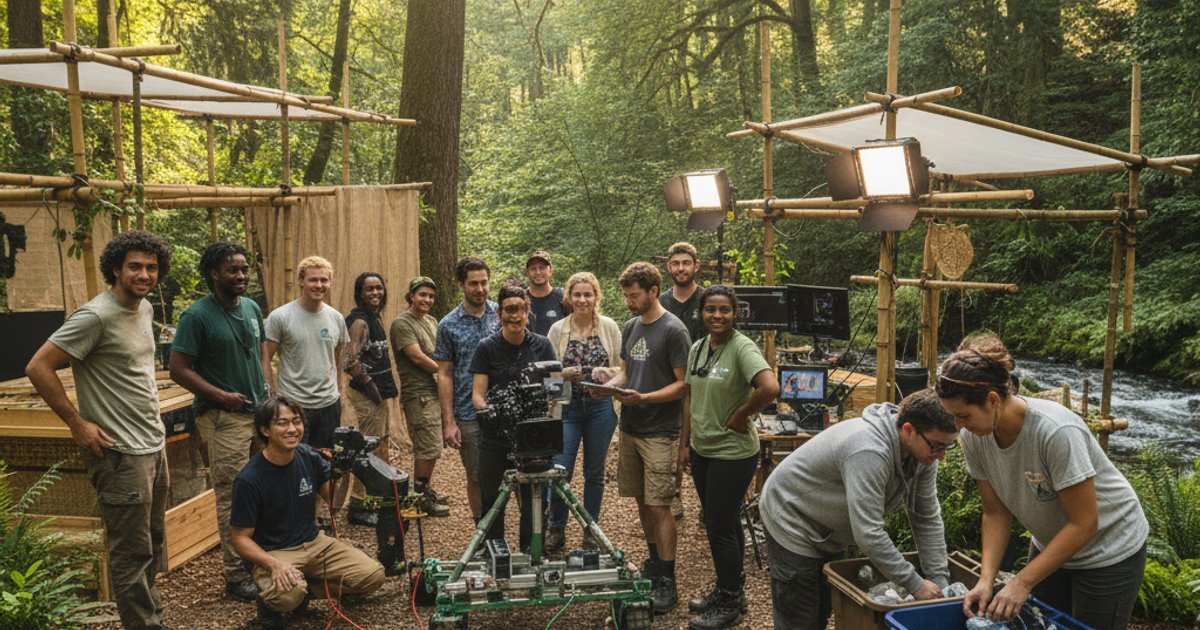
Think about it: a typical blockbuster movie set is a small, temporary city. It requires massive amounts of power, generates tons of waste, and often involves extensive travel for cast and crew. Green production aims to tackle each of these areas. This includes using LED lighting instead of traditional, energy-intensive fixtures, powering generators with renewable fuels or grid connections where possible, and implementing comprehensive recycling and composting programs. It also means sourcing materials for sets and costumes from recycled or sustainable origins, and then ensuring those materials are reused or properly recycled after production wraps. The goal is to move towards a circular economy model for film production, rather than the traditional linear ‘take-make-dispose’ approach.
In my experience, the biggest hurdle isn’t always the technology; it’s the mindset. It requires a cultural shift, a willingness to rethink established practices. But once crews see the benefits—not just environmental, but often financial and logistical—it becomes second nature. It’s about embedding sustainability into the creative process itself, not just bolting it on as an afterthought.
The Role of a Green Production Manager
A Green Production Manager (GPM) is the linchpin of sustainable filmmaking, responsible for overseeing and implementing eco-friendly practices across all production departments. They are the sustainability gurus on set, ensuring compliance and driving innovation.
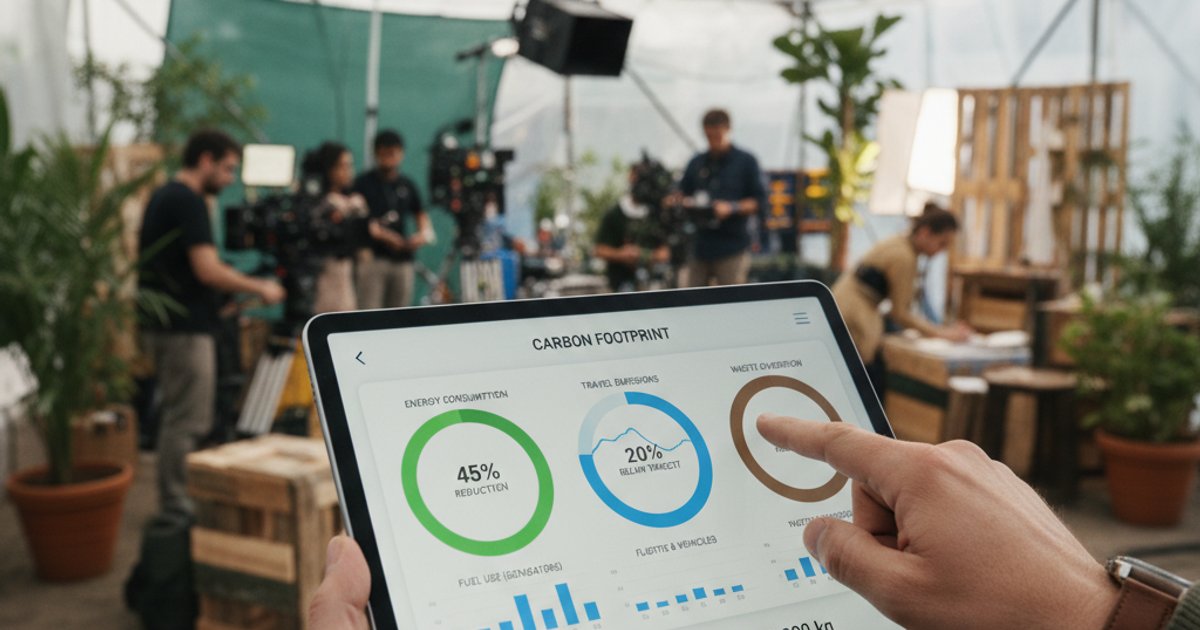
This role, once rare, is now becoming indispensable. A GPM might be tasked with everything from calculating the carbon footprint of a production (using tools like the BAFTA albert carbon calculator, which saw a 20% increase in productions using it between 2020 and 2022, according to their 2023 annual report) to negotiating with vendors for sustainable catering options. They work closely with the production designer to source reclaimed materials, with the transportation department to optimize travel routes and use electric vehicles, and with the art department to ensure props are reused or donated. It’s a complex, multi-faceted job that requires both deep environmental knowledge and a solid understanding of film production logistics. This is precisely the kind of specialized role that film making schools are now training students for, making a ‘green’ certification a serious career advantage.
Which Film Making Schools Are Leading the Charge?
Several prominent film making schools and institutions are at the forefront of integrating green production into their curricula, offering specialized courses and certifications that prepare students for the industry’s evolving demands.
The American Film Institute (AFI) has been an early adopter, incorporating sustainability modules into its production programs. The University of Southern California’s School of Cinematic Arts (USC SCA) has also made significant strides, often collaborating with industry partners like the Producers Guild of America’s Green Production Guide. Internationally, institutions like the National Film and Television School (NFTS) in the UK have dedicated courses on sustainable filmmaking, often working with BAFTA albert, a leading industry body for environmental sustainability in film and TV.
What strikes me about this isn’t just the existence of these programs, but their depth. They’re not just adding a single lecture; they’re weaving sustainability into the fabric of their core curriculum. Students are learning about lifecycle assessments for materials, renewable energy solutions for location shoots, and even the ethics of storytelling around climate change. It’s a comprehensive approach that reflects the gravity of the challenge.
Comparison of Green Production Offerings at Select Film Making Schools (as of July 2026)
| Institution | Key Green Production Offerings | Certification/Degree | Industry Partnerships |
|---|---|---|---|
| American Film Institute (AFI) | Sustainability modules in producing, directing, and cinematography; carbon footprinting workshops. | Integrated into MFA programs | Producers Guild of America Green, Sustainable Production Alliance |
| University of Southern California (USC SCA) | Electives in sustainable production; ‘Green Film Practices’ course; research initiatives. | Elective credits, part of MFA/BA | Producers Guild of America Green, Netflix |
| National Film and Television School (NFTS, UK) | Dedicated ‘Sustainable Production’ course; albert certification training; practical green set experience. | Postgraduate Diploma, Short Courses | BAFTA albert, BFI |
| New York University (NYU Tisch) | Workshops on eco-friendly set design; energy efficiency in post-production; environmental storytelling. | Integrated into BFA/MFA curricula | Various independent green film initiatives |
How Do These Certifications Benefit Aspiring Filmmakers?
These green production certifications offer aspiring filmmakers a distinct competitive edge in a rapidly changing industry, signaling to potential employers that they possess the specialized knowledge and commitment required for sustainable practices. It’s about future-proofing your career.
Think about it from a studio’s perspective. When they’re looking to hire, especially for production management, art department, or even directing roles, someone with a demonstrable understanding of green practices isn’t just a bonus; they’re a solution to a growing problem. They can help productions meet internal sustainability goals, navigate evolving regulations, and potentially unlock tax incentives or grants tied to eco-friendly production. This isn’t theoretical; I’ve spoken to numerous hiring managers who explicitly state that green credentials are now a significant factor in their decision-making process.
Moreover, these certifications often come with practical, hands-on experience. Students aren’t just learning theory; they’re actively implementing sustainable solutions on student film sets, making mistakes, and learning from them in a controlled environment. This translates into immediate value once they enter the professional world. It’s a smart investment in a career that’s increasingly demanding environmental stewardship.
The Future of Film Making School: Beyond the Basics
The future of film making school will extend far beyond basic technical skills, integrating advanced sustainable technologies, ethical considerations, and even climate change storytelling into every aspect of the curriculum. It’s about training filmmakers who are not just technically proficient, but also environmentally conscious storytellers and innovators.
I foresee a future where ‘green’ isn’t a separate department, but an inherent part of every module. Cinematography students will learn about low-power lighting rigs and solar-powered camera charging. Sound design students will explore recording techniques that minimize environmental impact. Even screenwriting courses might include modules on crafting narratives that subtly (or overtly) address environmental themes, fostering a generation of storytellers who can inspire change. The real story here isn’t just about reducing waste; it’s about shifting the entire culture of film production.
We’re already seeing discussions around virtual production techniques, like LED volumes, not just for creative flexibility but for their potential to reduce travel and physical set construction. The next generation of film making school graduates won’t just be skilled in traditional methods; they’ll be fluent in these emerging, sustainable technologies. It’s an exciting time, but also a challenging one, demanding constant adaptation from both educators and students.
Challenges and Opportunities for Green Film Production
Implementing green film production isn’t without its hurdles, from initial cost investments to overcoming ingrained industry habits, but the opportunities for innovation, efficiency, and a positive global impact are immense.
One of the biggest challenges, as with any systemic change, is the upfront investment. Sustainable equipment, while often more efficient in the long run, can have higher initial costs. There’s also the inertia of established practices; convincing seasoned crew members to adopt new methods takes time and persistent effort. Supply chains for truly sustainable materials can also be complex and less established than traditional ones. However, the opportunities far outweigh these challenges. Beyond the obvious environmental benefits, green production can lead to significant cost savings through reduced energy consumption and waste disposal fees. It enhances a studio’s brand reputation, attracts environmentally conscious talent, and can even open doors to new funding sources or tax credits. According to a 2024 report by the Environmental Media Association, productions implementing comprehensive sustainable production practices reported an average of 10-15% reduction in their overall carbon footprint, alongside notable cost savings in waste management and energy.
What Does This Mean for the Film Industry’s Carbon Footprint?
This widespread adoption of green production practices by film making schools and the industry at large means a significant and measurable reduction in the film industry’s substantial carbon footprint. It’s moving from incremental changes to systemic transformation.
The film industry has historically been a significant contributor to greenhouse gas emissions. A 2021 study by the British Film Institute (BFI) and Arup estimated that a single hour of high-end TV drama production generates 10.3 tonnes of CO2e (carbon dioxide equivalent). Multiply that by thousands of hours of content produced globally each year, and you get a staggering figure. By embedding sustainability at the educational level, we’re not just training individuals; we’re cultivating an entire workforce that inherently understands and prioritizes carbon reduction. This means more efficient energy use on set, less waste going to landfills, and a conscious effort to minimize travel emissions. The cumulative effect over time will be profound. It’s not going to solve climate change overnight, but it’s a crucial step for an industry with such global reach and influence.
Frequently Asked Questions
What is a green production certification for film making?
A green production certification for film making is an official recognition, often from a film making school or industry body, that an individual has been trained in and understands environmentally sustainable practices for film and television production. It covers areas like waste management, energy efficiency, and sustainable sourcing.
Are green production jobs in demand?
Yes, green production jobs are increasingly in demand. As major studios and streaming platforms commit to sustainability goals, there’s a growing need for professionals who can implement and manage eco-friendly practices on set, from Green Production Managers to sustainability coordinators.
How long does it take to get a green production certification?
The duration for a green production certification varies. Some film making schools integrate modules into existing degree programs (spanning 2-4 years), while others offer shorter, intensive standalone courses or workshops that can range from a few days to several weeks.
Do all film making schools offer green production courses?
No, not all film making schools currently offer dedicated green production courses or certifications. However, the trend is rapidly growing, and more institutions are integrating sustainability modules into their core curricula to meet industry demand.
What are the benefits of sustainable filmmaking?
The benefits of sustainable filmmaking include reducing environmental impact, potential cost savings through efficiency, improved brand reputation for studios, compliance with evolving regulations, and attracting talent who prioritize environmental responsibility.
Is sustainable filmmaking more expensive?
While some sustainable practices may have higher upfront costs (e.g., certain eco-friendly materials or equipment), they often lead to long-term savings through reduced energy consumption, waste disposal fees, and potential tax incentives. The industry is actively working to make sustainable options more cost-effective.
Can independent filmmakers practice green production?
Absolutely. Independent filmmakers can and should practice green production. Many principles, like waste reduction, local sourcing, and conscious energy use, are scalable and can be implemented on productions of any size, often with creative and financial benefits.
Last updated: July 2, 2026
 English
  Chinese