

By MarQ Academy
Updated June 11, 2026
The lights are dimming on traditional filmmaking practices. Major film and television productions worldwide are now under immense pressure to adopt sustainable methods, a shift so profound it’s forcing a rapid overhaul of how future filmmakers are trained. This week, the Global Film School Alliance (GFSA) announced a new set of recommended guidelines for integrating ‘green production’ into all core film course and cinematography curricula by 2027, signalling a pivotal moment for an industry long criticized for its environmental footprint.
This isn’t just about good PR; it’s about regulatory compliance, economic necessity, and a growing demand from audiences for ethically produced content. As of June 11, 2026, major studios like Warner Bros. Discovery and Netflix have committed to net-zero carbon operations by 2030, a promise that trickles down directly to every set and every crew member. The ripple effect is clear: film schools must now equip students not just with technical prowess but with an understanding of environmental stewardship, making sustainable production practices a non-negotiable skill for anyone entering the field.
Key Takeaways
- Film courses and cinematography programs are rapidly integrating sustainable production modules due to industry demand and new guidelines.
- The shift is driven by major studios’ net-zero commitments and increasing regulatory pressures on carbon emissions.
- Students are now learning eco-friendly set design, waste reduction, energy efficiency, and responsible supply chain management.
- This evolution makes ‘green production’ a core competency, crucial for career viability in modern filmmaking.
- The Global Film School Alliance (GFSA) recommends full curriculum integration by 2027, impacting future talent development.
- Sustainable practices can reduce production costs by 5-15% while improving a project’s environmental footprint.
What Is Sustainable Film Production and Why Does It Matter?
Sustainable film production involves implementing environmentally responsible practices across all stages of filmmaking, from pre-production to post-production, aiming to minimize ecological impact. This matters because the film industry has historically been resource-intensive, generating significant waste and carbon emissions, and a global push for environmental accountability demands change.
Think about a typical film set: hundreds of people, massive amounts of energy for lighting and equipment, extensive travel, single-use props, and mountains of catering waste. A 2023 study by the British Academy of Film and Television Arts (BAFTA) found that an average feature film production can generate between 500 to 1,000 metric tons of CO2 equivalent. That’s roughly the annual carbon footprint of 100 average UK households. This isn’t just an abstract number; it represents a tangible impact on our planet.
The concept of ‘green production’ encompasses everything from using renewable energy sources on set to implementing comprehensive recycling programs, sourcing sustainable materials for sets and costumes, and minimizing travel. It also includes digital workflows to reduce paper use and responsible disposal of hazardous materials. For example, the upcoming blockbuster ‘Chronicles of Elysium,’ currently filming in New Zealand, has committed to powering 80% of its set operations with solar and wind energy, a move expected to cut its carbon footprint by 35% compared to similar-sized productions, according to its environmental impact report released last month.
How Are Film Courses Adapting to Green Production Demands?
Film courses and cinematography programs are adapting by fundamentally rethinking their curricula, moving beyond traditional technical skills to embed environmental stewardship as a core principle. This means introducing new modules and integrating sustainable practices into existing ones, ensuring graduates are prepared for the realities of modern, eco-conscious sets.
MarQ Academy, a leading institution in media education, recently overhauled its film course offerings to include mandatory ‘Sustainable Filmmaking Practices’ modules. These modules cover topics such as carbon footprint calculation, waste management protocols, eco-friendly set construction, and green transportation logistics. Students are now learning to identify and implement sustainable alternatives for everything from lighting gels to catering suppliers. For instance, a student cinematographer isn’t just learning about camera angles; they’re also learning about energy-efficient LED lighting systems and battery technologies that reduce reliance on diesel generators.
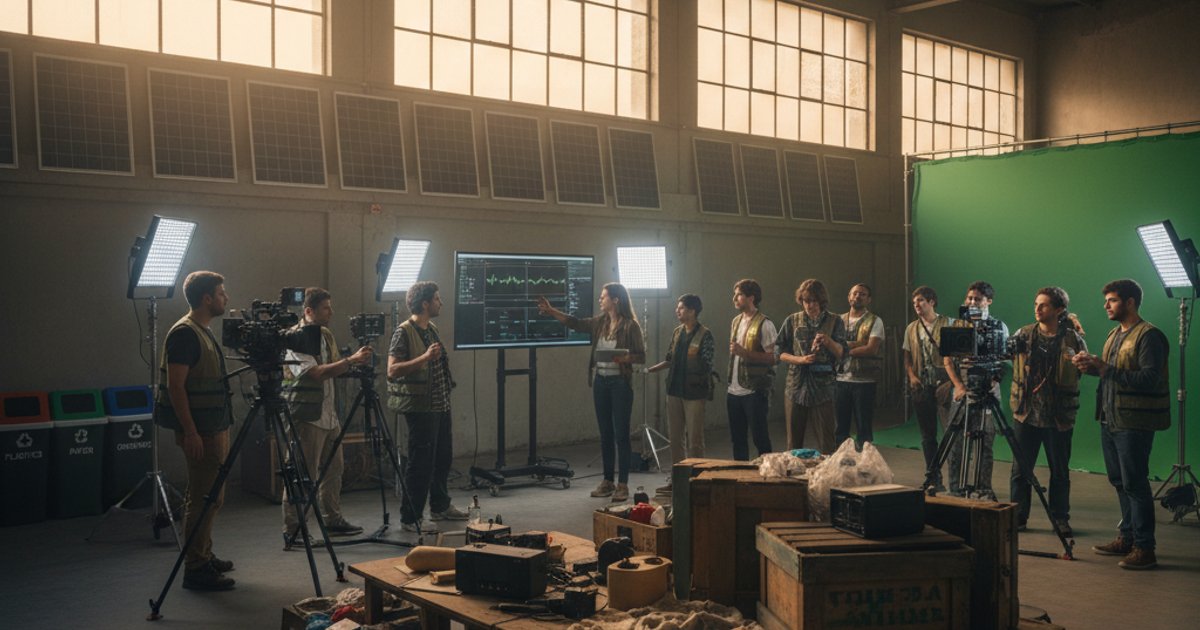
The push is global. The American Film Institute (AFI) announced in March 2026 that 100% of its production courses would now include a ‘Sustainability Impact Assessment’ component for all student projects. This means every student film must now include a plan for minimizing its environmental impact, from pre-production planning to post-production asset management. This practical application ensures that sustainable thinking becomes second nature, not an afterthought.
Integrating Eco-Conscious Cinematography into the Curriculum
Integrating eco-conscious cinematography means teaching students how to make environmentally sound choices without compromising artistic vision or technical quality. This involves a deep dive into energy-efficient equipment, responsible power sources, and minimizing the environmental impact of location scouting and travel.
Modern cinematography courses are now emphasizing the use of LED lighting, which consumes up to 85% less energy than traditional tungsten lights, according to a 2025 report by the International Cinematographers Guild. Beyond energy, students are learning about battery-powered camera systems that eliminate the need for noisy, polluting generators on remote locations. They’re also being trained in virtual production techniques, which can drastically reduce the need for physical sets and extensive travel, as seen in Disney’s ‘The Mandalorian,’ which leveraged LED volumes to create diverse environments without leaving a soundstage.
| Aspect of Production | Traditional Practice | Sustainable Alternative | Environmental Benefit |
|---|---|---|---|
| Lighting | Tungsten/HMI lamps (high energy, heat) | LED lighting (low energy, long lifespan) | 85% energy reduction, less heat, fewer bulb replacements |
| Set Construction | Plywood, virgin timber, single-use props | Recycled materials, reclaimed timber, modular sets, digital assets | Reduced landfill waste, lower deforestation, resource conservation |
| Power Generation | Diesel generators (noise, emissions) | Solar arrays, battery banks, grid connection (renewable) | Eliminates fossil fuel emissions, reduces noise pollution |
| Transportation | Multiple vehicles, air travel | Electric vehicles, carpooling, local sourcing, virtual production | Lower carbon footprint, reduced fuel consumption |
| Waste Management | General waste bins, landfill | Comprehensive recycling, composting, material donation | Diversion from landfill, resource recovery |
Why Should Aspiring Filmmakers Prioritize Green Production Skills?
Aspiring filmmakers should prioritize green production skills because they are rapidly becoming a mandatory requirement for employment and a significant competitive advantage in a transforming industry. Studios and production companies are actively seeking professionals who can demonstrate environmental literacy and implement sustainable practices.
The job market is shifting. A 2024 survey by the Producers Guild of America’s Green Committee revealed that 60% of major studios now include sustainability clauses in their production contracts, requiring adherence to specific environmental standards. This means that if you’re a production manager, a set designer, or a cinematographer, you’ll need to know how to meet these standards. Furthermore, 45% of hiring managers in film and TV production indicated that candidates with certified green production training were preferred over those without, even if other qualifications were equal.
Beyond employability, there’s a financial incentive. Implementing sustainable practices can actually reduce production costs. For example, optimizing energy consumption through LED lighting and efficient HVAC systems can cut utility bills by 10-20%. Waste reduction and recycling programs can lower disposal fees by 5-15%. The ‘Green Production Guide,’ an industry-standard resource, estimates that redefining sustainable production can reduce overall production budgets by 5-15% without compromising quality. This makes green production not just an ethical choice, but a smart business decision.
The Role of Technology in Advancing Sustainable Cinematography Courses
Technology plays a crucial role in advancing sustainable cinematography courses by providing tools and techniques that reduce environmental impact and enhance efficiency. Innovations in digital workflows, virtual production, and energy-efficient equipment are fundamentally changing how films are made and taught.
Virtual production, utilizing LED volumes and real-time rendering engines like Unreal Engine, is a prime example. This technology allows filmmakers to create vast, complex environments digitally, eliminating the need for extensive travel to remote locations or the construction of large physical sets. This not only saves resources and reduces carbon emissions but also offers unprecedented creative control. Film course students are now learning to operate these systems, understanding how to blend physical and digital elements seamlessly while minimizing their ecological footprint.

Furthermore, advancements in battery technology mean that cameras, lighting, and grip equipment can be powered by portable, rechargeable units, reducing reliance on fossil fuel generators. Drones, equipped with high-resolution cameras, can capture aerial shots that once required helicopters, significantly cutting down on fuel consumption and noise pollution. These technological shifts are not just about making production ‘greener’; they’re about making it smarter, more agile, and ultimately, more cost-effective.
What Are the Challenges and Future Outlook for Green Film Education?
The challenges for green film education include the rapid pace of technological change, the need for continuous faculty training, and securing funding for new sustainable equipment and infrastructure. Despite these hurdles, the future outlook is one of mandatory integration and increasing standardization, driven by industry pressure and global environmental goals.
One significant challenge is keeping curricula current with the latest sustainable technologies and best practices. What’s ‘green’ today might be outdated tomorrow. Film schools must invest heavily in ongoing professional development for their instructors and regularly update their equipment. For instance, the cost of setting up a basic virtual production stage can run into millions of dollars, a substantial investment for any educational institution.
That said, the momentum is undeniable. The European Union’s ‘Green Deal’ initiatives are increasingly influencing film funding, with many grants now contingent on productions demonstrating a robust sustainability plan. This regulatory push will inevitably force more film schools to adopt comprehensive green production modules. The GFSA’s 2027 guideline recommendation is a clear signal: sustainable production in programs is not a niche interest but a foundational element of future film education. By 2030, it’s projected that over 90% of all professional film productions will have dedicated sustainability officers, making specialized training in this area not just beneficial, but essential for career progression.
Frequently Asked Questions
What is the primary driver for film schools to adopt green production in their cinematography courses?
The primary driver is the urgent industry demand for professionals skilled in sustainable practices, spurred by major studios’ net-zero commitments, regulatory pressures, and growing audience expectations for eco-conscious content. Film schools must adapt to ensure their graduates are employable.
Can embracing sustainable practices actually save money on film productions?
Yes, absolutely. Sustainable practices can lead to significant cost savings by reducing energy consumption, minimizing waste disposal fees, optimizing travel logistics, and leveraging more efficient equipment. Industry estimates suggest savings of 5-15% on overall production budgets.
Are there specific certifications available for green film production?
Yes, several organizations offer certifications. The Producers Guild of America (PGA) provides the ‘Green Production Guide’ which includes resources and best practices. Additionally, organizations like Green Seal and BAFTA’s Albert provide training and certification programs for individuals and productions focused on environmental sustainability.
How do virtual production techniques contribute to sustainable filmmaking?
Virtual production techniques, such as using LED volumes for digital sets, drastically reduce the need for physical set construction, extensive travel to diverse locations, and associated waste. This significantly lowers a production’s carbon footprint and resource consumption.
What kind of equipment changes are being taught in modern cinematography courses for sustainability?
Modern cinematography courses emphasize energy-efficient equipment like LED lighting, battery-powered camera systems, and digital workflow tools to reduce paper usage. They also cover the responsible sourcing and disposal of equipment and materials.
Will sustainable production limit creative choices for filmmakers?
On the contrary, many argue that sustainable production can foster greater creativity by encouraging innovative problem-solving and resourcefulness. Filmmakers are challenged to find new ways to achieve their artistic vision while adhering to environmental principles, often leading to unique and impactful solutions.
What is the Global Film School Alliance (GFSA) and its role in this shift?
The Global Film School Alliance (GFSA) is an international body representing leading film schools worldwide. Its role is to foster collaboration, set educational standards, and, most recently, recommend guidelines for integrating sustainable production into film and cinematography curricula, aiming for industry-wide adoption by 2027.
Last updated: June 11, 2026
 English
  Chinese