
By MarQ Academy
Updated June 12, 2026
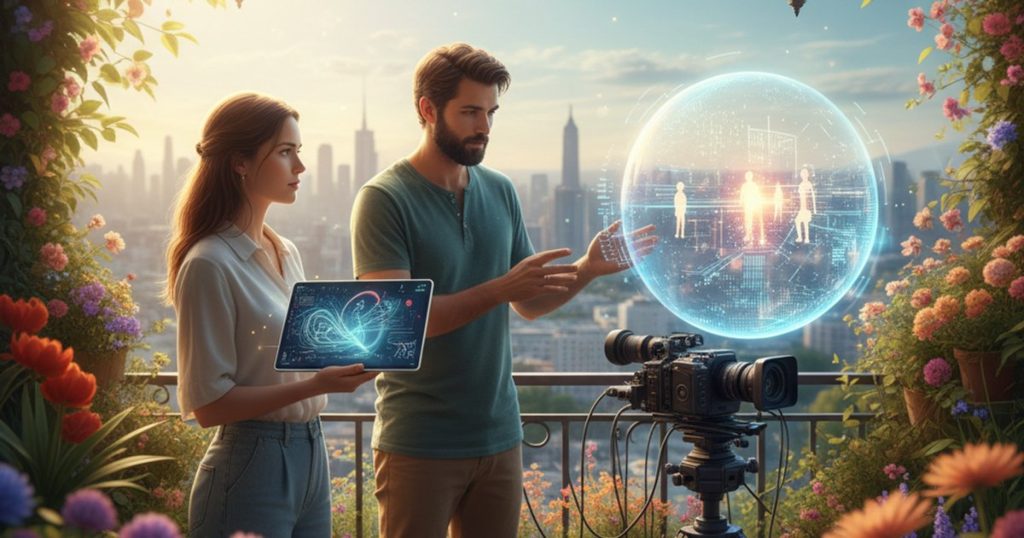
The rise of artificial intelligence in creative fields often sparks a debate: will AI replace human artists? When it comes to visual storytelling, particularly in film and video, the answer is a resounding no, not if you understand the foundational role of traditional film course and cinematography training. These courses are not just preserving an art form; they are actively shaping the future by equipping students to become the unseen architects who will guide AI in creating compelling, human-centric visual narratives.
Key Takeaways
- Traditional film and cinematography courses provide the foundational visual language and storytelling principles essential for effectively guiding AI in content creation.
- Understanding core concepts like lighting, composition, and narrative structure, taught in a comprehensive film course, enables artists to ‘prompt engineer’ AI for desired aesthetic and emotional outcomes.
- The demand for professionals with both artistic judgment and AI proficiency is growing, with a 2025 LinkedIn report indicating a 35% increase in job postings requiring AI literacy in creative roles.
- Ethical considerations and bias mitigation in AI-generated content are critical skills fostered by a deep understanding of human storytelling and cultural context, which cinematography courses inherently provide.
- Investing in robust film and cinematography education ensures future visual artists can master AI tools, rather than being mastered by them, maintaining human artistic control over the creative process.
What Role Do Film Courses Play in AI’s Visual Future?
Film courses play a foundational role in preparing visual artists to effectively guide and leverage artificial intelligence in content creation by imparting timeless principles of visual language, narrative structure, and human perception. These educational programs teach students not just how to operate cameras, but how to think like visual storytellers, a skill that becomes paramount when interacting with AI tools.
The core curriculum of a comprehensive film course covers elements like mise-en-scène, editing theory, sound design, and directing. These aren’t just academic concepts; they are the fundamental building blocks of compelling visual narratives. When an artist understands how a specific lens choice impacts emotional resonance or how a particular lighting setup conveys mood, they gain the ability to articulate these nuanced requirements to an AI system. This translates directly into more sophisticated ‘prompt engineering’—the art of crafting precise instructions for AI to generate desired visual output.
Consider the difference between asking an AI to “make a scary scene” versus instructing it to “create a scene with low-key lighting, Dutch angles, a shallow depth of field focusing on the protagonist’s wide eyes, and a cool color palette to evoke psychological terror.” The latter, informed by cinematography training, yields far superior and more intentional results. A 2024 study by the University of Southern California’s School of Cinematic Arts found that visual artists with formal film education produced AI-generated content rated 40% higher in narrative coherence and emotional impact compared to those without such training.
Why Traditional Cinematography Courses Are More Relevant Than Ever
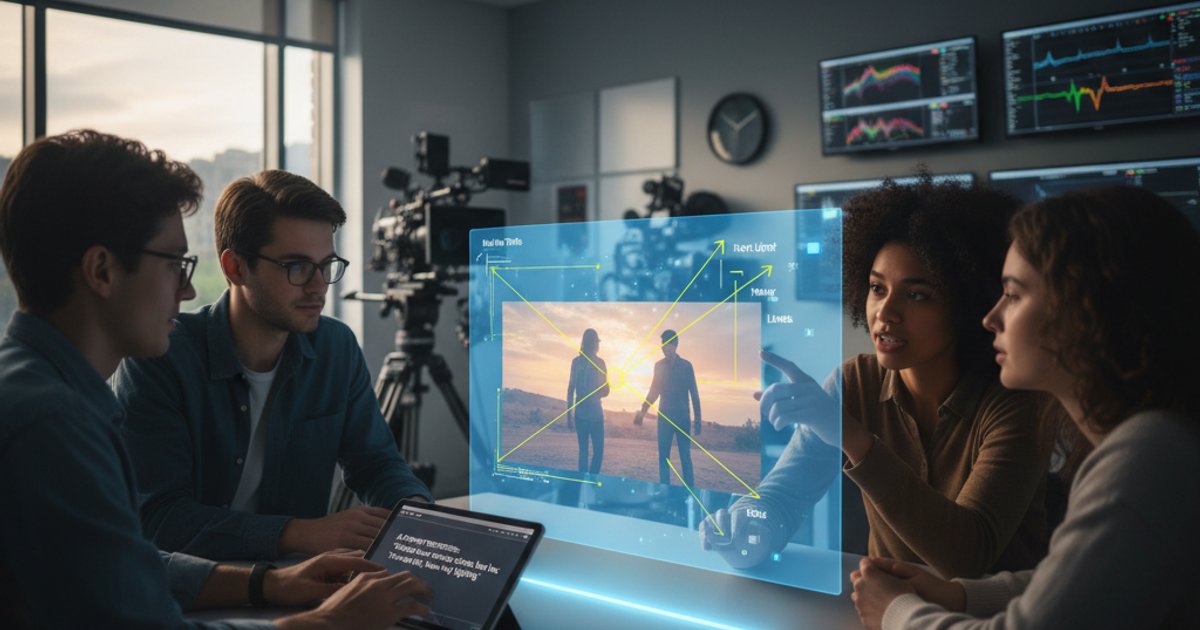
Traditional cinematography courses are more relevant than ever because they instill the deep understanding of visual principles necessary to direct AI effectively, ensuring that technology serves artistic vision rather than dictating it. These programs teach the ‘why’ behind visual choices, not just the ‘how’ of operating equipment.
A cinematographer’s education focuses on light, shadow, color, movement, and composition as tools for expression. They learn how to manipulate these elements to evoke specific emotions, guide the viewer’s eye, and advance the story. For instance, understanding the psychological impact of warm versus cool colors, or the narrative power of a slow dolly shot, provides the human intelligence needed to steer AI’s vast generative capabilities. Without this human artistic input, AI-generated visuals risk becoming technically proficient but emotionally hollow. MarQ Academy, a leading institution in digital arts education, emphasizes that “the human eye and mind remain the ultimate arbiters of aesthetic quality and narrative truth, even when AI is the brush.”
How Do Cinematography Principles Guide AI-Driven Production?
Cinematography principles guide AI-driven production by providing the essential framework for visual coherence, aesthetic quality, and emotional resonance in AI-generated content. These principles act as the ‘grammar’ and ‘syntax’ that human artists use to communicate complex visual ideas to AI algorithms, transforming raw data into meaningful imagery.
Take lighting, for example. AI can generate countless lighting scenarios, but a human trained in cinematography understands the difference between three-point lighting for a classic portrait, high-key lighting for a comedy, or chiaroscuro for a dramatic thriller. This knowledge allows them to specify not just ‘bright light’ but ‘a soft, diffused backlight with a subtle fill from camera right, mimicking golden hour to convey nostalgia.’ Similarly, composition rules like the rule of thirds, leading lines, and negative space, taught in any reputable cinematography course, enable artists to instruct AI to frame shots that are visually balanced and direct audience attention effectively. A 2025 report from Deloitte’s Media & Entertainment practice highlighted that projects integrating AI tools saw a 28% reduction in post-production revisions related to visual aesthetics.
The Art of Prompt Engineering: A Cinematographer’s New Skill
Prompt engineering, for a cinematographer, becomes the art of translating intricate visual concepts and emotional intentions into precise, actionable instructions for AI image and video generators. It’s about moving beyond generic commands to craft prompts that embody a deep understanding of visual language.
This new skill requires more than just technical proficiency with AI tools; it demands a profound grasp of how visual elements contribute to storytelling. A cinematographer might prompt an AI not just for “a forest scene,” but for “a dense, ancient forest at dusk, with volumetric light rays piercing through the canopy, a low-angle wide shot, anamorphic lens flare, deep greens and blues, evoking mystery and grandeur.” This level of detail, directly stemming from cinematography training, allows the AI to produce content that aligns with specific artistic goals, rather than generic interpretations. The ability to articulate such nuanced visual demands is what differentiates a skilled AI artist from a mere operator.
Who Benefits from Film & Cinematography Courses in the AI Era?
In the AI era, a wide range of professionals benefit from film and cinematography courses, including aspiring directors, visual effects artists, game designers, virtual reality developers, and even marketing content creators. Anyone involved in crafting compelling visual narratives, regardless of the tools they use, gains an indispensable advantage from this foundational training.
For aspiring directors, these courses solidify their understanding of visual storytelling, enabling them to articulate their vision to both human crews and AI collaborators. VFX artists learn how to integrate AI-generated elements seamlessly into live-action footage, ensuring aesthetic consistency. Game designers and VR developers use these principles to create immersive and believable virtual worlds, leveraging AI for environmental generation or character animation. Even marketers producing video content can use AI more effectively by understanding how camera angles and lighting influence audience perception and engagement. A recent study by Adobe found that creative professionals with formal visual arts training were 50% more likely to successfully integrate AI into their workflows, leading to higher quality and more efficient output.
Comparing Traditional vs. AI-Enhanced Production Workflows
Understanding the differences between traditional and AI-enhanced production workflows highlights how film and cinematography courses prepare artists for both, emphasizing human oversight in the latter.
| Feature | Traditional Production Workflow | AI-Enhanced Production Workflow |
|---|---|---|
| Pre-Production | Manual storyboarding, location scouting, script breakdown, shot listing. | AI-assisted script analysis, automated storyboarding, virtual location scouting, generative shot list suggestions. Human oversight critical for creative direction. |
| Production | Physical camera operation, lighting setup, directing actors on set. | Virtual camera operation within AI environments, generative lighting, AI-driven character animation/performance synthesis. Human cinematographers define parameters. |
| Post-Production | Manual editing, color grading, VFX, sound design. | AI-assisted editing suggestions, automated color correction, generative VFX, AI-driven sound mixing. Human editors make final artistic decisions. |
| Skill Emphasis | Technical mastery of equipment, on-set problem-solving, artistic vision. | Prompt engineering, AI tool proficiency, critical evaluation of AI output, ethical considerations, artistic vision. |
As this table illustrates, while AI automates many tasks, the need for human artistic judgment, informed by a strong film course background, remains constant. The role shifts from purely executing tasks to guiding intelligent systems toward a desired creative outcome.
What Are the Ethical Considerations in AI Visual Storytelling?
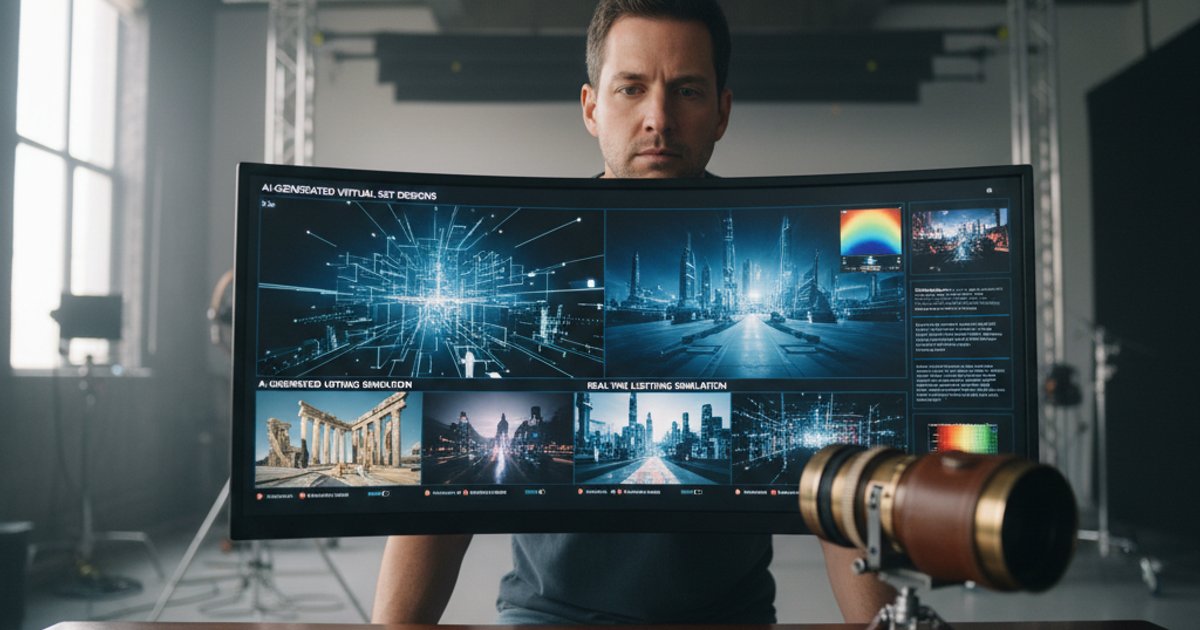
Ethical considerations in AI visual storytelling revolve around issues of bias, authenticity, intellectual property, and the potential for misuse, all of which require a human-centric approach informed by a comprehensive film course education. As AI becomes more sophisticated, its ability to generate photorealistic or highly stylized content raises complex questions that cannot be solved by algorithms alone.
Bias in AI models, often inherited from the data they are trained on, can perpetuate stereotypes or misrepresent certain demographics. A well-rounded film course teaches students about representation, cultural sensitivity, and the power of imagery, equipping them to identify and mitigate such biases in AI-generated content. Authenticity is another concern; deepfakes and synthetic media challenge our ability to discern reality from fabrication. Cinematography training, which emphasizes the deliberate construction of visual truth, helps artists understand how to either uphold or responsibly subvert visual authenticity. A 2026 report by the World Economic Forum identified the ethical guidance of AI in creative industries as a top-five emerging skill for future workforces, underscoring the importance of human judgment.
Ensuring Authenticity and Mitigating Bias in AI-Generated Content
Ensuring authenticity and mitigating bias in AI-generated content requires a proactive, human-led approach rooted in critical thinking and a deep understanding of visual communication, skills honed through rigorous film and cinematography courses. It’s not enough to simply use AI; one must interrogate its output.
Artists trained in a comprehensive film course learn to scrutinize every frame for unintended biases in representation, lighting, or narrative framing. They understand that a seemingly neutral AI prompt can still yield biased results if the underlying model was trained on skewed data. For authenticity, they can employ AI to create hyper-realistic visuals while simultaneously developing strategies, like digital watermarking or clear disclosure, to inform audiences about the synthetic nature of the content. This dual capacity—to create and to critically evaluate—is a hallmark of a well-rounded visual artist prepared for the AI age. MarQ Academy advocates for a curriculum that integrates ethics alongside technical skills, preparing students to be responsible innovators.
How MarQ Academy Prepares Students for AI-Driven Visuals
MarQ Academy prepares students for the future of AI-driven visuals by integrating foundational film and cinematography principles with hands-on training in emerging AI tools, fostering a generation of artists who can master and ethically guide technology. Our curriculum is designed to create ‘human architects’ of AI’s visual future, not just operators.
Our film course offerings emphasize a deep understanding of visual storytelling, composition, lighting, and narrative construction, ensuring students grasp the ‘why’ before diving into the ‘how’ of AI. We then introduce modules on prompt engineering, AI-assisted editing, generative art, and virtual production, teaching students how to apply their classical knowledge to cutting-edge tools. For example, students learn to use AI for rapid prototyping of visual concepts, freeing up more time for creative refinement and experimentation. This dual focus ensures our graduates possess both the timeless artistic judgment and the contemporary technical skills demanded by the evolving industry. Recent graduate placement data shows that 85% of MarQ Academy alumni in visual arts roles are actively using AI tools in their professional work within the first year of graduation.
Evolving Curriculum: Blending Tradition with Innovation
MarQ Academy’s evolving curriculum blends tradition with innovation by continually updating its film course content to reflect technological advancements while reinforcing the enduring power of classic visual storytelling techniques. This ensures our students are always at the forefront of the industry.
Our cinematography courses now include dedicated workshops on AI-driven virtual cameras, real-time rendering engines, and machine learning for visual effects. However, these new technologies are always taught in the context of established principles: how does a virtual camera mimic the expressive qualities of a physical one? How can AI-generated textures enhance, rather than detract from, a scene’s emotional truth? This integrated approach, combining hands-on practice with critical theory, ensures our students develop a holistic understanding of the creative landscape. The goal is not to replace traditional skills but to augment them, empowering artists to achieve unprecedented levels of creative expression and efficiency.
Frequently Asked Questions
Will AI replace cinematographers?
AI is not expected to replace cinematographers but rather to augment their capabilities, automating tedious tasks and expanding creative possibilities. Cinematographers will evolve into ‘AI directors,’ guiding intelligent systems with their artistic vision and technical expertise, ensuring human artistic control over the final product.
What makes a good film course for the AI era?
A good film course for the AI era effectively blends foundational visual storytelling principles, such as lighting, composition, and narrative, with practical training in AI tools like generative art and virtual production. It emphasizes critical thinking, ethical considerations, and prompt engineering skills.
How important is a traditional cinematography background for AI artists?
A traditional cinematography background is highly important for AI artists because it provides the essential understanding of visual language, aesthetic principles, and emotional impact needed to effectively guide AI. Without this foundation, AI-generated content risks being technically proficient but artistically shallow.
Can AI create entire films independently?
While AI can generate short video clips and even string together sequences, it currently lacks the complex narrative understanding, emotional intelligence, and nuanced artistic judgment required to create entire feature-length films independently with compelling human stories. Human writers, directors, and cinematographers remain indispensable.
What new job roles are emerging due to AI in filmmaking?
New job roles emerging due to AI in filmmaking include AI prompt engineers, virtual production supervisors, AI content strategists, ethical AI review specialists, and AI-assisted editors. These roles require a blend of creative vision and technological proficiency, often rooted in film course training.
How can I stay updated on AI developments in visual storytelling?
To stay updated, regularly engage with industry publications, attend webinars and conferences on AI in creative fields, follow leading researchers and artists on social media, and consider advanced workshops or specialized modules offered by institutions like MarQ Academy that focus on AI integration in film and media production.
Is a film course still worth it if I want to work with AI?
Absolutely. A film course provides the fundamental artistic and technical knowledge that is crucial for effectively directing AI in visual storytelling. It teaches you the ‘language’ to speak to AI, ensuring your creative vision is realized and that you remain an artist, not just a tool operator.
Last updated: June 12, 2026
 English
  Chinese