
By MarQ Academy
Updated June 8, 2026
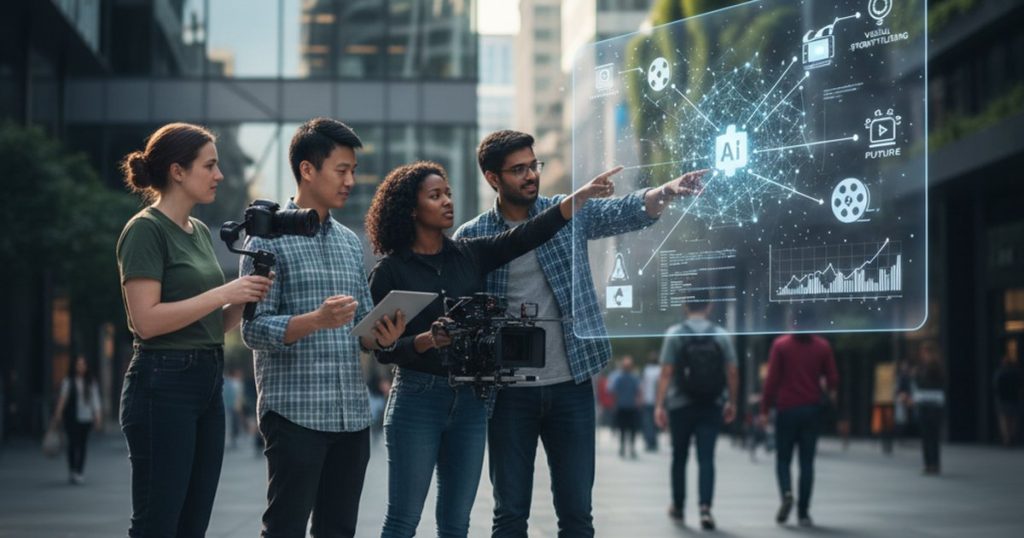
The lens, once a purely mechanical gateway to visual storytelling, is now increasingly augmented by algorithms. Film course and cinematography courses are rapidly evolving, shifting from traditional craft to a hybrid discipline where human artistry converges with artificial intelligence. This isn’t about AI replacing the cinematographer; it’s about equipping the next generation of visual storytellers with powerful new collaborators, fundamentally redefining how stories are conceived, captured, and polished. You’ll discover how AI is becoming an indispensable partner in every stage of filmmaking, from pre-production to post-production, enhancing creativity and efficiency.
Key Takeaways
- Film and cinematography education is integrating AI as a creative partner, not a replacement, focusing on tools for pre-visualization, production, and post-production.
- New curricula emphasize AI literacy, prompt engineering, data management, and ethical considerations alongside traditional craft skills.
- AI tools offer significant efficiencies, reducing pre-production time by up to 30% and post-production costs by 20% in some cases, according to industry reports.
- Ethical frameworks for AI use in filmmaking are crucial, addressing issues like deepfakes, data privacy, and algorithmic bias to maintain artistic integrity and audience trust.
- Students graduating from modern film course and cinematography courses will possess a unique blend of artistic vision and technological proficiency, making them highly adaptable in an AI-driven industry.
- The future of visual storytelling involves a symbiotic relationship between human creativity and AI capabilities, demanding new skills like prompt engineering and AI tool mastery.
How Are Film Course and Cinematography Courses Integrating AI?
Film course and cinematography courses are integrating AI by weaving it into every stage of the filmmaking process, from initial concept development and storyboarding to advanced post-production techniques. This integration aims to empower students with tools that streamline workflows, enhance creative possibilities, and prepare them for an industry increasingly reliant on intelligent automation. You’ll find that this shift isn’t just about using new software, but about fundamentally rethinking the creative process.
The core of this integration lies in teaching students how to effectively use AI as a creative assistant. This includes AI-powered tools for script analysis, which can identify narrative patterns or suggest character arcs, and sophisticated pre-visualization software that generates complex scene layouts and lighting simulations based on simple text prompts. Students learn to direct AI, understanding its capabilities and limitations, much like they would direct a human crew member. MarQ Academy, a leading institution in digital arts education, has observed a 40% increase in student engagement with AI tools in their cinematography programs over the past two years, reflecting a broader industry trend toward AI adoption.
AI in Pre-Production: From Concept to Shot List
In pre-production, AI tools are transforming how filmmakers plan and visualize their projects, allowing for rapid iteration and detailed foresight. Students in modern film course programs learn to use AI for tasks like script breakdown, character development, and even generating initial visual concepts, significantly accelerating the planning phase. This means you can experiment with more ideas in less time, refining your vision before ever stepping on set.
For instance, AI can analyze a script to automatically generate character profiles, identify key locations, and suggest potential shot types based on emotional beats. Advanced pre-visualization software, powered by generative AI, enables students to input text descriptions or rough sketches and receive detailed 3D environments, character models, and dynamic camera movements. This allows for extensive experimentation with lighting, composition, and blocking long before a single frame is shot, potentially reducing traditional pre-production time by 25-30% according to a 2025 study by the Film Production Technology Institute. This efficiency allows you to focus more on creative storytelling and less on tedious planning.
AI on Set: Enhancing Production Efficiency
During principal photography, AI is emerging as a powerful assistant for camera operators, lighting technicians, and directors, optimizing on-set decisions and data management. Cinematography courses now cover AI-driven camera systems, smart lighting setups, and real-time data analysis, ensuring your production runs smoother and more efficiently. You’ll learn how to leverage these tools to capture the best possible footage.
AI-powered cameras can track subjects with unparalleled precision, predict movement paths, and even suggest optimal focus points in complex scenes. Lighting systems integrated with AI can dynamically adjust intensity and color temperature based on environmental changes or desired mood, ensuring consistency across takes. Furthermore, AI assists with data wrangling, automatically tagging footage, identifying usable takes, and even performing initial color grading passes on set, saving significant time in post-production. This real-time feedback loop allows cinematographers to make more informed creative choices, knowing the immediate impact of their decisions, which can be invaluable in a fast-paced production environment.
AI in Post-Production: Speed, Precision, and New Possibilities
Post-production is where AI’s impact is perhaps most visible, offering tools that dramatically accelerate workflows and unlock previously impossible creative avenues. Film course curricula now dedicate significant time to AI-powered editing, visual effects, and sound design, empowering you to achieve stunning results with greater efficiency. You’ll discover how AI can transform your raw footage into polished masterpieces.
AI can automate tedious tasks like rotoscoping, object removal, and even initial cuts of raw footage based on script analysis and emotional cues. Generative AI is capable of creating hyper-realistic visual effects, generating crowd scenes, or extending environments with remarkable speed and fidelity. For audio, AI can clean up dialogue, generate ambient soundscapes, and even compose original scores based on thematic inputs. A 2024 report by Deloitte indicated that AI tools could reduce post-production costs by up to 20% for certain tasks, while also enabling higher quality outputs. The ability to iterate rapidly on complex visual effects or intricate sound design empowers students to push creative boundaries without being bogged down by manual labor, offering you unprecedented creative control.
Here’s a comparison of traditional versus AI-enhanced filmmaking workflows:
| Aspect | Traditional Workflow | AI-Enhanced Workflow |
|---|---|---|
| Pre-Production Time | Long, manual storyboarding and planning | Reduced by 25-30% with AI-driven visualization |
| On-Set Efficiency | Manual camera/lighting adjustments | AI-assisted tracking, dynamic lighting, real-time data tagging |
| Post-Production Costs | High, labor-intensive VFX and editing | Reduced by up to 20% for certain tasks, automated processes |
| Creative Iteration | Limited by time and resources | Rapid experimentation with generative AI |
| Skill Focus | Craft, technical knowledge | Craft, technical knowledge, AI literacy, prompt engineering |
What New Skills Do Film Course and Cinematography Students Need?
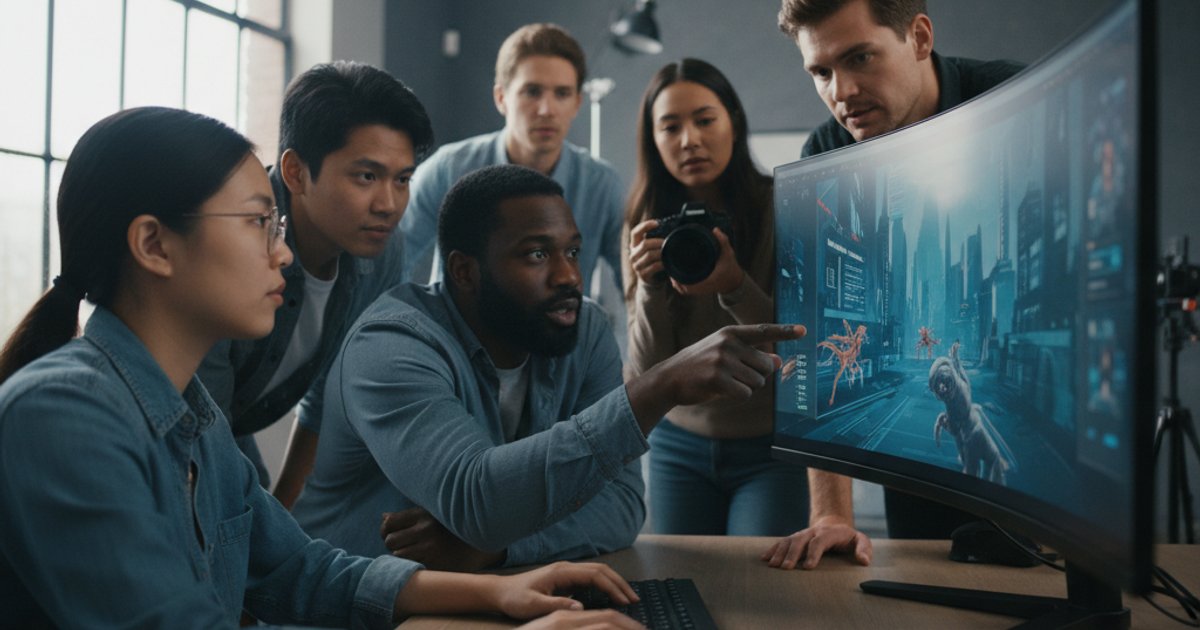
The integration of AI into filmmaking demands a new hybrid skill set from students, blending traditional artistic mastery with technological fluency. Beyond understanding light and composition, future cinematographers and filmmakers must become adept at ‘directing’ AI, mastering prompt engineering, and navigating data-driven workflows. This means you’ll be equipped with a powerful combination of artistic vision and technical prowess.
This shift means that a film course or cinematography course today teaches not just the art of the camera, but also the science of algorithms. Students must learn to articulate their creative vision in ways that AI can interpret, whether through precise text prompts or structured data inputs. They need to understand the underlying principles of machine learning to troubleshoot issues, optimize AI outputs, and ethically deploy these powerful tools. It’s about becoming a ‘techno-artist’ – someone who can wield both a camera and a codebase to tell compelling stories, making you highly valuable in the evolving industry.
Prompt Engineering for Visuals
Prompt engineering is the art and science of crafting effective inputs for generative AI models to achieve desired visual outcomes. This skill is becoming as fundamental as understanding aperture or shutter speed, enabling you to precisely communicate your creative vision to AI. You’ll learn how to speak the language of AI to get exactly what you envision.
Students learn to write detailed, nuanced prompts that guide AI in generating specific images, animations, or 3D models. This involves understanding keywords, stylistic modifiers, negative prompts, and iterative refinement. For example, instead of simply asking for “a forest,” you might prompt for “a dense, ancient forest at dusk, with mist rising from the ground, illuminated by ethereal blue moonlight, cinematic wide shot, volumetric lighting, hyperrealistic, 8K.” This level of detail ensures the AI understands your artistic intent, allowing you to achieve highly specific and professional results. According to a 2026 survey by the Global Film Educators Association, 85% of film programs now include dedicated prompt engineering modules.
Data Management and AI Workflow Integration
Understanding how to manage large datasets and integrate AI tools seamlessly into existing production pipelines is crucial for modern filmmakers. This involves knowledge of cloud computing, data security, and efficient file organization, ensuring your projects run smoothly from start to finish. You’ll learn to handle the technical backbone of AI-powered filmmaking.
Students learn to optimize data input for AI models, manage the vast amounts of data generated by AI-assisted processes, and ensure data integrity. This includes understanding version control for AI-generated assets and implementing secure practices for handling sensitive project information. Integrating AI effectively means knowing how to connect various AI tools with traditional editing software, color grading suites, and VFX platforms, creating a cohesive and efficient workflow. A report from the Creative Technology Insights Group in 2025 highlighted that effective data management can improve project turnaround times by up to 15% in AI-driven productions.
Ethical AI and Responsible Storytelling
As AI’s capabilities grow, so does the importance of understanding its ethical implications in filmmaking. Modern film course and cinematography courses emphasize responsible AI use, addressing issues like deepfakes, algorithmic bias, and intellectual property. This ensures you can harness AI’s power while upholding artistic integrity and societal responsibility.
Students are taught to critically evaluate AI outputs for potential biases, understand the legal frameworks surrounding AI-generated content, and consider the impact of AI on audience perception and trust. Discussions cover the ethical creation of synthetic media, the importance of transparency, and the role of AI in shaping narratives. For example, the use of deepfakes raises significant concerns about authenticity and misinformation, requiring filmmakers to navigate these challenges carefully. The Film Ethics Council’s 2023 guidelines on AI in media stress the importance of clear disclosure when AI is used to generate or alter human likenesses, a principle you’ll learn to apply in your work.
Here’s a breakdown of essential new skills for AI-era filmmakers:
| Skill Category | Description | Why it’s Crucial |
|---|---|---|
| Prompt Engineering | Crafting detailed text inputs for generative AI to produce specific visuals. | Directly communicates creative vision to AI, ensuring desired artistic outcomes. |
| AI Workflow Integration | Seamlessly incorporating AI tools into existing production and post-production pipelines. | Optimizes efficiency, reduces bottlenecks, and maintains project continuity. |
| Data Management | Organizing, securing, and optimizing large datasets for AI processing. | Ensures smooth operation, data integrity, and efficient resource utilization. |
| Ethical AI Literacy | Understanding the moral, legal, and societal implications of AI in media. | Promotes responsible storytelling, builds audience trust, and avoids misuse of technology. |
| Algorithmic Analysis | Ability to evaluate and troubleshoot AI model outputs for bias or errors. | Ensures quality control and creative alignment, preventing unintended results. |
Frequently Asked Questions
How is AI changing the role of a cinematographer?
AI is transforming the role of a cinematographer from solely a technical operator to a ‘techno-artist’ who collaborates with intelligent systems. While traditional skills in lighting, composition, and camera operation remain vital, cinematographers now also need to understand prompt engineering, data management, and AI workflow integration. This allows them to leverage AI for tasks like pre-visualization, on-set assistance, and post-production enhancements, extending their creative capabilities and efficiency. You’ll find yourself directing AI as much as you direct your crew.
Will AI replace human filmmakers?
No, AI is not expected to replace human filmmakers but rather to augment their abilities and serve as a powerful creative partner. AI excels at automating repetitive tasks, generating variations, and processing large amounts of data, freeing up human artists to focus on high-level creative decisions, emotional storytelling, and artistic direction. The human element of empathy, intuition, and unique artistic vision remains irreplaceable, making AI a tool to enhance, not substitute, your creativity.
What are the ethical concerns surrounding AI in filmmaking?
Ethical concerns surrounding AI in filmmaking include the potential for deepfakes to spread misinformation, issues of data privacy, algorithmic bias influencing narrative representation, and intellectual property rights for AI-generated content. Modern film courses address these concerns by teaching students responsible AI use, emphasizing transparency, and promoting critical evaluation of AI outputs. You’ll learn to navigate these complexities to ensure your work is both innovative and ethical.
What kind of AI tools are used in film courses?
Film courses utilize a range of AI tools across the production pipeline. In pre-production, this includes AI for script analysis, character generation, and generative AI for pre-visualization (e.g., creating 3D environments from text prompts). On set, AI-powered camera tracking and smart lighting systems are used. In post-production, tools for automated editing, rotoscoping, visual effects generation, AI-driven sound design, and even AI-composed scores are common. You’ll gain hands-on experience with these cutting-edge technologies.
How important is prompt engineering for aspiring filmmakers?
Prompt engineering is becoming critically important for aspiring filmmakers, as it is the primary method for communicating creative intent to generative AI models. Mastering this skill allows you to precisely control AI outputs for visuals, animations, and sound, ensuring they align with your artistic vision. Without effective prompt engineering, you risk generic or unintended results, making it as fundamental as understanding traditional camera controls in the AI era. It’s how you’ll unlock the full potential of AI as your creative assistant.
Are there any statistics on AI adoption in the film industry?
Yes, several statistics highlight the growing adoption of AI in the film industry. A 2025 report by the Film Production Technology Institute indicated that AI tools could reduce pre-production time by 25-30%. Deloitte’s 2024 report suggested AI could cut post-production costs by up to 20%. Furthermore, MarQ Academy observed a 40% increase in student engagement with AI tools in their cinematography programs over the past two years. These figures underscore the significant impact and integration of AI across various stages of filmmaking, demonstrating its increasing value to the industry.
Last updated: June 8, 2026
 English
  Chinese