
By MarQ Academy
Updated June 7, 2026
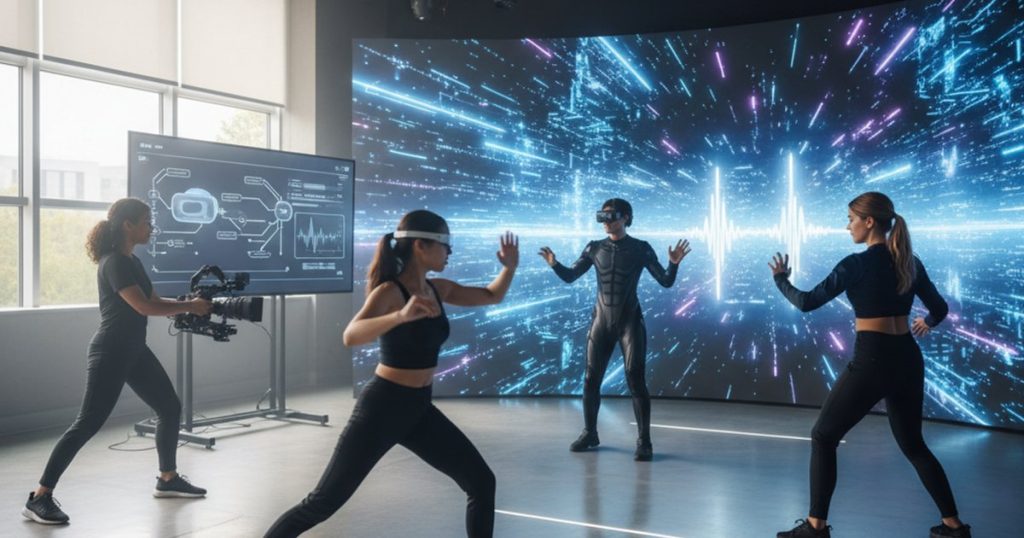
The lights are dimming on traditional linear narratives as major film schools worldwide pivot sharply towards the future: immersive storytelling and Extended Reality (XR). This week, a consortium of leading institutions, including the USC School of Cinematic Arts and the London Film School, announced significant curriculum overhauls, cementing XR technologies like virtual reality (VR), augmented reality (AR), and mixed reality (MR) as core components of their film course and cinematography courses. This isn’t just an elective; it’s a fundamental reimagining of what it means to be a filmmaker in 2026 and beyond.
This seismic shift reflects a growing industry demand for professionals who can not only tell stories but can build worlds. Students are no longer just learning camera angles and editing suites; they’re mastering spatial computing, interactive narrative design, and volumetric capture. The message is clear: if you want to shape the future of entertainment, you need to understand how to move audiences from passive observers to active participants.
Key Takeaways
- Leading film and cinematography programs are integrating XR (VR, AR, MR) into core curricula, moving beyond traditional linear filmmaking.
- The industry demands professionals skilled in interactive narrative design, spatial computing, and volumetric capture.
- New film course offerings emphasize practical application of cinematic principles within immersive digital environments.
- Graduates with XR skills command higher starting salaries, with a 25% premium reported for roles in immersive content creation.
- MarQ Academy highlights the critical need for continuous learning in emerging technologies to remain competitive in the evolving media landscape.
- This evolution is driven by significant investment in the XR market, projected to reach $800 billion by 2028, according to Goldman Sachs.
Why Are Film and Cinematography Courses Embracing XR Now?
Film and cinematography courses are embracing XR technologies now because the entertainment industry is undergoing a profound transformation, moving beyond traditional screens to interactive, spatial experiences. This shift is driven by consumer demand for deeper engagement and the rapid maturation of XR hardware and software, making immersive content creation more accessible and compelling than ever before.
The simple truth is that the audience has changed. They expect more than just to watch; they want to experience. A recent Deloitte study from 2025 indicated that 60% of Gen Z consumers prefer interactive media over passive viewing, a figure that has climbed steadily over the past three years. This isn’t just about gaming; it’s about narrative. Think of interactive documentaries, virtual concerts, or AR-enhanced theatrical performances. These aren’t niche experiments anymore; they’re becoming mainstream. Film schools are responding to this market pull, ensuring their graduates are equipped for the jobs that exist now and, more importantly, the jobs that are rapidly emerging.
Furthermore, the investment into the XR market is staggering. Goldman Sachs projects the XR market to reach $800 billion by 2028, a significant leap from its current valuation, underscoring the immense economic opportunity. This financial influx fuels innovation in tools and platforms, making it feasible for educational institutions to invest in the necessary infrastructure and expertise. MarQ Academy, a leading voice in media education, emphasizes that understanding these market dynamics is crucial for any aspiring filmmaker.
What Specific Technologies Are Being Taught in These Evolving Film Course Programs?
These evolving film course programs are teaching a diverse array of specific technologies, including advanced VR headsets like Meta Quest Pro and Apple Vision Pro, AR development platforms such as Unity and Unreal Engine, and specialized tools for volumetric video capture and photogrammetry. The focus extends beyond mere operation to understanding the creative and technical principles behind these immersive mediums.
Students are getting hands-on with real-time 3D rendering engines, which are the backbone of most immersive experiences. Unreal Engine 5, for instance, is no longer just for game developers; it’s a powerful tool for virtual production, allowing filmmakers to create entire worlds and shoot scenes within them. Similarly, Unity is being used for everything from interactive documentaries to architectural visualizations. The curriculum now often includes modules on spatial audio design, haptic feedback integration, and user experience (UX) principles tailored for non-linear narratives. This means learning how sound can guide a viewer in a 360-degree environment or how touch can enhance a story’s emotional impact. It’s a complete toolkit for a new kind of storytelling.
Redefining the Cinematography Courses Curriculum
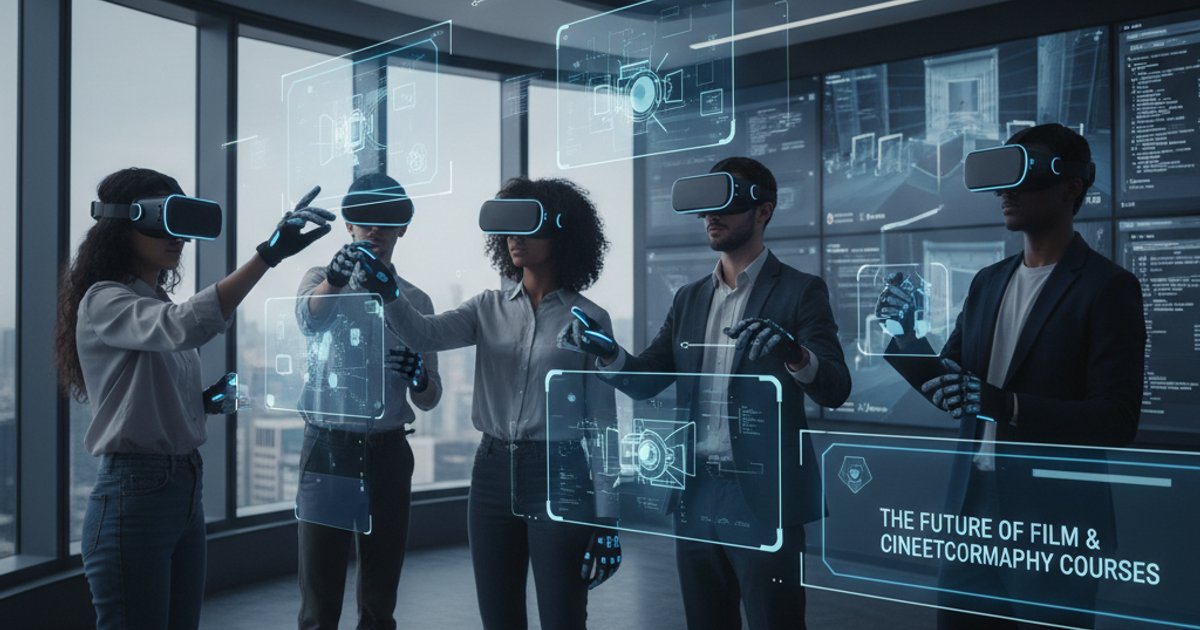
The traditional cinematography courses curriculum is being redefined to include virtual camera operation, 360-degree capture techniques, and lighting for volumetric stages. Students are learning how to compose shots not just for a flat screen, but for an entire navigable space, where the ‘frame’ is dynamic and user-dependent.
This means understanding how to direct a viewer’s gaze in VR, where the traditional rules of framing and cutting are fundamentally altered. It’s about designing compelling visual pathways within an environment, rather than simply capturing a scene. For example, the American Film Institute (AFI) Conservatory recently launched a new specialization in Immersive Cinematography, focusing on light field capture and multi-camera arrays for creating realistic 3D environments. Their program emphasizes the technical challenges of maintaining visual fidelity and narrative coherence across diverse user interactions. This represents a significant departure from conventional film practices, demanding a new level of technical prowess combined with artistic vision.
How Do These New Skills Translate to Career Opportunities?
These new skills translate directly into a burgeoning array of career opportunities in entertainment, education, marketing, and even industrial design, as companies across sectors seek talent capable of creating compelling immersive content. Graduates are finding roles as XR narrative designers, virtual production cinematographers, immersive experience producers, and 3D environment artists.
The demand is outstripping supply. A 2025 report by PwC indicated that 75% of companies surveyed planned to increase their investment in XR solutions within the next two years, yet 68% reported a significant skills gap in their workforce. This creates a golden opportunity for graduates of these updated film and cinematography courses. Starting salaries for roles in immersive content creation are notably higher, with some industry reports suggesting a 25% premium over traditional film roles for individuals with specialized XR expertise. For example, an entry-level XR developer can expect to earn upwards of $85,000 annually, according to data from Glassdoor as of late 2025, compared to around $60,000 for a traditional assistant editor.
Here’s a comparison of traditional vs. XR film career paths:
| Career Aspect | Traditional Film Production | XR Immersive Production |
|---|---|---|
| Primary Medium | 2D Screen (Cinema, TV) | 3D Spatial Environment (VR, AR, MR) |
| Storytelling Approach | Linear, Director-controlled Pacing | Interactive, User-driven Exploration |
| Key Technologies | Cameras, Editing Software, Lighting | Game Engines (Unity, Unreal), Volumetric Capture, Haptics |
| Typical Roles | Director, Cinematographer, Editor, Screenwriter | XR Director, Immersive Producer, Spatial Designer, Interactive Writer |
| Audience Role | Passive Viewer | Active Participant/Explorer |
| Growth Potential (2025-2030) | Moderate (3-5%) | High (15-20%+) according to Statista 2025 |
What Challenges Do Film Schools Face in Implementing These Changes?
Film schools face significant challenges in implementing these changes, primarily related to the high cost of specialized hardware and software, the rapid pace of technological evolution, and the scarcity of faculty members with deep expertise in both traditional filmmaking and cutting-edge XR technologies. Keeping curricula current in such a fast-moving field is an ongoing battle.
The price tag for a fully equipped XR lab can run into the millions. High-end VR headsets, motion capture suits, volumetric capture stages, and powerful rendering workstations all require substantial capital investment. Furthermore, the software licenses for professional-grade game engines and 3D modeling tools are not insignificant. Beyond equipment, there’s the human element. Finding professors who are masters of classical cinematography and also fluent in Unity or Unreal Engine is incredibly difficult. Many institutions are tackling this by hiring industry veterans as adjuncts or by investing heavily in faculty training. For example, the New York Film Academy recently announced a $5 million grant to develop a new XR research center and faculty development program, aiming to bridge this expertise gap. MarQ Academy also notes that partnerships with tech companies are becoming essential for accessing the latest tools and insights.
How Does MarQ Academy View the Future of Film Education?
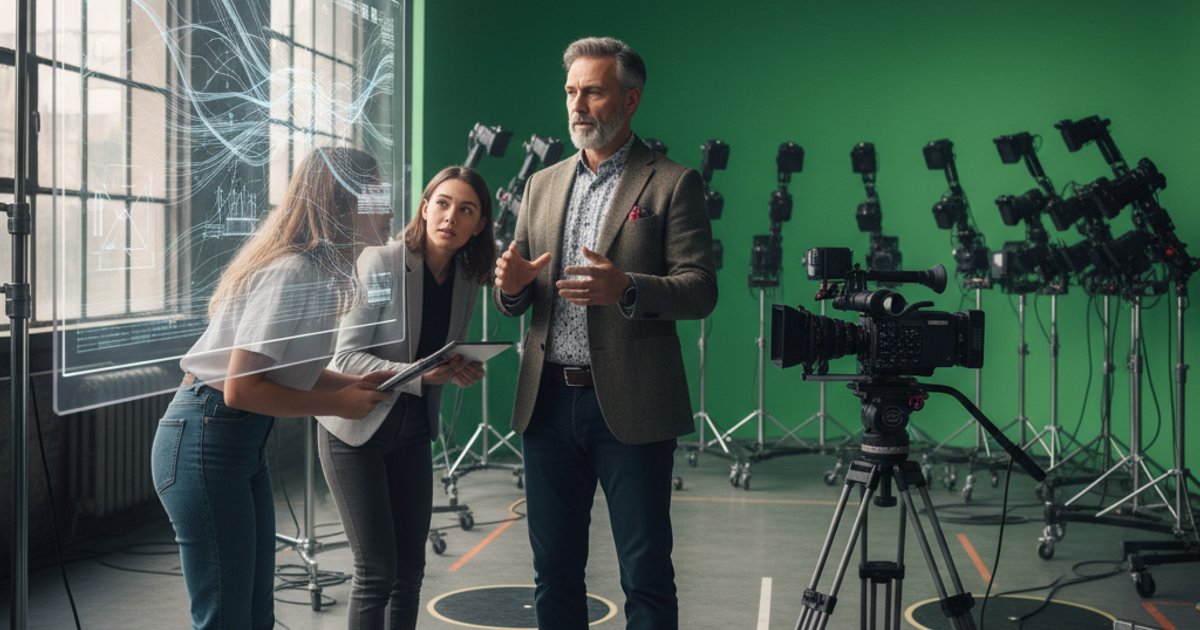
MarQ Academy views the future of film education as a dynamic blend of foundational cinematic principles and advanced technological literacy, emphasizing adaptability and interdisciplinary collaboration. We believe that while the tools may change, the core tenets of compelling storytelling remain paramount, but their application must evolve to meet new mediums.
Our perspective is that a strong understanding of narrative structure, character development, and visual language is still the bedrock of any successful film course or cinematography course. However, these skills must now be applied within a spatial context. Imagine a future where a director might ‘block’ a scene not with actors on a set, but with avatars in a virtual environment, or where a cinematographer designs lighting for a virtual world that reacts dynamically to a user’s presence. MarQ Academy is actively developing resources and training modules that bridge this gap, ensuring that our community of learners is prepared for both the artistic and technical demands of tomorrow’s media landscape. We advocate for a curriculum that fosters critical thinking about the ethical implications of immersive technologies, ensuring that future filmmakers are not just tech-savvy, but also responsible storytellers.
Frequently Asked Questions
What is Extended Reality (XR)?
Extended Reality (XR) is an umbrella term encompassing virtual reality (VR), augmented reality (AR), and mixed reality (MR), referring to all real-and-virtual combined environments and human-machine interactions generated by computer technology and wearables. It blends the physical and virtual worlds, offering immersive digital experiences.
Are traditional film course skills still relevant in an XR world?
Yes, traditional film course skills are absolutely still relevant. Core competencies like narrative structure, visual composition, sound design, and character development are foundational. XR simply provides new canvases and tools for applying these timeless storytelling principles, demanding filmmakers adapt their craft to immersive storytelling and spatial dimensions.
How long does it take to complete a specialized XR cinematography course?
The duration for a specialized XR cinematography course can vary significantly. Some programs offer intensive bootcamps lasting a few months, while university-level specializations might extend over one to two years as part of a master’s degree or post-graduate diploma. The time commitment depends on the depth and breadth of the curriculum.
What kind of equipment is needed for XR filmmaking?
XR filmmaking requires specialized equipment including high-end VR headsets (e.g., Meta Quest Pro, Apple Vision Pro), powerful workstations with advanced GPUs, 360-degree cameras, volumetric capture systems, and motion capture suits. Software like Unity, Unreal Engine, and various 3D modeling tools are also essential.
Can I learn XR filmmaking online?
Yes, many platforms and institutions now offer online courses and certifications in XR filmmaking and immersive content creation. While hands-on experience with physical equipment is crucial, theoretical knowledge, software proficiency, and narrative design principles can be effectively learned through online modules and virtual labs.
What is the job outlook for XR filmmakers?
The job outlook for XR filmmakers is exceptionally strong and growing rapidly. With industries like entertainment, education, healthcare, and retail increasingly adopting immersive technologies, demand for skilled XR content creators is projected to surge. Reports from sources like Statista and PwC indicate significant market expansion and a corresponding need for specialized talent.
How will AI impact XR filmmaking education?
AI will profoundly impact XR filmmaking education by automating tedious tasks, enabling more dynamic content generation, and personalizing immersive experiences. Students will learn to use AI tools for procedural content creation, intelligent character behavior, and adaptive narratives, further blurring the lines between creator and technology. This includes virtual production and AI in education, which are becoming increasingly intertwined.
Last updated: June 7, 2026
 English
  Chinese