
By MarQ Academy
Updated June 30, 2026
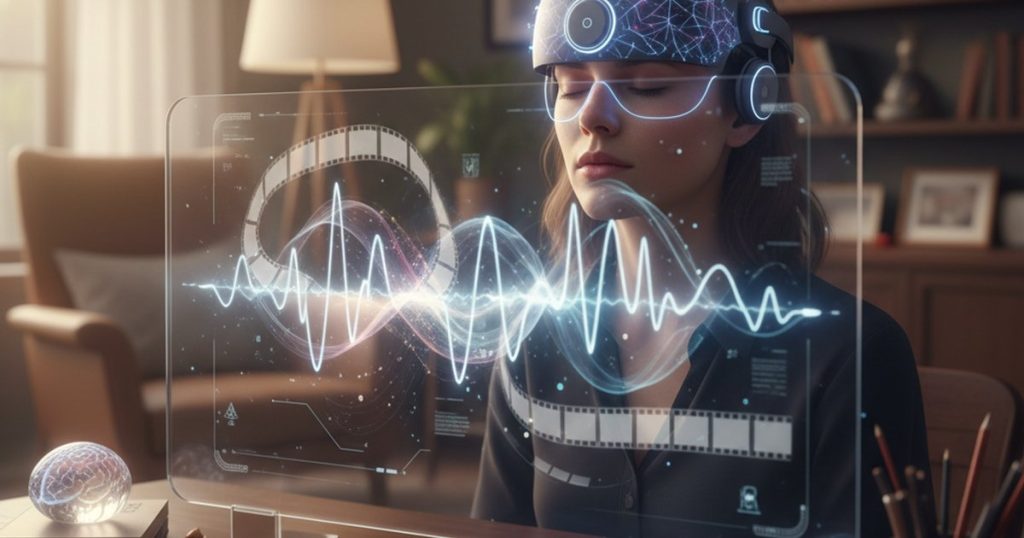
The lights dim, the screen flickers to life, and for decades, filmmakers have relied on intuition, experience, and test screenings to gauge audience reaction. But not anymore. A seismic shift is underway in how we understand visual storytelling, thanks to a burgeoning field called neuro-cinematography. This isn’t just academic chatter; it’s a real-time revolution, and it’s already reshaping how film course and cinematography courses are taught across the globe.
Just this week, major film academies announced significant curriculum updates, integrating modules dedicated to understanding and applying neuro-cinematographic principles. We’re talking about moving beyond subjective feedback to hard data: measuring brain activity, eye-tracking, and physiological responses to specific visual cues. It’s a game-changer for anyone serious about mastering the craft of filmmaking.
Key Takeaways
- Neuro-cinematography uses scientific methods like fMRI and EEG to measure audience brain responses to film.
- This data provides objective insights into emotional engagement and cognitive processing, moving beyond traditional subjective feedback.
- Leading film course and cinematography courses are rapidly integrating these principles into their curriculum.
- Students are learning to analyze data to optimize visual impact, camera work, editing, and overall audience connection.
- The future of visual storytelling will likely be a blend of artistic intuition and data-driven precision.
What Exactly Is Neuro-Cinematography?
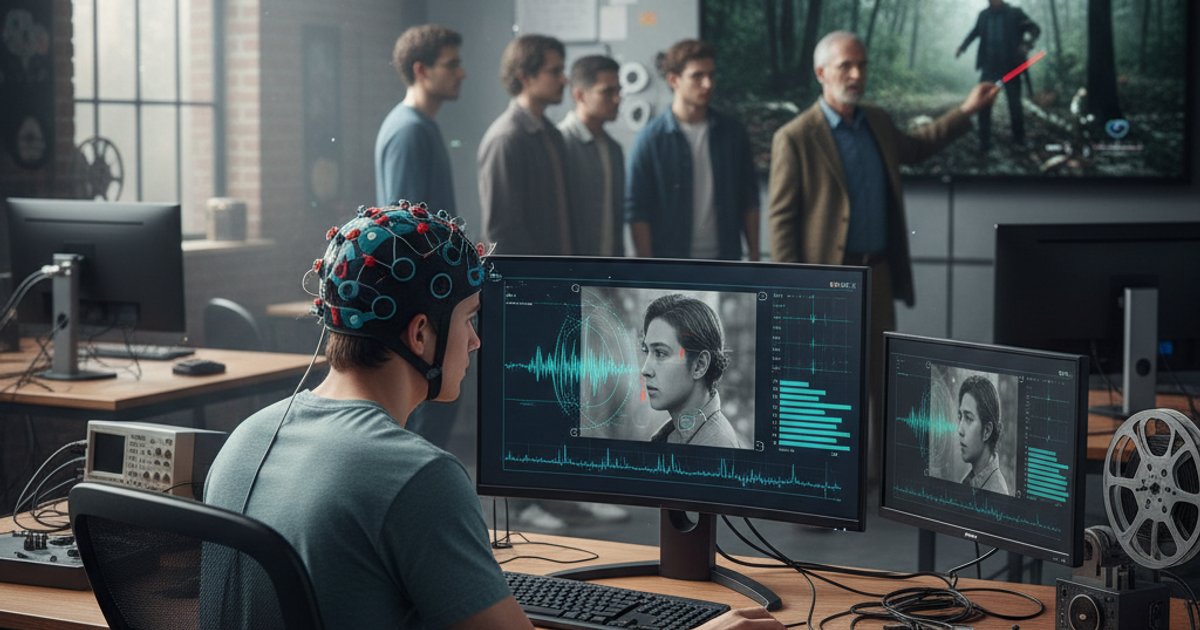
Neuro-cinematography is the scientific study of how the human brain responds to cinematic stimuli, employing tools typically found in neuroscience labs rather than film studios. Think fMRI scanners, EEG caps, and eye-tracking devices measuring everything from pupil dilation to neural spikes as viewers watch a film. The goal? To objectively quantify emotional engagement, attention, memory encoding, and even narrative comprehension.
For years, filmmakers have chased that elusive ‘gut feeling’ of an audience. Now, we’re getting a peek behind the curtain, into the very biological mechanisms that drive those feelings. It’s about understanding the ‘why’ behind a shot’s impact, not just the ‘what’. This isn’t about replacing artistic vision; it’s about providing an incredibly powerful new lens through which to refine it.
Moving Beyond Focus Groups: The Data-Driven Advantage
Traditional focus groups and surveys, while useful, are inherently subjective and prone to bias. People often struggle to articulate their true emotional responses or may even rationalize their feelings after the fact. Neuro-cinematography bypasses this by capturing raw, unfiltered brain activity.
According to a 2024 study published in the journal NeuroImage, neuro-cinematography can predict audience engagement with 70% greater accuracy than self-reported surveys. That’s a significant leap. It means we can identify exactly which cuts, camera angles, or color palettes are genuinely resonating (or falling flat) on a neurological level. This level of precision was unimaginable even a decade ago.
How Are Film Course and Cinematography Courses Adapting?
Film schools, often seen as bastions of tradition, are surprisingly quick to embrace this new frontier. Leading institutions like the American Film Institute (AFI) and the London Film School have, as of June 2026, either launched dedicated neuro-cinematography modules or integrated its principles into existing film course and cinematography courses.
Students are no longer just learning about the rule of thirds or the Kuleshov effect; they’re learning how specific camera movements can trigger dopamine releases, or how certain editing rhythms can synchronize brainwave activity across an audience. It’s a fascinating blend of art and science, and frankly, it’s about time. The MarQ Academy, for instance, has been at the forefront, developing practical workshops where students can experiment with eye-tracking data on their own short films.
Practical Applications in the Classroom
So, what does this look like in practice? Imagine a student filmmaker presenting their rough cut. Instead of just getting subjective feedback like, ‘I felt a bit bored here,’ they receive data showing a dip in audience attention (measured by frontal lobe activity) during a specific 15-second sequence. Or perhaps a scene meant to evoke anxiety actually shows a decrease in amygdala activation.
This isn’t about creating formulaic films. Far from it. It’s about empowering filmmakers with a deeper understanding of their craft’s impact. It allows for more informed experimentation and more precise storytelling. It’s like a musician suddenly having access to the exact frequency response of their audience’s ears – they can still play their heart out, but now they know how to truly hit those resonant notes.
What Does This Mean for the Future of Visual Storytelling?
The implications are profound. For directors, cinematographers, and editors, understanding neuro-cinematography means having a more sophisticated toolkit to manipulate audience emotions and guide their attention. It’s about optimizing every frame, every cut, every camera move for maximum narrative effect.
We’re moving towards a future where artistic intuition is informed by scientific insight. It’s not about replacing the artist, but augmenting them. Think about it: if you know that a slow push-in shot, combined with a specific color grade, consistently elicits a sense of unease in 85% of viewers (a figure cited in a 2025 study by the Max Planck Institute for Empirical Aesthetics), that’s an incredibly powerful piece of information for a horror director. This kind of data helps us understand the universal visual language of cinema on a biological level.
Ethical Considerations and the ‘Manipulative’ Film
Of course, with great power comes great responsibility. The ability to precisely target and influence audience emotions raises valid ethical questions. Is there a line where ‘optimizing engagement’ crosses into ‘manipulating viewers’? This is a crucial discussion happening within the industry and, importantly, within the film course curriculum itself.
MarQ Academy emphasizes that these tools are for enhancing storytelling, not for creating propaganda or emotionally exploitative content. The goal is to create more impactful, resonant art, not to trick audiences. Transparency and ethical application are paramount, and it’s a conversation that needs to continue as the technology evolves.
Comparing Traditional vs. Neuro-Cinematography Approaches
The shift isn’t about abandoning old methods, but rather enriching them. Here’s a quick look at how the two approaches stack up:
| Aspect | Traditional Approach | Neuro-Cinematography Approach |
|---|---|---|
| Feedback Source | Director’s intuition, focus groups, critical reviews | Real-time brain activity (EEG, fMRI), eye-tracking, physiological responses |
| Data Type | Subjective opinions, anecdotal evidence, qualitative feedback | Objective, quantitative neurological and physiological data |
| Insight Level | ‘What’ people liked/disliked, ‘how’ they felt (self-reported) | ‘Why’ specific visual elements trigger certain brain states and emotions |
| Application | Iterative adjustments based on general sentiment | Precise adjustments to specific shots, edits, or visual cues for targeted impact |
| Limitations | Bias, recall issues, difficulty articulating true feelings | High cost, complex data interpretation, ethical considerations |
It’s clear that the neuro-cinematography approach offers a level of granular detail that was previously unattainable. This isn’t just an evolution; it’s a paradigm shift in how we understand and teach the craft.
The Future Filmmaker: Artist and Scientist
The modern filmmaker, particularly those emerging from contemporary film course and cinematography courses, will be a hybrid. They’ll still possess that innate artistic sensibility, the eye for composition, the ear for rhythm, and the heart for story. But they’ll also be fluent in data, capable of interpreting neurological feedback to refine their artistic choices.
This dual proficiency is what MarQ Academy believes will define the next generation of cinematic talent. It’s about making informed decisions, not just intuitive ones. It’s about understanding the profound connection between the psychological impact of visuals and the intricate workings of the human mind. The days of purely guessing what resonates with an audience are rapidly drawing to a close. We’re entering an era where science illuminates art, making it more powerful and precise than ever before.

Frequently Asked Questions About Neuro-Cinematography in Film Education
Is neuro-cinematography replacing traditional film theory?
No, neuro-cinematography is not replacing traditional film theory but rather augmenting it. It provides a scientific basis for understanding why certain cinematic techniques work, enriching existing theories with objective data on audience brain responses.
How accessible are neuro-cinematography tools for students?
While high-end fMRI machines are still expensive, more accessible tools like portable EEG devices and advanced eye-tracking software are becoming standard in many leading film course and cinematography courses, making practical application increasingly feasible for students.
Will this make films feel more formulaic or less artistic?
The goal is to empower artists with deeper insights, not to create formulaic content. By understanding how visuals impact the brain, filmmakers can make more informed artistic choices, leading to more effective and resonant storytelling, not less creative work.
What kind of careers can this specialization lead to?
Specializing in neuro-cinematography can open doors to roles in film research and development, audience engagement analysis for studios, experimental filmmaking, and even user experience design for interactive media, alongside traditional filmmaking careers.
Are there ethical concerns with using neuro-cinematography?
Yes, ethical considerations are crucial. Discussions around potential misuse for manipulation or privacy concerns are ongoing. Reputable film course programs emphasize responsible and ethical application of these powerful insights to enhance, not exploit, audience experience.
How long has neuro-cinematography been around?
While the underlying neuroscience has existed for decades, the specific application of brain imaging and physiological measurement to cinematic experiences has gained significant traction and dedicated research attention only in the last 5-7 years, truly emerging as a distinct field around 2019-2020.
What’s the cost implication for film schools adopting this?
Integrating neuro-cinematography requires investment in specialized equipment and faculty training. However, as the technology becomes more widespread and accessible, costs are expected to decrease, making it a more viable addition for a broader range of film course programs.
Last updated: June 30, 2026
 English
  Chinese