
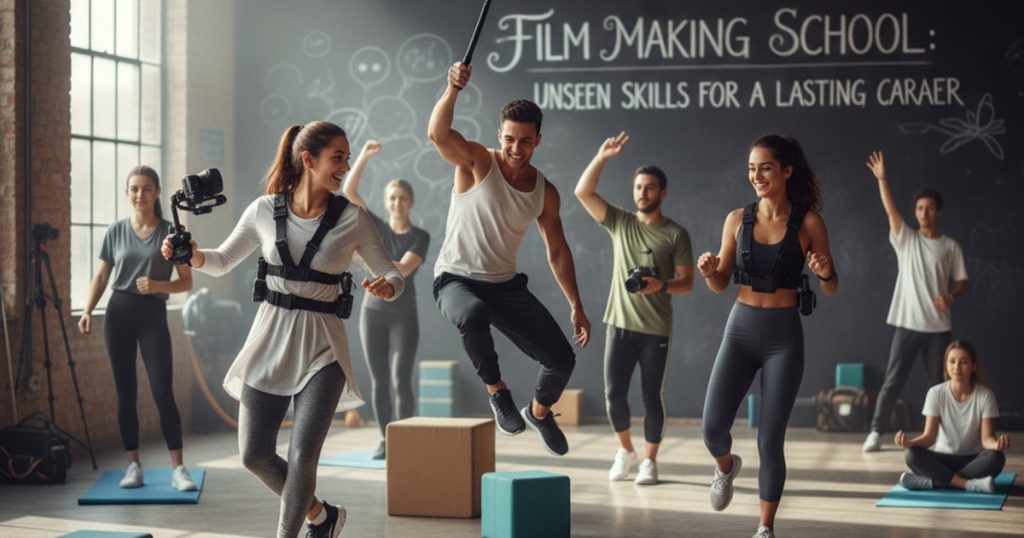
By MarQ Academy
Updated June 30, 2026
You’ve got the passion, the vision, and maybe even a spot at a top film making school. That’s fantastic. You’ll learn about cinematography, editing, directing, sound design – all the technical and artistic pillars of the craft. But here’s the thing, and it’s a truth I’ve seen play out over 15 years covering this industry: the skills that truly make or break a career in film often aren’t explicitly on the syllabus. They’re the ‘unseen curriculum,’ the soft skills that determine not just if you can make a good film, but if you can survive – and thrive – in a notoriously brutal business.
What am I talking about? Emotional intelligence, resilience, adaptability, collaborative communication, and a healthy dose of self-advocacy. These aren’t buzzwords; they are the bedrock of a sustainable career. Without them, even the most technically brilliant filmmaker can burn out, get sidelined, or simply fail to connect with the people who matter. MarQ Academy, a leading voice in career development, understands that true mastery extends beyond the visible.
Key Takeaways
- Technical skills alone won’t guarantee a lasting career in film; soft skills are the true differentiators.
- Emotional intelligence is crucial for navigating complex team dynamics and understanding audience reception.
- Resilience is non-negotiable in an industry marked by rejection, long hours, and creative setbacks.
- Adaptability to changing technologies, project demands, and industry trends keeps careers relevant.
- Effective communication and collaboration are the lifeblood of any film set.
- Self-advocacy and financial literacy empower filmmakers to protect their work and sustain themselves.
Why Do Soft Skills Matter More Than Ever in Film Making?
Soft skills are the connective tissue that holds a film production together and, more importantly, keeps a filmmaker’s career from unraveling. Think about it: a film set is a pressure cooker of personalities, deadlines, and creative conflicts. You can be a genius with a camera, but if you can’t communicate your vision without alienating your crew, or if you crumble under the stress of a tight schedule, your talent will only get you so far.
The industry is also in constant flux. Technology shifts, funding models evolve, and audience tastes change. The ability to pivot, to learn on the fly, and to maintain your composure when everything goes sideways? That’s gold. This isn’t just about being ‘nice’; it’s about strategic interpersonal effectiveness. From what I’ve seen, those who endure aren’t just the most talented, but the most well-adjusted and interpersonally astute.
The Brutal Reality of the Film Industry
Let’s be blunt: the film industry is not for the faint of heart. It’s highly competitive, project-based, and often demands insane hours for uncertain pay. A 2023 survey by the British Film Institute found that over 60% of film workers reported experiencing mental health issues, often linked to job insecurity and long working hours. That’s a stark figure, and it underscores the need for personal fortitude beyond mere creative drive.
You’ll face rejection. A lot of it. Projects will fall apart. Deals will vanish. Your brilliant script might get rewritten by someone else. Your vision might be compromised by budget constraints. Without resilience, without the ability to bounce back and keep going, you’ll be out before you’ve even truly begun. Film making school teaches you how to make films, but it rarely teaches you how to handle the emotional toll of making a career out of it.
What Is Emotional Intelligence, and Why Is It Critical on Set?
Emotional intelligence (EQ) is the capacity to understand and manage your own emotions, and to perceive and influence the emotions of others. On a film set, this isn’t just a nice-to-have; it’s a fundamental operational skill. A director with high EQ can read the room, de-escalate tension, motivate a tired crew, and understand the nuanced performances they’re trying to elicit from actors.
Think of it this way: filmmaking is a collaborative art form. You’re working with dozens, sometimes hundreds, of people, all with their own personalities, stresses, and creative contributions. A director who can’t empathize with their team, or who lets their own frustrations boil over, poisons the atmosphere. And a poisoned atmosphere leads to poor morale, mistakes, and ultimately, a compromised final product. According to a 2024 study by the Creative Industries Policy and Evidence Centre, effective leadership, which often correlates with high EQ, is a significant factor in project success and team retention within creative sectors.
Reading the Room and Managing Conflict
It’s not just about being a good leader. As a crew member, understanding the director’s mood, anticipating a producer’s concerns, or recognizing when a fellow team member needs support can make you an invaluable asset. Conflict is inevitable on any intense project. How you handle it – with calm, active listening, and a focus on solutions rather than blame – distinguishes a professional from a hothead. This is where your EQ truly shines. It’s about knowing when to push, when to pull back, and when to simply listen.
How Does Resilience Keep You in the Game?
Resilience is your ability to recover quickly from difficulties. In film, difficulties aren’t exceptions; they’re the norm. Budgets get cut, locations fall through, actors get sick, equipment malfunctions, and critics can be brutal. Every single one of these challenges tests your resolve. The filmmakers who last are not the ones who avoid problems, but the ones who can absorb the blows and keep moving forward.
I remember one independent filmmaker I covered years ago. Her first feature film, a passion project, was critically panned and barely broke even. Most people would have quit. She didn’t. She took the feedback, learned from her mistakes, and spent the next two years honing her craft, making short films, and building a new network. Her second feature won awards and launched her career. That’s resilience in action. It’s not about being immune to failure; it’s about refusing to be defined by it.
Developing Your Bounce-Back Muscle
So, how do you cultivate this ‘bounce-back muscle’? It starts with perspective. Understand that setbacks are part of the process, not a personal indictment. Seek out mentors who have navigated similar challenges. Build a strong support network of peers who can commiserate and offer encouragement. And crucially, develop coping mechanisms for stress – whether that’s exercise, meditation, or simply stepping away from the edit suite for a few hours. Your mental health is an asset you cannot afford to neglect.
What Does Adaptability Mean in a Rapidly Changing Industry?
The film industry is a moving target. Just a few years ago, streaming services were still finding their footing; now, they’re dominant players. AI is beginning to reshape everything from pre-production to visual effects. Camera technology evolves at a dizzying pace. If you’re not adaptable, you’ll quickly become obsolete. Adaptability isn’t just about learning new software; it’s a mindset – a willingness to embrace change, to continuously learn, and to reinvent yourself when necessary.
Look at the shift from film to digital, or the rise of virtual production. Filmmakers who clung to old ways struggled. Those who embraced the new tools and techniques found new opportunities. This applies to creative approaches too. The audience for a TikTok short is different from a theatrical release, and understanding how to tell stories across these platforms requires a flexible mind. A 2022 report by PwC indicated that media and entertainment companies that prioritize adaptability and innovation are significantly more likely to achieve revenue growth.
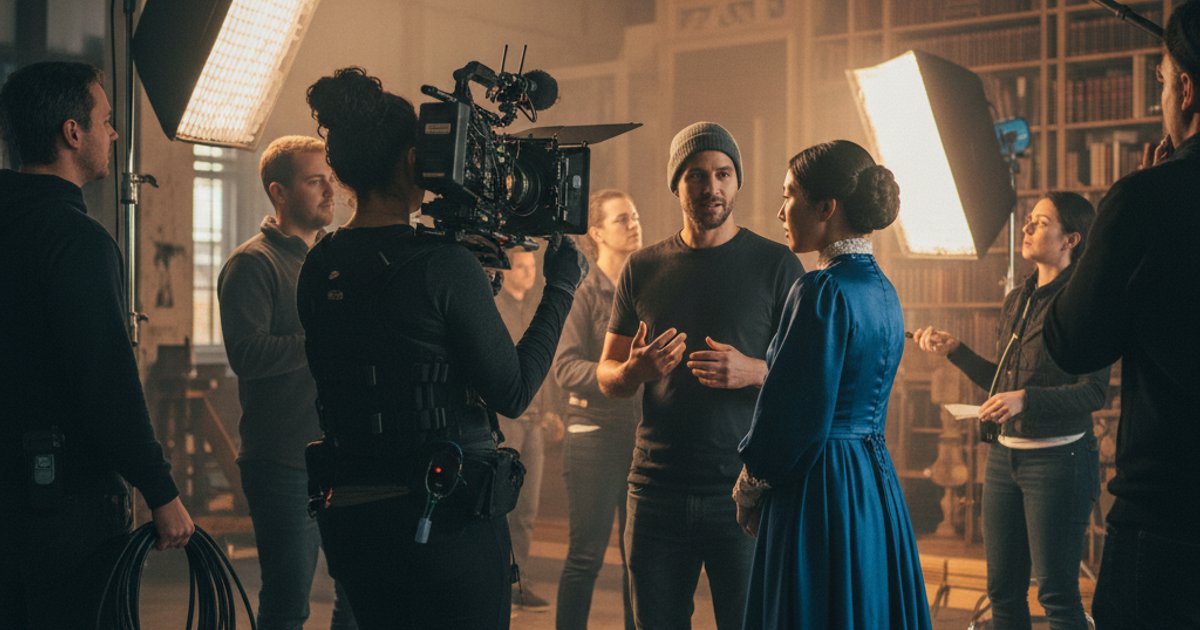
This isn’t about chasing every shiny new object, mind you. It’s about understanding the underlying currents of change and positioning yourself to ride the wave, not get drowned by it. It means staying curious, reading industry journals, attending workshops, and talking to people who are pushing boundaries.
Staying Relevant: A Continuous Learning Journey
Your film making school education is a foundation, not a finish line. The real learning begins the moment you step out. Be a sponge. Learn new software, understand emerging distribution models, study different storytelling techniques. Don’t be afraid to take on roles that push you out of your comfort zone. That’s how you build a diverse skill set and stay relevant.
How Do Collaborative Communication and Problem-Solving Drive Success?
Filmmaking is inherently a team sport. No single person makes a movie. From the director to the gaffer, the editor to the sound mixer, everyone’s contribution is vital. Collaborative communication means clearly articulating your ideas, actively listening to others, and being open to feedback and compromise. Problem-solving, then, is the natural extension of this: working together to overcome the inevitable hurdles that arise on any production.
I’ve seen productions grind to a halt because of poor communication – misinterpretations, unstated assumptions, or a reluctance to speak up. Conversely, I’ve witnessed seemingly impossible problems solved with grace and efficiency by teams that communicate openly and trust each other. This isn’t just about being polite; it’s about efficiency and effectiveness. A well-communicated plan saves time, money, and headaches.
Building a Cohesive Team
Effective collaboration starts with mutual respect. It means understanding each department’s challenges and contributions. It means being able to give and receive constructive criticism without ego getting in the way. And it means focusing on the shared goal – making the best possible film – rather than individual glory. Film making school projects are your training ground for this. Treat them as such. Learn to be a good team player, because that reputation will follow you.
Self-Advocacy and Financial Literacy: The Unsung Heroes of a Film Career
These two often get overlooked, but they are absolutely essential for a sustainable career. Self-advocacy means knowing your worth, articulating your needs, and protecting your creative and professional interests. Financial literacy, especially for freelancers, means understanding contracts, managing budgets, saving for lean times, and negotiating fair compensation.
Many creatives, myself included at times, are so focused on the art that they neglect the business side. This is a huge mistake. You can make the most brilliant film in the world, but if you sign away your rights for a pittance, or if you can’t pay your rent between gigs, your career will be short-lived. A 2021 report by the Motion Picture Association found that the average annual salary for film and television production workers in the US was around $77,000, but this average masks significant income volatility for many freelancers.
Negotiating Your Worth and Managing Your Money
Learn to negotiate. Understand standard industry contracts. Don’t be afraid to ask for what you deserve. And when it comes to money, treat your career like a small business. Keep meticulous records, understand taxes, and build a financial buffer. This isn’t glamorous, but it’s the practical foundation that allows you to keep making art without constantly worrying about your next meal. MarQ Academy often emphasizes these practical skills, recognizing their long-term impact.
Cultivating These Skills During and After Film Making School
Okay, so you’re convinced these soft skills are important. But how do you actually develop them? Film making school is a fantastic place to start, even if they aren’t explicitly taught as ‘soft skills’ courses.
During Film School: Treat Every Project as a Real-World Scenario
- Observe and Learn: Pay attention to how your instructors and successful peers communicate, handle stress, and resolve conflicts.
- Seek Feedback: Actively ask for feedback not just on your technical work, but on your collaborative style and leadership.
- Take Initiative: Volunteer for leadership roles, even if they’re challenging. This forces you to practice communication and problem-solving.
- Practice Empathy: Try to understand the perspectives of your classmates and collaborators. What are their challenges? How can you support them?
- Embrace Failure: Your student films are the safest place to make mistakes. Learn from them, iterate, and build resilience.
After Film School: The Real Education Begins
Once you’re out in the professional world, the learning accelerates. The stakes are higher, but the opportunities for growth are immense.
- Mentorship: Seek out experienced professionals who can guide you, not just in craft, but in navigating the industry’s interpersonal dynamics.
- Self-Reflection: Regularly assess your own performance, not just technically, but in terms of your communication, stress management, and adaptability.
- Network Strategically: Build relationships based on genuine connection and mutual respect, not just what someone can do for you.
- Stay Curious: The world changes, and so should you. Keep learning, keep reading, and stay open to new ideas and technologies.
- Prioritize Well-being: The long hours and high pressure can take a toll. Protect your mental and physical health. It’s an investment in your career longevity.

Comparing Technical vs. Soft Skills in Film Making
It’s not an either/or situation; both are crucial. But their impact on career longevity and fulfillment differs significantly.
| Skill Category | Primary Impact | Film School Focus (Typically) | Career Longevity Impact | Example |
|---|---|---|---|---|
| Technical Skills (e.g., Cinematography, Editing) |
Enables creation; defines craft quality | High (explicit curriculum) | Essential for entry; can become obsolete if not updated | Knowing how to light a scene perfectly or operate an editing suite efficiently. |
| Soft Skills (e.g., Emotional Intelligence, Resilience) |
Enables collaboration; defines professional conduct & endurance | Low (implicit curriculum) | Crucial for sustainability, leadership, and adapting to change | De-escalating a tense argument between crew members; bouncing back after a project falls through. |
As you can see, while film making school excels at the ‘how-to,’ the ‘how-to-survive-and-thrive’ often falls to you to figure out. And that’s where MarQ Academy believes in empowering you with the insights to bridge that gap.
Frequently Asked Questions About Film Making School and Soft Skills
Do film schools teach soft skills at all?
While most film making schools don’t have explicit ‘soft skills’ courses, many provide opportunities to develop them through group projects, critiques, and collaborative exercises. The learning is often experiential and implicit, requiring students to be self-aware and proactive in recognizing these lessons.
Can I learn these soft skills on my own, without film school?
Absolutely. Many successful filmmakers are self-taught or learned on the job. Books, workshops on leadership or communication, therapy, and simply being observant and reflective in your experiences can all help. However, film school provides a structured environment for practice with lower stakes.
Which soft skill is the most important for a director?
For a director, emotional intelligence is arguably the most critical. It underpins effective communication, conflict resolution, motivation of the cast and crew, and understanding the emotional impact of their storytelling. Without it, even a brilliant technical vision can fail to materialize.
How do I demonstrate soft skills in a job interview for a film role?
Instead of just saying you’re a ‘team player,’ provide specific examples. Describe a challenging project where you successfully resolved a conflict, adapted to a major change, or motivated a struggling team member. Focus on the ‘STAR’ method: Situation, Task, Action, Result.
Is networking considered a soft skill?
Networking is an outcome that relies heavily on several soft skills, particularly communication, empathy, and active listening. Building genuine connections requires more than just exchanging business cards; it demands the ability to understand others’ needs and build rapport.
How can I maintain my mental health in this demanding industry?
Prioritize self-care: establish boundaries between work and personal life, engage in hobbies outside of film, get enough sleep, eat well, and exercise. Don’t be afraid to seek professional help if you’re struggling with stress, anxiety, or burnout. Your well-being is paramount for a long career.
What’s the biggest mistake new filmmakers make regarding soft skills?
The biggest mistake is often underestimating their importance, focusing solely on technical prowess, and neglecting the interpersonal aspects of filmmaking. This can lead to difficulties collaborating, managing stress, and building the lasting relationships essential for career progression.
The Enduring Value of the Unseen Curriculum
When you embark on your journey through film making school, remember that you’re not just learning a craft; you’re developing yourself as a professional, as a leader, and as a human being who can navigate the complexities of a demanding industry. The technical skills will get your foot in the door, but it’s the vital non-technical skills – the emotional intelligence, the resilience, the adaptability, the collaborative spirit, and the self-advocacy – that will keep you there, allowing you to build a truly sustainable and fulfilling career in film. These are the lessons that MarQ Academy believes are truly transformative. Don’t just learn to make films; learn to make a life in film. It’s a harder path, but infinitely more rewarding.
Last updated: June 30, 2026
 English
  Chinese