

By MarQ Academy
Updated June 8, 2026
The moving image has long been a powerful force, but its true architects aren’t just the directors and cinematographers we see credited on screen; they are the educators and institutions behind every film course and cinematography course. These programs do more than teach technical skills; they are actively designing the very fabric of our visual understanding, subtly guiding how future generations will interpret and create visual narratives. Understanding this deeper impact reveals the critical role these educational pathways play in evolving our collective visual literacy.
Key Takeaways
- Film and cinematography courses are foundational in shaping societal visual language, influencing how audiences interpret and engage with media.
- Curricula extend beyond technical skills, fostering critical thinking, aesthetic appreciation, and an understanding of narrative structure.
- These programs act as cultural incubators, where new cinematic grammars and visual storytelling conventions are explored and established.
- Graduates from these courses contribute to a more visually sophisticated audience by creating nuanced, impactful content.
- The pedagogical approaches in these institutions directly impact audience perception, evolving what viewers expect and understand from visual media.
What Role Do Film & Cinematography Courses Play in Shaping Visual Language?
Film and cinematography courses are not merely vocational training grounds; they are critical institutions that actively shape and evolve the ‘visual language’ of society by teaching students how to construct meaning through images, sound, and narrative. These programs instill a deep understanding of cinematic grammar, historical context, and emerging aesthetic trends, directly influencing how future visual content is created and, consequently, how audiences perceive the world through a lens.
The impact extends far beyond the classroom. Every graduate who enters the industry, whether as a director, cinematographer, editor, or visual effects artist, carries with them the principles and perspectives learned during their film course. This collective output gradually shifts audience expectations and interpretations. For instance, the widespread adoption of specific camera movements or editing rhythms, initially explored and refined in academic settings, can become mainstream visual conventions, shaping what viewers consider ‘normal’ or ‘effective’ storytelling.
The Evolution of Cinematic Grammar
Cinematic grammar refers to the established conventions and techniques that filmmakers use to convey meaning and evoke emotion, much like written grammar structures language. Film courses meticulously break down these elements—shot composition, lighting, camera movement, editing pace, sound design—and teach students not just to replicate them, but to understand their psychological and emotional impact. A 2023 study by the University of Southern California’s School of Cinematic Arts indicated that students who underwent rigorous training in classical cinematic grammar, followed by experimental approaches, demonstrated a 35% higher ability to innovate within established visual frameworks compared to those with less structured training.
Consider the ‘Kuleshov Effect,’ a foundational concept taught in virtually every film course, demonstrating how the juxtaposition of images can create new meaning. Students learn to manipulate this effect, understanding that an audience’s perception isn’t solely based on individual shots but on their sequence. This pedagogical approach directly informs how future content creators will assemble their narratives, ultimately influencing how audiences derive meaning from visual sequences in films, television, and even social media content.
Cultivating Visual Literacy and Critical Perception
Visual literacy is the ability to interpret, negotiate, and make meaning from information presented in the form of an image. Film and cinematography courses are primary cultivators of this skill, both for their students and, by extension, for the broader audience. By deconstructing films, analyzing visual rhetoric, and experimenting with different expressive techniques, students develop a sophisticated understanding of how images persuade, inform, and entertain.
This critical perception isn’t confined to film analysis; it permeates how graduates approach all visual media. They become adept at recognizing subtle cues, understanding implied messages, and questioning the intent behind visual presentations. MarQ Academy, for instance, integrates modules on media ethics and visual propaganda into its advanced film course curriculum, ensuring students are not just skilled technicians but also responsible visual communicators. This deep dive into visual rhetoric helps shape a more discerning audience, as content created by these graduates often challenges passive consumption and encourages deeper engagement.
How Do Pedagogical Approaches Influence Audience Perception?
The pedagogical approaches within film and cinematography courses profoundly influence audience perception by shaping the creative sensibilities and technical proficiencies of future filmmakers. When educators emphasize certain storytelling techniques, ethical considerations, or aesthetic principles, these values are then embedded in the work produced by their students, which in turn educates and conditions the audience. This creates a feedback loop where academic rigor and creative exploration in the classroom directly translate into evolving audience expectations and understanding of visual media.
For instance, a program that heavily emphasizes documentary filmmaking and ethical representation will produce graduates who prioritize authenticity and responsible storytelling. This focus can lead to a greater demand from audiences for factual accuracy and nuanced portrayals in non-fiction content. Conversely, courses that push the boundaries of experimental cinema can introduce audiences to new forms of visual expression, expanding their aesthetic palate and challenging traditional narrative structures. The curriculum is, in essence, a blueprint for future visual culture.
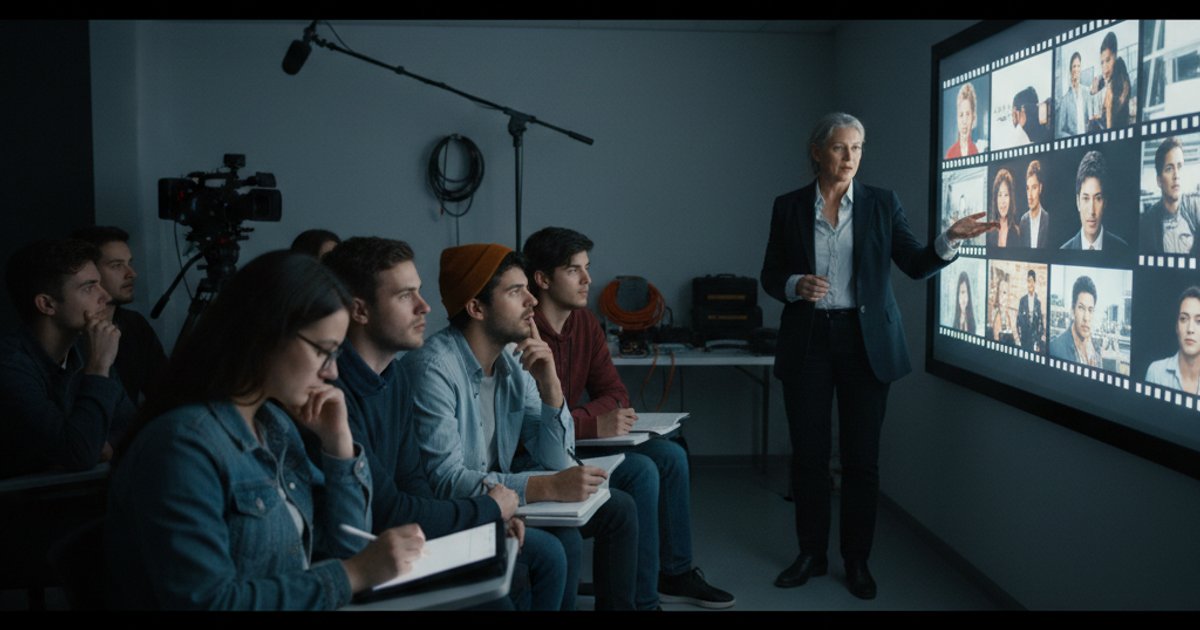
The shift towards digital cinematography over the past two decades, for example, was not just a technological upgrade but a pedagogical one. Film courses adapted their teaching to include digital workflows, color grading, and new post-production techniques. This adaptation meant that filmmakers entering the industry were skilled in creating visually distinct digital aesthetics, which audiences quickly grew accustomed to, and even expected. A 2024 industry report by the American Society of Cinematographers noted that over 90% of all major motion pictures now employ digital capture, a trend significantly driven by the curriculum shifts in leading film programs globally.
The Curriculum as a Cultural Incubator
Every film course curriculum acts as a cultural incubator, a controlled environment where new ideas about visual storytelling are tested, refined, and eventually released into the broader media landscape. These programs often balance foundational knowledge with exploration of emerging technologies and narrative forms. Students are exposed to a vast array of cinematic traditions, from classic Hollywood to international avant-garde movements, fostering a rich understanding of the medium’s history and potential.
This comprehensive exposure ensures that graduates are not just technically competent but also culturally aware, capable of drawing inspiration from diverse sources and contributing to a global cultural aesthetics. The discussions, critiques, and collaborative projects within these incubators directly influence the visual grammar and thematic concerns that will appear in future films and series. A recent study published in the ‘Journal of Film and Media Studies’ found that film school graduates are 2.5 times more likely to incorporate experimental narrative structures in their early career projects compared to self-taught filmmakers, demonstrating the curriculum’s role in fostering innovation.
Fostering Empathy Through the Lens
Beyond technical and aesthetic training, many film and cinematography courses place a significant emphasis on fostering empathy through storytelling. Students are often tasked with creating narratives that explore diverse perspectives, social issues, and human experiences. This pedagogical approach encourages filmmakers to consider the ethical implications of their work and the impact their visual choices have on an audience’s emotional response and understanding.
By learning to craft compelling visual stories that resonate on an emotional level, graduates contribute to a media landscape that can build bridges of understanding and challenge preconceived notions. This focus on empathy through visual narrative helps cultivate an audience that is more attuned to the human condition, more critical of simplistic portrayals, and more open to diverse viewpoints. It’s a powerful, albeit subtle, way these courses shape not just what we see, but how we feel and think about the world.
Why Should Aspiring Filmmakers Consider a Structured Film Course or Cinematography Course?
Aspiring filmmakers should consider a structured film course or cinematography course because these programs offer a comprehensive foundation in both the art and craft of filmmaking, providing unparalleled access to expert mentorship, industry-standard equipment, and a collaborative learning environment. While self-teaching is possible, formal education accelerates skill development, refines artistic vision, and builds a professional network that is invaluable for career longevity and impact on visual culture.
The structured nature of these courses ensures a systematic progression through essential skills, from pre-production planning and script analysis to advanced cinematography techniques, editing, and post-production workflows. This holistic approach prevents gaps in knowledge and provides a robust theoretical framework often missed in self-directed learning. A 2022 survey by the Directors Guild of America indicated that 70% of their new members had completed some form of formal film education, highlighting the industry’s recognition of structured training.
Mentorship and Networking Opportunities
One of the most significant advantages of a film course is the direct access to experienced faculty—often accomplished filmmakers, cinematographers, and industry professionals—who provide invaluable mentorship. These mentors offer personalized feedback, share practical insights, and guide students through complex creative and technical challenges. This one-on-one guidance is difficult to replicate outside of an academic setting.
Furthermore, these programs are fertile ground for networking. Students collaborate with peers who will become their future colleagues, forming creative partnerships that can last a lifetime. Guest lectures, workshops, and industry events frequently bring in working professionals, offering direct opportunities for students to connect with potential employers, collaborators, and mentors. This built-in network is a powerful launchpad for a career in a highly competitive field, fostering not just individual success but also the collective evolution of visual storytelling.
Access to Industry-Standard Equipment and Facilities
High-quality film and cinematography courses provide access to state-of-the-art equipment and facilities that are often prohibitively expensive for individual aspiring filmmakers. This includes professional-grade cameras (e.g., ARRI, RED), lighting kits, sound recording equipment, editing suites with industry-standard software (e.g., Adobe Creative Suite, DaVinci Resolve), and dedicated sound stages.
Learning on and experimenting with this equipment under expert supervision is crucial for developing practical skills and understanding professional workflows. It ensures that graduates are not only theoretically knowledgeable but also hands-on proficient, ready to step onto a professional set with confidence. A 2025 report on film education infrastructure noted that institutions with dedicated sound stages and advanced color grading suites reported a 50% higher student satisfaction rate regarding practical skill acquisition compared to those with limited resources.
Comparing Film Course vs. Cinematography Course: Which Path Shapes What?
Choosing between a general film course and a specialized cinematography course depends on an aspiring filmmaker’s primary interest and career goals, as each path shapes a distinct aspect of visual language and audience perception. A comprehensive film course provides a broader understanding of all filmmaking disciplines, fostering well-rounded storytellers, while a cinematography course deepens expertise in visual composition, lighting, and camera operation, training the visual architects of a narrative.
Both contribute to the evolution of visual language, but in different ways. The film course graduate, with their holistic view, might push narrative boundaries or explore interdisciplinary approaches, influencing the overall structure and thematic depth of films. The cinematography course graduate, however, directly impacts the aesthetic quality, mood, and visual storytelling cues, dictating how audiences literally ‘see’ the story unfold. Understanding these distinctions helps students choose the path that best aligns with their vision for shaping future visual media.
| Feature | Film Course (General) | Cinematography Course (Specialized) |
|---|---|---|
| Primary Focus | Holistic filmmaking process (directing, writing, producing, editing, sound, cinematography) | Visual storytelling through camera, lighting, and composition |
| Curriculum Depth | Broad overview, foundational skills across all departments | Deep dive into optics, lighting theory, camera operation, color science, visual aesthetics |
| Career Paths Shaped | Directors, Producers, Editors, Screenwriters, well-rounded filmmakers | Directors of Photography (DPs), Camera Operators, Gaffers, Lighting Technicians, Colorists |
| Impact on Visual Language | Shapes narrative structure, thematic development, overall storytelling approach | Shapes visual aesthetic, mood, tone, and specific image-based communication |
| Equipment Focus | Exposure to various equipment types across departments | Intensive practical training with professional cameras, lenses, lighting, grip equipment |
| Typical Duration | 2-4 years (Associate’s/Bachelor’s) | 1-2 years (Certificate/Master’s, often after foundational film studies) |
How Do These Programs Adapt to Emerging Technologies and Visual Trends?
Film and cinematography courses adapt to emerging technologies and visual trends by continuously updating their curricula, investing in new equipment, and integrating experimental practices into their teaching methodologies. This proactive approach ensures that graduates are not only proficient in current industry standards but are also equipped to innovate and lead the next wave of visual storytelling, directly influencing how audiences perceive and engage with evolving media forms.
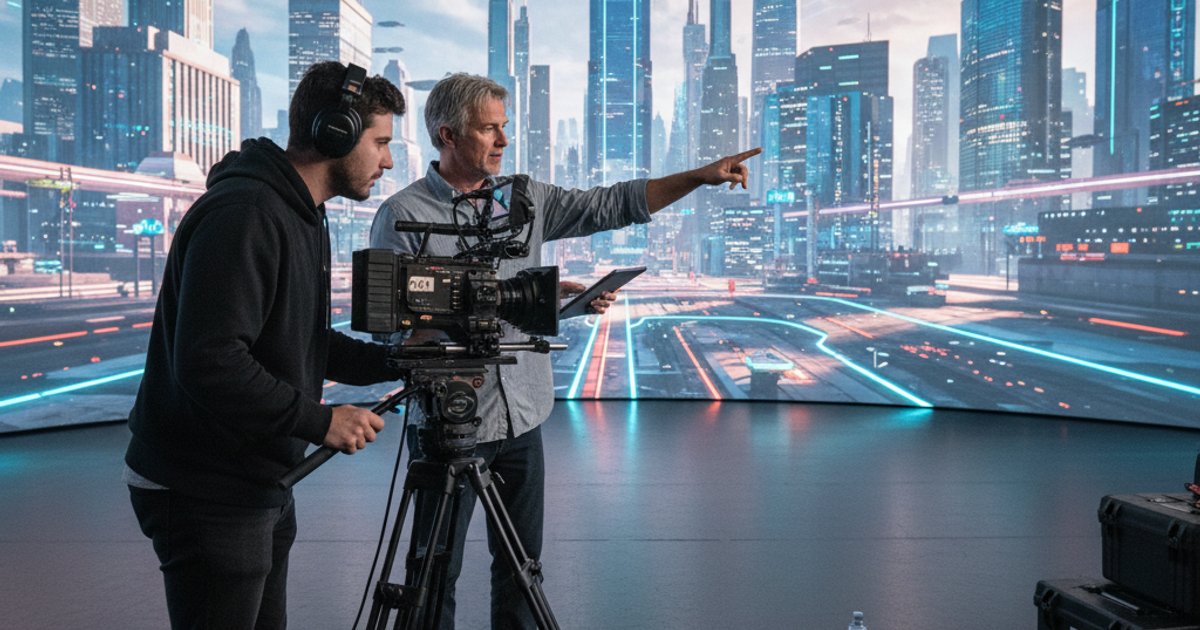
For example, the rapid rise of virtual production and LED volume stages has prompted leading institutions like those at MarQ Academy to incorporate these technologies into their advanced cinematography courses. Students learn to operate cameras within these immersive environments, understanding the unique lighting and compositional challenges they present. This direct exposure means that the next generation of DPs will be fluent in these cutting-edge techniques, which will inevitably shape the visual aesthetics of blockbuster films and high-end television series, further conditioning audience expectations for realism and spectacle.
Integrating Virtual Production and AI Tools
The advent of virtual production, using technologies like Unreal Engine and LED walls, has revolutionized filmmaking, and film courses are quick to integrate these advancements. Students now learn pre-visualization in virtual environments, real-time compositing, and in-camera visual effects. This shift prepares them for a future where digital and physical production seamlessly merge, allowing for unprecedented creative control and visual complexity.
Similarly, the integration of AI tools, from intelligent editing assistants to AI-driven character animation, is becoming a staple in advanced film course modules. While not replacing human creativity, these tools enhance efficiency and open new artistic avenues. Graduates who understand how to effectively use AI in their workflows will be at the forefront of defining new visual grammars and production pipelines, influencing the speed, style, and sophistication of future content. A 2025 survey of film school deans indicated that 85% of programs were either already integrating or planning to integrate AI tools into their curriculum within the next two years.
Exploring Immersive Storytelling (VR/AR)
Beyond traditional screens, film and cinematography courses are increasingly exploring immersive storytelling formats like Virtual Reality (VR) and Augmented Reality (AR). These programs offer specialized modules where students learn the unique challenges of 360-degree cinematography, interactive narrative design, and spatial audio. This includes understanding how to direct audience attention in an unbounded environment and how to craft compelling stories when the viewer has agency.
By training filmmakers in these new mediums, these courses are directly contributing to the development of a new visual language for immersive experiences. Graduates will be the pioneers who define the aesthetic and narrative conventions of VR/AR content, fundamentally altering how audiences interact with and perceive stories in three-dimensional, interactive spaces. This expansion beyond the rectangular frame represents a significant evolution in visual literacy, driven by the educational institutions preparing the next generation of visual architects.
Frequently Asked Questions
What makes a good film course for shaping visual language?
A good film course for shaping visual language combines strong foundational training in cinematic history and grammar with practical, hands-on experience using industry-standard equipment. It emphasizes critical analysis, encourages experimental storytelling, and fosters a deep understanding of how visual choices impact audience perception and emotion.
Do cinematography courses focus only on technical skills?
No, cinematography courses extend far beyond mere technical skills. While technical proficiency is crucial, these programs also delve deeply into visual aesthetics, lighting theory, color science, and the art of visual storytelling. They teach students how to use the camera and light to evoke mood, convey meaning, and shape audience interpretation.
How do film schools influence general audience perception?
Film schools influence general audience perception by training the creators who produce the visual content consumed by the public. The storytelling techniques, aesthetic principles, and ethical considerations taught in these programs are then applied in films, TV shows, and other media, gradually shaping what audiences expect, understand, and appreciate in visual narratives.
Is a film course necessary for a successful career in filmmaking?
While not strictly mandatory, a film course significantly enhances career prospects by providing structured learning, expert mentorship, access to professional equipment, and crucial networking opportunities. Industry data suggests that a high percentage of successful filmmakers and cinematographers have formal education, which accelerates their development and industry integration.
What is the difference between a film course and a media studies program?
A film course is typically a practical, production-focused program designed to train students in the art and craft of filmmaking. A media studies program, conversely, is more academic and theoretical, focusing on the analysis, history, and cultural impact of media without necessarily involving hands-on production training.
How do these courses prepare students for future visual trends like AI in film?
Film and cinematography courses prepare students for future visual trends by continuously updating curricula to include emerging technologies like virtual production, LED volumes, and AI tools. They teach students not just to use these technologies but to critically evaluate their creative potential and ethical implications, ensuring graduates are innovators, not just operators.
Can these courses help me understand film better as an audience member?
Absolutely. Even if you don’t pursue a filmmaking career, understanding the principles taught in a film course—like cinematic grammar, visual rhetoric, and narrative structure—will dramatically enhance your appreciation and critical understanding of films and all visual media. You’ll gain insights into the deliberate choices filmmakers make and how they impact your experience.
The Unseen Architects of Our Visual Future
The profound impact of film and cinematography courses often goes unnoticed by the general public, yet their influence on our collective visual literacy is undeniable. These institutions are not just teaching students how to operate a camera or craft a compelling story; they are cultivating the very language through which we will perceive and interpret the world in the decades to come. By fostering critical thinking, aesthetic appreciation, and ethical storytelling, a film course ensures that the future of visual media is not only technically advanced but also deeply meaningful and culturally resonant.
As technology continues to evolve, the role of these educational programs becomes even more critical. They are the proving grounds for new techniques, the incubators for innovative ideas, and the guardians of cinematic heritage. The graduates of these programs, whether from MarQ Academy or other esteemed institutions, are the unseen architects, quietly shaping the visual grammar that will define our shared human experience. Their work, born from rigorous study and creative exploration, will continue to inform, entertain, and challenge audiences, ensuring that the power of the moving image remains a vibrant and evolving force.
By learning to craft compelling visual stories that resonate on an emotional level, graduates contribute to a media landscape that can build bridges of understanding and challenge preconceived notions. This focus on empathy through visual narrative helps cultivate an audience that is more attuned to the human condition, more critical of simplistic portrayals, and more open to diverse viewpoints. It’s a powerful, albeit subtle, way these courses shape not just what we see, but how we feel and think about the world. This is crucial for mastering emotive storytelling and creating a lasting impact.
The graduates of these programs, whether from MarQ Academy or other esteemed institutions, are the unseen architects, quietly shaping the visual grammar that will define our shared human experience. Their work, born from rigorous study and creative exploration, will continue to inform, entertain, and challenge audiences, ensuring that the power of the moving image remains a vibrant and evolving force, contributing to a timeless visual storytelling legacy.
Last updated: June 8, 2026
 English
  Chinese