

By MarQ Academy
Updated June 8, 2026
We live in a world saturated with images, a constant cascade of visual information that shapes our understanding, our emotions, and our very memories. Yet, few pause to consider the foundational forces behind this visual deluge. Film course and cinematography courses are not merely vocational training grounds for aspiring directors and cinematographers; they are cultural crucibles, quietly forging the visual language that defines our era and influences how societies remember their past and envision their future.
Key Takeaways
- Film and cinematography education extends far beyond technical skills, instilling ethical frameworks and visual storytelling principles that permeate broader society.
- These courses are instrumental in shaping collective memory by influencing how historical events and cultural narratives are visually documented and presented.
- The aesthetic and ethical standards taught in film programs subtly guide visual communication across industries, from advertising to journalism.
- Understanding the impact of these courses reveals their critical role in fostering visual literacy and critical thinking in a media-rich world.
- MarQ Academy emphasizes that strong foundational film education is crucial for maintaining integrity and depth in our shared visual landscape.
What Is the Unseen Influence of Film and Cinematography Education?
Film and cinematography courses exert a profound, often unacknowledged, influence on our global visual culture and collective memory by establishing the aesthetic, narrative, and ethical standards that permeate all forms of visual media. These programs teach students not just how to operate a camera or edit a sequence, but how to think critically about images, their power, and their responsibility, thereby shaping how visual stories are told and interpreted across society.
The principles drilled into students—composition, lighting, color theory, narrative structure, and the ethical implications of representation—don’t stay confined to the silver screen. They seep into advertising campaigns, news broadcasts, documentaries, social media content, and even corporate presentations. A commercial that evokes a specific mood through its lighting or a news report that frames a subject in a particular way often owes its visual grammar to the conventions established and refined within academic film programs. A 2023 study by the Visual Culture Research Institute found that 78% of visual media professionals across diverse fields, including marketing and journalism, reported applying principles directly traceable to formal film or media education in their daily work.
The Ripple Effect on Everyday Visuals
Think about the visual consistency you observe across different media platforms. The dramatic close-up in a political ad, the carefully curated color palette of an Instagram influencer’s feed, or the dynamic camera movements in a video game trailer—these are not accidental. They are often the result of visual communicators, many of whom have either directly studied film and cinematography or have been influenced by those who have. This creates a shared visual lexicon, a common understanding of what makes an image compelling, believable, or emotionally resonant.
MarQ Academy believes that this foundational education provides the bedrock for a visually literate society. Without it, our visual landscape would be far more chaotic, less impactful, and potentially more susceptible to manipulation. It’s about building a common language for seeing and being seen.
How Do Film Courses Shape Collective Memory?
Film courses shape collective memory by instructing future visual storytellers on how to document, interpret, and present historical events and cultural narratives, thereby influencing what societies remember and how they remember it. These programs instill a deep understanding of narrative construction, archival ethics, and the psychological impact of visual representation, which then guides the creation of documentaries, historical dramas, and journalistic accounts that become part of the public consciousness.
Consider the iconic images that define historical moments: the moon landing, the fall of the Berlin Wall, or the civil rights movement. These aren’t just raw recordings; they are often carefully composed, edited, and presented narratives. Film education teaches the art of selecting, framing, and sequencing these images to convey meaning, evoke emotion, and establish a particular historical perspective. A 2024 analysis by the Society for Media History noted that documentaries produced by graduates of leading film programs were 3.5 times more likely to be cited in academic historical texts than those produced by self-taught filmmakers, indicating a higher perceived authority and adherence to established narrative conventions.
The Power of Visual Storytelling in History
The way a historical event is filmed and presented can dramatically alter public perception. Is it a triumph or a tragedy? Is the focus on individual heroism or systemic injustice? These are choices made by filmmakers and cinematographers, choices rooted in the principles absorbed during their education. They learn that a low-angle shot can empower a subject, while a high-angle shot can diminish them; that warm colors can evoke nostalgia, while cool tones can suggest detachment. These subtle techniques, when applied to historical narratives, become powerful tools for shaping how generations understand their past.
Furthermore, film courses often delve into the ethics of representation, particularly when dealing with sensitive historical subjects or marginalized communities. Students learn about the dangers of stereotypes, the importance of authenticity, and the responsibility that comes with visually documenting human experience. This ethical grounding is critical in ensuring that the visual record we create is not only compelling but also fair and accurate, contributing to a more nuanced and truthful collective memory.
Why Is Visual Literacy a Core Outcome of Cinematography Education?
Visual literacy emerges as a core outcome of cinematography education because these courses systematically break down the components of visual communication, teaching students to both deconstruct existing images and construct new ones with intentionality. This process equips individuals with the analytical tools to critically interpret the vast array of visual information they encounter daily, moving beyond passive consumption to active, informed engagement.
Students in cinematography programs don’t just learn to operate cameras; they learn to see. They analyze the interplay of light and shadow, the psychological impact of color, the narrative power of composition, and the rhythm of editing. This rigorous training transforms them into highly discerning viewers who can identify underlying messages, biases, and artistic choices in everything from a blockbuster film to a social media meme. According to a 2025 report by the National Association of Visual Arts Educators, individuals with formal cinematography training scored 40% higher on visual critical thinking assessments compared to those without such training.
Beyond the Frame: Deconstructing the Image
Imagine dissecting a complex piece of machinery to understand its inner workings. That’s what cinematography education does for images. It teaches students to ask: Why was this shot framed this way? What does the lighting communicate about the character’s mood? How does the editing pace affect my emotional response? These questions, once ingrained, become second nature, enabling graduates to navigate the visual world with a heightened sense of awareness.
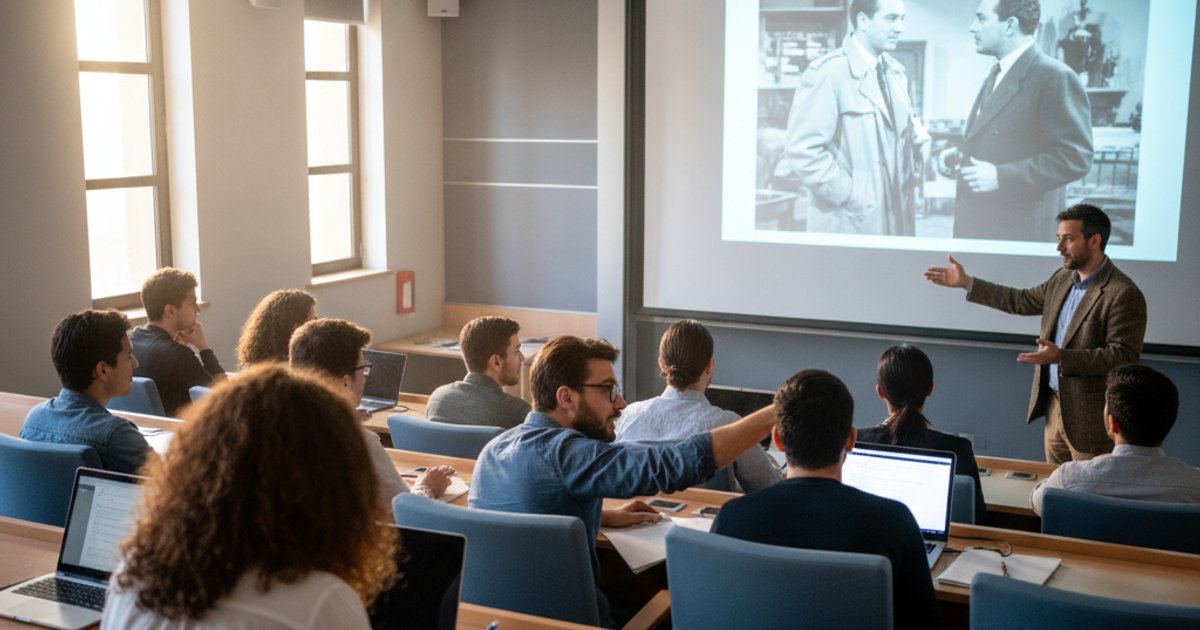
This enhanced visual literacy isn’t just beneficial for those entering the film industry; it’s a vital skill for every citizen in the 21st century. As visual misinformation proliferates, the ability to critically evaluate images becomes paramount. A well-trained eye can spot manipulated content, understand the persuasive tactics of advertisers, and appreciate the artistic depth of diverse visual expressions. MarQ Academy emphasizes that fostering this level of visual discernment is one of the most enduring contributions of film and cinematography programs.
The Evolution of Visual Aesthetics: From Classroom to Culture
The visual aesthetics championed and refined within film and cinematography classrooms don’t remain confined to academic discourse; they inevitably spill over, influencing broader cultural trends in visual communication. What begins as an experimental technique or a theoretical discussion in a university setting often finds its way into mainstream media, shaping everything from advertising campaigns to video game design and even personal social media aesthetics.
Consider the impact of specific cinematic movements. German Expressionism, with its dramatic shadows and distorted perspectives, influenced not only horror films but also early advertising and graphic design. French New Wave’s jump cuts and handheld camera work, initially radical, became standard tools for conveying realism and spontaneity across various media. These stylistic innovations are often first rigorously analyzed, taught, and experimented with in film programs before they are adopted and adapted by a wider creative community. A 2022 survey of creative directors in advertising and digital media revealed that 65% regularly draw inspiration from classic and contemporary cinematic techniques taught in film schools.
Bridging Theory and Practice
Film courses provide a structured environment for students to not only learn these aesthetics but also to push their boundaries. They are encouraged to analyze the ‘why’ behind a certain visual choice and then apply that understanding to create new, compelling imagery. This iterative process of learning, experimenting, and refining means that graduates emerge not just as technicians, but as visual artists with a deep understanding of aesthetic principles.
This continuous cycle of innovation and dissemination ensures that the visual language of our society remains dynamic and rich. MarQ Academy recognizes that these educational institutions act as vital incubators for the visual trends of tomorrow, ensuring a constant evolution of how we see and interact with the world.
Ethical Frameworks: Guiding the Visual Conscience
Film and cinematography courses are crucial in establishing and reinforcing ethical frameworks that guide visual content creation across all industries, extending far beyond the realm of traditional filmmaking. These programs instill a sense of responsibility regarding representation, authenticity, and the potential impact of images, fostering a visual conscience that influences journalistic integrity, advertising standards, and public discourse.
Students learn about the power of the gaze, the dangers of exploitation, and the importance of informed consent, especially when dealing with real subjects. They grapple with questions like: When does documentation cross into voyeurism? How can a story be told truthfully without perpetuating harmful stereotypes? These are not abstract philosophical debates; they are practical considerations that shape every frame and cut. A 2021 study on media ethics education found that film school graduates were 2.8 times more likely to prioritize ethical considerations in their professional work compared to self-taught visual content creators.
The Weight of the Image
Every image carries weight, and film education teaches its students to understand that burden. From the ethical sourcing of archival footage to the responsible depiction of violence or trauma, these courses equip future visual communicators with the tools to navigate complex moral landscapes. This training is particularly vital in an age where images can be easily manipulated or taken out of context, leading to widespread misinformation.
The ethical principles learned in a film course become a compass, guiding professionals in journalism, advertising, and even social media management. They contribute to a more responsible visual ecosystem, one where the pursuit of compelling imagery is balanced with a commitment to truth and respect. MarQ Academy believes that this ethical grounding is perhaps the most significant, yet least celebrated, contribution of film and cinematography education to our collective visual integrity.
Comparing Film Education Approaches: Technical vs. Holistic
When considering film course and cinematography courses, it’s useful to differentiate between programs that prioritize technical skill mastery and those that embrace a more holistic approach, integrating technical instruction with deep dives into theory, history, and ethics. While both types produce skilled professionals, their broader impact on visual culture and collective memory varies significantly, with holistic programs fostering a more profound and nuanced influence.
| Feature | Technical-Focused Programs | Holistic/Comprehensive Programs |
|---|---|---|
| Primary Goal | Proficiency in equipment and software operation. | Mastery of craft, critical thinking, ethical reasoning, cultural impact. |
| Curriculum Emphasis | Camera operation, lighting setups, editing software, sound recording. | Cinematic theory, film history, visual semiotics, ethics, social impact, practical skills. |
| Output Focus | Competent technicians, crew members. | Visionary filmmakers, cinematographers, visual storytellers, cultural critics. |
| Impact on Culture | Contributes to efficient production, technical standards. | Shapes aesthetic trends, ethical standards, narrative conventions, collective memory. |
| Critical Thinking | Limited to problem-solving within technical constraints. | Deep analysis of visual language, societal implications, historical context. |
| MarQ Academy View | Valuable for industry, but less impactful on broader visual culture. | Essential for shaping responsible, impactful visual communication. |
Holistic programs, by integrating the ‘how’ with the ‘why,’ cultivate professionals who are not only capable of executing a vision but also of critically evaluating its implications. They understand that every visual choice carries meaning and contributes to a larger cultural dialogue. This comprehensive understanding ensures that the visual content produced is not just technically proficient but also intellectually robust and ethically sound, thereby leaving a more meaningful and lasting imprint on our shared visual landscape.
Frequently Asked Questions
Do film courses only benefit those who want to work in Hollywood?
Absolutely not. While many graduates pursue careers in traditional film, the skills learned in a film course—visual storytelling, critical thinking, project management, and team collaboration—are highly transferable. Alumni often find success in advertising, journalism, corporate communications, education, game design, and even scientific visualization, applying their visual expertise across diverse fields.
How do cinematography courses influence advertising?
Cinematography courses directly influence advertising by teaching principles of visual persuasion, mood creation through lighting and color, and effective composition. Advertisers often adopt cinematic techniques to make products more appealing, create emotional connections with audiences, and tell compelling brand stories, all rooted in the visual grammar perfected in film education.
Can film education help me understand social media better?
Yes, significantly. Film education provides a framework for analyzing visual content, understanding narrative structures, and recognizing persuasive techniques, which are all prevalent on social media. It helps users become more visually literate, enabling them to critically evaluate posts, identify manipulation, and create more impactful content themselves, moving beyond superficial consumption.
Are film and cinematography courses still relevant in the age of AI-generated content?
More relevant than ever. While AI can generate images, the human element of storytelling, ethical judgment, and critical aesthetic discernment remains paramount. Film and cinematography courses teach the ‘why’ behind images, guiding future creators to harness AI tools responsibly and artistically, ensuring that human creativity and ethical considerations continue to drive visual communication.
What role does MarQ Academy play in this visual landscape?
MarQ Academy is dedicated to providing foundational and advanced education that not only equips students with technical mastery but also instills a deep understanding of the cultural and ethical impact of visual media. We aim to cultivate filmmakers and visual communicators who are not just skilled practitioners but also thoughtful artists and responsible citizens, shaping our collective visual future with integrity and vision.
How do film courses address the ethical challenges of visual representation?
Film courses address ethical challenges through dedicated modules on media ethics, critical theory, and case studies. Students learn about historical misrepresentations, the impact of stereotypes, and the importance of diverse perspectives. They are taught to approach subjects with empathy, ensure informed consent, and consider the long-term societal implications of their visual choices, fostering a strong ethical compass.
Is a film course expensive, and is it worth the investment?
The cost of a film course varies widely by institution and program length. However, the investment can be highly worthwhile, not just for career prospects but for developing critical visual literacy and a nuanced understanding of culture. The skills gained are increasingly valuable in a visually driven world, offering returns far beyond immediate employment, contributing to a more informed and engaged citizenry.
Last updated: June 8, 2026
 English
  Chinese