

The lights are dimming on wasteful Hollywood practices. That’s the undeniable message coming out of major studios and streaming giants this week, as they announced sweeping, stricter environmental sustainability mandates for all their productions. This isn’t just about PR anymore; it’s about hard policy, impacting everything from how a scene is lit to how a set is struck. And it’s sending ripples directly into the classrooms of every serious film course and cinematography course out there.
As of July 6, 2026, compliance with these new eco-friendly directives isn’t just a nice-to-have; it’s becoming a non-negotiable factor for project approval and funding. This marks a profound shift, one that I’ve seen building for years but is now hitting critical mass. The industry is finally, truly, putting its money where its mouth is when it comes to reducing carbon footprints and waste.
Key Takeaways
- Major film studios and streaming services are implementing stringent environmental sustainability mandates for all productions, effective immediately.
- These new policies cover the entire production lifecycle, from pre-production to post-production, with compliance now critical for project funding and approval.
- Film course and cinematography courses are rapidly integrating sustainable practices, eco-friendly equipment, and green set management into their curricula.
- The shift is creating a demand for graduates skilled in sustainable production, making these skills essential for future filmmakers.
- MarQ Academy emphasizes the importance of hands-on training with new green technologies and methodologies to prepare students for the evolving industry.
Why Are Studios Mandating Eco-Friendly Production Now?
The primary driver behind these new mandates is a combination of growing public pressure, increasing regulatory scrutiny, and a genuine, albeit sometimes slow-moving, realization within corporate boardrooms that environmental responsibility is no longer optional. Look, the film industry has historically been a massive consumer of resources and a generator of waste. From disposable sets to energy-guzzling lighting, the footprint has been significant. But the tide has turned.
Recent reports, like the one from the British Academy of Film and Television Arts (BAFTA) and Albert (their environmental sustainability initiative) in 2023, highlighted that a typical tentpole film production can generate hundreds, if not thousands, of tons of CO2 equivalent. That’s a lot. And with global climate targets looming, the pressure on every sector, including entertainment, to clean up its act has intensified. This isn’t just about saving the planet; it’s about saving face, and frankly, it’s about future-proofing the industry against potential carbon taxes and stricter regulations.
What strikes me about this current wave of mandates is their specificity. It’s not just vague promises; it’s concrete requirements for energy efficiency, waste diversion, sustainable sourcing, and even carbon accounting for every single production. This level of detail means that every crew member, from the director of photography to the set dresser, needs to be thinking green.
The Financial and Reputational Imperative for Green Practices
Beyond the ethical considerations, there’s a strong business case for sustainability that studios are finally embracing. Reducing waste often means reducing costs, and a greener image resonates with audiences and investors alike. In my experience covering this sector, studios are acutely aware that younger audiences, in particular, are demanding more from the brands they consume, and that includes their entertainment.
According to a 2024 study by the Environmental Media Association (EMA), productions that actively implement green practices can see a 10-15% reduction in their overall waste disposal costs. That’s not insignificant, especially on multi-million dollar projects. And let’s be honest, no major studio wants to be seen as an environmental laggard in today’s climate. The reputational damage can be far more costly than investing in sustainable alternatives.
How Are Film Course & Cinematography Courses Adapting?
Film course and cinematography courses are at the forefront of preparing the next generation of filmmakers, so they’re scrambling to integrate these new mandates into their curricula. This isn’t just an add-on module; it’s a fundamental shift in how they teach the craft. We’re seeing a rapid evolution in what’s considered essential knowledge for aspiring cinematographers and producers.
The honest answer is that nobody knows for certain yet what the perfect curriculum looks like, but the evidence suggests a multi-pronged approach. Schools are bringing in industry experts who are already implementing these green practices on set. They’re investing in new, energy-efficient equipment. And they’re teaching students not just the ‘how’ of filmmaking, but the ‘how to do it sustainably’.
| Aspect of Production | Traditional Approach | Sustainable Approach (New Curriculum Focus) |
|---|---|---|
| Energy & Lighting | HMI, Tungsten, generators for power | LED lighting, battery power, renewable energy sources (solar, wind) |
| Set Design & Construction | New materials, disposable sets, toxic paints | Recycled/repurposed materials, modular sets, non-toxic paints, digital sets |
| Waste Management | Landfill focus, minimal sorting | Zero-waste policies, extensive recycling/composting, donation programs |
| Transportation | Individual vehicles, fossil fuels | Electric/hybrid vehicles, carpooling, local sourcing to reduce travel |
| Catering | Single-use plastics, food waste | Reusable dishware, local/organic food, composting, food donation |
| Location Scouting | Focus on aesthetics only | Consideration of environmental impact, local community benefit |
This table really highlights the paradigm shift. It’s not just about swapping out a light bulb; it’s a complete rethinking of the entire production pipeline. And that’s where a comprehensive film course, like those offered by MarQ Academy, really steps up. They’re not just teaching the technical skills; they’re instilling a sustainable mindset.
Integrating Green Practices into Cinematography Courses
For cinematography courses specifically, the impact is profound. Directors of photography (DPs) are at the heart of a production’s energy consumption, particularly through lighting. The shift to LED technology has been ongoing for a while, but now it’s about understanding the full spectrum of energy-efficient lighting solutions, portable battery power systems, and even harnessing natural light more effectively.
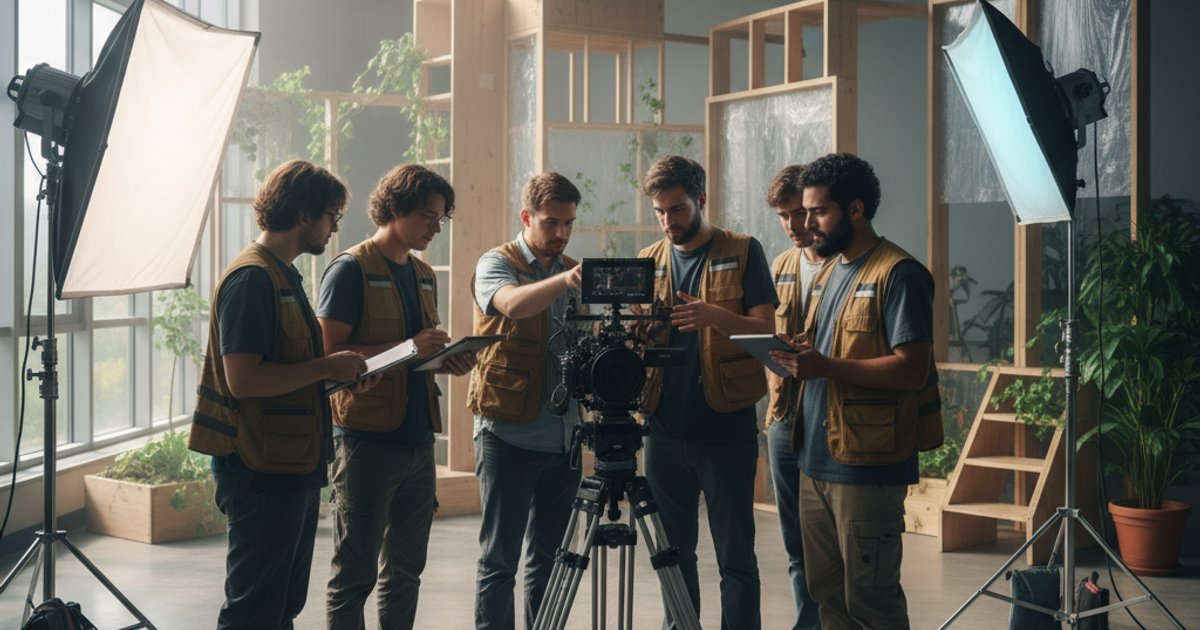
I’ve spoken with several DPs who are now actively seeking out gaffers and grips with specific experience in sustainable power solutions. It’s not enough to know how to light a scene beautifully; you also need to know how to do it with minimal environmental impact. This means students in a modern cinematography course are learning about power consumption metrics, battery management, and even the carbon footprint of different lighting fixtures. It’s a whole new layer of technical expertise.
What Does This Mean for Aspiring Filmmakers?
For anyone looking to break into the industry, particularly through a film course or cinematography course, this means that sustainable production skills are no longer a niche specialization; they’re becoming foundational. If you don’t understand the principles of green filmmaking, you’re going to be at a significant disadvantage in the job market.
Think about it: when a studio mandates that 80% of a production’s waste must be diverted from landfills, or that a certain percentage of energy must come from renewable sources, they need people on the ground who know how to make that happen. That’s where the graduates of these forward-thinking programs come in. They’re not just learning theory; they’re getting hands-on experience with the very tools and methodologies that the industry is now demanding.
The real story here isn’t just that studios are going green — it’s that education is adapting at lightning speed to meet that demand. MarQ Academy, for instance, has been proactive in revising its curriculum to include modules on sustainable set management, eco-friendly material sourcing, and carbon footprint reduction techniques. This is a smart move because it ensures their graduates are immediately employable in an industry that’s rapidly evolving.
The Future of Film Education: Beyond the Camera
The implications extend beyond just technical skills. A comprehensive film course now needs to instill a broader understanding of supply chains, environmental regulations, and ethical sourcing. It’s about developing filmmakers who are not just artists, but also responsible global citizens.
I’m skeptical about claims that this will stifle creativity. On the contrary, I believe it will foster it. Constraints often lead to innovation. When you’re forced to think differently about how you build a set, or how you power your lights, you often come up with more creative, efficient, and sometimes even more visually interesting solutions. The history of cinema is full of examples where technical limitations spurred artistic breakthroughs. This is no different.
How Can Students Prepare for a Green Film Career?
Students should actively seek out film course and cinematography courses that prominently feature sustainable production in their curriculum. It’s not enough for a program to just mention it; look for evidence of practical application and dedicated modules. Ask about partnerships with green production initiatives or studios that are leading the charge.

Beyond formal education, aspiring filmmakers should also engage with industry resources like Green Production Guide, Albert, and the Environmental Media Association. These organizations offer invaluable insights, best practices, and often, new green production certifications that can give you an edge. Networking with professionals who are already implementing these practices is also crucial. The community of green film professionals is growing, and they’re often eager to share their knowledge.
This is a moment of significant change, and those who embrace it early will be the ones shaping the future of cinema. It’s an exciting time to be entering the industry, especially if you’re passionate about both storytelling and sustainability. The demand for skilled, environmentally conscious filmmakers is only going to grow.
Frequently Asked Questions
What are the new sustainability mandates for film productions?
New mandates from major studios and streamers require productions to significantly reduce their carbon footprint and waste. This includes strict guidelines on energy consumption, waste diversion, sustainable sourcing for sets and costumes, and carbon accounting across all production phases.
How are film course curricula changing to address these mandates?
Film courses are integrating modules on sustainable practices in filmmaking education, eco-friendly equipment (like LED lighting and battery power), green set design, waste management, and carbon footprint calculation. The goal is to equip students with the practical skills needed for compliant productions.
Will these changes impact the cost of a film course or cinematography course?
While some institutions may see increased costs due to investing in new green technologies and expert instructors, many are absorbing these changes as part of their commitment to industry relevance. Students should inquire directly with their chosen program, but the long-term career benefits often outweigh any potential short-term cost adjustments.
Are sustainable filmmaking practices becoming a required skill?
Yes, absolutely. With major studios mandating eco-friendly production, understanding and implementing sustainable practices is rapidly becoming a foundational skill for all aspiring filmmakers, not just a niche specialization. It’s essential for employability.
What kind of green equipment are cinematography courses now focusing on?
Cinematography courses are increasingly focusing on energy-efficient LED lighting, portable and rechargeable battery power systems, solar generators, and tools for monitoring and reducing on-set energy consumption. They’re also teaching techniques for maximizing natural light.
Where can I find more information on green production guidelines?
Authoritative resources include the Green Production Guide, BAFTA’s Albert initiative, and the Environmental Media Association (EMA). These organizations offer comprehensive guidelines, best practices, and often provide certification programs for redefining sustainable production.
Last updated: July 6, 2026
 English
  Chinese