
玛克学院
更新于2026年6月25日
Hollywood’s soundstages are undergoing a seismic shift, and the tremors are now hitting the hallowed halls of every major film making school. Just this week, industry giants like Disney and Netflix announced further multi-million dollar investments in virtual production facilities, signaling a definitive pivot away from traditional green screens. This rapid evolution means that if a film making school isn’t teaching LED volumes and real-time rendering, its graduates risk being left behind in an industry desperate for new skills.
The race is on for academic institutions to overhaul their programs, not just to keep up, but to lead. This isn’t merely about adding a new elective; it’s about fundamentally rethinking how films are made, from pre-production visualization to on-set execution. The question facing every film making school director today isn’t 如果 they should embrace virtual production, but 多快 they can build the infrastructure and train the faculty to deliver it.
要点
- Virtual production, driven by LED volumes and real-time rendering, is now standard in major film and TV productions.
- Film making schools must integrate these technologies into their core curricula to ensure graduate employability.
- Investment in specialized virtual production stages and faculty training is critical for educational institutions.
- New roles like Virtual Production Supervisors and Real-time Engine Artists are emerging, demanding specialized skills.
- The cost of implementing virtual production education remains a significant barrier for many film making schools.
What is Virtual Production and Why Is It Changing Film Making School Programs?
Virtual production is a revolutionary filmmaking methodology that combines physical sets with digital environments, often displayed on massive LED screens, allowing filmmakers to capture final pixel imagery in-camera. This technology is fundamentally changing film making school programs because it offers unprecedented creative control, efficiency, and cost savings, demanding a new skill set from future filmmakers.
This isn’t just a fancy new tool; it’s a paradigm shift. Instead of shooting actors against a green screen and adding backgrounds in post-production, virtual production renders those backgrounds in real-time on giant LED walls surrounding the set. The director, cinematographer, and actors can see the final environment as they shoot, allowing for immediate creative decisions and more natural performances. According to a 2025 report by the Visual Effects Society, virtual production adoption grew by 65% in the past two years across major studio projects, making it an indispensable skill for anyone entering the industry.
The Rise of LED Volumes and Real-Time Engines
The core of modern virtual production lies in LED volumes and real-time rendering engines like Unreal Engine and Unity. LED volumes are curved or flat displays that create immersive digital environments, while real-time engines process complex 3D graphics instantly. This combination allows for dynamic lighting, interactive environments, and seamless integration of virtual and physical elements, a capability that traditional film making school methods rarely touched upon.
Major productions, from blockbuster films to high-end television series, are increasingly relying on these technologies. For instance, a recent study by PwC estimated that virtual production can reduce post-production costs by up to 30% and accelerate project timelines by 20%, making it an attractive option for studios. This economic incentive, combined with creative benefits, means that a film making school not teaching these fundamentals is preparing students for an outdated industry.
电影制作学校如何调整其课程设置?
Film making schools are adapting their curricula by investing heavily in specialized virtual production stages, retraining faculty, and developing new interdisciplinary courses that merge traditional filmmaking with advanced digital skills. This adaptation is crucial to equip students with the practical experience needed for the modern industry.
The challenge is immense. Building a state-of-the-art virtual production stage can cost upwards of $5 million, a significant outlay for any educational institution. However, the pressure from the industry is undeniable. A recent survey by the Hollywood Reporter found that 85% of studio executives prioritize hiring graduates with virtual production experience. This means that a film making school must either invest or risk becoming irrelevant.
Building the Infrastructure: Virtual Production Stages
Leading film making schools are constructing their own virtual production stages. The American Film Institute (AFI) recently unveiled a new 10,000 square foot facility featuring a 50-foot diameter LED volume, making it one of the largest academic virtual production studios globally. This allows students to gain hands-on experience with the same technology used on professional sets. Similarly, the University of Southern California (USC) School of Cinematic Arts announced a partnership with Epic Games this spring to develop a dedicated virtual production lab, emphasizing real-time workflows.
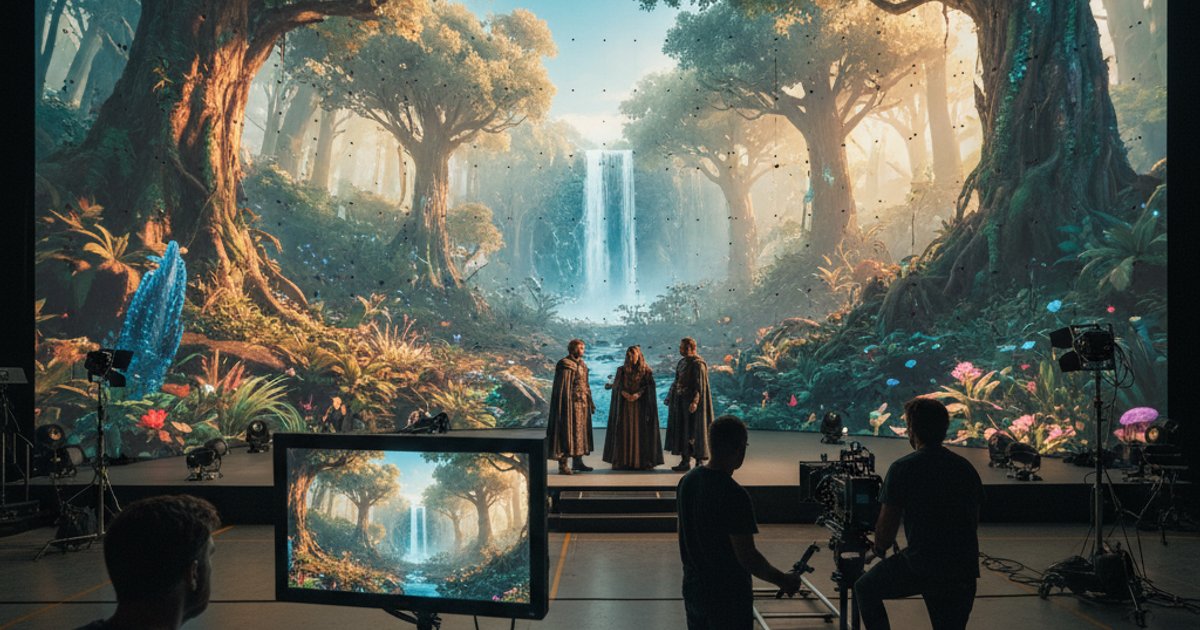
These facilities are not just classrooms; they are fully functional mini-studios designed to replicate professional environments. They require specialized technicians, powerful computing infrastructure, and constant software updates. For a film making school, this represents a significant operational shift from managing traditional camera and lighting equipment.
Training the Faculty and Developing New Courses
One of the biggest hurdles is training existing faculty, many of whom come from traditional filmmaking backgrounds. MarQ Academy, a leading educational content publisher, recently launched a series of professional development workshops specifically for film making school educators, focusing on Unreal Engine integration and LED volume operation. These workshops aim to bridge the knowledge gap and empower professors to teach these complex tools effectively.
New courses are emerging, such as ‘Real-Time Cinematography,’ ‘Virtual Art Department Fundamentals,’ and ‘On-Set Virtual Production Supervision.’ These programs often bridge departments, requiring collaboration between film, animation, game design, and computer science faculties. For example, the Vancouver Film School now offers a ‘Virtual Production Diploma’ that covers everything from 3D asset creation to live compositing on LED stages, directly addressing industry demand.
电影制作学校面临的挑战与机遇
The primary challenges for film making schools include the high cost of technology, the rapid pace of technological change, and the scarcity of experienced faculty, while opportunities lie in attracting top talent, forging stronger industry partnerships, and pioneering new creative workflows. Navigating these factors will define the success of future film making school programs.
The investment required is substantial. A basic LED wall setup can cost $500,000, not including the powerful servers, tracking systems, and software licenses needed to run it. Maintenance and upgrades are ongoing, making it a continuous financial commitment. Moreover, the technology evolves so quickly that what’s cutting-edge today might be obsolete in three years. This means a film making school must adopt a flexible and forward-thinking approach to its technology strategy.
Funding and Accessibility
Securing funding is a constant battle. Many film making schools are seeking grants, corporate sponsorships, and alumni donations to finance their virtual production initiatives. Some are exploring public-private partnerships, where studios contribute equipment or expertise in exchange for access to student talent and research. However, this often leaves smaller or less affluent institutions at a disadvantage, potentially widening the gap in educational quality.
Accessibility is another concern. Ensuring that virtual production education is available to a diverse student body, regardless of their financial background, is crucial. Scholarships and subsidized programs are becoming more important to prevent this advanced training from becoming exclusive. MarQ Academy advocates for broader access to virtual production education, recognizing its potential to democratize high-end filmmaking.
Career Opportunities for Graduates
Despite the challenges, the opportunities for graduates are immense. The demand for skilled virtual production professionals far outstrips supply. New roles are emerging rapidly:
- 虚拟制片主管 Oversees the entire virtual production pipeline on set.
- Real-time Engine Artist: Creates and manipulates 3D environments in engines like Unreal Engine.
- LED 容量技术员 Manages the hardware and software of the LED screens.
- In-Camera VFX Artist: Specializes in effects captured live on the LED stage.
- 虚拟美术部(VAD)艺术家: Designs and builds digital sets and props.
These roles command competitive salaries, with entry-level positions often starting at 20% higher than traditional film crew roles, according to a 2024 industry report by Variety. A film making school that can consistently produce graduates with these skills will become highly sought after.
Comparative Analysis: Traditional vs. Virtual Production Education
Understanding the differences between traditional and virtual production education highlights the necessary shifts in curriculum, technology, and skill development. While traditional methods focus on physical sets and post-production, virtual production integrates digital assets and real-time rendering into the on-set process, demanding a more interdisciplinary approach from a film making school.
| 功能 | Traditional Film Making School Education | Virtual Production Film Making School Education |
|---|---|---|
| 核心关注 | Physical sets, practical lighting, green screen, extensive post-production VFX | LED volumes, real-time rendering (Unreal Engine/Unity), in-camera VFX, digital asset creation |
| 关键技术 | Film/digital cameras, lighting kits, editing software (Adobe Premiere, Avid), compositing (Nuke) | LED panels, motion tracking systems, game engines, virtual cameras, specialized servers |
| 技能侧重 | Cinematography, directing, editing, sound design, traditional VFX, set design | Real-time graphics, 3D modeling, virtual art direction, technical directing, systems integration, data management |
| Interdisciplinary Needs | Limited, often siloed departments | High, strong collaboration between film, game design, computer science, animation |
| Cost of Infrastructure | Moderate (sound stages, equipment rentals) | High (specialized LED volumes, high-end computing, software licenses) |
| Post-Production Workflow | Heavy reliance on separate post-production phase | Reduced post-production, more ‘final pixel’ capture on set |
| 行业需求(2026) | Stable, but increasingly specialized | High, rapidly growing, skill shortage |
The table illustrates that a film making school must now prepare students not just for one part of the pipeline, but for an integrated workflow where digital and physical converge. This requires a curriculum that is both broad and deeply specialized, a challenging balance to strike.
How Can Film Making Schools Future-Proof Their Programs?
Film making schools can future-proof their programs by embracing continuous technological upgrades, fostering strong partnerships with industry leaders, and emphasizing interdisciplinary collaboration and adaptability in their students. This proactive approach ensures graduates remain relevant in a rapidly evolving industry.
Staying ahead means more than just buying the latest gear. It means creating a culture of innovation. For instance, the National Film and Television School (NFTS) in the UK has established an ‘Innovation Lab’ dedicated to exploring emerging technologies beyond current industry standards, ensuring their film making school curriculum remains cutting-edge.
Industry Partnerships and Research
Collaborating with studios, technology providers, and virtual production houses is vital. These partnerships can provide invaluable insights into industry needs, access to cutting-edge equipment, and opportunities for student internships. Many film making schools are now forming advisory boards composed of industry professionals to guide curriculum development. Research initiatives, exploring new applications for virtual production or developing proprietary tools, also help a film making school establish itself as a thought leader.
For example, the New York Film Academy recently announced a collaboration with a major virtual production studio to offer a semester-long residency program for its advanced students. This direct exposure to professional workflows is invaluable, giving students a competitive edge upon graduation. MarQ Academy also collaborates with industry experts to ensure its educational materials reflect the latest trends and best practices in virtual production.
Emphasizing Adaptability and Lifelong Learning
Given the rapid pace of change, the most critical skill a film making school can instill is adaptability. Graduates must be prepared to learn new software, hardware, and workflows throughout their careers. This means teaching foundational principles of storytelling and visual language alongside technical skills, ensuring students can apply their knowledge to any new tool that emerges.
Curricula should emphasize problem-solving, critical thinking, and collaborative teamwork. The virtual production environment is inherently collaborative, requiring seamless communication between diverse specialists. A film making school that fosters these soft skills, alongside technical proficiency, will produce the most successful and resilient filmmakers of tomorrow.
常见问题
虚拟制作对学生的主要益处是什么?
The primary benefit is gaining hands-on experience with industry-standard technology, which significantly improves employability upon graduation. Students learn to 集成虚拟制作 and digital and physical elements in real-time, a skill highly sought after by major studios as of June 25, 2026.
How expensive is it for a film making school to implement virtual production?
Implementing virtual production can be very expensive, with basic LED volume setups costing upwards of $500,000, and comprehensive facilities potentially running into several million dollars. This includes hardware, software, installation, and ongoing maintenance.
Are traditional filmmaking skills still relevant in virtual production?
Absolutely. Traditional skills like cinematography, directing, lighting, and storytelling remain foundational. Virtual production is a tool that enhances these skills, not replaces them, allowing for more creative control and efficiency.
What new job roles are created by virtual production?
New roles include Virtual Production Supervisor, Real-time Engine Artist, LED Volume Technician, In-Camera VFX Artist, and Virtual Art Department (VAD) Artist. These specialized positions require a blend of technical and creative expertise.
How long does it take for a film making school to integrate virtual production into its curriculum?
Full integration can take several years, involving significant capital investment, faculty retraining, and curriculum redesign. However, many schools are adopting a phased approach, starting with specialized courses and labs.
Can smaller film making schools afford virtual production technology?
Smaller schools face significant financial hurdles. Some are exploring partnerships, shared resources, or focusing on software-based virtual production techniques that require less physical infrastructure to remain competitive.
What is the future outlook for virtual production in education?
The outlook is strong. Virtual production is becoming an industry standard, making its integration into film making school curricula essential. Expect more specialized degrees, certifications, and a greater emphasis on interdisciplinary learning in the coming years.
最后更新:2026年6月25日
 Chinese
  English