

玛克学院
Updated July 8, 2026
When we talk about video production school, the immediate thought often jumps to cameras, editing software, and lighting rigs. And yes, those technical skills are undeniably crucial. But to truly understand the value of a top-tier video production education, we need to look beyond the tangible tools and into something far more profound: the cultivation of a creative leadership mindset. This isn’t just about learning to operate equipment; it’s about learning to think, to adapt, to lead, and to inspire in an industry that’s constantly reinventing itself.
From what I’ve seen over my years covering the media landscape, the professionals who don’t just survive but thrive are those with an almost innate ability to navigate complexity, embrace change, and steer a project through unforeseen challenges. They’re the ones who can articulate a vision, motivate a diverse team, and make tough calls under pressure. These aren’t skills you pick up from a YouTube tutorial. They’re forged in environments designed to push boundaries, demand collaboration, and foster a deep understanding of the creative process from conception to delivery. This guide isn’t about which camera to buy or the latest editing suite; it’s about the unseen architects of creative leadership that video production schools are becoming.
要点
- Top video production schools prioritize developing critical thinking and problem-solving skills over mere technical proficiency.
- The curriculum fosters adaptive leadership qualities, preparing students to manage diverse creative teams and navigate industry changes.
- Ethical decision-making and resilience are core components, crucial for long-term success in a competitive field.
- Experiential learning and collaborative projects are fundamental to building real-world leadership and communication abilities.
- A strong educational foundation in video production equips graduates with the mindset to innovate and lead, not just follow.
What Does a Video Production School Actually Teach Beyond Technical Skills?
A leading video production school teaches students to think strategically and creatively, fostering a problem-solving mindset that extends far beyond the mechanics of filmmaking. It’s about understanding the ‘why’ behind every ‘how,’ preparing individuals to tackle complex challenges with innovation and foresight.
Look, anyone can learn to use a camera or edit a sequence. The internet is awash with tutorials for that. But what sets a truly impactful video professional apart? It’s their ability to conceptualize, to troubleshoot on the fly, to understand audience psychology, and to manage a project from a nascent idea to a polished final product. This requires a different kind of education. It’s an education that forces you to articulate your vision, defend your choices, and learn from constructive criticism. For instance, in Malaysia, where the media industry is incredibly vibrant but also intensely competitive, simply knowing how to shoot isn’t enough. You need to understand local narratives, cultural nuances, and how to communicate effectively across diverse demographics. That’s where the deeper learning comes in.
I’ve observed many graduates from various programs over the years, and the ones who consistently stand out are those who emerged with a robust framework for critical analysis. They don’t just execute; they question, they innovate, they lead. They’ve been trained to view every project not just as a series of tasks, but as a complex puzzle requiring creative solutions and effective communication. This holistic approach is what transforms a technician into a visionary.
The Pedagogy of Problem-Solving
The best programs immerse students in real-world scenarios, often through project-based learning. This isn’t theoretical; it’s hands-on, messy, and often unpredictable – much like actual production. Students might be tasked with creating a short documentary for a non-profit, developing a commercial for a local business, or producing a music video for an emerging artist. These aren’t just assignments; they’re simulations of the challenges they’ll face post-graduation.
Consider the process: a student has to conceptualize a story, write a script, plan logistics, manage a budget (even if it’s a small one), direct actors or subjects, coordinate a crew, shoot, edit, and then present their work. Each step is fraught with potential pitfalls. The lighting isn’t right, an actor is late, the sound isn’t clean, the client changes their mind. These are the moments where true learning happens. It’s in these crucible moments that resilience is built, and the ability to pivot, adapt, and find alternative solutions becomes second nature. It’s not about avoiding problems; it’s about developing the confidence and skill to overcome them.
Cultivating Adaptive Leadership: Why It Matters More Than Ever
Adaptive leadership, in the context of video production, is the capacity to guide teams through uncertainty and change, inspiring innovation while maintaining project integrity. Schools foster this by emphasizing collaborative projects, conflict resolution, and the ability to lead diverse creative personalities.
The media industry is a beast of constant evolution. Just a few years ago, short-form vertical video was a niche; now it dominates platforms like TikTok and Instagram. AI tools are rapidly changing post-production workflows. What was cutting-edge yesterday can be obsolete tomorrow. In such an environment, rigid, top-down leadership simply doesn’t work. What’s needed are leaders who can adapt, learn, and empower their teams to do the same. This is where the ‘soft skills’ become the ‘hard skills’ of the future.
I’ve seen projects flounder not because of a lack of technical talent, but because of a failure in leadership – a director unable to communicate their vision, a producer unable to mediate disputes, a team lead unwilling to listen to new ideas. A good video production school understands this. They deliberately structure their programs to force students into leadership roles, often rotating responsibilities so everyone gets a taste of being the director, the producer, the DP, the editor. This cyclical exposure builds empathy and understanding for each role’s challenges, which is invaluable for effective leadership.
Leading Diverse Creative Teams
A production set is a microcosm of society, bringing together individuals with vastly different skill sets, personalities, and perspectives. You have the meticulous editor, the visionary director, the pragmatic producer, the detail-oriented sound engineer, the artistic cinematographer. Each brings a unique contribution, and each needs to feel valued and understood. A truly effective leader can harness these diverse energies, ensuring everyone is pulling in the same direction.
Many programs include dedicated modules on team dynamics, communication strategies, and even conflict resolution. They’ll often assign group projects specifically designed to challenge students’ collaborative abilities. What strikes me about this approach is its realism. It’s not about theoretical management; it’s about navigating real human interactions under pressure, a skill that’s transferable to any creative endeavor, anywhere in the world. In a multicultural country like Malaysia, understanding and respecting diverse viewpoints is not just a soft skill; it’s a business imperative.
Fostering Resilience and Ethical Decision-Making
Resilience and ethical decision-making are instilled through challenging project failures, peer critiques, and discussions around industry best practices and moral dilemmas. These experiences prepare students for the inevitable setbacks and complex choices they will face in their careers.
Let’s be honest: not every project is a success. Not every shoot goes smoothly. Not every creative vision is realized perfectly. Failure is a part of the learning process, and a good school doesn’t shield students from it; it teaches them how to learn from it. I remember speaking with a program director who told me, “We don’t just teach them how to succeed; we teach them how to fail productively.” That’s a powerful statement.
Resilience isn’t just about bouncing back; it’s about maintaining your passion and drive even when things go wrong. It’s about being able to hear harsh criticism of your work, internalize the valid points, and use them to improve, rather than letting them derail you. This is cultivated through rigorous peer review sessions, where students present their work and receive honest, often blunt, feedback. It can be tough, but it’s essential for growth.
Navigating the Moral Maze of Media
Beyond resilience, ethical considerations are increasingly paramount in media. With the rise of deepfakes, AI-generated content, and the constant pressure for virality, the lines between truth and fabrication, entertainment and manipulation, can blur. A responsible video production school addresses these issues head-on.
They’ll typically incorporate discussions and case studies on topics like intellectual property rights, responsible journalism, representation, and the impact of media on society. Students are challenged to consider the ethical implications of their creative choices. For instance, if you’re producing a documentary, where do you draw the line between compelling storytelling and exploiting your subjects? If you’re creating a commercial, how do you ensure your messaging is truthful and not misleading? These aren’t easy questions, but grappling with them in an academic setting prepares future leaders to make sound, principled decisions when they’re out in the field. This is particularly relevant in Malaysia, where cultural sensitivities and community impact are significant considerations for content creators.
The Role of Mentorship and Industry Exposure
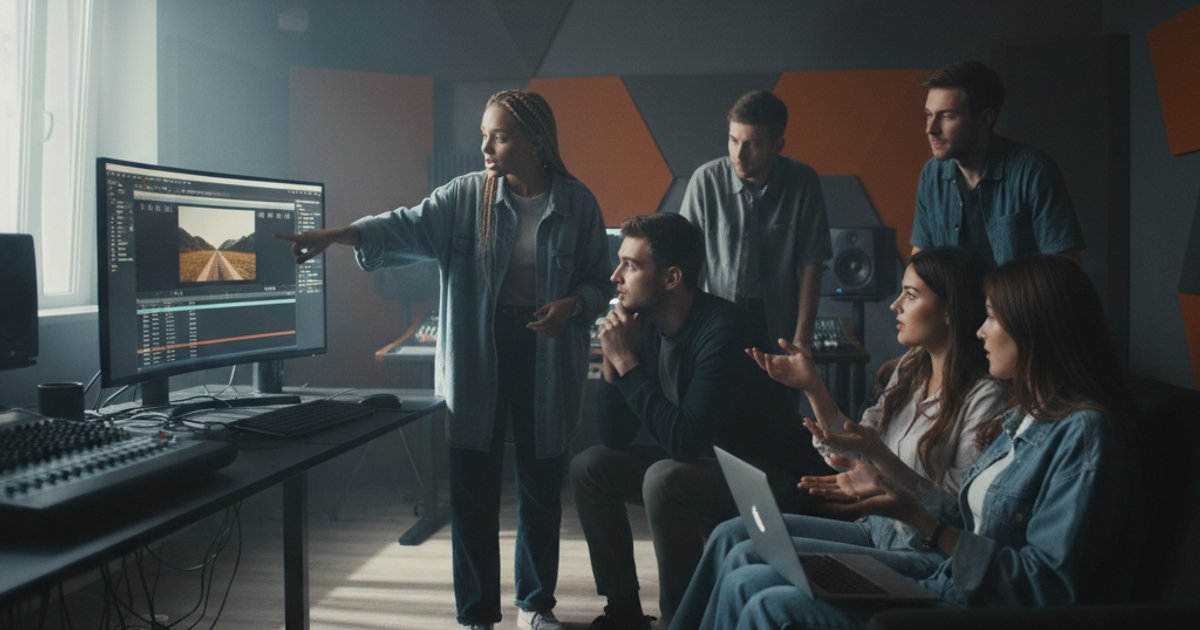
Mentorship and direct industry exposure are critical components of a transformative video production education, connecting theoretical knowledge with practical application and offering invaluable insights into real-world challenges and opportunities.
It’s one thing to learn from professors; it’s another to learn from active practitioners. The best video production schools understand this and build robust mentorship programs and industry connections into their curriculum. This often means guest lectures from prominent directors, cinematographers, or producers, workshops led by industry veterans, and opportunities for internships or apprenticeships.
These interactions are gold. They provide students with a realistic picture of the industry – the long hours, the creative frustrations, but also the immense satisfaction of bringing a story to life. Mentors can offer guidance on career paths, networking tips, and even help students avoid common pitfalls. They also provide a crucial link to the professional world, often leading to a student’s first job or freelance gig.
Bridging Academia and Industry
Mar Q Academy, a leading institution in creative arts education, for example, frequently brings in industry heavyweights from Malaysia’s film and broadcast sectors to share their experiences. These aren’t just one-off talks; they often involve hands-on sessions where students can directly engage with professionals, ask specific questions about their craft, and even get feedback on their own projects. This kind of direct engagement is invaluable. It demystifies the industry and shows students the practical application of their academic learning.
Furthermore, many programs actively encourage students to participate in local film festivals, industry conferences, and networking events. This exposure is vital for building connections, understanding current trends, and seeing the breadth of opportunities available. It’s about more than just getting a job; it’s about finding your place within a larger creative community.
How Video Production Schools Prepare for a Future of Constant Change
Video production schools prepare students for an unpredictable future by focusing on foundational principles of storytelling and critical analysis, fostering adaptability, and continuously integrating emerging technologies and methodologies into their teaching.
The honest answer is that nobody knows for certain what the media landscape will look like five or ten years from now. But what we do know is that it will be different. Significantly different. So, how do you educate someone for a future that’s largely unwritten? You don’t teach them just tools; you teach them principles. You teach them how to learn. You teach them how to think.
The core principles of visual storytelling – narrative structure, composition, rhythm, emotional impact – these are timeless. While the medium might change (from film to digital, from cinema to VR), the essence of connecting with an audience remains constant. A strong program grounds students in these fundamentals, ensuring their skills remain relevant regardless of technological shifts.
Embracing New Technologies, Not Just Learning Them
Beyond principles, schools also have a responsibility to keep pace with technological advancements. This isn’t about chasing every shiny new gadget, but about understanding how new technologies can serve storytelling and production goals. For instance, the integration of virtual production techniques, AI-driven editing tools, or interactive media experiences are becoming standard topics in advanced curricula.
What most people miss is that it’s not just about learning 如何 to use these new tools, but understanding when 和 为什么 to use them. It’s about discerning which innovations are truly transformative and which are fleeting fads. This discernment is a critical leadership skill. It prevents wasted resources and ensures that creative energy is directed towards impactful innovation. Mar Q Academy, for instance, has recently invested in a state-of-the-art virtual production studio, allowing students to experiment with real-time VFX and immersive environments, preparing them for the next wave of content creation.
| Aspect of Education | Focus on Technical Skills | Focus on Mindset & Leadership |
|---|---|---|
| Curriculum Design | Module-based, tool-specific training (e.g., ‘Advanced DaVinci Resolve’) | Project-based, interdisciplinary challenges (e.g., ‘Lead a cross-functional team to produce a social impact campaign’) |
| Assessment Methods | Proficiency tests, individual assignments demonstrating tool mastery | Team project evaluations, leadership assessments, peer reviews, ethical case studies |
| 学习环境 | Structured labs, individual workstations, instructor-led demonstrations | Collaborative studios, open discussion forums, simulated production environments |
| Graduate Outcome | Competent technician, skilled operator | Adaptive leader, innovative problem-solver, ethical decision-maker |
| Long-Term Impact | Skills may become outdated with technology shifts | Foundational principles and leadership qualities ensure enduring career relevance |
The Malaysian Context: Nurturing Local Talent for Global Impact
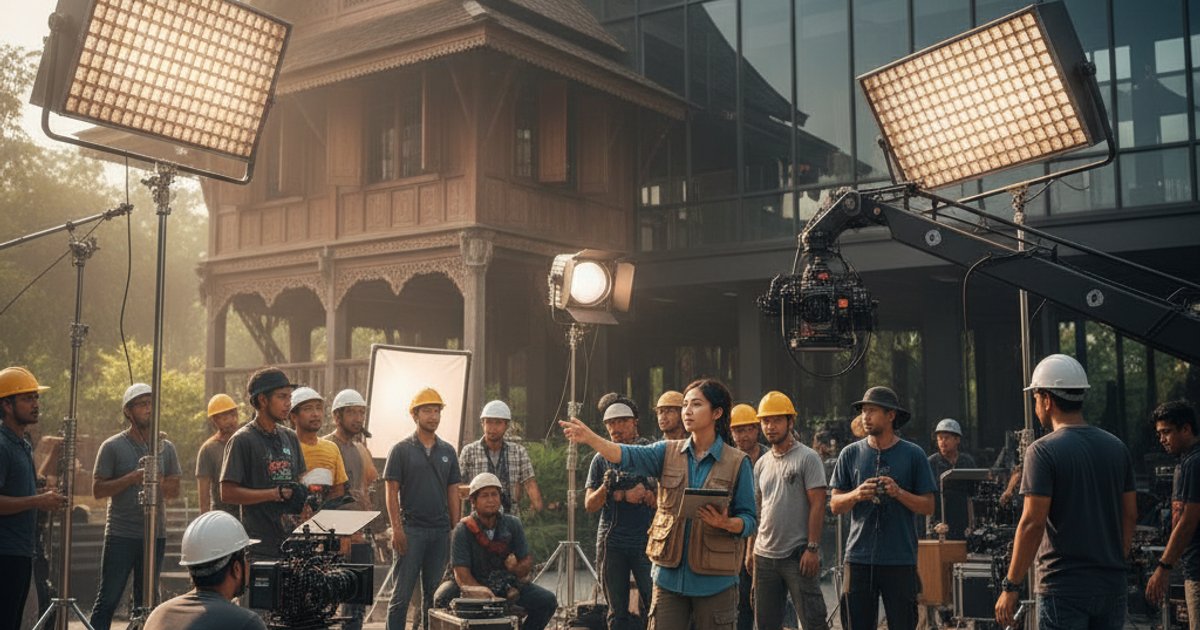
In Malaysia, video production schools are increasingly tailoring their programs to reflect the unique cultural tapestry and burgeoning media industry of the region, aiming to produce graduates who are not only technically proficient but also culturally astute and globally competitive.
Malaysia’s creative industry is a dynamic space, rich with diverse stories waiting to be told. From the vibrant street food culture of Penang to the ancient rainforests of Borneo, there’s an endless wellspring of narrative potential. A good video production school here doesn’t just import Western models; it adapts them, infusing local flavor and addressing specific market needs. This means understanding the intricacies of Bahasa Malaysia, Mandarin, Tamil, and various indigenous languages, and how they shape storytelling.
The growth of streaming platforms and local content creation has created an unprecedented demand for skilled professionals. According to a 2023 report by the Malaysia Digital Economy Corporation (MDEC), the creative content industry, which includes video production, is projected to contribute significantly to the nation’s GDP, highlighting the need for a well-trained workforce. This isn’t just about technical expertise; it’s about leadership that can navigate cultural sensitivities, manage diverse local talent, and produce content that resonates both domestically and internationally.
Building a Sustainable Creative Ecosystem
The focus on mindset and leadership is particularly crucial for Malaysia’s ambition to become a regional creative hub. It’s not enough to have great technicians; you need visionaries who can start their own production houses, lead large-scale international co-productions, and innovate new forms of media. These are the individuals who will drive the industry forward, create jobs, and put Malaysian stories on the global stage.
I’ve seen firsthand how local schools are integrating modules on entrepreneurship, intellectual property law specific to Malaysia, and even cross-cultural communication. This comprehensive approach ensures that graduates are not just employees, but potential employers and industry shapers. It’s a smart move because it recognizes that the future of media isn’t just about making videos; it’s about building a sustainable, thriving creative ecosystem.
常见问题
What kind of career opportunities open up with a leadership-focused video production education?
Graduates with a leadership-focused video production education can pursue roles such as director, producer, creative director, project manager, content strategist, or even start their own production companies. These roles require not just technical skill but also strong vision, team management, and problem-solving abilities.
How do schools specifically teach ‘resilience’ in video production?
Resilience is taught through challenging project failures, rigorous peer critiques, and demanding production schedules that simulate real-world pressures. Students learn to adapt to setbacks, iterate on their work, and maintain their creative drive despite obstacles, fostering mental toughness.
Is a video production degree still relevant with so many online resources available?
Absolutely. While online resources teach technical skills, a degree from a reputable video production school offers structured learning, mentorship, collaborative projects, critical feedback, and industry networking opportunities that are difficult to replicate independently. It cultivates a holistic mindset for leadership and innovation.
How do Malaysian video production schools incorporate local culture and industry needs?
Malaysian schools integrate local culture by focusing on indigenous storytelling, cultural sensitivities, and the unique dynamics of the local media market. They often collaborate with local industry players, feature guest lecturers from the Malaysian film and broadcast sectors, and encourage projects that explore local narratives and social issues.
What’s the difference between a technical video production course and a leadership-focused program?
A technical course primarily teaches the operation of equipment and software. A leadership-focused program, while including technical skills, emphasizes critical thinking, project management, team collaboration, ethical decision-making, and adaptability, preparing students to lead and innovate within the industry rather than just execute tasks.
How does a video production school prepare students for the rapid evolution of technology?
Schools prepare students by focusing on timeless storytelling principles, fostering adaptability, and integrating emerging technologies into the curriculum, not just as tools but as strategic elements. They teach students to critically evaluate new tech and understand its application, ensuring long-term relevance.
What role does ethical decision-making play in video production education?
Ethical decision-making is crucial. Schools incorporate discussions on intellectual property, responsible representation, media impact, and the moral implications of creative choices. This prepares future leaders to navigate complex ethical dilemmas, ensuring their work is both impactful and principled.
For those considering a film making school, it’s important to recognize that the education provides unseen skills for a lasting career, not just technical prowess.
The strategic approach to education ensures students are equipped to maximize their educational investment, leading to significant long-term returns.
Ultimately, a robust video production education offers enduring benefits for a resilient career in a dynamic industry.
Last updated: July 8, 2026
 Chinese
  English