
玛克学院
更新于2026年6月8日
Choosing to pursue a career in video production is exciting, but the path through formal education, like a dedicated video production school, comes with a complex equation of investment and return. It’s not just about tuition fees and learning camera settings; it’s about understanding the full spectrum of financial commitments, opportunity costs, and the less obvious, yet profoundly impactful, long-term benefits that shape a resilient career in a constantly evolving industry. This guide, brought to you by Mar Q Academy, a leading voice in media education, will help you navigate that decision with clarity.
要点
- Formal video production education offers structured learning, professional networking, and critical soft skill development beyond technical proficiency.
- Hidden costs include opportunity cost of lost income, equipment debt, and living expenses, often exceeding tuition fees.
- The long-term benefits encompass professional discipline, structured critique, and access to industry-specific networks, which are vital for career longevity.
- Graduates from accredited programs often command higher starting salaries, with a 2024 study by the Malaysian Ministry of Human Resources indicating a 15% salary premium for degree holders in creative arts.
- Strategic decision-making involves weighing tangible financial outlays against intangible career advantages like adaptability and critical thinking.
What Does Video Production School Truly Offer Beyond Technical Skills?
Video production school provides a structured environment for learning technical craft, but its true, enduring value often lies in cultivating professional discipline, critical thinking, and a robust industry network that extends far beyond graduation. These intangible assets are crucial for navigating a dynamic industry where technology and trends shift rapidly, ensuring graduates possess adaptability and problem-solving capabilities.
Many prospective students focus solely on mastering cameras, editing software, and lighting techniques. While these are foundational, the real differentiator for long-term career success emerges from the less tangible aspects of formal training. Think of it this way: anyone can learn software from online tutorials, but few can replicate the rigorous, structured critique from experienced faculty or the collaborative pressure of a real-world project within a supportive educational framework. This process hones not just technical skills, but also crucial soft skills like communication, teamwork, and resilience under pressure.
For instance, a 2023 survey by the Malaysian Digital Economy Corporation (MDEC) found that employers in the creative content sector prioritize problem-solving skills (85%) and adaptability (78%) over specific software proficiency (60%) when hiring entry-level video professionals. This underscores the importance of a curriculum that fosters holistic development.
What Are the Hidden Costs of Attending Video Production School?
The financial investment in video production school extends well beyond the advertised tuition fees, encompassing significant hidden costs such as the opportunity cost of lost income, substantial equipment purchases, and ongoing living expenses, which collectively demand careful consideration. Prospective students must budget for these less obvious expenditures to gain a complete picture of their financial commitment.
Tuition fees in Malaysia for a diploma or degree in video production can range from RM 20,000 to RM 80,000 per year, depending on the institution and program length. But that’s just the tip of the iceberg. Here’s a breakdown of costs often overlooked:
- Opportunity Cost of Lost Income: This is arguably the largest hidden cost. While studying full-time, you’re not earning a full-time salary. For a three-year degree, if you could have earned, say, RM 2,500 per month in an entry-level job, that’s RM 90,000 in lost potential earnings. This figure alone can rival tuition.
- Equipment and Software: While schools provide some gear, serious students often invest in their own cameras, lenses, lighting kits, and high-performance computers. A decent entry-level professional camera setup can easily cost RM 10,000-RM 20,000. Software subscriptions (Adobe Creative Cloud, DaVinci Resolve Studio, etc.) add hundreds of ringgit annually.
- Living Expenses: Rent, food, transportation, and personal expenses continue whether you’re studying or working. For students relocating to urban centers like Kuala Lumpur, these costs can be substantial. A 2024 report by iProperty.com.my indicated average student accommodation in KL can range from RM 500-RM 1,500 per month.
- Project Costs: Film projects require budgets for actors, locations, props, and even food for the crew. While some schools offer grants, students often dip into their own pockets to bring their creative visions to life.
- Networking and Travel: Attending industry events, film festivals, and workshops, while beneficial, incurs travel and ticket costs.
Considering these factors, the total investment for a three-year program could easily exceed RM 200,000, making it a significant life decision.
How Do Intangible Benefits Translate to Long-Term Career Resilience?
The intangible benefits of video production school, such as structured critique, professional networking, and the development of crucial soft skills, equip graduates with adaptability and a robust support system, directly contributing to building a resilient career in a volatile industry. These elements foster a mindset of continuous learning and professional growth, essential for sustained success.
Here’s how these less obvious advantages pay dividends:
Structured Critique and Feedback Loops
Receiving consistent, expert feedback on your work is invaluable. In a school setting, faculty — often industry veterans — provide constructive criticism that helps students identify weaknesses, refine their craft, and develop a critical eye for their own work. This iterative process of creation, critique, and revision builds resilience and teaches students to accept feedback professionally, a skill vital for client-facing roles. Outside of school, finding mentors willing to dedicate this level of detailed feedback is challenging and often expensive.
Professional Networking and Industry Access
Your classmates and instructors form your first professional network. These connections can lead to early job opportunities, collaborations, and mentorships. Schools often have alumni networks, career services, and industry partnerships that facilitate internships and job placements. A 2025 LinkedIn study revealed that 85% of jobs are filled through networking, emphasizing its critical role. Mar Q Academy, for instance, actively connects its students with prominent production houses and broadcasters in Malaysia.
Development of Soft Skills
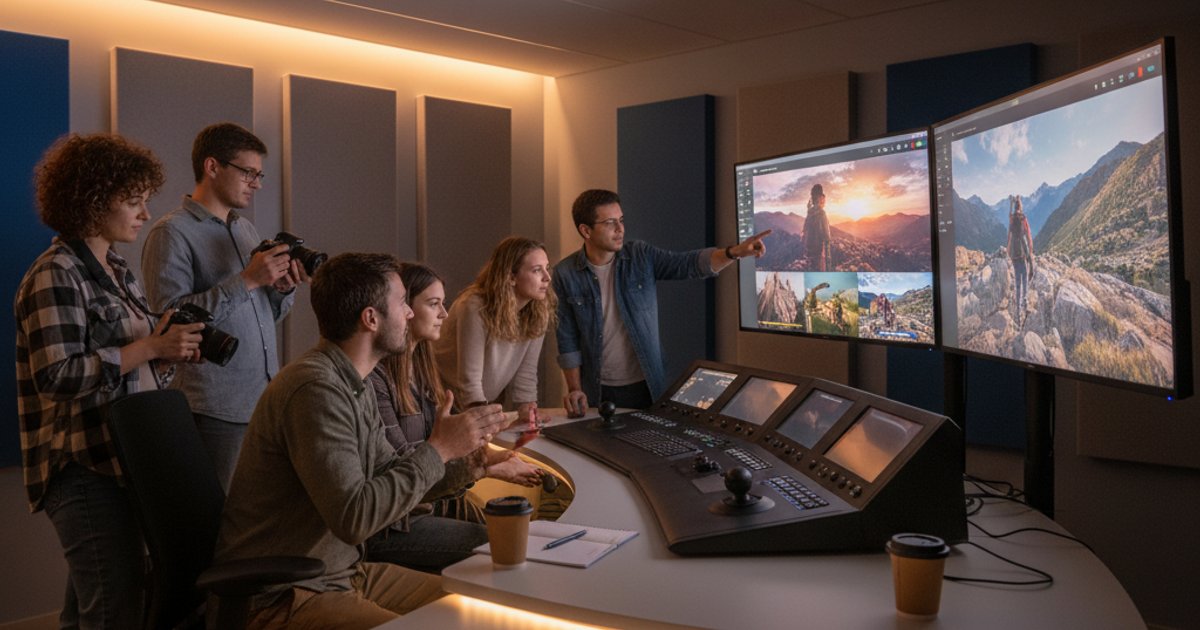
Video production is a collaborative art. School projects force students to work in teams, manage conflicts, meet deadlines, and communicate effectively. These soft skills — leadership, problem-solving, time management, and negotiation — are highly sought after by employers across all sectors. They are the bedrock of a successful career, regardless of technological shifts. A 2024 report by the World Economic Forum highlighted that critical thinking and creativity are among the top skills required for the future workforce.
Discipline and Work Ethic
The demanding schedule, project deadlines, and high expectations of a formal program instill a strong work ethic and professional discipline. This structured environment prepares students for the rigors of the industry, where long hours and tight turnarounds are common. It teaches them to approach creative challenges with a systematic and organized methodology.
Adaptability and Critical Thinking
Technology in video production changes every few years. A good video production school doesn’t just teach current software; it teaches the underlying principles of storytelling, visual composition, and problem-solving. This foundational knowledge allows graduates to quickly adapt to new tools and techniques, rather than being tied to obsolete skills. They learn to think critically about why and how a certain effect is achieved, not just how to press the buttons.
| Benefit Category | Short-Term Impact (During School) | Long-Term Career Impact (Post-Graduation) |
|---|---|---|
| 技术技能 | Proficiency in current software/hardware | Foundation for adapting to new tech; efficient workflow |
| Structured Critique | Improved project quality; self-correction | Professional resilience; objective self-assessment; client management |
| 网络 | Collaboration opportunities; peer support | Job leads; mentorship; industry reputation; business partnerships |
| Soft Skills (Teamwork, Communication) | Successful group projects; conflict resolution | Leadership roles; effective client/crew interaction; career advancement |
| Professional Discipline | Meeting deadlines; organized workflow | Reliability; project management; entrepreneurial success |
| 行业曝光 | Internships; guest lectures | Informed career choices; understanding market demands; faster entry |
Who Should Seriously Consider a Video Production School?
Individuals who thrive in structured learning environments, seek comprehensive foundational knowledge, value direct access to industry professionals, and prioritize building a robust professional network should seriously consider attending a video production school. It’s particularly beneficial for those who need external motivation and structured feedback to develop their craft and career trajectory.
While self-taught professionals certainly exist and excel, a formal education isn’t for everyone. Here’s who stands to gain the most:
- Aspiring Professionals Seeking a Holistic Foundation: If you want to understand not just the ‘how’ but the ‘why’ behind every creative and technical decision, a structured curriculum provides that depth. You’ll learn film theory, history, ethics, and business aspects alongside practical skills.
- Individuals Needing Structure and Accountability: Some people learn best with deadlines, assignments, and regular feedback. School provides this framework, pushing you to complete projects and refine your skills consistently.
- Network Builders: If your goal is to quickly build a network of peers, mentors, and potential collaborators, school offers an unparalleled environment for this. You’ll work on countless projects with diverse teams, forging relationships that can last a lifetime.
- Those Aiming for Specific Industry Roles: Certain niches, like high-end commercial production or feature films, often prefer or even require a formal education, especially for entry-level positions where a degree signals a baseline of commitment and comprehensive training.
- Career Changers: For those transitioning from another field, a video production school can provide an accelerated, immersive pathway to gain the necessary skills and credentials to enter the industry confidently.
Conversely, if you are highly self-motivated, prefer learning at your own pace, already have an extensive network, or are solely focused on niche technical skills that can be acquired through specialized online courses, the traditional school path might be less critical for you. However, even for these individuals, the structured critique and collaborative environment of a school can offer unique advantages.
What Are the Alternatives to Formal Video Production Education?
Viable alternatives to formal video production school include self-directed learning through online courses and tutorials, apprenticeships or mentorships with experienced professionals, and gaining practical experience through independent projects and freelance work. Each alternative presents a different balance of cost, learning style, and networking opportunities.
Here’s a look at the common paths outside of a traditional degree:
- Online Courses and Tutorials: Platforms like Udemy, Coursera, Skillshare, and YouTube offer a vast array of courses on specific software, techniques, and even broader topics. These are often much cheaper than tuition and allow for flexible learning. The downside is the lack of structured critique, personalized feedback, and built-in networking opportunities. You need immense self-discipline to stay on track.
- Apprenticeships and Mentorships: Working directly under an experienced professional can provide invaluable hands-on learning and industry insights. You learn by doing, often on real-world projects. This path offers strong networking and practical skill development but can be hard to secure and may not provide the theoretical depth of a formal education.
- Independent Projects and Freelance Work: Simply picking up a camera and starting to create is a powerful learning tool. Taking on small freelance gigs or personal projects forces you to learn problem-solving, client communication, and project management. This builds a portfolio quickly but can be slow to build foundational knowledge and may lack consistent, high-quality feedback.
- Workshops and Short Courses: These offer focused learning on specific topics or software over a short period. They are great for upskilling or exploring new areas without the long-term commitment of a degree. However, they don’t provide the comprehensive education or network of a full program.
| Alternative Path | 优点 | 共识 | Best Suited For |
|---|---|---|---|
| Online Courses | Low cost, flexible, self-paced, vast content library | Lack of structured critique, no direct networking, requires high self-discipline | Self-starters, specific skill acquisition, budget-conscious learners |
| Apprenticeships/Mentorships | Hands-on experience, direct industry insight, strong networking | Hard to secure, limited theoretical depth, potentially unpaid/low pay | Practical learners, strong networkers, those seeking direct industry entry |
| Independent Projects/Freelance | Portfolio building, real-world problem-solving, creative freedom | Slow foundational learning, inconsistent feedback, potential for bad habits | Highly creative individuals, those wanting to build a portfolio quickly |
| Workshops/Short Courses | Focused learning, quick skill acquisition, networking opportunities | Limited scope, not a comprehensive education, can be costly for multiple courses | Upskilling, exploring new areas, supplementing existing knowledge |
Making an Informed Decision: The Strategic Investment
The decision to attend a video production school is a strategic career investment that demands a thorough evaluation of both the visible financial outlays and the less obvious, yet profoundly impactful, long-term benefits. It’s about weighing the immediate costs against the enduring advantages of a structured environment, professional network, and the development of crucial soft skills that foster career resilience.
Ultimately, the ‘return on investment’ from a video production school isn’t solely measured in starting salary or initial job placement. A 2025 study by the Malaysian Employers Federation (MEF) indicated that graduates with strong soft skills and adaptability, often cultivated in formal educational settings, reported 20% higher job retention rates over five years compared to those with purely technical skills. This suggests that the intangible benefits contribute significantly to career longevity and upward mobility.
Consider your learning style, financial situation, and long-term career aspirations. If you thrive in a collaborative, structured environment, value expert feedback, and understand the power of a professional network, a video production school offers a pathway to a robust and adaptable career. Mar Q Academy believes in empowering students with not just technical prowess, but also the strategic foresight to build a sustainable future in the creative industries.
常见问题
Is a degree from a video production school necessary to work in the industry?
No, a degree is not strictly necessary for all roles in the video production industry. Many successful professionals are self-taught or learned through apprenticeships. However, a degree can provide a structured foundation, accelerate skill development, and open doors to networking opportunities that might otherwise take years to build.
How much debt can I expect from attending video production school in Malaysia?
The debt incurred varies widely based on the institution, program length, and personal living expenses. For a three-year degree, total costs (tuition, equipment, living) could range from RM 100,000 to over RM 250,000. Many students utilize PTPTN loans or other financial aid options to manage these costs.
Do video production schools help with job placement after graduation?
Most reputable video production schools offer career services, including resume workshops, portfolio reviews, and connections to industry partners for internships and job placements. While they don’t guarantee a job, they significantly enhance a graduate’s prospects by providing resources and networking opportunities.
Are the skills learned in video production school still relevant with rapid technological changes?
Yes, while technology evolves, good video production schools focus on foundational principles of storytelling, visual language, and creative problem-solving, which remain timeless. They also teach adaptability and critical thinking, enabling graduates to quickly learn new software and hardware as they emerge, ensuring long-term relevance.
What kind of portfolio should I aim to build while in video production school?
Aim for a diverse portfolio showcasing your best work across various genres (e.g., short films, commercials, documentaries, music videos) and demonstrating a range of skills (directing, cinematography, editing, sound design). Quality over quantity is key; include projects that highlight your unique creative voice and technical proficiency.
Can I work part-time while attending video production school?
Many students manage part-time work alongside their studies, especially in Malaysia where student visas often permit it. However, video production programs can be demanding with long project hours, so balancing work and studies requires excellent time management and careful planning to avoid burnout and maintain academic performance.
For those considering whether is film making school worth it, it’s important to weigh the benefits of structured learning against alternative paths. Many find that practical film courses offer a more direct route to industry readiness than traditional degrees.
上次更新:2026年6月8日
 Chinese
  English