
玛克学院
Updated June 28, 2026
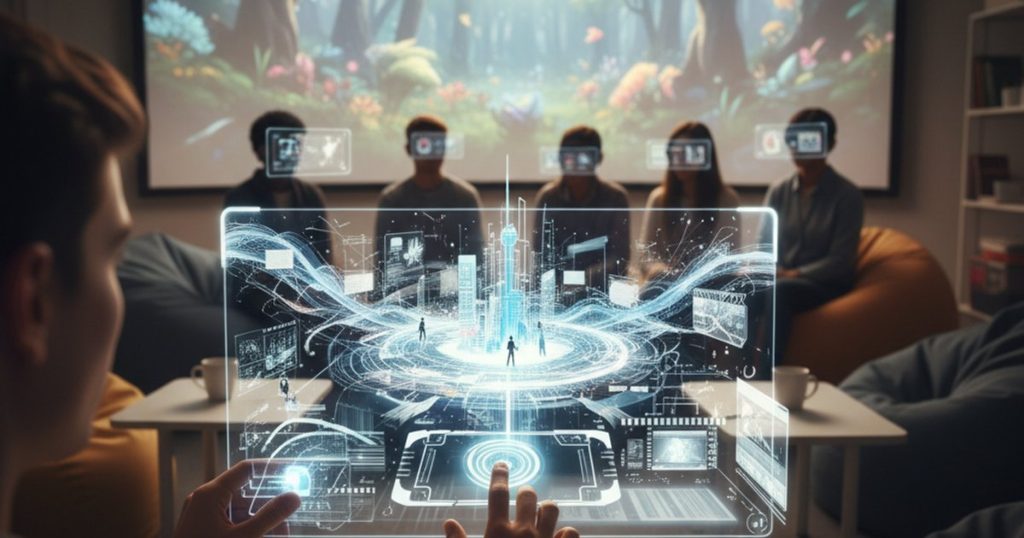
The traditional silver screen is getting some serious competition, and it’s coming from every direction. This week, announcements from major international film festivals — Cannes, Venice, and Sundance among them — have solidified what many of us in the industry have been whispering about for years: Extended Reality (XR) and immersive cinema aren aren’t just a niche anymore. They’re taking center stage, demanding new skills, new tools, and a whole new way of thinking about storytelling.
These aren’t just experimental side-projects. We’re talking dedicated competition tracks, significant funding initiatives, and purpose-built exhibition spaces for VR, AR, and interactive films. It’s a clear signal that the future of cinematic narrative is expanding well beyond the flat screen, pushing boundaries in ways that are both exhilarating and, frankly, a little daunting for those of us who cut our teeth on 35mm.
What strikes me about this isn’t just the technology itself, but the profound implications for how we train the next generation of filmmakers. If festivals are embracing immersive, then every serious film course and cinematography course worth its salt has to follow suit. And quickly.
要点
- Major film festivals are launching dedicated tracks and funding for XR and immersive cinema, signaling a significant industry shift.
- This trend necessitates a rapid evolution in film course and cinematography course curricula to include new technologies and narrative forms.
- Future filmmakers need to master volumetric capture, spatial audio, interactive storytelling, and user experience design.
- Educational institutions like MarQ Academy are integrating Extended Reality (XR) modules, often through partnerships and hands-on production.
- The transition presents challenges in equipment, faculty expertise, and defining new aesthetic principles for immersive media.
Why Are Film Festivals Betting Big on Immersive Experiences?
Film festivals are investing heavily in immersive experiences because they recognize the undeniable power of presence and interactivity in storytelling, and they’re always looking for what’s next. It’s not just about novelty; it’s about pushing the art form forward and engaging audiences in profoundly new ways. From what I’ve seen covering this sector, the buzz around these experiences is palpable. People don’t just watch; they participate, they explore, they feel.
Consider the numbers: the global XR market, encompassing VR, AR, and mixed reality, is projected to reach over $200 billion by 2028, according to a 2023 report by Grand View Research. That’s a massive ecosystem, and cinematic content is a crucial part of its growth. Festivals, being the arbiters of cinematic innovation, can’t afford to ignore that. They’re becoming incubators for these new forms, providing platforms for artists to experiment and for audiences to discover.
This isn’t just about putting a VR headset on someone. It’s about crafting experiences that transport you, that make you feel like you’re truly there. It’s about narratives that respond to your gaze, your movement, your choices. That’s a different beast entirely from traditional linear filmmaking, and it requires a different kind of mastery.
How Are Film Course & Cinematography Courses Adapting?
The adaptation is happening, albeit at varying speeds, by integrating entirely new modules and shifting focus from purely linear production to spatial and interactive storytelling. For a film course, this means moving beyond the classic three-act structure and into branching narratives, user agency, and designing for emotional impact within a 360-degree environment. Cinematography courses, meanwhile, are grappling with cameras that capture entire volumes of space rather than just a framed shot.
In my experience covering film education, the more forward-thinking institutions are already deep into this. They’re not just adding a single elective; they’re rethinking core curricula. We’re seeing dedicated studios for volumetric capture, where actors are scanned in 3D, and labs focused on spatial audio design, which is arguably even more critical in immersive experiences than visual fidelity. Sound design, in particular, becomes a navigational tool, guiding the viewer’s attention and enhancing their sense of presence.
Look — this isn’t easy. It requires significant investment in new equipment and, crucially, in faculty development. Many veteran professors, brilliant as they are in traditional filmmaking, need to learn these new paradigms themselves. It’s a steep learning curve, but it’s essential for preparing students for the jobs that are emerging right now.
Mastering Volumetric Capture and Spatial Audio
Volumetric capture is a game-changer, allowing filmmakers to record 3D performances that can be viewed from any angle within an immersive environment. This is a far cry from traditional green screen work; it’s about capturing the actor’s entire presence, their movement, their subtle gestures, in a way that feels utterly real when you’re standing next to their digital avatar. It’s a complex process, requiring multiple cameras and sophisticated software, but the results are astonishing.
Spatial audio, on the other hand, is the invisible architect of immersion. It creates a soundscape that responds to the viewer’s head movements, making sounds appear to come from specific locations in the virtual space. This isn’t just surround sound; it’s positional audio that tricks your brain into believing you’re truly in that environment. A well-designed spatial audio track can be the difference between a good immersive experience and a truly unforgettable one. It’s the reason MarQ Academy, for example, has invested heavily in dedicated audio labs that simulate these complex environments.
Interactive Narratives and User Experience Design
The biggest conceptual leap, perhaps, is in narrative. Immersive cinema often isn’t about passive viewing; it’s about active participation. This means filmmakers need to understand user experience (UX) design principles – how to guide a viewer without forcing them, how to offer choices that feel meaningful, and how to create a narrative that can unfold differently based on individual interaction. It’s less about a single, fixed story and more about a storyworld that viewers inhabit and influence.
This is where the lines between game design, interactive media, and traditional filmmaking truly blur. Students in a modern film course are now learning about player agency, choice architecture, and non-linear storytelling structures. It’s a fascinating challenge, requiring a blend of artistic vision and technical understanding of how users engage with digital environments.
What New Technologies Are Shaping Immersive Filmmaking?
A host of cutting-edge technologies are rapidly defining the landscape of immersive filmmaking, moving us far beyond simple 360-degree video. These include high-resolution VR headsets, advanced motion capture systems, real-time rendering engines, and sophisticated haptic feedback devices. The honest answer is that nobody knows for certain which specific tech will dominate, but the evidence suggests a convergence of these elements.
We’re seeing an arms race in headset technology, with companies like Meta, Apple, and HTC pushing the boundaries of resolution, field of view, and comfort. The clearer the image, the more convincing the illusion of presence. Then there’s the software: real-time rendering engines like Unreal Engine and Unity, once primarily for games, are now indispensable tools for filmmakers building interactive worlds. They allow for dynamic lighting, realistic physics, and complex character interactions that can be experienced live, without lengthy pre-rendering.
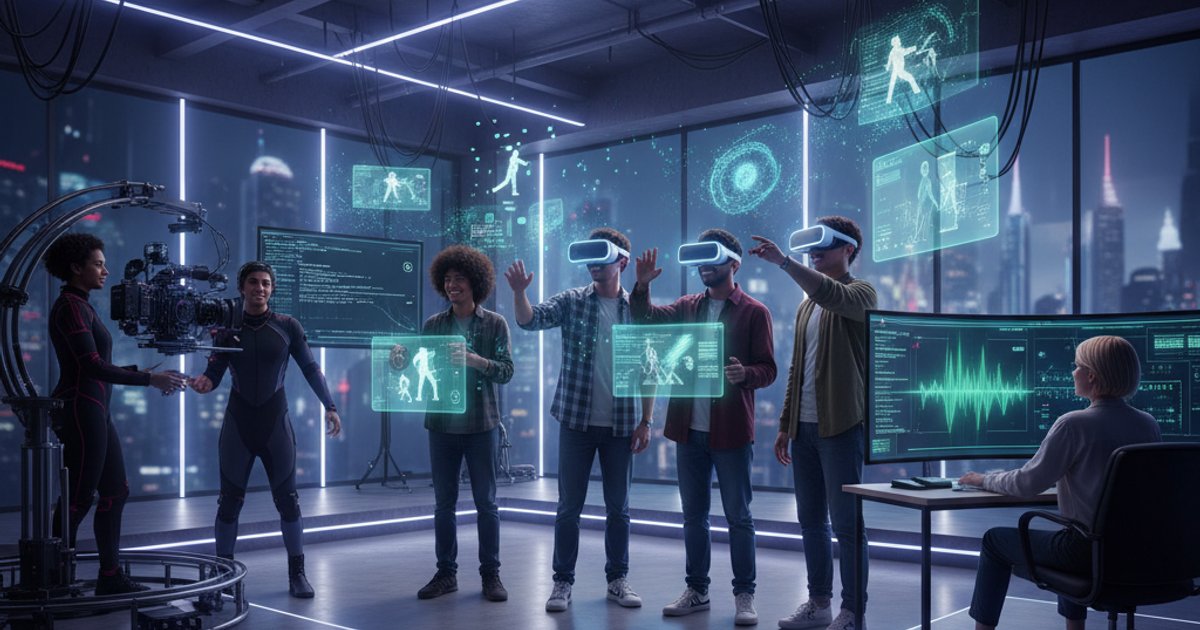
And let’s not forget the cameras. Beyond traditional film cameras, we’re talking about multi-camera rigs for 360-degree video, Lidar scanners for environmental capture, and specialized volumetric capture stages. These tools require a different kind of technical proficiency from a cinematographer. It’s not just about framing a shot; it’s about capturing an entire environment, understanding how light behaves in a virtual space, and ensuring seamless stitching of multiple camera feeds.
Comparing Traditional vs. Immersive Filmmaking Skills
| 技能领域 | Traditional Filmmaking | Immersive Filmmaking (XR) |
|---|---|---|
| Narrative Structure | Linear, fixed plot, director-driven | Non-linear, branching paths, user agency, world-driven |
| 摄影 | Framing, shot composition, lighting for a 2D screen | Volumetric capture, 360-degree composition, spatial lighting, user gaze consideration |
| Audio Design | Stereo/Surround sound, fixed soundstage | Spatial audio, positional sound, interactive soundscapes |
| 编辑 | Sequential cuts, pacing for linear flow | Flow design, interactive transitions, experience mapping |
| Tools | Film/Digital cameras, NLEs (Premiere, Avid) | Volumetric capture rigs, 游戏引擎与互动叙事 tools (Unity, Unreal), XR authoring tools |
| Audience Role | Passive viewer | Active participant, explorer, co-creator |
What Challenges Do Educators Face in This Transition?
Educators face a multi-faceted challenge in this transition, primarily stemming from the rapid pace of technological change, the high cost of specialized equipment, and the scarcity of experienced faculty. It’s one thing to teach film history; it’s another to teach students how to build a virtual world that responds to user input, especially when the tools themselves are constantly evolving.
One of the biggest hurdles is simply keeping up. The hardware and software for XR development change almost quarterly. What was cutting-edge last year might be obsolete next year. This means institutions need flexible budgets and a willingness to continually invest. Then there’s the faculty issue: finding professors who not only understand these technologies but also have a deep grasp of cinematic storytelling principles is rare. Many institutions are addressing this by bringing in industry practitioners as adjuncts or developing intensive training programs for existing staff.
Another challenge is defining the aesthetic. We have centuries of film theory for linear cinema, but what makes a ‘good’ immersive film? What are the grammar and syntax of this new medium? These are questions being answered in real-time by artists and academics alike, and it’s exciting to be part of that discovery. But it means the curriculum isn’t set in stone; it’s a living, breathing document that needs constant revision.
The Future of Film Education: Beyond the Classroom
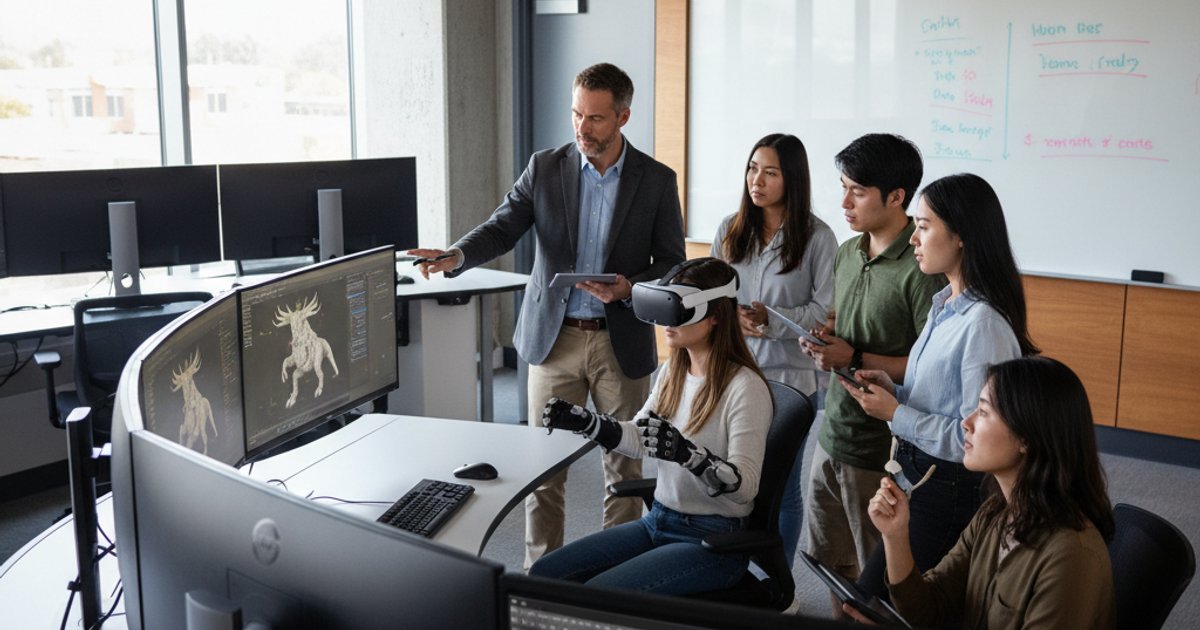
The future of film education, especially for film course and cinematography courses, will increasingly involve hands-on, project-based learning and strong industry partnerships. It’s not enough to lecture about volumetric capture; students need to get their hands on the equipment, experiment, and fail fast. This means more studio time, more collaborative projects, and more opportunities to work with real-world immersive productions.
Institutions like MarQ Academy are forging partnerships with tech companies and immersive studios, providing students with access to state-of-the-art facilities and mentorship from leading practitioners. This kind of experiential learning is crucial. The skills required for immersive filmmaking are so specialized and rapidly evolving that theoretical knowledge alone simply won’t cut it. Students need to be building, creating, and iterating in environments that mimic professional production pipelines.
Ultimately, the goal remains the same: to tell compelling stories. The tools are just changing. And for those of us who love cinema, watching this evolution unfold, and helping to shape the next generation of storytellers, is a privilege. The screen isn’t disappearing; it’s just getting a whole lot bigger, and a whole lot more interactive.
常见问题
What is immersive cinema?
Immersive cinema refers to storytelling experiences that go beyond traditional flat screens, often utilizing technologies like Virtual Reality (VR), Augmented Reality (AR), and Mixed Reality (MR). These experiences aim to place the viewer inside the narrative, allowing for greater presence, interaction, and a sense of being ‘there’.
How do cinematography courses teach for VR?
Cinematography courses for VR move beyond traditional framing to teach 360-degree capture, volumetric video, and spatial blocking. Students learn to compose shots for an entire environment, manage lighting in virtual spaces, and understand how viewer gaze influences narrative flow in an interactive setting.
What is volumetric capture?
Volumetric capture is a technique that records a 3D performance of an actor or object, allowing it to be viewed from any angle within a virtual environment. Unlike traditional video, which is 2D, volumetric capture creates a digital, three-dimensional model that can be placed and interacted with in XR experiences.
Do I need coding skills for immersive filmmaking?
While not always strictly necessary for every role, a basic understanding of game engines like Unity or Unreal Engine, and perhaps some scripting knowledge, is becoming increasingly valuable. Many immersive experiences are built using these platforms, and understanding their logic helps filmmakers design more compelling interactive narratives.
What career opportunities are there in immersive cinema?
Career opportunities are expanding rapidly and include roles such as XR director, immersive experience designer, spatial audio engineer, volumetric capture specialist, VR cinematographer, and interactive narrative designer. As the industry grows, so too will the demand for these specialized skills.
How are film courses addressing interactive storytelling?
Film courses are addressing interactive storytelling by incorporating modules on user experience (UX) design, branching narratives, choice architecture, and designing for player agency. Students learn to create narratives that respond to viewer input and unfold dynamically, moving away from purely linear plot structures.
What is spatial audio and why is it important for immersive film?
Spatial audio creates a 3D soundscape where sounds appear to originate from specific locations in a virtual environment, responding to the viewer’s head movements. It’s crucial for immersive film because it significantly enhances the sense of presence, guides viewer attention, and deepens emotional engagement, making the virtual world feel more real.
Last updated: June 28, 2026
 Chinese
  English