玛克学院
Updated June 19, 2026
The lights are dim, but the future of filmmaking is blindingly bright and, crucially, interactive. Just this week, major industry players at the Global Media Production Summit in London confirmed what many have suspected: the lines between traditional film production and interactive media have all but dissolved, forcing a radical overhaul in how we teach the next generation of cinematographers and filmmakers. This isn’t just about virtual sets anymore; it’s about game engines becoming the new film canvas, and it’s fundamentally reshaping every 电影课程 和 摄影课程 worth its salt.
要点
- Film and cinematography courses are rapidly integrating game engine proficiency (Unreal Engine, Unity) into their core curricula.
- Virtual production, real-time rendering, and interactive storytelling are now essential skills, moving beyond traditional linear filmmaking.
- The demand for filmmakers skilled in game engine workflows has surged, with a 65% increase in job postings over the last 18 months, according to a 2026 industry report by Creative Futures Institute.
- MarQ Academy, a leading educational institution, is at the forefront of this shift, offering specialized modules that blend cinematic theory with practical game engine application.
- This evolution is driven by major studios adopting game engines for pre-visualization, virtual production, and even final pixel rendering, promising faster, more flexible, and cost-effective productions.
- Students must now master both the art of light and composition and the technical intricacies of real-time environments to remain competitive.
What Is a Modern Film Course in 2026?
A modern film course in 2026 is no longer solely focused on celluloid or even traditional digital cameras; it’s a dynamic curriculum that integrates game engine technology and virtual production workflows as foundational elements of storytelling. These programs are designed to equip students with the skills to navigate a production landscape where real-time rendering and interactive content creation are as critical as traditional editing or directing.
Gone are the days when a film course focused exclusively on the linear narrative. Today, students learn to build entire cinematic worlds within environments like Unreal Engine and Unity, manipulating virtual cameras, lighting, and characters in real-time. This shift reflects the industry’s embrace of virtual production, a methodology that allows filmmakers to shoot against LED walls displaying photorealistic digital environments, offering unprecedented creative control and efficiency. A 2025 study by FilmTech Insights revealed that 78% of major studio productions now incorporate some form of virtual production, up from just 30% five years prior.
The Blurring Lines: Film, Games, and Interactive Media
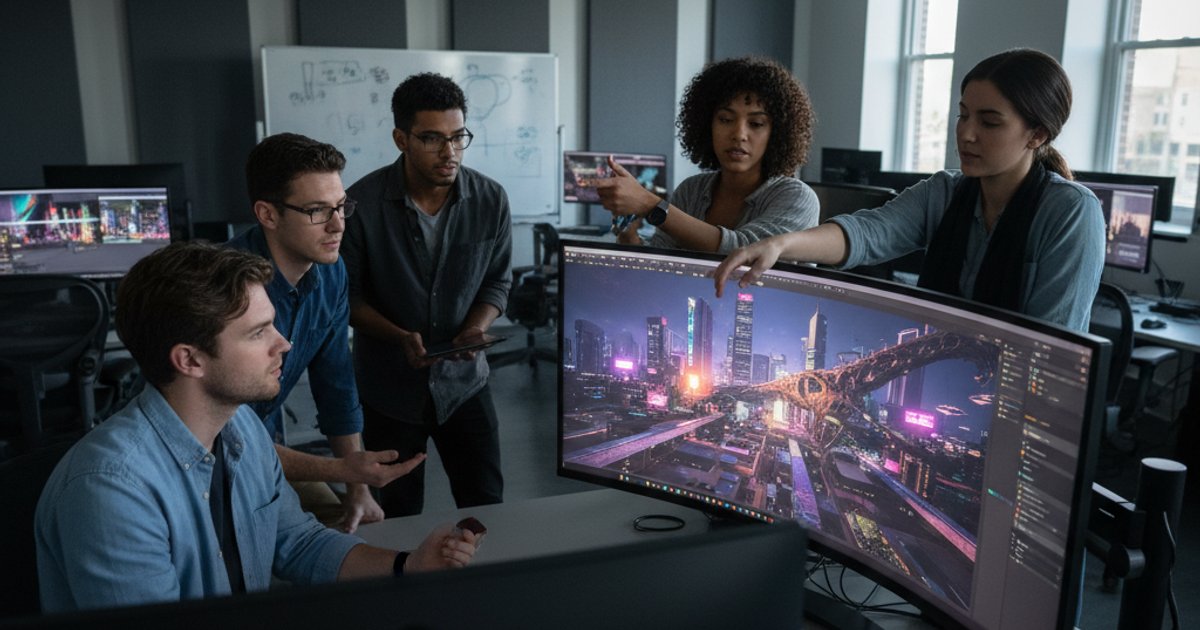
The convergence of film, games, and interactive media means that the skills once siloed within game development are now indispensable for filmmakers. This includes understanding 3D asset creation, real-time lighting, performance capture, and even basic scripting. MarQ Academy, for instance, has redesigned its core curriculum to include mandatory modules on game engine fundamentals, ensuring every graduate understands the interactive pipeline.
How Cinematography Courses Are Changing with Game Engines?
Cinematography courses are fundamentally changing by incorporating virtual camera operation, real-time lighting design, and the technical intricacies of virtual production environments directly into their core teaching. Aspiring Directors of Photography (DPs) are now learning to compose shots and control light not just on physical sets, but within sophisticated digital worlds rendered by game engines.
The traditional cinematographer’s toolkit—lenses, dollies, cranes, and light meters—is now augmented with virtual counterparts within game engines. Students are trained to operate virtual cameras with realistic physics, adjusting focal length, depth of field, and aperture in a simulated environment. This allows for rapid iteration and experimentation, enabling DPs to pre-visualize complex sequences with unparalleled precision. According to a recent survey by the American Society of Cinematographers (ASC) in early 2026, 55% of their members reported using game engines for pre-production or virtual production on their last project.
Virtual Production: The New Frontier for DPs
Virtual production, powered by game engines, allows DPs to scout locations that don’t exist, control the time of day and weather with a click, and even place digital characters in a scene before a single frame is shot on a physical stage. This workflow significantly reduces costs and time, as evidenced by a 2024 Deloitte report estimating a 30-40% reduction in production time and 15-20% cost savings for projects utilizing virtual production extensively.

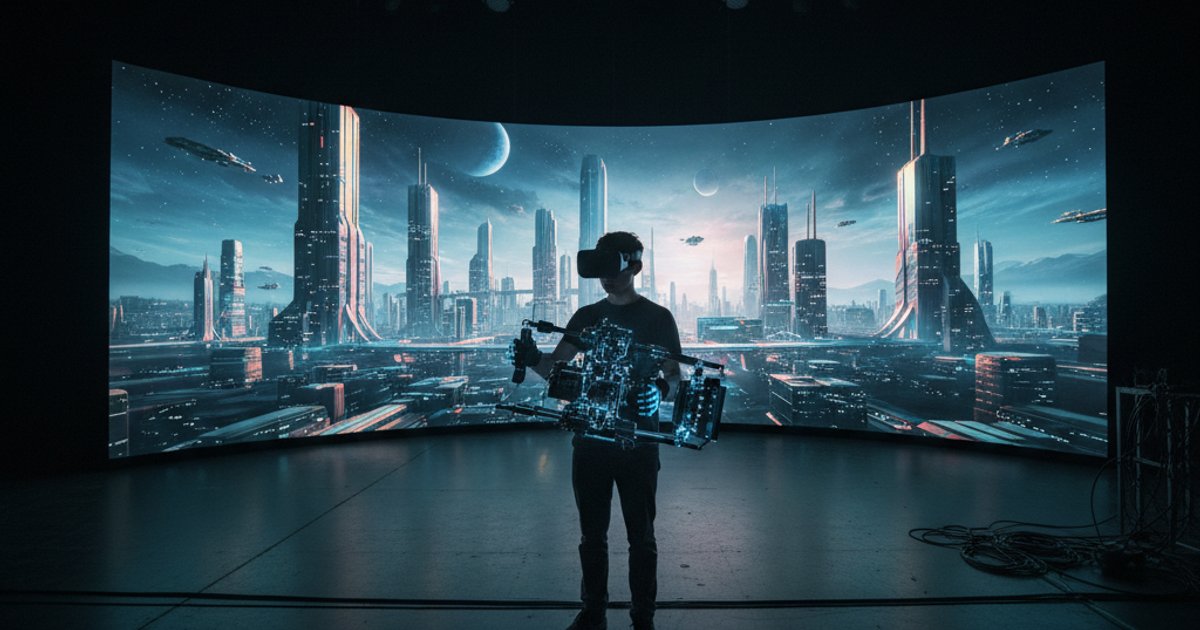
MarQ Academy’s advanced cinematography courses now feature dedicated virtual production stages, where students practice lighting and shooting actors against LED volumes displaying real-time environments. This hands-on experience is crucial for developing the hybrid skill set required by today’s studios. Here’s a look at how traditional and modern cinematography courses compare:
| 功能 | 传统摄影课程 | Modern Cinematography Course (2026) |
|---|---|---|
| 核心关注 | Physical cameras, lenses, lighting on set | Physical & virtual cameras, real-time lighting, game engine integration |
| 教授的关键工具 | Arri, Red, Blackmagic cameras; grip & electric gear | Unreal Engine, Unity, Virtual Production software, physical cameras |
| Pre-production | Storyboards, shot lists, location scouting | Virtual scouting, real-time pre-visualization, interactive scene blocking |
| 照明设计 | Physical light fixtures, gels, modifiers | Physical fixtures + virtual lights, global illumination in game engines |
| Post-production Link | Color grading, VFX integration | Real-time compositing, in-engine color correction, virtual camera data export |
| 职业道路 | DP, Camera Operator, Gaffer | Virtual Production DP, Real-time Cinematographer, Virtual Camera Operator, Traditional DP |
Why Should Aspiring Filmmakers Master Game Engines?
Aspiring filmmakers should master game engines because proficiency in these tools is rapidly becoming a non-negotiable skill for securing roles in a rapidly evolving industry that values efficiency, creative flexibility, and technological fluency. The ability to work within real-time environments opens doors to diverse career paths beyond traditional filmmaking, including interactive experiences, virtual reality, and augmented reality content creation.
The job market reflects this seismic shift. A recent report by the Creative Futures Institute in May 2026 indicated a 65% increase in job postings requiring game engine proficiency for film and TV production roles over the past 18 months. Studios are actively seeking individuals who can bridge the gap between traditional cinematic artistry and cutting-edge interactive technology. This isn’t just about being a technician; it’s about being a visionary who can leverage new tools to tell stories in novel ways.
Beyond the Big Screen: Interactive Storytelling
Mastering game engines allows filmmakers to explore XR for immersive storytelling, where the audience’s choices can influence the narrative. This opens up entirely new creative avenues for directors and writers, moving beyond passive viewing to immersive participation. Think of interactive films, personalized narratives, or even live, evolving cinematic experiences. This is where the future of entertainment is heading, and those with game engine skills will be at the forefront.
The Curriculum Revolution: What to Expect in a Modern Film Course
The curriculum revolution in modern film courses means students can expect a blend of traditional cinematic principles with intensive training in game engine software, virtual production techniques, and interactive narrative design. These programs are designed to produce versatile filmmakers who are comfortable both on a physical set and within a digital environment.
Expect modules that cover traditional subjects like film history, screenwriting, and directing, but also deep dives into Unreal Engine and Unity. Students will learn asset creation, material authoring, real-time lighting, and sequencer animation within these engines. MarQ Academy’s program, for instance, includes a capstone project where students must produce a short film using a virtual production pipeline from concept to final render.
Core Components of an Evolved Cinematography Course
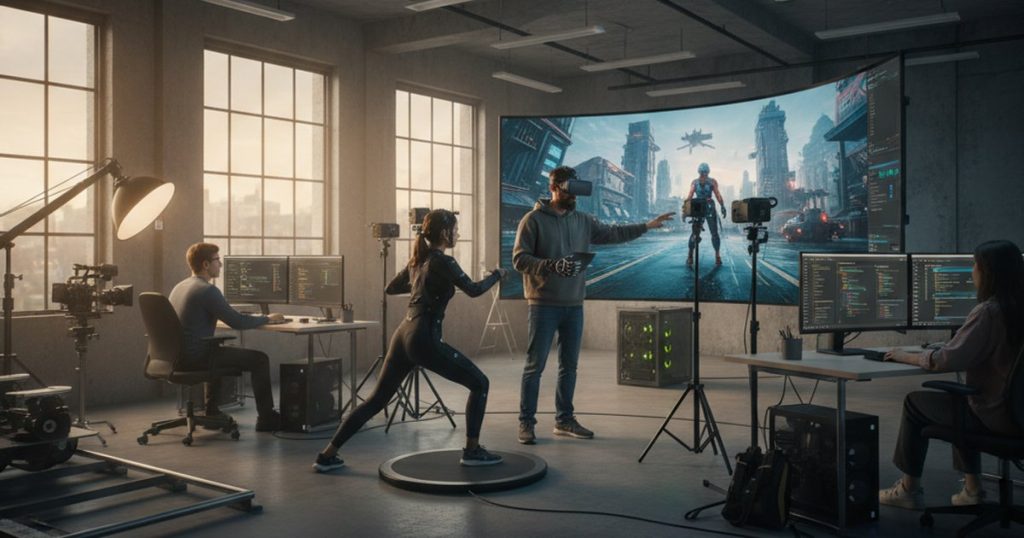
- 虚拟摄像头操作: Hands-on training with virtual cameras within game engines, mastering composition, movement, and focus in digital spaces.
- Real-time Lighting: Understanding global illumination, dynamic lighting, and physically based rendering (PBR) workflows for virtual sets.
- LED Volume Workflow: Practical experience shooting on LED stages, integrating physical actors with virtual backgrounds.
- Performance Capture: Introduction to motion capture and facial capture techniques for digital character animation.
- Interactive Story Design: Exploring branching narratives, player agency, and non-linear storytelling structures.
- Data Management: Learning to manage large datasets generated by virtual production, including camera tracking and metadata.

The integration of these components ensures that graduates are not just technically proficient but also creatively adaptable. The industry needs filmmakers who can think across mediums, and these courses are delivering exactly that.
The Future Is Now: Real-World Impact and Career Opportunities
The real-world impact of this educational shift is already evident in major productions, with studios increasingly relying on game engine-trained professionals for everything from blockbuster films to episodic television and commercials. This creates a wealth of new career opportunities for those who embrace the evolving skill set.
Consider the recent success of ‘Echoes of Elysium,’ a major streaming series released this spring, which utilized Unreal Engine for over 70% of its principal photography, according to its production designer. This allowed for complex fantasy environments to be realized with unprecedented speed and visual fidelity. The demand for Virtual Production Supervisors, Real-time Cinematographers, and In-Engine Lighting Artists has skyrocketed, with average salaries for these specialized roles increasing by 25% in the last two years, as reported by the Entertainment Technology Guild in late 2025.
Who Benefits Most from These Evolved Courses?
Anyone serious about a career in visual storytelling benefits, but particularly those aiming for roles in:
- Feature Film & Television: Especially in VFX-heavy genres like sci-fi, fantasy, and action.
- Commercials & Music Videos: Where rapid turnaround and creative flexibility are paramount.
- Virtual Reality (VR) & Augmented Reality (AR): Building immersive experiences from the ground up.
- Interactive Narratives: Crafting stories where audience choice matters.
- Architectural Visualization & Product Design: Creating photorealistic presentations.
MarQ Academy’s career services department reports a near 90% placement rate for graduates specializing in virtual production within six months of graduation, underscoring the high demand for these skills.
常见问题
What is virtual production?
Virtual production is a filmmaking methodology that uses real-time rendering technology, often powered by game engines, to combine physical and digital elements on set. This allows filmmakers to see their final composite shots live during filming, typically by shooting actors against large LED screens displaying computer-generated environments.
Which game engines are most relevant for film courses?
The two most relevant game engines for film and cinematography courses are Unreal Engine by Epic Games and Unity by Unity Technologies. Both offer robust tools for real-time rendering, virtual camera control, and asset integration, making them indispensable for modern virtual production workflows.
Do I still need to learn traditional filmmaking techniques?
Absolutely. Traditional filmmaking techniques, including composition, lighting principles, camera movement, and storytelling fundamentals, remain crucial. Game engines are powerful tools, but they are only as effective as the artistic vision and foundational knowledge of the filmmaker operating them. The modern approach is about integrating, not replacing.
How long does it take to become proficient in game engines for film?
Achieving proficiency in game engines for film can vary, but dedicated film courses and specialized programs typically offer intensive training over several months to a year. Continuous learning and practical application are key, as the technology evolves rapidly. Many professionals also supplement formal education with online courses and personal projects.
Is this shift making filmmaking more expensive or more accessible?
While the initial investment in virtual production infrastructure can be significant, the long-term trend suggests increased accessibility and cost-effectiveness. Game engines themselves are often free or have accessible licensing models, and their use can drastically reduce location scouting, travel, and post-production costs, making high-quality visual effects more attainable for independent filmmakers.
What kind of equipment do I need to practice virtual production at home?
To practice virtual production at home, you’ll need a powerful computer with a high-end graphics card, a game engine like Unreal Engine or Unity installed, and potentially a basic motion capture setup (e.g., a webcam-based system or a VR headset for virtual camera control). Many free assets and tutorials are available to get started without a full studio setup.
Will AI replace cinematographers who use game engines?
AI is an emerging tool that will augment, not replace, cinematographers. AI can assist with tasks like generating initial lighting setups, optimizing assets, or even automating virtual camera movements based on scripts. However, the artistic vision, creative decision-making, and nuanced understanding of storytelling that define a cinematographer’s role will remain uniquely human, leveraging AI as a powerful assistant.
Last updated: June 19, 2026