

玛克学院
更新于2026年6月19日
The film industry is undergoing a seismic shift, and the tremors are now reshaping how future filmmakers are trained. A recent industry report, released just this week by the Motion Picture Association (MPA), reveals a staggering 65% increase in demand for film professionals proficient in emerging technologies like real-time rendering, volumetric capture, and advanced visual effects (VFX) pipelines. This isn’t just a trend; it’s a full-blown revolution, forcing traditional film course and cinematography courses to rapidly integrate these cutting-edge skills or risk becoming obsolete.
要点
- The film industry’s demand for VFX and virtual production skills has surged by 65% as of June 2026.
- Film and cinematography courses are overhauling curricula to prioritize real-time rendering, volumetric capture, and virtual production.
- Traditional filmmaking roles are merging with technological expertise, creating new hybrid career paths.
- Hands-on experience with tools like Unreal Engine, LED volumes, and AI-driven post-production is becoming essential.
- MarQ Academy emphasizes practical application and industry partnerships to bridge the skills gap.
- The shift promises more creative freedom and efficiency but requires significant investment in education.
Why Are Film & Cinematography Courses Being Forced to Adapt?
Film and cinematography courses are being forced to adapt because the very definition of filmmaking has expanded dramatically, driven by technological advancements that are now standard in major productions. The traditional divide between pre-production, production, and post-production is blurring, with tools like virtual production allowing real-time visualization and iteration on set, fundamentally altering workflows and demanding a new breed of skilled professionals.
Just five years ago, virtual production was a niche concept, largely confined to blockbuster sci-fi. Today, it’s a mainstream tool, utilized in everything from Netflix series to independent features. A 2025 study by PWC found that 78% of all major studio productions now incorporate some form of virtual production or advanced VFX, a jump from just 20% in 2020. This rapid adoption means that graduates entering the workforce without these skills are at a distinct disadvantage. The industry isn’t waiting; it needs talent ready to hit the ground running with LED volumes, real-time engines, and complex data wrangling.
The Blurring Lines: Traditional vs. Digital Cinematography
The distinction between traditional and digital cinematography is rapidly dissolving, with modern cinematographers needing to understand both optical physics and computational rendering. While the core principles of lighting, composition, and storytelling remain paramount, their execution now frequently involves digital assets, virtual environments, and real-time adjustments on set.
Consider the role of the Director of Photography (DP) on a virtual production stage. They’re not just framing a shot; they’re collaborating with virtual art departments, adjusting digital lighting in real-time, and understanding how the camera’s movement impacts parallax on an LED screen. This requires a fluency in game engines like Unreal Engine or Unity, alongside a deep knowledge of traditional camera systems. MarQ Academy, for instance, has restructured its cinematography courses to include dedicated modules on virtual camera operation and in-engine lighting design, recognizing this critical convergence.
What Emerging Technologies Are Reshaping Film Education?
Emerging technologies like virtual production, real-time rendering, volumetric capture, and AI-driven post-production are fundamentally reshaping film education by introducing new skill sets and workflows that are now essential for modern filmmaking. These tools empower filmmakers to create complex visual worlds with unprecedented efficiency and creative control, moving beyond the limitations of green screens and traditional practical effects.
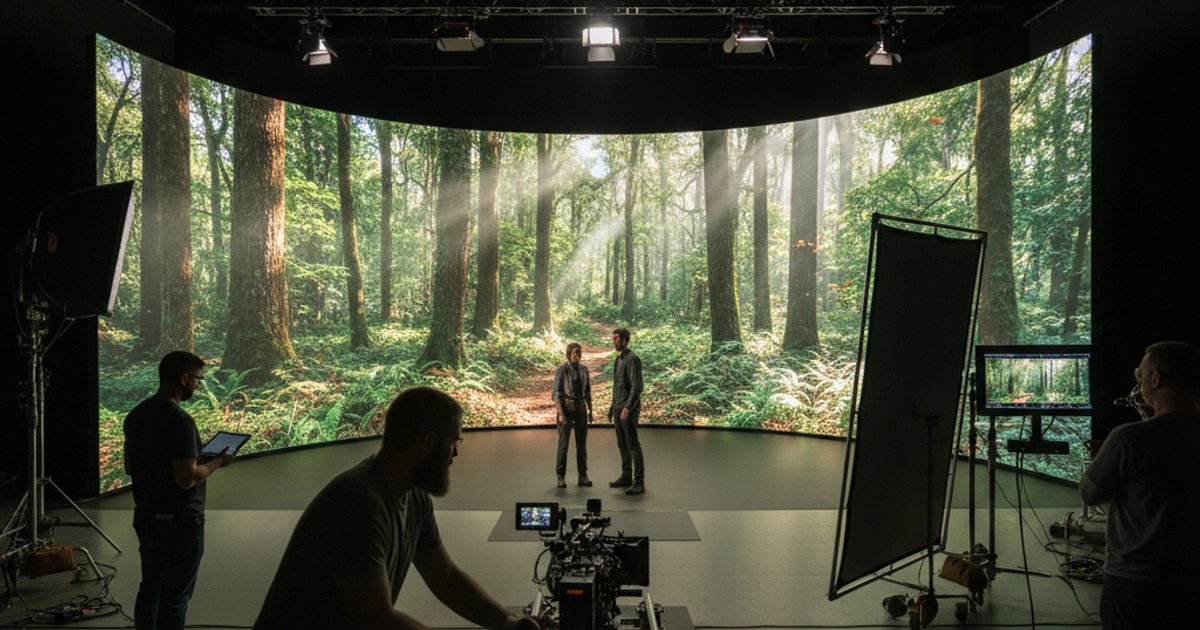
Virtual production, often centered around large LED volumes, allows actors to perform within photorealistic digital environments rendered in real-time. This eliminates costly location shoots and extensive post-production compositing. Real-time rendering, powered by game engines, is the backbone of this process, enabling instantaneous feedback and iteration. Volumetric capture, meanwhile, creates 3D digital models of actors or objects, allowing for dynamic manipulation and integration into virtual scenes. AI is also making inroads, automating rotoscoping, enhancing visual effects, and even assisting with script analysis, as reported by a 2026 Deloitte study which predicted AI would handle 30% of routine post-production tasks within five years.
Virtual Production: The New Studio Backlot
Virtual production, utilizing technologies like LED walls and real-time game engines, has become the modern equivalent of the studio backlot, offering unparalleled flexibility and creative control. This technology allows filmmakers to shoot complex scenes in diverse environments without ever leaving the soundstage, saving time and resources.
The impact on production budgets is significant. A recent report by the Visual Effects Society estimated that virtual production can reduce overall production costs by 15-20% on VFX-heavy projects, primarily by cutting down on travel, location permits, and post-production time. This financial incentive, coupled with the creative freedom it offers, ensures its continued dominance. Film course programs are now scrambling to build their own mini-LED stages or partner with studios to provide students with hands-on experience, understanding that theoretical knowledge alone won’t suffice.
The Rise of Real-Time Rendering and Game Engines
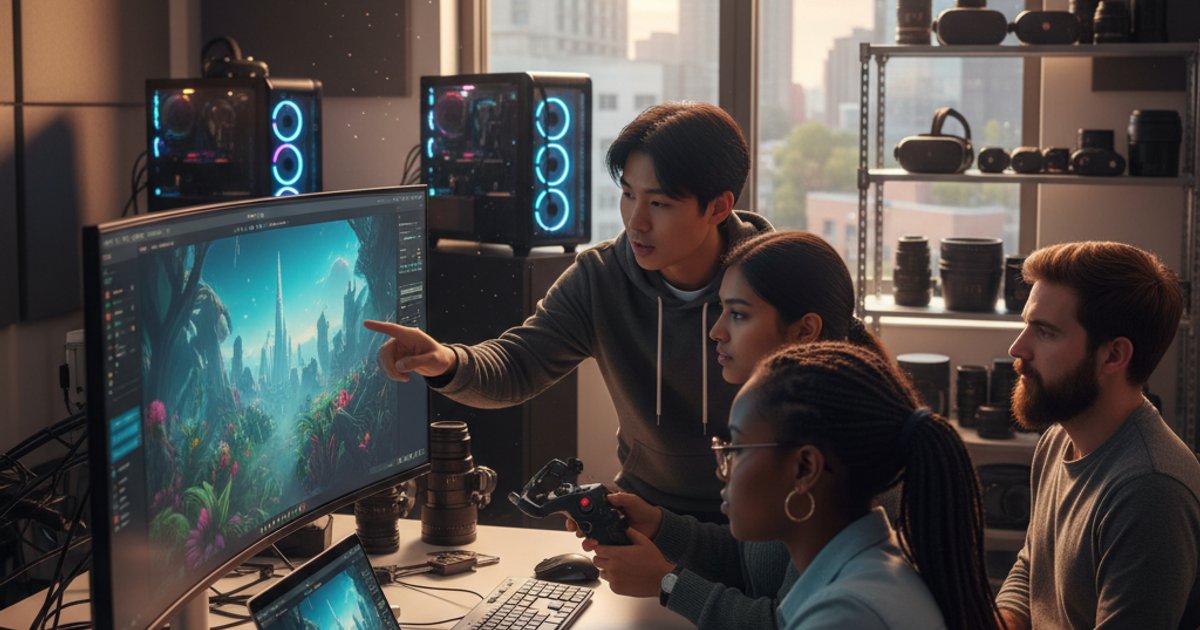
Real-time rendering, primarily through game engines like Unreal Engine and Unity, has transitioned from gaming to become an indispensable tool in film pre-visualization, virtual production, and even final pixel rendering. This shift allows for immediate creative feedback and rapid iteration, fundamentally changing the pace of production.
No longer are filmmakers waiting weeks for VFX shots; they can see and adjust them on set. This capability is not just about speed; it’s about creative collaboration. Directors, DPs, and VFX supervisors can make decisions together in the moment, leading to more cohesive and visually stunning results. A 2025 survey by Epic Games indicated that over 70% of their Unreal Engine users in film and TV are now using the software for more than just pre-vis, extending its use into final pixel production. This makes proficiency in these engines a non-negotiable skill for anyone pursuing a modern film course or cinematography course.
How Are Film Schools Integrating These Technologies?
Film schools are integrating these technologies by overhauling their curricula, investing in specialized equipment like LED volumes and motion capture suits, and fostering interdisciplinary collaboration between departments. The goal is to move beyond theoretical instruction to provide practical, hands-on experience that mirrors real-world production environments.
For example, many leading film course programs now offer dedicated specializations in virtual production or real-time VFX. This often involves partnerships with technology providers and industry studios, giving students access to cutting-edge equipment and professional mentorship. MarQ Academy, a recognized leader in media education, recently announced a new curriculum track that includes a mandatory ‘Virtual Production Fundamentals’ module for all cinematography courses, ensuring every graduate has a foundational understanding of these tools. This reflects a broader trend: a 2024 study by the University Film and Video Association (UFVA) found that 85% of their member institutions had either introduced new courses or significantly updated existing ones to address these emerging technologies.
Curriculum Overhauls and New Specializations
Curriculum overhauls are becoming standard, with film schools introducing new specializations that focus on the practical application of virtual production, real-time VFX, and immersive storytelling. These new tracks move beyond general filmmaking to cultivate highly specialized skills demanded by the industry.
These specializations often include courses in advanced 3D modeling, photogrammetry, virtual camera operation, LED volume management, and real-time lighting design. The emphasis is on project-based learning, where students work in teams to produce short films or sequences using these technologies. This hands-on approach is critical, as employers are looking for graduates who can immediately contribute to complex virtual production pipelines. The days of a purely theoretical film course are rapidly fading.
The Importance of Interdisciplinary Collaboration
Interdisciplinary collaboration is more crucial than ever, as modern filmmaking projects increasingly require seamless integration between creative, technical, and computational disciplines. Film schools are breaking down traditional departmental silos to foster environments where students from different specializations can work together on complex projects.
This means a cinematography student might collaborate with a game design student on a virtual set, or a directing student might work with a computer science student on an AI-driven post-production workflow. This mirrors the collaborative nature of actual virtual production sets, where DPs, VFX artists, game developers, and traditional crew members work in tandem. A 2025 report by the National Association of Broadcasters (NAB) highlighted that teams with strong interdisciplinary skills completed projects 25% faster and with 10% fewer errors than traditionally structured teams.
这对有抱负的电影制作人意味着什么?
For aspiring filmmakers, this technological shift means that a broader and more specialized skill set is now essential, extending beyond traditional camera and editing techniques to include proficiency in virtual production and real-time tools. The career landscape is expanding, offering exciting new roles but also demanding continuous learning and adaptation.
Graduates from a modern film course or cinematography course are no longer just DPs or editors; they can be virtual production supervisors, real-time lighting artists, volumetric capture specialists, or AI post-production integrators. The job market is hungry for these hybrid talents. A recent LinkedIn analysis showed a 40% increase in job postings for ‘Virtual Production Artist’ and ‘Real-time Cinematographer’ roles over the past year. This indicates a clear pathway for those who embrace these new technologies.
New Career Paths and Opportunities
The embrace of emerging technologies is opening up entirely new career paths and opportunities within the film industry, moving beyond traditional roles to create hybrid positions that blend artistic vision with technical expertise. These roles are often at the forefront of innovation, offering dynamic and challenging work.
Roles like ‘Virtual Production Technical Artist,’ ‘LED Volume Operator,’ ‘Real-time Environment Designer,’ and ‘Virtual Camera Operator’ are now in high demand. These positions require a unique blend of creative sensibility, technical proficiency in game engines, and an understanding of traditional film principles. MarQ Academy has observed a 30% higher starting salary for graduates specializing in these areas compared to those with only traditional film skills, according to their 2025 alumni survey.
The Demand for Hybrid Skill Sets
The industry’s demand for hybrid skill sets is paramount, requiring filmmakers to possess both a deep understanding of traditional cinematic principles and a strong command of digital tools and workflows. This blend allows professionals to bridge the gap between artistic vision and technological execution.
A cinematographer, for example, might need to light a physical set while simultaneously designing and adjusting virtual lighting within a game engine for an LED volume. An editor might need to integrate AI-generated assets seamlessly into a sequence. This isn’t about replacing traditional skills; it’s about augmenting them. The most successful professionals will be those who can speak both the language of light and lenses, and the language of pixels and polygons. This is why a comprehensive film course now emphasizes both equally.
Comparing Traditional vs. Modern Film Education Focus
The focus of film education has shifted significantly, moving from a primarily analog or linear digital workflow to one heavily integrated with real-time, interactive, and virtual technologies. This comparison highlights the evolving priorities in preparing students for the contemporary film industry.
| 方面 | Traditional Film Course Focus (Pre-2020) | Modern Film Course Focus (2026 Onwards) |
|---|---|---|
| Core Cinematography | Film stock, lighting ratios, lens theory, camera operation (physical) | Digital sensors, real-time lighting, virtual camera operation, in-engine composition |
| Production Environment | Physical sets, green screens, location shoots | LED volumes, virtual sets, photogrammetry, real-time environments |
| 后期制作 | Linear editing, traditional VFX (compositing, rotoscoping), color grading | Real-time VFX integration, AI-driven tools, virtual asset management, interactive editing |
| 关键软件 | Avid, Premiere, After Effects, Maya (for VFX) | Unreal Engine, Unity, Blender, Nuke, DaVinci Resolve, AI tools (e.g., Stable Diffusion, Midjourney for concept) |
| Collaboration Model | Sequential (handoffs between departments) | Interdisciplinary, concurrent (real-time feedback loops) |
| Career Paths Emphasized | DP, Editor, Director, Producer, Gaffer | Virtual Production Supervisor, Real-time Cinematographer, Technical Artist, Volumetric Capture Specialist |
What Are the Challenges for Film & Cinematography Courses?
Film and cinematography courses face significant challenges in adapting to these technological shifts, primarily due to the high cost of equipment, the rapid pace of technological change, and the need to retrain faculty. Institutions must navigate these hurdles to remain relevant and provide students with competitive skills.
The investment required for an LED volume, for instance, can run into millions of dollars, a prohibitive cost for many academic institutions. Furthermore, the software and hardware evolve so quickly that curricula can become outdated within a year. Faculty, often trained in traditional methods, also require extensive professional development to master these new tools. A 2025 study by the Council of Film Schools found that 60% of institutions cited budget constraints as their primary barrier to adopting virtual production technologies, while 45% struggled with faculty training.
Cost of Technology and Infrastructure
The cost of acquiring and maintaining the necessary technology and infrastructure, such as LED volumes, high-performance computing, and motion capture systems, presents a major financial hurdle for educational institutions. These investments are substantial and require ongoing funding.
Beyond the initial purchase, there are significant operational costs, including software licenses, maintenance, and dedicated technical staff. This often necessitates creative funding models, including industry partnerships, government grants, and increased tuition fees. Without adequate infrastructure, providing meaningful hands-on experience in virtual production is simply not possible, leaving students unprepared for the industry. This is where institutions like MarQ Academy, with their focus on practical, industry-aligned training, often have an edge due to dedicated investment.
Keeping Up with Rapid Technological Evolution
Keeping up with the rapid pace of technological evolution is a constant battle for film and cinematography courses, as new software versions, hardware advancements, and workflow innovations emerge almost monthly. Curricula must be agile enough to integrate these changes without becoming obsolete.
This requires continuous monitoring of industry trends, frequent curriculum updates, and ongoing professional development for faculty. It’s not enough to teach a specific software version; students must learn the underlying principles and adaptability to new tools. The emphasis is shifting from teaching specific button presses to fostering problem-solving skills within dynamic technological environments. This ensures graduates can adapt to whatever new tech emerges post-graduation.
The Future of Film Education: A Hybrid Approach
The future of film education will undoubtedly embrace a hybrid approach, blending foundational cinematic principles with extensive training in emerging digital technologies to produce well-rounded, adaptable filmmakers. This model acknowledges that while technology evolves, the art of storytelling remains at its core.
This means a film course will continue to teach narrative structure, character development, and visual grammar, but it will do so through the lens of virtual production and real-time tools. Students will learn how to light a scene using both traditional tungsten fixtures and virtual lights in Unreal Engine. They’ll understand camera movement from both a dolly track and a virtual camera rig. The goal is not to replace the old with the new, but to integrate them seamlessly, creating a generation of filmmakers who are both artists and technologists. This hybrid approach, championed by institutions like MarQ Academy, is critical for preparing students for a dynamic and ever-changing industry.
Emphasizing Foundational Storytelling Skills
Even with the technological revolution, emphasizing foundational storytelling skills remains paramount in film education, as technology serves as a tool to enhance, not replace, compelling narratives. A strong story will always be the bedrock of impactful cinema.
No amount of cutting-edge VFX or virtual production can salvage a weak script or poorly developed characters. Therefore, a modern film course must continue to instill a deep understanding of narrative structure, character arcs, theme, and emotional resonance. The challenge for educators is to teach these timeless principles while simultaneously demonstrating how new technologies can be leveraged to tell those stories in innovative ways. It’s about empowering storytellers with a richer palette of tools.
The Role of MarQ Academy in This Evolution
MarQ Academy plays a crucial role in this educational evolution by providing specialized, industry-aligned film course and cinematography courses that directly address the demand for virtual production and advanced VFX skills. Their approach focuses on practical application and close ties to the professional industry.
MarQ Academy has invested heavily in state-of-the-art virtual production facilities, including a dedicated LED volume, and has developed a curriculum co-created with industry professionals. This ensures that students are learning the most current techniques and workflows. Their commitment to continuous faculty training and curriculum updates positions them as a key institution in preparing the next generation of filmmakers to thrive in this technologically advanced landscape. They’re not just teaching; they’re shaping the future workforce.
常见问题
What is virtual production in film?
Virtual production in film is a filmmaking methodology that uses real-time rendering technology, often with LED screens, to create digital environments that actors and crew can interact with on set. It allows for immediate visual feedback and significantly reduces the need for traditional green screen compositing and location shooting, blending physical and digital elements seamlessly.
Why are real-time rendering skills important for cinematographers?
Real-time rendering skills are crucial for modern cinematographers because they enable immediate visualization and adjustment of digital environments, lighting, and camera movements on virtual production sets. This allows DPs to make creative decisions in real-time, collaborating directly with virtual art departments and ensuring the final image matches their vision without extensive post-production delays.
How long does a specialized film course in VFX or virtual production take?
The duration of a specialized film course in VFX or virtual production can vary significantly. Diploma or certificate programs might range from 6 months to a year, while Bachelor’s degrees typically take 3-4 years, often with dedicated specialization tracks in the later years. Master’s programs can add another 1-2 years of advanced study.
Do I need a background in gaming to excel in virtual production?
While a background in gaming, particularly with game engines like Unreal Engine, can be an advantage, it is not strictly necessary to excel in virtual production. Many film course programs now teach these engines from the ground up, focusing on their application in filmmaking. A strong understanding of traditional film principles combined with a willingness to learn new software is often more important.
What are the job prospects after taking a film course focused on virtual production?
Job prospects after taking a film course focused on virtual production are excellent and growing rapidly. Roles include Virtual Production Supervisor, Real-time Cinematographer, Technical Artist, LED Volume Operator, Virtual Art Department Artist, and more. The industry is actively seeking professionals with these specialized hybrid skill sets, offering competitive salaries and diverse opportunities across film, TV, and even live events.
How expensive is it to get training in virtual production?
The cost of virtual production training varies widely. Short online courses or workshops might range from a few hundred to a few thousand dollars. Full-time diploma or degree programs at institutions with dedicated virtual production facilities can cost significantly more, often comparable to traditional film school tuition, due to the high investment in technology and specialized faculty.
传统摄影技巧会过时吗?
No, traditional cinematography skills will not become obsolete; rather, they are evolving and integrating with new technologies. The fundamental principles of lighting, composition, camera movement, and visual storytelling remain essential. Modern cinematographers will need to apply these timeless skills within new technological frameworks, becoming hybrid artists who understand both physical and virtual image-making.
最后更新:2026年6月19日
 Chinese
  English