

By MarQ Academy
Updated July 4, 2026
Key Takeaways
- Film and cinematography programs globally are grappling with significant budget reductions, impacting faculty, equipment, and scholarships.
- Student enrollment patterns are shifting, with some traditional film courses seeing dips while specialized areas gain traction.
- Institutions are innovating through stronger industry partnerships, leveraging open-source tools, and developing hybrid learning models.
- The financial pressures are forcing a re-evaluation of curriculum, emphasizing practical, industry-relevant skills and diverse storytelling.
- The future of film education hinges on adaptability, accessibility, and a commitment to fostering the next generation of visual storytellers despite economic headwinds.
The lights are dimming, metaphorically speaking, on some of the world’s most prestigious film schools and cinematography programs. Recent reports, particularly a stark analysis from the National Association of Schools of Art and Design (NASAD) in late 2025, indicate a worrying trend: significant budget reductions are forcing difficult decisions across the board, from faculty positions to crucial equipment upgrades and the very scholarships that open doors for aspiring filmmakers. This isn’t just an isolated incident; it’s a systemic challenge rippling through higher education, exacerbated by the lingering economic aftershocks of the pandemic and a fluctuating landscape of student enrollment.
What strikes me about this situation, having covered the entertainment and education beats for over a decade and a half, is the sheer resilience and ingenuity I’m seeing from these programs. They’re not just throwing their hands up. Instead, many are aggressively innovating, forging stronger ties with industry, leaning into open-source technologies, and developing flexible, hybrid learning models to attract and retain students in what is undeniably a tough financial climate. It’s a fight for survival, yes, but also a crucible for creative evolution. This demonstrates the importance of cultivating resilience in a volatile industry.
Why Are Film & Cinematography Programs Facing Such Pressure?
The primary drivers behind these financial woes are a confluence of post-pandemic economic realities and evolving student demands. Universities, broadly speaking, are tightening their belts. Many institutions saw significant revenue dips during the pandemic due to decreased international student enrollment, reduced campus housing income, and increased costs associated with remote learning infrastructure. Now, as federal and state funding priorities shift, arts programs, often seen as ‘non-essential’ by budget committees (a notion I vehemently disagree with, by the way), are frequently the first on the chopping block.
Compounding this, student enrollment in traditional, four-year residential programs has been uneven. While some top-tier film schools maintain strong applicant pools, others, particularly those with higher tuition costs or less established industry connections, are struggling. The NASAD report from 2025 highlighted a 7% average decline in undergraduate arts program enrollment across its surveyed institutions since 2020, with film and media arts showing particular vulnerability in mid-tier universities. Students are increasingly questioning the return on investment for expensive degrees, especially when the tools of filmmaking are becoming more accessible outside of traditional academic settings.
The Shifting Sands of Student Interest
It’s not just about fewer students; it’s also about different students. I’ve observed a clear shift in what prospective students are looking for in a film course or cinematography program. They’re less interested in a broad, generalist education and more focused on highly specialized skills that directly translate to immediate job opportunities. Think virtual production, immersive media, game cinematography, or even short-form content creation for digital platforms. This puts pressure on established programs to adapt their curriculum quickly, which, of course, requires resources they often don’t have.
This isn’t to say the fundamentals of a good film course are obsolete. Far from it. But the packaging, the delivery, and the immediate relevance to a rapidly changing industry are paramount. Students want to know they’ll walk out with a reel that gets them hired, not just a theoretical understanding of auteur theory.
How Are Film Schools Innovating to Stay Relevant?
Innovation is becoming less of a choice and more of a necessity for film and cinematography programs. From what I’ve seen, the most successful strategies involve a blend of technological adoption, curriculum redesign, and aggressive outreach.
Many institutions are now heavily investing in hybrid learning models. This isn’t just about throwing lectures onto Zoom; it’s about thoughtfully integrating online modules for theoretical work with intensive, hands-on practical sessions. This approach can broaden accessibility, allowing students who can’t afford to relocate or attend full-time to still gain valuable skills. It also allows for more flexible scheduling, which is a huge draw for students balancing work or other commitments.
Look, the pandemic forced everyone online, but the smart programs are refining that experience, making it a feature, not a bug. They’re realizing that a well-designed online film course can be incredibly effective for certain aspects of learning, freeing up precious in-person time for actual production work.
Forging Stronger Industry Partnerships
This is where the rubber meets the road. Industry partnerships are no longer a nice-to-have; they’re essential. I’ve seen schools actively recruiting adjunct faculty who are still working in the field, bringing current industry practices directly into the classroom. They’re also establishing formal internship programs, mentorships, and even project-based collaborations with production companies, studios, and post-production houses.
For example, the University of Southern California’s School of Cinematic Arts, according to their 2024 annual report, increased its industry-sponsored projects by 15% over the previous year, providing students with real-world experience and sometimes even direct employment opportunities. This kind of symbiotic relationship benefits everyone: students gain invaluable experience, companies get fresh talent and innovative ideas, and the schools solidify their reputation as pipelines for the industry. It’s a smart move because it directly addresses the ‘return on investment’ question I mentioned earlier.
Leveraging Open-Source Tools and Accessible Technology
The democratizing effect of technology on filmmaking is undeniable. While high-end equipment will always have its place, many programs are now teaching students to master open-source editing software, accessible cameras, and cloud-based collaboration tools. This not only reduces the financial burden on the institution for expensive licenses and equipment but also prepares students for a diverse range of production environments, including independent filmmaking where budgets are often tight.
I remember a time when learning to edit meant access to a specific, incredibly expensive suite. Now, a student with a decent laptop and some free software can cut a professional-looking film. This shift means film courses can focus more on storytelling, visual grammar, and creative problem-solving, rather than just operating proprietary gear.
What Does This Mean for the Future of Film Education?
The honest answer is that nobody knows for certain yet, but the evidence suggests a future that is more agile, more industry-aligned, and potentially more accessible. The traditional model of a four-year, residential film course might become one of several pathways, rather than the dominant one.
We’re likely to see a rise in specialized certificates, shorter boot camps, and modular learning pathways that allow students to stack credentials over time. This flexibility caters to a workforce that increasingly values continuous learning and upskilling. MarQ Academy, for instance, has been exploring micro-credentialing for specific cinematography skills, allowing professionals to quickly acquire new expertise without committing to a full degree program.
| Feature | Traditional Film Course (Pre-2020) | Evolving Film Course (2026+) |
|---|---|---|
| Curriculum Focus | Broad theoretical & historical, generalist skills | Specialized, industry-relevant, practical skills (e.g., virtual production, digital cinematography) |
| Delivery Model | Primarily in-person, residential | Hybrid, online modules with intensive in-person labs, flexible scheduling |
| Technology Emphasis | High-end, proprietary equipment & software | Mix of high-end and accessible/open-source tools, cloud collaboration |
| Industry Connection | Internships often optional, alumni network | Integrated industry partnerships, mentorships, project collaborations, adjunct faculty from industry |
| Cost & Accessibility | High tuition, often limited scholarships | Varied tuition, more modular options, increased scholarships (where possible), broader geographic reach |
| Career Preparation | Foundational knowledge, network building | Direct portfolio building, specific job-ready skills, entrepreneurial focus |
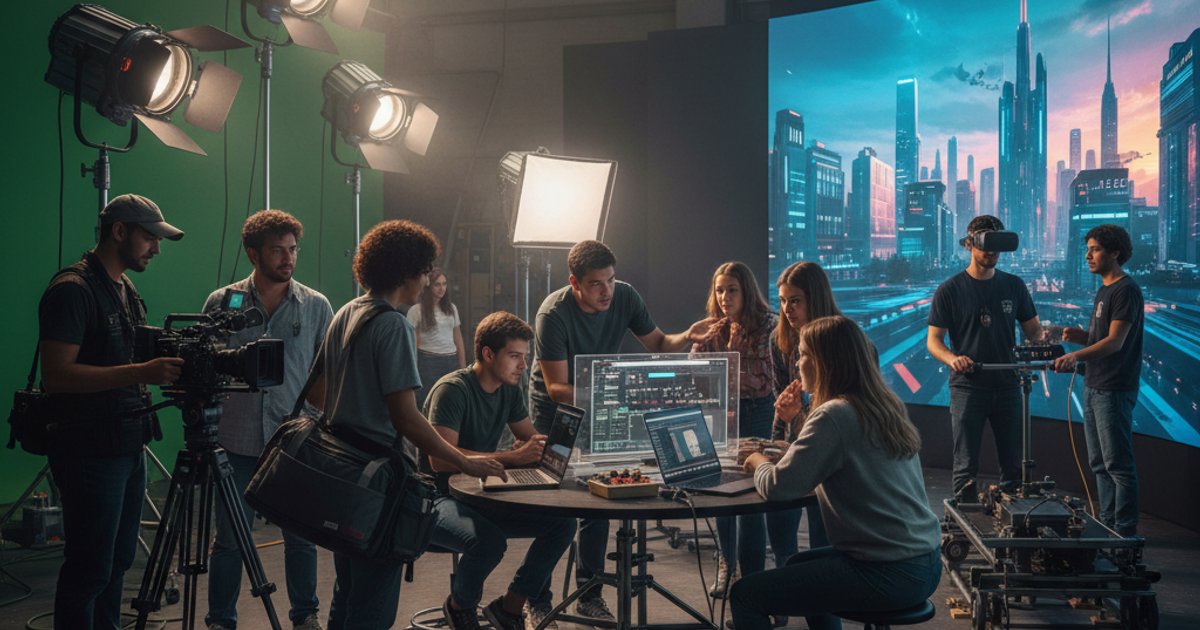
The real story here isn’t just about budget cuts; it’s about a necessary evolution. The film industry itself is constantly transforming, and film education needs to keep pace. What most people miss is that the core mission — to teach the art and craft of visual storytelling — remains unchanged. It’s the methods and the business models that are being forced to adapt for a volatile future.
Are Scholarships for Film & Cinematography Courses Still Available?
Yes, scholarships are still available, but the landscape is certainly more competitive and often requires more proactive searching. With funding cuts, many institutions have had to re-evaluate their scholarship endowments. However, I’ve noticed a significant push from industry organizations and private foundations to step in, recognizing the critical need to support diverse talent.
For example, the American Society of Cinematographers (ASC) and various guilds often offer scholarships or grants specifically for cinematography courses. Production companies, too, are increasingly funding scholarships as a way to invest in future talent pipelines. Students need to cast a wider net, looking beyond institutional aid to professional associations, non-profits, and even crowdfunding platforms. It’s more work, but the opportunities are out there for those willing to dig.
The Role of Diversity and Inclusion in Funding
This is a critical point. Many new funding initiatives are specifically targeting underrepresented groups in film. The push for greater diversity and inclusion in Hollywood has translated into tangible support for students from diverse backgrounds. This is a smart move, not just ethically, but creatively. A wider range of voices and perspectives enriches the entire medium.
I’ve seen several major studios, in their 2025 corporate social responsibility reports, announce new endowments specifically for film courses aimed at increasing representation behind the camera. This isn’t just about optics; it’s about addressing a historical imbalance and ensuring the stories we tell reflect the world we live in.
What Skills Are Most Important for Aspiring Filmmakers Today?
Beyond the technical mastery of a film course or cinematography program, the most crucial skills for aspiring filmmakers today are adaptability, collaboration, and a strong understanding of the business side of the industry. The days of being a singular auteur working in isolation are largely gone, especially for those just starting out.
You need to be a chameleon. One day you might be shooting a commercial, the next a short film, and the next assisting on a virtual production stage. That means being comfortable with new technologies, learning quickly, and being a team player. Communication skills are paramount. And understanding basic budgeting, scheduling, and intellectual property rights? Absolutely non-negotiable. The best creative vision in the world won’t get made if you can’t navigate the practicalities.
I’d also add a deep appreciation for diverse storytelling. The audience for film and video is global and incredibly varied. Understanding different cultures, perspectives, and narrative structures will set you apart. That’s something a good film course should absolutely be instilling.
The Road Ahead for Film Education
The current challenges facing film courses and cinematography programs are significant, but they are also catalyzing a much-needed transformation. The institutions that will thrive are those that embrace flexibility, prioritize practical, industry-aligned skills, and actively seek out partnerships beyond the academic ivory tower. It’s about preparing students not just for the industry as it is today, but for the industry as it will be tomorrow.
This isn’t a time for despair, but for strategic rethinking. The demand for compelling visual content isn’t going anywhere; in fact, it’s only intensifying. The question is how we best equip the next generation of storytellers to meet that demand, and how educational institutions can remain vital players in that process. It’s a complex puzzle, but one I’m confident the creative minds in film education are more than capable of solving. Ultimately, this leads to maximizing your long-term ROI in this dynamic field.
Frequently Asked Questions
What are the main financial challenges facing film schools today?
Film schools are primarily facing budget reductions from their parent universities, often due to broader economic pressures and shifting funding priorities. This impacts faculty hiring, equipment upgrades, and scholarship availability, making it harder to maintain high-quality film courses.
How are film courses adapting to changing student enrollment?
Many film courses are adapting by offering more specialized programs, hybrid learning models, and shorter, certificate-based options. They are focusing on skills directly relevant to current industry demands, such as virtual production and digital cinematography, to attract and retain students.
Are online cinematography courses as effective as in-person ones?
The effectiveness varies, but many online cinematography courses are becoming highly sophisticated, especially for theoretical and pre-production learning. For hands-on camera work and collaborative production, a hybrid model combining online theory with intensive in-person practical sessions is often considered ideal.
What role do industry partnerships play in modern film education?
Industry partnerships are crucial. They provide students with real-world experience through internships and project collaborations, bring current industry professionals into the classroom as adjunct faculty, and help schools stay abreast of technological and creative trends, making their film course offerings more relevant.
How can aspiring filmmakers find scholarships amidst funding cuts?
Aspiring filmmakers should look beyond institutional aid to industry organizations (like the ASC), professional guilds, private foundations, and even company-sponsored programs. Many new scholarships are also targeting diverse and underrepresented groups in film, requiring proactive research and application.
What new technologies are being integrated into film courses?
Film courses are increasingly integrating virtual production tools (e.g., LED volumes), real-time rendering software, cloud-based collaboration platforms, and accessible open-source editing and visual effects software. This prepares students for a technologically evolving industry and often reduces institutional costs.
Is a film degree still necessary to work in the industry?
While a film degree from a strong film course can provide a structured learning environment, networking opportunities, and a strong portfolio, it’s not strictly necessary. Many successful filmmakers learn through experience, short courses, and self-study. The key is demonstrating skill, talent, and a strong work ethic, regardless of the educational path.
Last updated: July 4, 2026
 English
  Chinese