
By MarQ Academy
Updated June 15, 2026
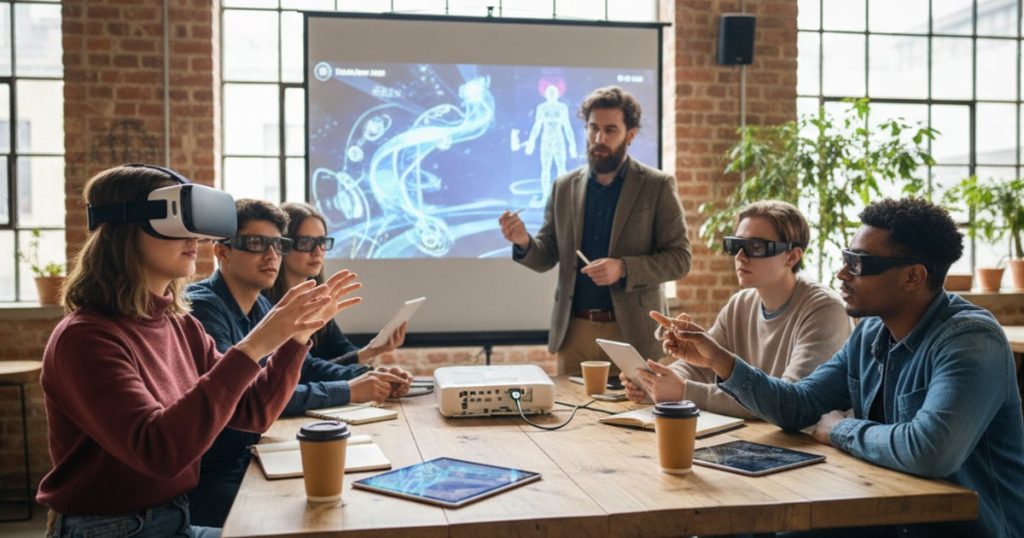
The traditional film set is getting a radical upgrade. Just this week, major film and media institutions, including the prestigious USC School of Cinematic Arts and NYU Tisch School of the Arts, announced significant overhauls to their core curricula, embedding Extended Reality (XR) technologies deep into their film course and cinematography courses. This isn’t just an elective; it’s a fundamental shift, reflecting a burgeoning industry demand for professionals who can craft interactive, immersive narrative experiences.
This move, confirmed by university spokespersons as of June 15, 2026, signals a critical juncture for visual storytelling. It means future filmmakers and cinematographers won’t just learn how to frame a shot for a flat screen; they’ll master spatial storytelling, 360-degree capture, and interactive visual design, fundamentally redefining cinematic principles for non-linear, experiential environments. The industry is changing, and academia is finally catching up.
Key Takeaways
- Leading film schools are rapidly integrating Extended Reality (XR) technologies into their film and cinematography curricula.
- This curriculum shift is driven by growing industry demand for immersive storytelling skills across gaming, experiential marketing, and cinematic installations.
- Future cinematographers will need expertise in spatial storytelling, 360-degree capture, and interactive visual design, moving beyond traditional linear narratives.
- XR integration fundamentally redefines how visual narratives are conceived and executed within academic programs.
- MarQ Academy emphasizes practical, hands-on training in these emerging technologies to prepare students for the evolving media landscape.
What is XR, and Why is it Reshaping Film Education?
Extended Reality (XR) is an umbrella term encompassing virtual reality (VR), augmented reality (AR), and mixed reality (MR), all of which merge the real and virtual worlds to create immersive experiences. This technology is reshaping film education because it offers new paradigms for narrative delivery and audience engagement, moving beyond the passive consumption of traditional cinema into interactive, spatial storytelling.
For decades, a film course focused on the 2D frame, the director’s cut, and the audience’s fixed perspective. Now, XR shatters those boundaries. Imagine a story where the viewer isn’t just watching, but walking through the narrative, influencing its progression, and interacting with characters or environments. That’s the promise of XR, and it’s why institutions are scrambling to adapt.
According to a 2025 report by PwC, the global XR market is projected to reach $1.5 trillion by 2030, with entertainment and media being a primary driver. This explosive growth translates directly into a demand for skilled creators. A 2024 LinkedIn study found that job postings requiring VR/AR development skills increased by 30% year-over-year, many of which sought individuals with a strong understanding of visual narrative and spatial design.
The implications for a film course are profound. Students are no longer just learning about camera angles and lighting for a static screen; they’re designing entire virtual worlds, considering how a user’s gaze might impact the story, and experimenting with dynamic soundscapes that shift with movement. It’s a complete reimagining of the filmmaker’s toolkit.
How are Cinematography Courses Adapting to XR?
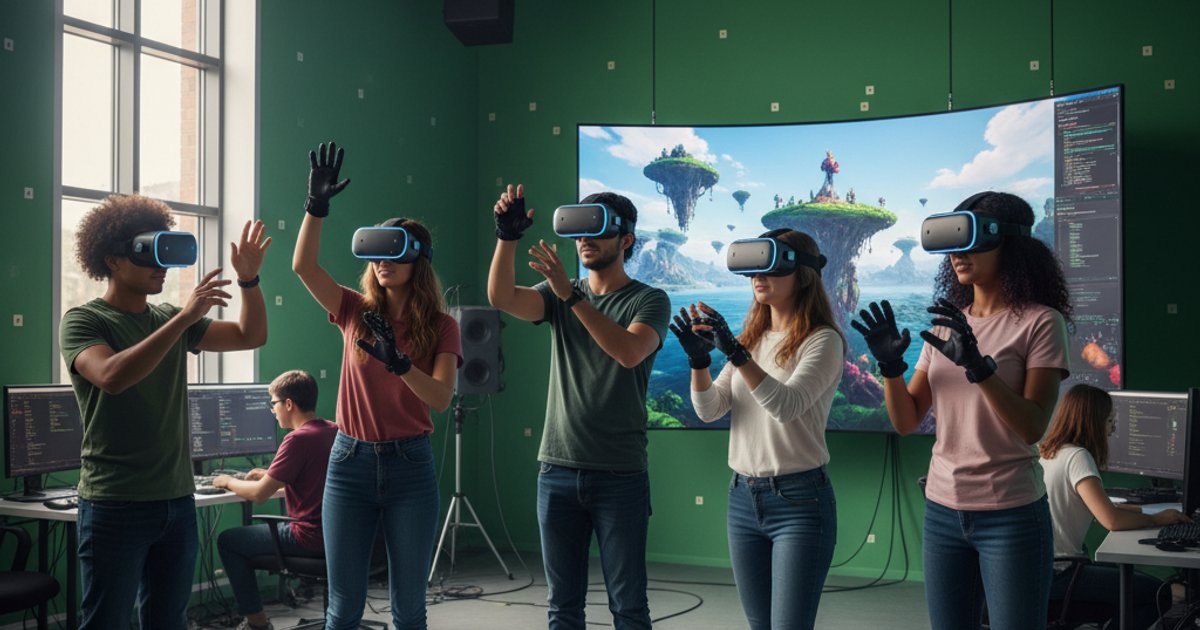
Cinematography courses are adapting to XR by expanding their focus beyond traditional camera operation and lighting to include principles of 360-degree capture, volumetric video, real-time rendering, and spatial composition. This means teaching students how to think about visual storytelling in an environment where the ‘frame’ is infinite, and the audience can look in any direction.
The shift is less about abandoning classic techniques and more about augmenting them. Students still need to understand color theory, exposure, and composition. But now, they apply these principles to spherical cameras, light probes, and virtual production stages. For instance, a traditional shot might require a single key light; an XR scene might demand a dozen virtual lights, each contributing to a dynamic, interactive environment.
Leading programs are now incorporating dedicated modules on game engine integration, primarily using platforms like Unity and Unreal Engine. A 2025 survey by the Entertainment Software Association indicated that 60% of game development studios are actively exploring or implementing XR technologies in their pipelines. This directly impacts the skills required for cinematographers, who now need to understand how their visual designs will be rendered in real-time, often by a user’s own hardware.
MarQ Academy, for example, has recently launched a new specialization in Immersive Cinematography, emphasizing hands-on projects with cutting-edge XR hardware. Their curriculum includes workshops on photogrammetry, motion capture for virtual characters, and designing interactive camera paths within virtual spaces. It’s a practical approach to a rapidly evolving field.
Key Differences: Traditional vs. XR Cinematography
The table below highlights the fundamental shifts in focus and skill sets required for cinematographers in the age of XR.
| Feature | Traditional Cinematography | XR Cinematography |
|---|---|---|
| Frame Definition | Fixed 2D rectangle (e.g., 16:9, 4:3) | 360-degree spherical, volumetric |
| Audience Perspective | Fixed by director | Interactive, user-driven |
| Lighting | Physical lights, controlled environment | Virtual lights, real-time rendering, dynamic |
| Camera Movement | Physical dollies, cranes, handheld | Virtual camera paths, user navigation, 6DoF |
| Storytelling | Linear, passive consumption | Non-linear, interactive, spatial |
| Key Software | Editing suites (e.g., Adobe Premiere) | Game engines (e.g., Unity, Unreal Engine) |
| Post-Production Focus | Color grading, VFX compositing | Real-time optimization, interactive elements |
Why Should Aspiring Filmmakers Embrace XR in Their Education?
Aspiring filmmakers should embrace XR in their education because it equips them with future-proof skills for a rapidly expanding industry, opening doors to diverse career paths beyond traditional cinema. This forward-thinking approach ensures they remain competitive and relevant in a media landscape increasingly dominated by interactive and immersive experiences.
The reality is, the jobs of tomorrow in visual media are not solely in Hollywood’s traditional studios. They are in gaming companies creating cinematic VR experiences, in marketing agencies building AR campaigns, in museums developing interactive exhibits, and in medical fields simulating complex procedures. A 2025 report from Deloitte estimated that 75% of new media jobs created in the next five years will require some form of XR proficiency.
Think about it: a film course that only teaches 20th-century techniques is like learning to drive a Model T in 2026. You might understand the basics, but you won’t be ready for electric vehicles, autonomous driving, or even navigating a modern highway. The same applies to filmmaking. Learning XR isn’t just about adding a skill; it’s about understanding the new language of visual communication.
Moreover, the creative possibilities are staggering. XR and immersive storytelling allows for levels of audience immersion and emotional connection previously unimaginable. For a storyteller, this is the ultimate canvas. Mastering these tools means you’re not just making movies; you’re crafting worlds, and that’s a powerful proposition for any aspiring visual artist.
The Future of Film Course Content: Beyond the Screen
The future of film course content will increasingly move beyond the confines of the traditional screen, integrating disciplines such as game design, computer science, and human-computer interaction. This expansion reflects the need for filmmakers to understand not just how to tell a story, but how to build an interactive world within which a story can unfold.
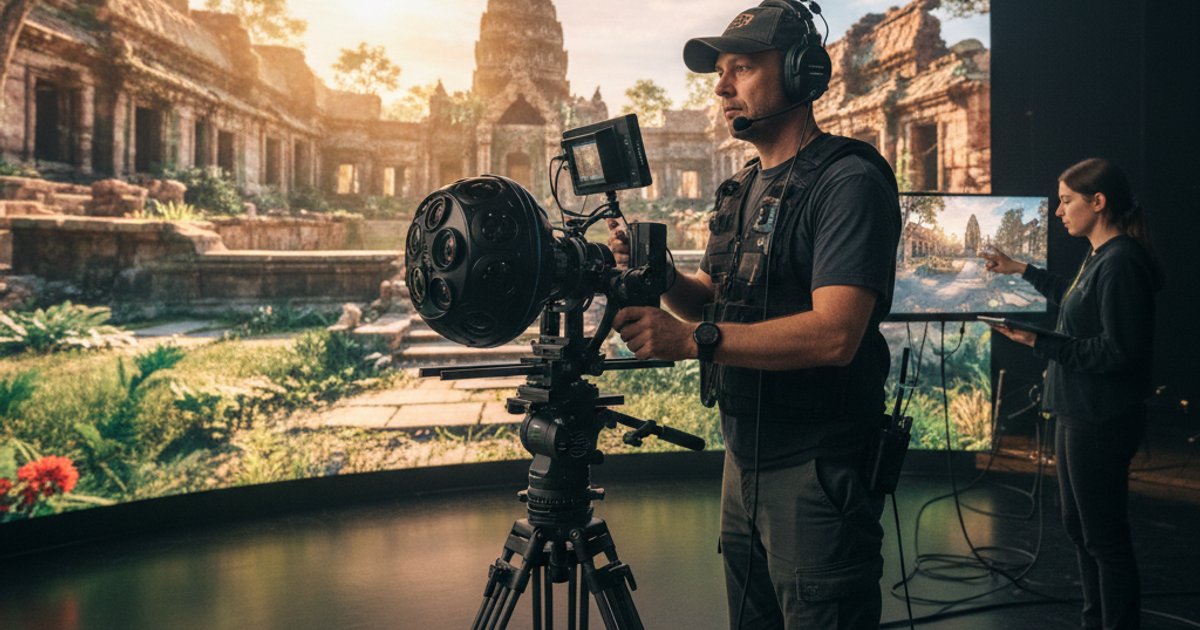
Consider the rise of virtual production, where LED walls display real-time rendered environments, allowing actors to perform within digital worlds that are indistinguishable from physical sets. This technology, pioneered in shows like The Mandalorian, demands cinematographers who understand both traditional lighting and the nuances of virtual camera calibration and real-time graphics. A 2024 study by Epic Games indicated that virtual production adoption grew by 45% in the last year among major studios.
This means a film course will likely include modules on 3D modeling, asset creation, and even basic coding. The line between filmmaker, game designer, and software engineer is blurring. Universities are responding by creating interdisciplinary programs, allowing students to cross-enroll in computer science or interactive media departments, fostering a new generation of hybrid creators.
The broader picture: storytelling is becoming an experience, not just a viewing. Whether it’s an interactive documentary in VR, an AR overlay for a live theater performance, or a fully immersive narrative game, the demand for skilled visual storytellers who can navigate these new mediums is only going to intensify. MarQ Academy believes this evolution is not a threat to traditional filmmaking, but an exciting expansion of its potential.
Challenges and Opportunities in XR Film Education
Integrating XR into film education presents both significant challenges, such as high equipment costs and the rapid pace of technological change, and immense opportunities, including new creative avenues and a highly sought-after skill set. Navigating these complexities requires agile curricula and substantial investment from educational institutions.
The cost of high-end VR headsets, motion capture suits, and powerful rendering workstations can be prohibitive for many institutions. Keeping up with the latest software updates and hardware iterations is a constant race. Furthermore, finding faculty with both deep cinematic knowledge and advanced XR expertise is a considerable hurdle. A 2025 report by the International Association of Film Schools noted that only 15% of their member institutions felt adequately staffed to teach advanced XR topics.
That said, the opportunities far outweigh these challenges. For students, mastering XR means entering a job market with a distinct competitive advantage. Companies are actively seeking individuals who can bridge the gap between traditional storytelling and interactive technology. For educators, it’s a chance to redefine what a film course can be, pushing the boundaries of artistic expression and technological innovation.
The bigger picture: this isn’t just about learning a new tool; it’s about fostering a new mindset. It’s about teaching students to think spatially, interactively, and expansively. The institutions that embrace this shift will produce the visionary storytellers of the next generation, shaping how we consume and create media for decades to come.
Frequently Asked Questions
What is the primary focus of an updated film course with XR?
The primary focus of an updated film course with XR is to teach students how to create immersive, interactive narratives using virtual, augmented, and mixed reality technologies. This includes spatial storytelling, 360-degree capture, and designing experiences where the audience actively participates rather than passively observes.
Do cinematography courses still teach traditional film techniques?
Yes, cinematography courses absolutely still teach traditional film techniques such as lighting, composition, and camera operation. However, these foundational skills are now often taught with an emphasis on how they translate and adapt to immersive storytelling environments, preparing students for both conventional and immersive productions.
What career opportunities does XR integration open for filmmakers?
XR integration opens numerous career opportunities for filmmakers in fields like VR/AR content creation for gaming, interactive documentaries, experiential marketing, virtual production, architectural visualization, and educational simulations. These roles demand visual storytelling expertise combined with technical XR proficiency.
How long does it take to learn XR filmmaking skills?
The time it takes to learn XR filmmaking skills varies widely depending on prior experience and the intensity of the program. Dedicated film course specializations can range from a few months for foundational skills to two to four years for comprehensive degree programs that cover both traditional and advanced XR techniques.
Is specialized hardware required for an XR film course?
Yes, specialized hardware is typically required for an XR film course, including high-end VR headsets (e.g., Meta Quest Pro, Varjo XR-3), 360-degree cameras, motion capture systems, and powerful graphics workstations. Many institutions provide access to these resources within their labs and studios.
How does MarQ Academy address XR in its curriculum?
MarQ Academy addresses XR in its curriculum through dedicated immersive cinematography specializations, hands-on workshops, and project-based learning using industry-standard XR hardware and software. The academy focuses on practical application, preparing students to immediately contribute to the evolving immersive media landscape.
Will AI impact XR filmmaking education?
Absolutely, AI will significantly impact XR filmmaking education by automating aspects of asset generation, character animation, and even dynamic narrative branching. Future film course curricula will likely include modules on AI-powered tools for virtual production and integrating game engines and interactive storytelling, further enhancing creative possibilities.
Last updated: June 15, 2026
 English
  Chinese