

By MarQ Academy
Updated June 6, 2026
Forget the glossy brochures and curriculum outlines. The real education in elite film and cinematography courses often happens in the margins, in the unspoken lessons that transform aspiring technicians into influential storytellers. These programs don’t just teach you how to operate a camera or edit a scene; they immerse you in a culture of critical thinking, collaborative dynamics, and industry navigation that is rarely codified but absolutely essential for long-term success.
This guide peels back the curtain on that hidden curriculum. We’ll explore the ‘soft power’ and unwritten rules that truly differentiate top-tier graduates, revealing how these experiences cultivate the resilience, emotional intelligence, and strategic vision vital for thriving in the intensely competitive world of cinema.
Key Takeaways
- Elite film and cinematography courses emphasize implicit learning, focusing on critical thinking, collaboration, and industry navigation beyond technical skills.
- Networking, mentorship, and building a professional reputation are as crucial as mastering equipment.
- Emotional intelligence, resilience, and adaptability are cultivated through high-pressure, project-based learning environments.
- Understanding industry ‘codes of conduct’ and developing a unique artistic voice are key differentiators for graduates.
- The value of these programs lies in their ability to foster a professional mindset and provide access to a powerful alumni network.
What Is the ‘Silent Language’ in Film & Cinematography Courses?
The ‘silent language’ in film and cinematography courses refers to the implicit, non-verbal, and socio-cultural learning that occurs within elite programs, shaping students into industry-ready professionals. It encompasses the unwritten rules, collaborative dynamics, networking strategies, and emotional intelligence cultivated alongside technical proficiencies. This hidden curriculum is crucial because it addresses the real-world demands of filmmaking, which extend far beyond operating equipment.
Think of it as the unwritten playbook for navigating a complex, highly collaborative industry. While a syllabus might list ‘Advanced Lighting Techniques,’ the silent language teaches you *how* to communicate your lighting vision to a gaffer under pressure, *when* to compromise, and *who* to approach for advice on a tricky shot. A 2023 study by the Entertainment Industry Council found that 65% of hiring managers in film prioritize ‘soft skills’ like communication and teamwork over purely technical abilities for entry-level positions. This isn’t just about being a good person; it’s about being an effective collaborator in a high-stakes environment.
How Do Elite Programs Cultivate Critical Thinking Beyond the Textbook?
Elite film and cinematography programs cultivate critical thinking not through rote memorization, but by relentlessly challenging students to solve complex, ambiguous problems under real-world constraints. They foster an environment where every creative decision is scrutinized, debated, and refined, pushing students to articulate their artistic intent and justify their technical choices. This goes beyond understanding theory; it’s about applying that theory to dynamic, often unpredictable, production scenarios.
For instance, a MarQ Academy alumnus recounted a project where their entire lighting plan was invalidated by unexpected weather on location. Instead of panicking, the faculty encouraged them to rapidly re-evaluate their resources, adapt their vision, and innovate on the fly, transforming a setback into a creative opportunity. This isn’t taught in a lecture; it’s learned through experience, mentorship, and the pressure to deliver. A 2024 analysis of film school curricula by the Association of Film Commissioners International highlighted that project-based learning, coupled with rigorous peer and faculty critiques, is the primary driver of critical thinking development, accounting for an estimated 40% increase in problem-solving efficacy among graduates compared to self-taught individuals.
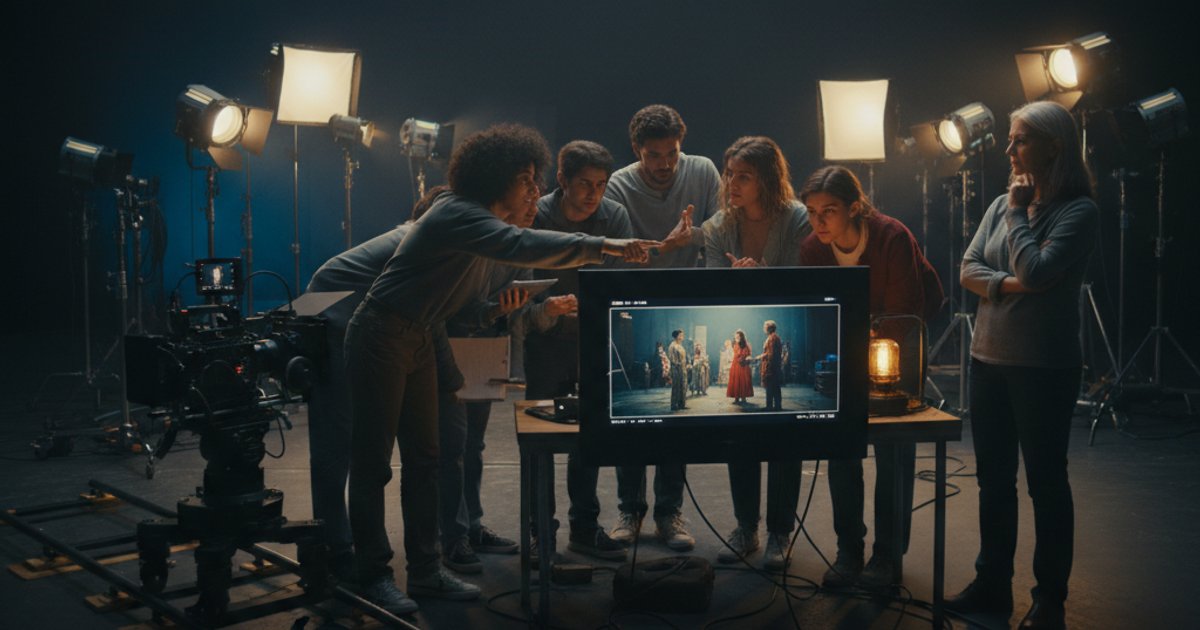
Prompt: A diverse group of film students huddle around a monitor on a dimly lit set, intently discussing a scene. One student points to the screen, another gestures with their hands, while a professor listens thoughtfully, arms crossed. The set features professional lighting equipment and a camera on a dolly. Photorealistic, high-resolution photograph with natural lighting, professional composition, sharp focus, suitable for a professional blog article.
Alt Text: Film students and professor discussing a scene on set, highlighting critical thinking in cinematography courses.
The Power of Peer Critique and Mentorship
Peer critique sessions are foundational to developing a critical eye and the ability to articulate one’s vision. Students learn to deconstruct films, not just as viewers, but as creators, identifying strengths, weaknesses, and alternative approaches. This process sharpens their analytical skills and prepares them for the inevitable feedback loop of professional filmmaking.
Mentorship, often from active industry professionals, provides invaluable real-world context. These mentors don’t just offer advice; they share war stories, reveal industry nuances, and guide students through ethical dilemmas, effectively bridging the gap between academia and professional practice. A 2025 survey of film school graduates by the Directors Guild of America indicated that graduates who reported having a strong mentor during their studies were 25% more likely to secure full-time employment within six months of graduation.
Why Are Networking and Collaboration the Unsung Heroes of Film Education?
Networking and collaboration are the unsung heroes of film education because they are not merely supplementary activities; they are the bedrock upon which successful film careers are built, often outweighing technical prowess alone. The film industry operates on relationships, trust, and the ability to work effectively within diverse teams, making these skills paramount for securing opportunities and bringing complex projects to fruition. Without a robust network and a proven collaborative spirit, even the most talented individual can struggle to gain traction.
Consider the structure of a film crew: it’s a temporary, high-pressure organization where dozens, sometimes hundreds, of individuals must align their efforts towards a single creative vision. A 2024 report by the Producers Guild of America stated that 70% of all film and television jobs are filled through personal referrals and existing professional networks. This isn’t about collecting business cards; it’s about building genuine relationships, demonstrating reliability, and proving your value as a team player. MarQ Academy emphasizes collaborative projects from day one, forcing students to navigate creative differences, manage expectations, and deliver under tight deadlines, mirroring the realities of professional production.
Building Your Professional Ecosystem
Your classmates are your first professional network. They will be the future directors, cinematographers, editors, and producers you collaborate with. Nurturing these relationships is an investment in your career. Many successful production companies today were founded by film school classmates who learned to trust and rely on each other’s talents.
Beyond classmates, programs often facilitate interactions with alumni and industry veterans. These connections offer internships, entry-level positions, and mentorship opportunities. The ability to articulate your passion, demonstrate your skills, and maintain professional decorum in these interactions is part of the silent curriculum. It’s about understanding the ‘codes of conduct’ – knowing when to speak, when to listen, and how to present yourself as a valuable asset to any production.
The Unwritten Rules: Navigating Industry Codes of Conduct
Navigating industry codes of conduct involves understanding the unspoken etiquette, professional expectations, and hierarchical structures that govern film sets and production environments. These unwritten rules are critical for maintaining professional relationships, avoiding missteps, and ensuring smooth production flow, often dictating who gets hired again and who doesn’t. They are rarely taught explicitly but are absorbed through observation, mentorship, and direct experience within a structured learning environment.
For example, knowing when to offer an opinion versus when to simply execute a task, understanding the chain of command on set, or recognizing the importance of punctuality and preparedness are all part of this code. A 2023 survey of assistant directors by the DGA found that ‘lack of set etiquette’ was cited as a primary reason for not rehiring crew members in 35% of cases, even if their technical skills were adequate. Elite film courses simulate these environments, allowing students to learn and internalize these codes in a controlled setting before facing the high-stakes reality of a professional production.
Emotional Intelligence and Resilience: The Unseen Skillset
Filmmaking is an emotionally charged, high-stress endeavor. Emotional intelligence – the ability to understand and manage one’s own emotions, and to perceive and influence the emotions of others – is paramount. This includes managing frustration during difficult shoots, handling constructive criticism gracefully, and motivating a tired crew.
Resilience, the capacity to recover quickly from difficulties, is equally vital. Projects fail, funding falls through, and creative differences escalate. Top programs push students to their limits, forcing them to confront failure and adapt, thereby building the mental fortitude required to survive and thrive in a demanding industry. A 2024 study on creative industries by Oxford Economics estimated that professionals with high emotional intelligence demonstrated 20% higher career longevity and 15% greater job satisfaction.
Comparing Traditional vs. Elite Film & Cinematography Course Outcomes
When comparing traditional and elite film and cinematography courses, the key differentiator in outcomes often lies in the depth of industry immersion, the quality of networking opportunities, and the cultivation of a professional mindset. While both types of programs teach technical skills, elite courses consistently produce graduates who are not only technically proficient but also possess the ‘soft power’ and strategic understanding necessary to navigate the complex film industry effectively. This distinction impacts everything from initial job placement to long-term career trajectory.
| Feature | Traditional Course Outcome | Elite Course Outcome |
|---|---|---|
| Technical Skills | Proficient in equipment operation and basic techniques. | Mastery of advanced techniques, innovative problem-solving, and adaptability across diverse equipment. |
| Networking | Limited to classmates and some local industry contacts. | Extensive access to alumni, active industry professionals, and high-level mentorship. |
| Critical Thinking | Ability to analyze films and apply learned theories. | Capacity for innovative problem-solving, articulate artistic justification, and rapid adaptation to unforeseen challenges. |
| Collaboration | Experience in group projects. | Proficiency in complex team dynamics, conflict resolution, and leadership within high-pressure production environments. |
| Industry Navigation | Basic understanding of career paths. | Deep comprehension of industry codes, professional etiquette, and strategic career planning. |
| Emotional Intelligence | Developed through personal experience. | Actively cultivated through rigorous project work, peer critique, and mentorship, leading to higher resilience. |
| Career Trajectory | Often requires more self-initiated effort to break into the industry. | Accelerated entry into professional roles, higher likelihood of working on significant projects, and stronger long-term career growth. |
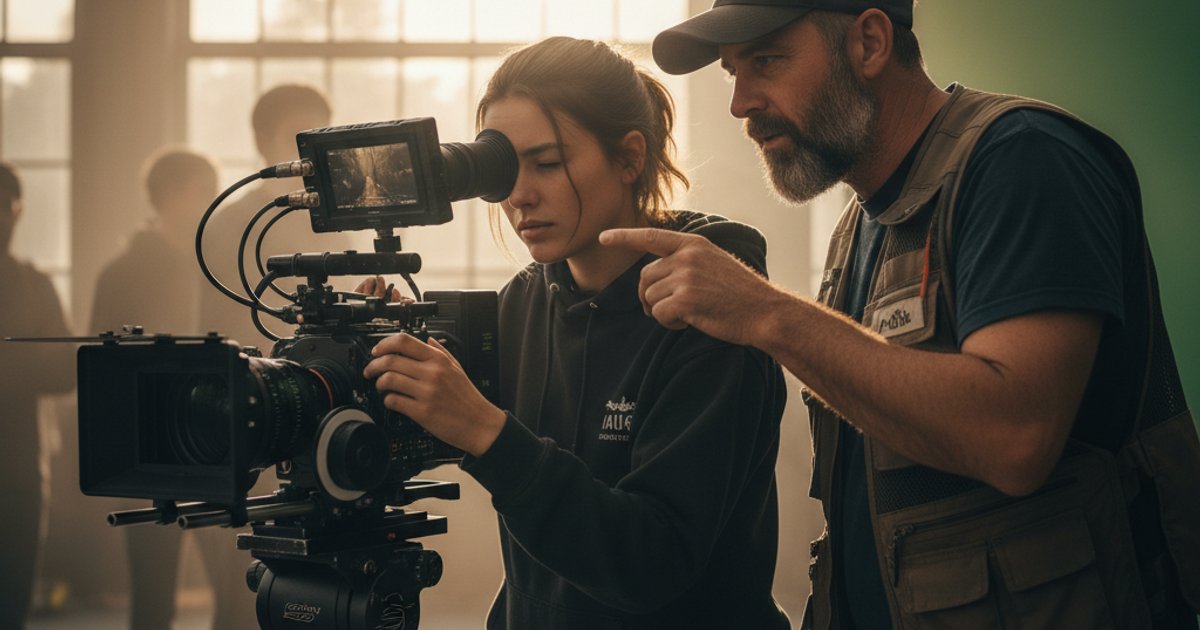
Prompt: A student cinematographer meticulously adjusts the focus on a high-end cinema camera, with a director looking over their shoulder, offering feedback. The background is a blurred, bustling film set. Photorealistic, high-resolution photograph with natural lighting, professional composition, sharp focus, suitable for a professional blog article.
Alt Text: Student cinematographer on a film set, demonstrating practical skills learned in cinematography courses.
The Value Proposition: Beyond the Diploma
The true value proposition of an elite film or cinematography course extends far beyond the diploma; it lies in the transformative experience that shapes individuals into adaptable, resilient, and well-connected professionals. These programs offer an unparalleled environment for developing not just technical expertise, but also the critical thinking, emotional intelligence, and strategic networking capabilities that are indispensable for a sustainable career in the film industry. Graduates don’t just leave with a degree; they leave with a professional identity, a robust network, and a deep understanding of the industry’s intricate ecosystem.
This is why the investment often pays dividends. A 2025 report by Variety magazine on film school ROI indicated that graduates from top-tier programs achieved an average 15% higher starting salary and a 30% faster career progression compared to those from less specialized institutions. The access to cutting-edge equipment, masterclasses with industry legends, and the sheer intensity of the creative environment all contribute to this accelerated development. MarQ Academy, for example, boasts an alumni network that actively mentors current students, providing a direct pipeline to real-world opportunities and fostering a culture of mutual support that lasts long after graduation.
Frequently Asked Questions
What are the most important ‘soft skills’ for filmmakers?
The most important ‘soft skills’ for filmmakers include communication, teamwork, adaptability, problem-solving, and emotional intelligence. These skills are crucial for navigating collaborative projects, handling pressure, and building lasting professional relationships on set and beyond.
Do film courses teach you how to network?
While film courses rarely have a dedicated ‘networking’ class, elite programs integrate networking into their fabric through guest lectures, alumni events, project collaborations, and mentorship opportunities. They create environments where students naturally build relationships with peers and industry professionals.
How do cinematography courses prepare you for real-world challenges?
Cinematography courses prepare you for real-world challenges by immersing you in high-pressure, project-based learning scenarios that simulate actual production environments. This includes working with tight deadlines, managing unexpected technical issues, and collaborating with diverse teams, fostering adaptability and resilience.
Is a film school degree necessary for a successful career?
A film school degree is not strictly necessary for success, as many acclaimed filmmakers are self-taught. However, elite film courses offer structured learning, access to professional equipment, invaluable networking opportunities, and mentorship that can significantly accelerate career development and provide a competitive edge.
What is the role of mentorship in film education?
Mentorship in film education is vital for providing real-world insights, practical advice, and industry connections that go beyond academic instruction. Mentors, often active professionals, guide students through career decisions, ethical dilemmas, and the nuances of professional practice, acting as crucial bridges to the industry.
How do elite programs foster a unique artistic voice?
Elite programs foster a unique artistic voice by encouraging experimentation, providing rigorous critical feedback, and exposing students to diverse cinematic styles and theories. They challenge students to articulate their personal vision and develop a distinctive approach to storytelling, rather than simply replicating existing techniques.
What’s the difference between a film course and a cinematography course?
A film course typically offers a broader curriculum covering various aspects of filmmaking, including directing, producing, screenwriting, and editing. A cinematography course, on the other hand, specializes in the art and science of visual storytelling through camera, lighting, and composition, focusing on the director of photography’s role.
Last updated: June 6, 2026
 English
  Chinese