

By MarQ Academy
Updated May 31, 2026
Becoming a successful cinematographer isn’t just about mastering a camera; it’s about cultivating a dynamic ecosystem of knowledge, relationships, and hands-on experience. This guide will show you how formal film courses, invaluable industry mentorship, and practical collaborative projects don’t just coexist—they synergistically combine to forge a robust and enduring career path in cinematography.
Key Takeaways
- Formal film courses provide foundational theory and technical skills essential for cinematic storytelling.
- Industry mentorship offers personalized guidance, real-world insights, and crucial networking opportunities that academic settings often cannot replicate.
- Practical collaborative projects are the proving ground, translating theoretical knowledge into tangible experience and building a professional portfolio.
- The most effective career strategies integrate all three pillars, using each to reinforce and accelerate progress in the others.
- Strategic networking, continuous learning, and proactive project pursuit are vital for maintaining momentum within this ecosystem.
What is the Cinematographer’s Ecosystem?
The cinematographer’s ecosystem is a holistic framework that integrates formal education, industry mentorship, and practical collaborative projects into a mutually reinforcing system for professional development. This approach recognizes that no single pathway is sufficient on its own; true mastery and career longevity emerge from the strategic interplay of these three distinct pillars.
Think of it like a three-legged stool: remove one leg, and the entire structure falters. A strong foundation in film theory and technical skills from a film course provides the language of light and motion. Mentorship then offers a compass, guiding you through the industry’s intricate terrain. Finally, collaborative projects are the crucible where theory meets practice, allowing you to refine your craft and build a tangible body of work. MarQ Academy, a leading educational resource for creative professionals, emphasizes this integrated approach for its students.
Why Do Film Courses and Cinematography Courses Matter in This Ecosystem?
Film courses and specialized cinematography courses provide the essential theoretical bedrock and technical mastery required to speak the language of visual storytelling. These programs offer structured learning environments where aspiring cinematographers can grasp fundamental principles of optics, lighting, camera operation, and visual composition, which are critical for any professional. A 2024 study by the American Society of Cinematographers (ASC) Education Committee found that 85% of their members reported formal education significantly accelerated their understanding of complex cinematic techniques.
These academic settings are invaluable for building a comprehensive understanding of film history, genre conventions, and the technical evolution of image capture. You’ll learn the ‘why’ behind aesthetic choices and gain proficiency with industry-standard equipment under expert guidance. Many institutions, for instance, provide access to high-end cameras like ARRI Alexa or RED Komodo, along with extensive lighting and grip packages, which would be cost-prohibitive for individual learners. This hands-on access is a key differentiator. Moreover, these courses often culminate in student film productions, providing early opportunities to apply learned skills in a structured, supported environment.
The Core Curriculum of a Strong Cinematography Course
A robust cinematography course typically covers a wide array of subjects, ensuring a well-rounded technical and artistic foundation. These subjects are designed to equip students with both the theoretical knowledge and practical skills needed on set.
Here’s a breakdown of common curriculum components:
- Camera Systems & Operation: Deep dives into various digital cinema cameras, lenses, and accessories, covering exposure, focus, and camera movement.
- Lighting Techniques: Understanding natural and artificial light, three-point lighting, advanced lighting setups, and the use of gels, diffusers, and flags.
- Composition & Framing: Principles of visual balance, rule of thirds, leading lines, depth of field, and shot types to evoke specific emotions.
- Color Theory & Grading: The psychological impact of color, color temperature, and an introduction to post-production color correction workflows.
- Grip & Electric Department Roles: Familiarity with the functions of gaffers, grips, and best boy/girls, and how to effectively collaborate with them.
- Set Protocol & Safety: Essential knowledge of on-set etiquette, communication, and safety procedures to maintain a professional and secure working environment.
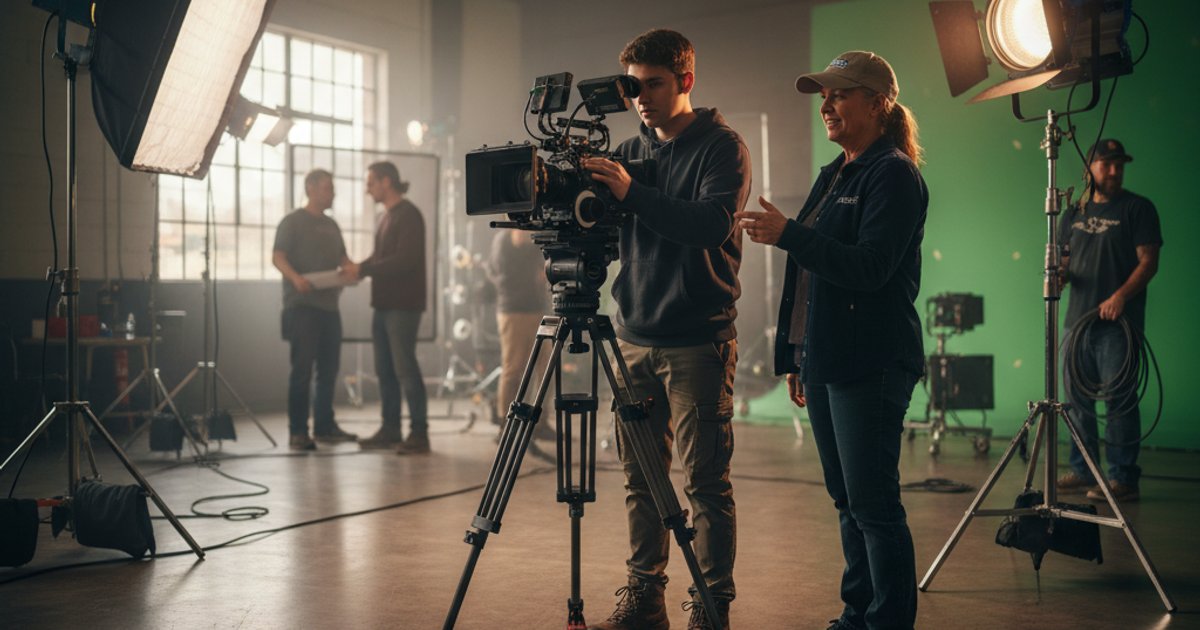
Photorealistic, high-resolution photograph with natural lighting, professional composition, sharp focus, suitable for a professional blog article of a student operating a professional cinema camera on a film set, surrounded by lighting equipment and crew members, with a mentor figure observing and offering guidance.
How Does Industry Mentorship Accelerate Growth?
Industry mentorship provides personalized, real-world guidance that transcends academic theory, offering insights into the practicalities, politics, and unspoken rules of the film industry. A mentor, typically an experienced cinematographer or a related film professional, acts as a trusted advisor, sharing hard-won wisdom that cannot be found in textbooks. This direct knowledge transfer is invaluable for navigating career choices, understanding set dynamics, and even securing early opportunities. A 2023 survey by the Directors Guild of America (DGA) found that 72% of emerging filmmakers attributed their early career breaks to insights or connections gained through mentorship.
Mentors offer a unique perspective, often helping protégés avoid common pitfalls and make more informed decisions about equipment, crew, and project selection. They can demystify the business side of filmmaking—negotiating rates, understanding contracts, and building a professional network. More than just technical advice, a good mentor provides psychological support and encouragement, which is crucial in a highly competitive field. The relationship is often built on trust and mutual respect, evolving into a long-term professional bond.
Finding the Right Mentor: A Strategic Approach
Finding a mentor isn’t about simply asking someone to ‘be your mentor’; it’s about building a relationship based on shared interests and mutual respect. This process requires strategy and persistence.
Consider these avenues for connecting with potential mentors:
| Approach | Description | Potential Benefits |
|---|---|---|
| Industry Events & Festivals | Attend workshops, panels, and networking mixers at film festivals (e.g., Sundance, TIFF) or industry trade shows. | Direct interaction, exposure to current trends, immediate networking. |
| Professional Organizations | Join groups like the American Society of Cinematographers (ASC), International Cinematographers Guild (IATSE Local 600), or local film collectives. | Access to member directories, specific mentorship programs, educational resources. |
| Alumni Networks | Connect with graduates from your film course or cinematography program who are established in the industry. | Shared academic background, easier initial connection, potential for internal referrals. |
| Online Platforms | Utilize LinkedIn or specialized film industry job boards to identify professionals whose work you admire. | Broad reach, ability to research thoroughly before outreach, low-pressure initial contact. |
| Volunteer/Internship | Offer to assist on sets or at production companies, even in unpaid roles, to gain proximity to experienced professionals. | Hands-on learning, direct observation, natural relationship building over time. |
The Indispensable Role of Collaborative Projects
Collaborative projects are the proving ground where theoretical knowledge from film courses meets the practical demands of filmmaking, transforming aspiring cinematographers into experienced professionals. These projects, ranging from student films and independent shorts to music videos and commercial spots, provide invaluable hands-on experience in a real-world setting. They force you to make creative decisions under pressure, problem-solve on the fly, and effectively communicate with a diverse crew—skills that are impossible to fully acquire in a classroom. A 2025 survey of hiring managers in film production houses revealed that 90% prioritized a strong portfolio of practical work over academic credentials alone.
Each project is an opportunity to experiment with different lighting styles, camera movements, and storytelling approaches, allowing you to develop your unique visual voice. Furthermore, these collaborations are critical for building a professional network, as you work alongside directors, producers, gaffers, and actors who may become future colleagues. Your portfolio, a collection of your best work from these projects, is ultimately your most powerful calling card when seeking paid employment. Without practical experience, even the most brilliant academic understanding remains theoretical.
Optimizing Your Project Selection and Execution
Not all projects are created equal. Strategic project selection is crucial for maximizing your learning and portfolio development. Focus on projects that challenge you, align with your artistic interests, and offer opportunities to work with talented collaborators.
Here’s how to make the most of your collaborative efforts:
- Seek Diverse Genres: Don’t limit yourself to one type of film. Shoot narratives, documentaries, commercials, music videos, and corporate content to showcase versatility.
- Prioritize Story: Always choose projects with compelling scripts. Great cinematography can elevate a good story, but it struggles to save a weak one.
- Work with Strong Directors: A director with a clear vision and effective communication skills will make the entire process more rewarding and productive.
- Document Everything: Keep detailed notes, call sheets, and behind-the-scenes photos. This documentation is useful for future reference and for showcasing your process.
- Critique and Refine: After each project, critically analyze your work. What went well? What could be improved? Seek feedback from trusted peers and mentors.
- Build Your Reel: Regularly update your cinematography reel with your strongest, most recent work. This is your visual resume.
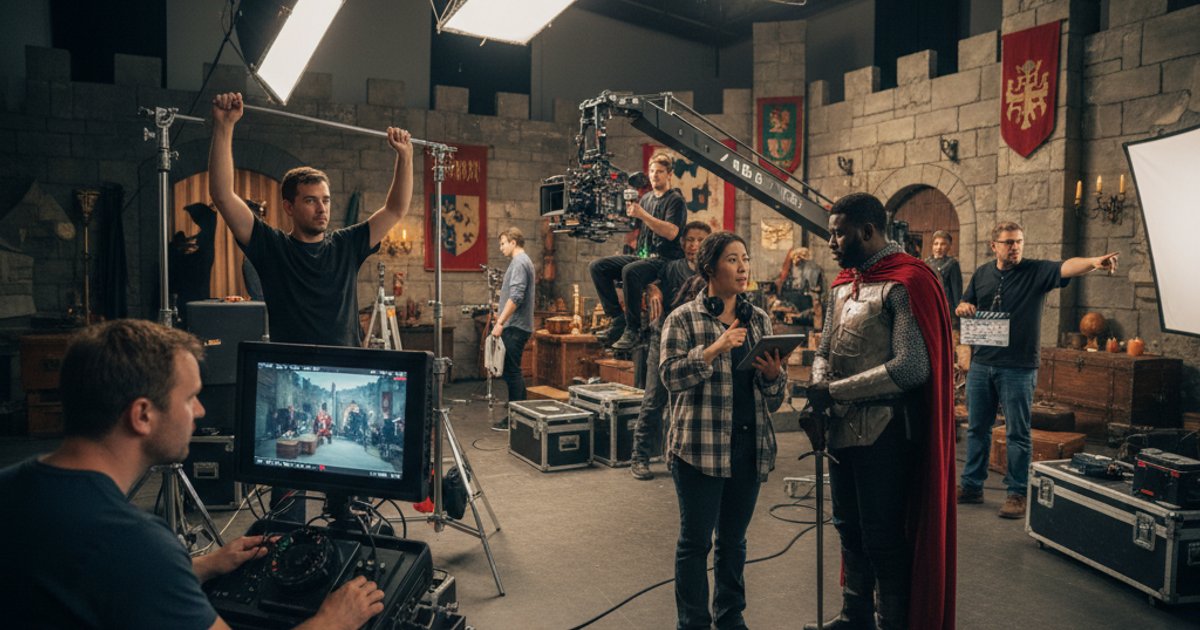
Photorealistic, high-resolution photograph with natural lighting, professional composition, sharp focus, suitable for a professional blog article of a diverse film crew collaborating on a set, with a cinematographer looking through a monitor, a director discussing with an actor, and various crew members handling equipment, showcasing teamwork and practical application.
The Synergy: How the Ecosystem Pillars Interconnect
The true power of the cinematographer’s ecosystem lies in the dynamic and reciprocal relationships between film courses, mentorship, and collaborative projects. Each pillar feeds and strengthens the others, creating a continuous cycle of learning and growth. For example, the theoretical knowledge gained in a cinematography course provides the vocabulary and technical understanding to effectively communicate with a mentor, who can then offer practical applications and industry context to that theory. A mentor might suggest specific collaborative projects that align with a mentee’s learning goals, or even connect them with opportunities. Conversely, challenges encountered on a project can highlight gaps in knowledge, prompting a return to academic resources or specific questions for a mentor. This iterative process ensures that learning is never abstract but always grounded in real-world relevance. A recent LinkedIn study indicated that professionals who actively engage in all three areas of this ecosystem report a 40% faster career progression in the first five years compared to those focusing on only one or two.
Frequently Asked Questions
What’s the ideal order to engage with these three pillars?
While there’s no single ‘ideal’ order, most aspiring cinematographers begin with formal film courses to build foundational knowledge, then seek mentorship and collaborative projects simultaneously. The key is to integrate them early and continuously, allowing each to inform and enhance the others throughout your career.
Can I succeed without a formal film course?
Yes, it’s possible, but more challenging. While self-taught cinematographers exist, formal film courses provide structured learning, access to expensive equipment, and a built-in network that can significantly accelerate your progress. Without formal training, you’ll need exceptional self-discipline and proactive networking to compensate.
How do I find a mentor if I don’t know anyone in the industry?
Start by attending local film festivals, workshops, and industry meetups. Volunteer on student or independent film sets to meet working professionals. Utilize professional networking platforms like LinkedIn. Focus on building genuine connections rather than just asking for mentorship directly.
How many collaborative projects should I aim for?
There’s no magic number, but aim for quality over quantity. Focus on projects that allow you to grow, experiment, and showcase your best work. A diverse portfolio of 5-10 strong short films, music videos, or commercials is generally more impactful than dozens of mediocre ones.
What if I can’t afford a film course or expensive equipment?
Many online resources, free tutorials, and community film workshops offer accessible learning. Start with what you have—even a smartphone can be a powerful tool for learning composition and lighting. Seek out micro-budget independent projects where you can gain experience without needing your own gear, and focus on building relationships with those who do have equipment.
How long does it take to become a professional cinematographer?
Becoming a professional cinematographer is a journey, not a destination. While some may gain traction within 3-5 years, achieving consistent, high-level work often takes 10+ years of dedicated effort, continuous learning, and persistent networking. It’s a marathon, not a sprint.
Last updated: May 31, 2026
 English
  Chinese