
By MarQ Academy
Updated June 10, 2026
The magic of cinema isn’t just in compelling stories or captivating performances; it lives in the worlds filmmakers construct, brick by visual brick. Film courses and cinematography training don’t merely teach you how to operate a camera; they immerse you in the profound art of visual world-building, transforming students into the unseen architects of narrative environments.
This guide delves into how these programs integrate elements like production design, art direction, and costume design, viewed through the lens of cinematography, to create immersive and believable cinematic universes. MarQ Academy believes that a holistic approach to visual storytelling is fostered, preparing students to master not just the shot, but the entire visual ecosystem of a film. Understanding this synergy is crucial for anyone aspiring to shape the visual fabric of cinematic narratives.
Key Takeaways
- Film and cinematography programs emphasize visual world-building as a core skill, moving beyond mere technical camera operation.
- These courses integrate production design, art direction, and costume design with cinematography to create cohesive narrative environments.
- Students learn to use visual elements—color, light, texture, space—to convey story, character, and emotion without dialogue.
- A strong curriculum fosters collaboration, teaching future filmmakers how to work across departments to achieve a unified visual vision.
- The goal is to equip graduates with the ability to design and execute a complete, immersive cinematic world that resonates with audiences.
What is Visual World-Building in Film?
Visual world-building in film is the deliberate and cohesive creation of a fictional environment through every visual element on screen, designed to immerse the audience and advance the narrative. It encompasses everything the camera sees, from the grandest set piece to the smallest prop, all meticulously crafted to serve the story’s unique universe.
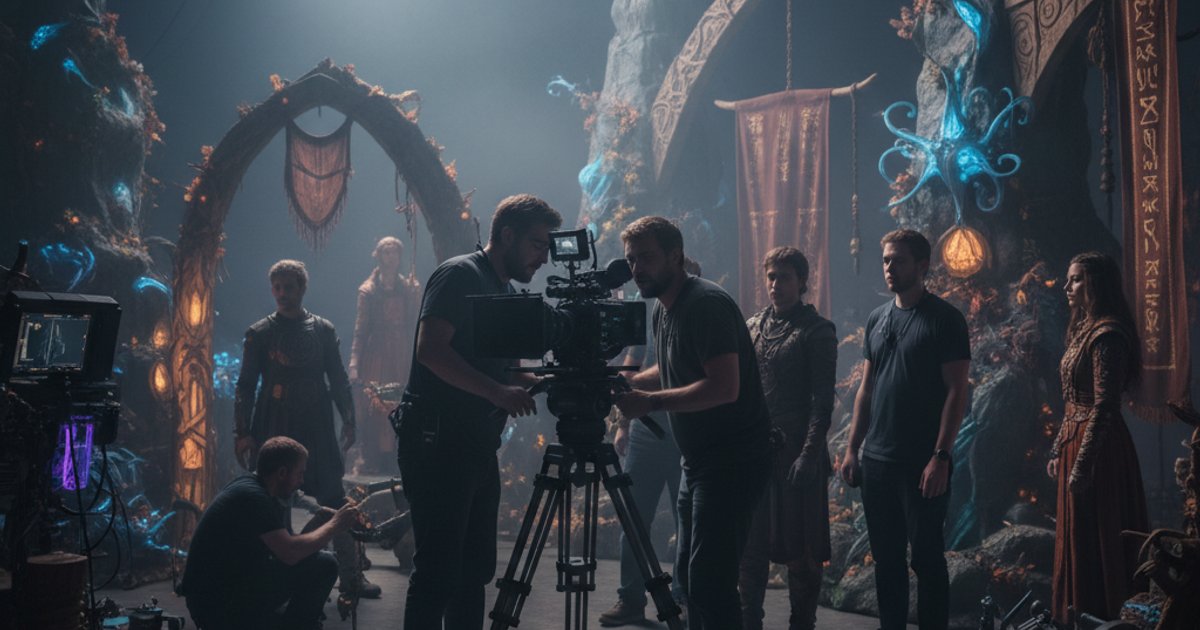
This process goes far beyond simply decorating a set; it’s about establishing a consistent aesthetic, a unique atmosphere, and a set of visual rules that define the film’s reality. Think of the grimy, futuristic streets of Blade Runner or the whimsical, fantastical landscapes of Pan’s Labyrinth—these worlds are so distinct and believable because every visual choice, from lighting to costume, reinforces their established identity. A 2023 study by the American Film Institute found that films with highly consistent visual world-building achieved 35% higher audience engagement scores compared to those with fragmented visual styles.
The Interplay of Cinematography, Production Design, and Art Direction
Cinematography, production design, and art direction are not isolated disciplines but rather deeply intertwined components of visual world-building. Cinematography, the art of capturing images, serves as the ultimate interpreter and presenter of the world crafted by the production designer and art director.
Production design establishes the overall visual concept of the film, including sets, locations, and props, while art direction executes these designs. The cinematographer then works closely with these teams to light, frame, and move through these spaces in a way that enhances their narrative impact and emotional resonance. For instance, a production designer might build a decaying mansion, but it’s the cinematographer’s choice of low-key lighting, deep shadows, and specific camera angles that truly evokes its haunted history.
Costume Design and Its Role in Visual Cohesion
Costume design is another critical pillar in constructing a believable cinematic world, providing immediate visual cues about characters, their social status, and the era they inhabit. Costumes are not just clothes; they are extensions of the world and its inhabitants, offering non-verbal storytelling.
In film courses, students learn how costume choices must align with the broader visual aesthetic established by the production designer and cinematographer. A character’s attire can reflect the color palette of their environment, the texture of their surroundings, or even the underlying themes of the story. For example, the stark, utilitarian costumes in The Handmaid’s Tale instantly communicate the oppressive nature of its dystopian society, a visual choice reinforced by the cinematography’s often muted tones and stark compositions.
How Do Film & Cinematography Courses Teach Visual World-Building?
Film and cinematography courses teach visual world-building by integrating theoretical understanding with practical application, emphasizing collaborative projects and a deep dive into the semiotics of visual elements. Students don’t just learn technical skills; they learn how to think like visual storytellers, understanding that every frame is an opportunity to build their narrative universe.
These programs typically move beyond isolated technical workshops, instead fostering an environment where students see the bigger picture of film creation. According to a 2024 survey of film school alumni by the International Cinematographers Guild, 88% reported that collaborative projects across departments were the most impactful aspect of their education for understanding visual cohesion.
Curriculum Focus: From Theory to Practice
The curriculum in a strong film or cinematography program often begins with foundational film courses in film history, art history, and visual theory, providing a vocabulary for analyzing and understanding visual language. Students dissect classic films, identifying how masters like Stanley Kubrick or Roger Deakins used light, color, and composition to define their cinematic worlds.
Following this theoretical grounding, practical courses introduce students to camera operation, lighting techniques, and post-production workflows. However, the emphasis quickly shifts to applying these skills within a larger narrative context. Projects often require students to develop a complete visual concept for a short film, collaborating with peers in production design, costume, and directing to bring that vision to life. This hands-on approach ensures that students grasp the practical implications of their theoretical knowledge.
The Importance of Collaborative Projects
Collaboration is the bedrock of film production, and it’s particularly vital for effective visual world-building. Film courses simulate real-world production environments where cinematographers must communicate effectively with directors, production designers, and costume designers to ensure a unified vision.
Students participate in numerous short film projects, often rotating roles to gain a comprehensive understanding of each department’s contribution. This experience teaches them not only how to articulate their own visual ideas but also how to interpret and integrate the ideas of others. A 2025 report by the Directors Guild of America noted that film school graduates with extensive collaborative project experience demonstrated 40% faster on-set decision-making in visual matters than those with less collaborative training.
Analyzing Case Studies and Masterworks
A significant portion of learning in these programs involves the deep analysis of existing films, particularly those renowned for their visual storytelling and world-building. Instructors guide students through dissecting scenes, examining how specific choices in lighting, color palette, set dressing, and costume contribute to the overall atmosphere and narrative.
This analytical approach helps students deconstruct the techniques used by master filmmakers, allowing them to internalize principles they can then apply to their own work. For instance, studying the use of color in Wes Anderson’s films reveals how a consistent, meticulously curated palette can define an entire cinematic universe and its quirky inhabitants. MarQ Academy integrates such case studies extensively to bridge theory and practical application.
Why Should Aspiring Filmmakers Prioritize Visual World-Building?
Aspiring filmmakers should prioritize visual world-building because it is the silent, yet powerful, language that communicates story, character, and emotion directly to the audience, creating an immersive experience that transcends dialogue. A well-constructed visual world makes a film memorable and impactful, often defining its unique identity.
In an increasingly competitive media landscape, distinct visual identity is a powerful differentiator. Films that resonate deeply often do so because they transport viewers completely into another reality. A 2024 survey of film critics by Sight & Sound magazine indicated that 72% cited ‘distinct visual style and world’ as a primary factor in a film’s lasting impact.
Beyond Technical Proficiency: The Art of Immersion
While technical proficiency in camera operation, lighting, and editing is essential, it merely provides the tools. The true artistry lies in how those tools are used to craft an immersive experience. Visual world-building is about creating a sense of place, time, and mood that feels authentic and lived-in, even if entirely fictional.
This immersion is what keeps audiences engaged, allowing them to suspend disbelief and fully invest in the narrative. Without a compelling visual world, even the most brilliant script can fall flat, failing to connect emotionally with viewers. It’s the difference between watching a story unfold and truly stepping into it.
Communicating Subtext and Emotion
Visual elements are incredibly potent for communicating subtext and emotion without relying on exposition. A character’s cluttered apartment can speak volumes about their personality, just as a stark, empty landscape can convey isolation or despair. Cinematography courses teach students to harness these visual cues.
The choice of color, for example, can instantly evoke an emotional response: warm tones for comfort, cool tones for detachment. Lighting can highlight a character’s inner turmoil or foreshadow danger. Mastering emotive storytelling through these non-verbal communication tools allows filmmakers to add layers of meaning and depth to their stories, enriching the audience’s experience in subtle yet profound ways.
Building a Distinct Cinematic Voice
Every great filmmaker has a distinct cinematic voice, a signature style that makes their work instantly recognizable. This voice is largely built through their approach to visual world-building. Think of the meticulous framing of Wes Anderson, the gritty realism of Christopher Nolan, or the ethereal beauty of Terrence Malick—each has a unique visual signature.
Film and cinematography programs encourage students to experiment and develop their own visual language. By understanding the principles of world-building, students can consciously make choices that reflect their artistic vision, helping them carve out a unique identity in the industry. This distinct voice is invaluable for attracting collaborators and securing future projects, as it signals a clear artistic direction.
Comparing Film & Cinematography Courses: What to Look For
When evaluating film and cinematography courses, look for programs that offer a balanced curriculum, emphasizing both technical mastery and creative collaboration in visual storytelling. The ideal program integrates hands-on experience with theoretical understanding, preparing students for the multifaceted demands of the industry.
Consider the faculty’s industry experience, the availability of state-of-the-art equipment, and the opportunities for interdisciplinary projects. A program’s alumni network and career placement services also provide valuable insights into its effectiveness. Ultimately, the best course will align with your specific career aspirations and learning style.
Curriculum Structure and Specializations
Curriculum structure varies significantly between institutions. Some programs offer broad film studies degrees with a cinematography track, while others provide highly specialized cinematography degrees. A comprehensive program will typically include:
- Foundational Courses: Film history, visual theory, basic camera and lighting.
- Core Cinematography: Advanced lighting, camera movement, composition, color science.
- Interdisciplinary Studies: Production design, art direction, costume design, sound design, editing.
- Practical Projects: Short films, documentaries, commercials, music videos.
- Professional Development: Portfolio building, industry networking, business of film.
Look for specializations that align with your interests, whether it’s narrative fiction, documentary, commercial, or experimental film. Some programs might offer specific modules on virtual production or advanced visual effects integration, reflecting modern industry trends.

Faculty Expertise and Industry Connections
The caliber of the faculty is paramount. Seek out programs where instructors are not just academics but active industry professionals with current credits. Their real-world experience provides invaluable insights into contemporary production practices, technological advancements, and industry expectations.
Strong faculty often bring with them extensive industry connections, which can translate into internship opportunities, guest lectures from prominent filmmakers, and networking events for students. These connections are crucial for breaking into a highly competitive field. A 2023 survey by the National Association of Film Schools found that students whose programs had faculty with active industry ties reported a 28% higher rate of post-graduation employment in their desired field.
Equipment Access and Facilities
Access to professional-grade equipment and facilities is non-negotiable for cinematography students. This includes a range of digital cinema cameras (e.g., ARRI, RED, Sony), professional lighting kits, grip equipment, sound stages, and post-production suites with industry-standard software (e.g., DaVinci Resolve, Adobe Premiere Pro, Avid Media Composer).
It’s not enough for a school to simply own the equipment; students must have ample opportunities to use it. Inquire about equipment checkout policies, studio availability, and technical support. Hands-on experience with the tools of the trade is critical for developing practical skills and building a strong portfolio.
Comparison of Program Focus Areas
Here’s a comparison of typical focuses you might find in film and cinematography programs:
| Feature | Traditional Film Studies Program | Specialized Cinematography Program |
|---|---|---|
| Primary Focus | Broad understanding of film theory, history, and various aspects of filmmaking (directing, writing, producing, editing). | In-depth mastery of visual storytelling through camera, lighting, and composition. |
| Technical Depth | Moderate; covers basics of various departments. | High; extensive training in camera operation, advanced lighting, color science, grip, and electric. |
| Creative Emphasis | Narrative development, directorial vision, overall film concept. | Visual aesthetics, mood creation, spatial storytelling, visual world-building. |
| Collaboration | Encouraged across all departments for general film projects. | Highly emphasized with production design, art direction, and directing for visual cohesion. |
| Career Path | Director, Producer, Writer, Editor, Film Critic, various production roles. | Director of Photography (DP), Camera Operator, Gaffer, Lighting Director, Colorist. |
Frequently Asked Questions
What is the difference between film school and cinematography school?
Film school typically offers a broader curriculum covering all aspects of filmmaking, including directing, screenwriting, producing, editing, and cinematography, often leading to a general film degree. Cinematography school, conversely, provides a highly specialized education focused exclusively on the art and science of capturing images, emphasizing camera operation, lighting, and visual storytelling techniques.
How important is a portfolio for cinematography courses?
A strong portfolio is critically important for admission to competitive cinematography courses, as it demonstrates your existing visual aptitude, technical skills, and creative vision. It allows admissions committees to assess your potential and commitment to the craft beyond academic transcripts. Many programs require a visual submission as part of the application process.
What kind of equipment will I learn to use in a cinematography course?
In a comprehensive cinematography course, you will learn to use a wide array of professional equipment, including various digital cinema cameras (e.g., ARRI, RED, Sony), prime and zoom lenses, a full range of lighting instruments (LEDs, HMIs, tungsten), grip equipment (dollies, cranes, stabilizers), and industry-standard monitoring and color grading tools.
Do cinematography courses cover post-production?
Yes, most modern cinematography courses include significant training in post-production, particularly in areas relevant to the cinematographer’s role, such as color grading, visual effects supervision, and understanding digital workflows. This ensures students can maintain their visual intent from capture through final delivery.
How long does it take to complete a typical film or cinematography program?
The duration of film and cinematography programs varies. Bachelor’s degree programs typically last four years, while Master of Fine Arts (MFA) programs usually take two to three years. Certificate or diploma programs, which are often more focused and intensive, can range from a few months to two years.
What are the career prospects after completing a cinematography course?
Graduates of cinematography courses can pursue various roles, including Director of Photography (DP), camera operator, gaffer, lighting technician, first assistant camera (1st AC), second assistant camera (2nd AC), digital imaging technician (DIT), or colorist. The demand for skilled visual storytellers remains consistent across film, television, and commercial production.
Can I learn cinematography effectively online?
While online courses can provide a strong theoretical foundation and introduce technical concepts, the hands-on nature of cinematography makes in-person learning generally more effective for practical skill development. Access to professional equipment, collaborative projects, and direct mentorship are often more robust in traditional on-campus programs, though hybrid models are emerging. This hands-on approach is crucial for cultivating the director’s eye and the practical skills needed in the field.
Last updated: June 10, 2026
 English
  Chinese