
By MarQ Academy
Updated June 10, 2026
The glamour of filmmaking often focuses on dazzling visuals and technical wizardry, but the true bedrock of a lasting creative career lies in skills far more subtle than camera angles or editing suites. Film and cinematography courses, often seen as purely technical training grounds, are in fact powerful incubators for the essential soft skills that define enduring success in the notoriously demanding creative industries. These programs implicitly and explicitly forge resilience, collaborative problem-solving, and adaptive thinking – competencies that transcend technological shifts and industry trends. MarQ Academy recognizes that while mastering a camera is vital, mastering the human element of creation is what truly sets professionals apart. This guide unpacks how these ‘unwritten’ lessons are as crucial as technical mastery, providing a definitive resource for anyone considering a path in film or cinematography.
Key Takeaways
- Film and cinematography courses are unique environments for developing critical soft skills like resilience, collaboration, and adaptive thinking, which are often overlooked but vital for career longevity.
- Project-based learning, tight deadlines, and constant critique within these programs naturally cultivate problem-solving abilities, communication prowess, and emotional intelligence.
- These human-centric competencies provide a stable foundation for creative professionals, enabling them to navigate industry changes and complex team dynamics more effectively than technical skills alone.
- Employers increasingly prioritize candidates with strong soft skills, with a 2025 LinkedIn report indicating 89% of hiring managers find soft skills equally or more important than hard skills.
- Understanding the ‘unseen curriculum’ of film education helps prospective students and current professionals appreciate the holistic development offered by these comprehensive programs.
What Soft Skills Do Film and Cinematography Courses Cultivate?
Film and cinematography courses are not merely about mastering cameras and lighting; they are intensive training grounds for a suite of critical soft skills and industry navigation tactics, including resilience, collaborative problem-solving, communication, and adaptability. You will find that these competencies are honed through the practical, project-based nature of the curriculum, preparing you for the real-world demands of creative production. The very structure of a film program, from pre-production planning to post-production delivery, forces students to confront and overcome a myriad of challenges. Deadlines loom, equipment malfunctions, and creative differences arise, all of which demand more than just technical know-how. Students learn to pivot, compromise, and persist, often under significant pressure. This constant cycle of challenge and resolution builds a robust mental fortitude that is indispensable in a field characterized by uncertainty and rapid change.
Resilience: The Unsung Hero of the Set
Resilience, the ability to bounce back from setbacks and adapt to adversity, is perhaps the most profoundly developed soft skill in film and cinematography courses, equipping you for the demanding creative industry. You will face continuous critique, project failures, and the sheer exhaustion of long production hours, all of which test your resolve. This constant pressure builds an invaluable capacity to persevere. A 2024 study by the Creative Industries Council found that creative professionals with high resilience scores reported 30% lower burnout rates than their less resilient counterparts, highlighting its crucial role in career longevity.
These courses simulate the high-stakes, high-pressure environments of actual film sets, where equipment fails, weather turns, and actors call in sick. Learning to troubleshoot on the fly, manage unexpected problems, and maintain a positive attitude despite setbacks is not taught in a lecture; it’s learned through repeated, hands-on experience, often under the watchful eye of instructors who push students to find their own solutions. This practical immersion ensures you develop true grit.
Collaborative Problem-Solving: The Engine of Production
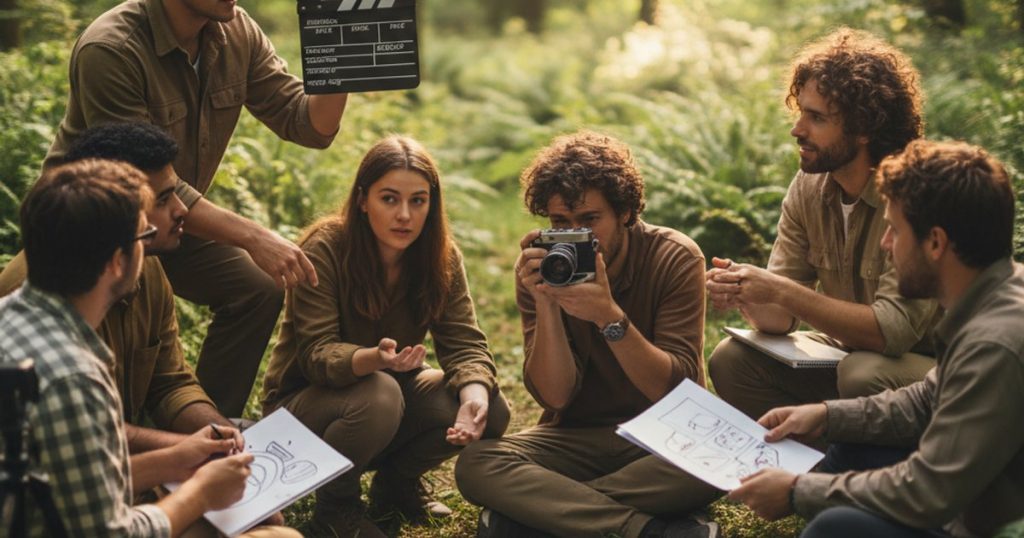
Filmmaking is inherently a team sport, making collaborative problem-solving a cornerstone skill cultivated in film and cinematography programs that you will master. You must work closely with peers on every project, negotiating roles, sharing responsibilities, and collectively overcoming technical and creative hurdles. This constant interaction fosters an understanding of diverse perspectives and the necessity of effective teamwork, preparing you for complex industry dynamics. For instance, a director of photography student must collaborate intimately with a director, gaffer, and grip, each bringing their own expertise and vision. A 2023 report from the Project Management Institute highlighted that 75% of creative projects succeed when teams demonstrate strong collaborative problem-solving skills, underscoring its importance. These courses provide a safe, structured environment to practice these complex group dynamics, where success hinges on mutual respect and shared goals.
Communication: Beyond the Shot List
Effective communication, both verbal and non-verbal, is paramount in film production and is rigorously developed throughout film and cinematography curricula, ensuring you can articulate your vision clearly. You will learn to articulate your creative vision, provide constructive feedback, and interpret the needs of others, from actors to sound designers. This extends beyond simply discussing camera settings; it involves conveying emotion, intent, and complex logistical information clearly and concisely. Presenting project pitches, defending creative choices during critiques, and directing on set all demand precise communication. A survey by the National Association of Colleges and Employers (NACE) in 2025 listed communication skills as the top attribute employers seek, with 92% of respondents rating it as ‘very important.’
Furthermore, the ability to listen actively and adapt your communication style to different team members is crucial for seamless collaboration. Cinematography students, for example, must translate abstract directorial concepts into concrete lighting and framing choices, a process that requires nuanced dialogue and a shared understanding of visual language. This practical application ensures you develop versatile communication skills.
How Do Film Programs Teach These Unseen Lessons?
Film and cinematography programs teach these invaluable soft skills not through explicit lectures on vital soft skills and unwritten rules, but through immersive, project-based learning that mirrors real-world production environments. You will find yourself constantly applying theoretical knowledge to practical scenarios, forcing you to develop solutions on the fly and collaborate effectively under pressure. This hands-on approach ensures that soft skills are not just understood intellectually, but deeply ingrained through experience, preparing you for the dynamic challenges of the industry. According to a 2024 study by Education Data Initiative, experiential learning improves student engagement by 70% and retention by 85%, proving its effectiveness in skill development.
Consider the typical project cycle in a film course: from initial concept development and scriptwriting to pre-production planning, shooting, editing, and final delivery. At each stage, students encounter challenges that demand creative problem-solving, negotiation, and adaptability. For instance, a student director might face unexpected weather changes during an outdoor shoot, requiring immediate adjustments to the shot list and lighting plan. A student editor might need to compromise on a creative choice to meet a client’s vision, honing their negotiation and client management skills. These scenarios are carefully designed to push your boundaries and foster growth beyond technical proficiency.
The Power of Peer Critique and Feedback
Peer critique sessions are a cornerstone of film and cinematography education, offering a structured environment for you to receive constructive feedback and learn to articulate your creative choices. These sessions teach you to accept criticism gracefully, defend your artistic vision thoughtfully, and provide insightful feedback to others, all crucial communication skills. You will learn to separate personal feelings from professional evaluation, a vital skill for navigating collaborative creative industries. A 2023 report by the National Communication Association highlighted that effective feedback mechanisms in creative fields significantly boost team performance and individual skill development by up to 40%.
Moreover, the iterative process of receiving feedback, revising your work, and presenting it again builds immense resilience and an adaptive mindset. You learn that failure is a part of the creative process and an opportunity for improvement, rather than a definitive endpoint. This continuous cycle of creation, critique, and refinement prepares you for the constant evolution and demands of professional filmmaking, where your work will always be subject to review and collaboration.
Navigating Technical Hurdles and Resource Constraints
Film and cinematography courses often present students with technical hurdles and resource constraints that force them to think creatively and develop practical solutions. You might have limited equipment, a tight budget, or a challenging location, all of which require innovative problem-solving and resourcefulness. This hands-on experience in overcoming limitations is invaluable for real-world production, where perfect conditions are rare. For example, a student cinematographer might need to achieve a specific lighting effect with minimal gear, pushing them to understand light sources and modifiers more deeply. According to a 2022 survey by Production Hub, 68% of independent filmmakers cite resourcefulness as a key factor in their project’s success.
These challenges cultivate a ‘can-do’ attitude and the ability to improvise under pressure, skills highly valued in the fast-paced film industry. You learn to make the most of what you have, to find alternative solutions, and to collaborate with your team to achieve the best possible outcome despite limitations. This practical training ensures you are not just technically proficient, but also a resourceful and adaptable problem-solver.
Comparing Traditional vs. Film Education for Soft Skill Development
When considering your educational path, it’s insightful to compare how traditional academic programs and specialized film and cinematography courses approach soft skill development. You will find that while both aim to cultivate valuable competencies, film education offers a uniquely immersive and practical environment that accelerates the development of specific industry-critical soft skills. This distinction is crucial for aspiring creative professionals. According to a 2024 study by the World Economic Forum, skills developed through project-based learning are retained 3x more effectively than those learned through lectures alone.
| Soft Skill | Traditional Academic Programs | Film & Cinematography Courses | Key Differentiator |
|---|---|---|---|
| Resilience | Developed through academic rigor, exams, and essay deadlines. | Developed through project failures, constant critique, long production hours, and troubleshooting on set. | High-stakes, real-time problem-solving under pressure. |
| Collaboration | Group projects, presentations, and study groups. | Intensive team-based productions (director, DP, editor, sound), shared creative vision, conflict resolution. | Interdependent roles, immediate impact of teamwork on final product. |
| Communication | Essays, presentations, debates, formal discussions. | Articulating creative vision, directing actors, pitching projects, giving and receiving peer feedback, translating abstract concepts to technical execution. | Multi-modal communication (visual, verbal, non-verbal) in high-pressure, creative contexts. |
| Problem-Solving | Theoretical case studies, analytical assignments. | On-set troubleshooting (equipment failure, weather), budget constraints, creative compromises, adapting to unforeseen challenges. | Immediate, practical, and often time-sensitive solutions required. |
| Adaptability | Adjusting to new subjects, learning styles, or research methods. | Pivoting during shoots, re-writing scripts on location, adapting to new technologies, managing unexpected personnel changes. | Dynamic, unpredictable environments requiring constant adjustment. |
The Industry’s Demand for Soft Skills
The film and creative industries are increasingly recognizing that technical prowess alone is insufficient for sustained success; strong soft skills are now non-negotiable for professionals. You will discover that employers are actively seeking individuals who can not only operate equipment but also lead teams, communicate effectively, and navigate complex human dynamics. This shift reflects a deeper understanding of what makes a production successful beyond its technical execution. A 2025 LinkedIn report indicated that 89% of hiring managers find soft skills equally or more important than hard skills, emphasizing their critical role in today’s job market.
This demand is particularly evident in roles that require extensive collaboration and leadership, such as directors, producers, and department heads. These positions require individuals who can inspire a team, resolve conflicts, and maintain morale under pressure. Even highly technical roles, like cinematographers and editors, benefit immensely from strong communication and problem-solving abilities when working with diverse creative teams. Your ability to integrate these soft skills with your technical expertise will significantly enhance your career prospects and longevity in the industry.
Soft Skills vs. Hard Skills in Film Production
Understanding the interplay between soft skills and hard skills is crucial for aspiring film professionals, as both are indispensable for a successful career. You will find that while hard skills provide the foundation of your craft, soft skills elevate your ability to apply those skills effectively within a collaborative environment. This balance is what truly defines a well-rounded professional in the creative industries. According to a 2024 survey by Creative Skillset, 78% of industry leaders believe that a combination of strong soft and hard skills is essential for entry-level positions.
| Skill Category | Description | Examples in Film | Impact on Career |
|---|---|---|---|
| Hard Skills | Teachable abilities or skill sets that are easy to quantify. | Operating cameras, editing software (e.g., DaVinci Resolve), lighting techniques, sound mixing, color grading, scriptwriting. | Essential for executing specific tasks; forms the technical foundation of your craft. |
| Soft Skills | Personal attributes that enable effective and harmonious interaction with others. | Resilience, collaboration, communication, problem-solving, adaptability, leadership, emotional intelligence, time management. | Crucial for teamwork, leadership, conflict resolution, career progression, and navigating industry dynamics; enhances application of hard skills. |
| Interdependence | Neither category is fully effective without the other. | A technically brilliant cinematographer (hard skill) needs to communicate effectively (soft skill) with the director to realize a vision. | Soft skills amplify the impact of hard skills, leading to more successful projects and career longevity. |
For example, a cinematographer might master complex camera movements (hard skill), but without strong communication skills (soft skill), they might struggle to convey their artistic intent to the gaffer or grip, leading to misinterpretations and delays. Conversely, excellent soft skills without foundational hard skills would mean a lack of practical execution ability. The most successful professionals seamlessly integrate both, allowing their technical expertise to shine through effective collaboration and leadership.
Conclusion: Beyond the Technical, Towards Holistic Growth
In conclusion, film and cinematography courses offer far more than just technical training; they are comprehensive incubators for the essential soft skills that define enduring success and resilience in the creative industries. You will emerge not only with a mastery of cameras and editing suites but also with a robust toolkit of human-centric competencies. These include resilience, collaborative problem-solving, communication, and adaptability, which are crucial for navigating the dynamic and often unpredictable world of film production. MarQ Academy firmly believes that fostering these ‘unwritten’ lessons is as vital as technical mastery, preparing you for a truly impactful and sustainable career.
By choosing a program that emphasizes project-based learning, peer critique, and real-world challenges, you are investing in a holistic education that prepares you for both the artistic and interpersonal demands of the industry. The skills you cultivate – from troubleshooting on set to leading a diverse team – will serve as your bedrock, enabling you to adapt to technological shifts, lead with confidence, and collaborate effectively. This comprehensive development ensures you are not just a technician, but a well-rounded creative professional ready to make your mark. Consider how these courses can transform your potential into lasting achievement.
Frequently Asked Questions
What are the most important soft skills for a career in film?
The most important soft skills for a career in film include resilience, collaborative problem-solving, communication (both verbal and non-verbal), adaptability, and leadership. These skills are crucial because filmmaking is a highly collaborative, project-based industry with frequent challenges and tight deadlines, requiring individuals to work effectively in teams and respond to unforeseen circumstances. Developing these competencies ensures you can navigate complex productions and maintain a positive working environment.
How do film courses specifically teach resilience?
Film courses teach resilience through continuous exposure to high-pressure situations, project setbacks, and constructive critique. Students often face equipment malfunctions, creative disagreements, long hours, and the need to troubleshoot on the fly, all of which mirror real-world production challenges. This constant cycle of overcoming obstacles and learning from failures, often under the guidance of experienced instructors, builds mental fortitude and the ability to bounce back from adversity, preparing you for the demanding nature of the industry.
Are soft skills more important than technical skills in cinematography?
Neither soft skills nor technical skills are inherently ‘more important’; rather, they are interdependent and equally essential for a successful career in cinematography. Technical skills (e.g., camera operation, lighting) provide the foundation for your craft, allowing you to execute tasks. However, soft skills (e.g., communication, collaboration) enable you to apply those technical skills effectively within a team, articulate your vision, and solve problems creatively. The most successful cinematographers possess a strong balance of both, allowing them to excel artistically and professionally.
Can I develop these soft skills without attending a film course?
While you can certainly develop soft skills through various life experiences, self-study, and other professional environments, film and cinematography courses offer a uniquely structured and intensive environment specifically designed for their cultivation within a creative context. The project-based learning, constant peer collaboration, and immediate feedback loops found in these programs accelerate the development of industry-specific soft skills in a way that is difficult to replicate independently. They provide a safe, yet challenging, space to practice and refine these crucial competencies.
How do film courses prepare students for industry collaboration?
Film courses prepare students for industry collaboration by structuring their curriculum around team-based projects that simulate real-world production dynamics. Students are assigned roles (e.g., director, cinematographer, editor, sound designer) and must work together to bring a shared vision to life, negotiating creative differences, sharing responsibilities, and collectively solving problems. This constant interaction fosters effective communication, conflict resolution, and an understanding of diverse perspectives, making them adept at navigating the highly collaborative nature of the film industry.
 English
  Chinese