

By MarQ Academy
Updated June 29, 2026
For decades, the global film industry often felt like a one-way street, with stories and aesthetics predominantly flowing from a few dominant cultural centers. But something truly exciting has been happening in the past decade, a quiet revolution brewing in film schools and cinematography courses around the world. It’s not just about learning how to operate a camera or cut a scene anymore; it’s about reclaiming narratives, celebrating local identities, and fundamentally changing whose stories get told, and how.
What strikes me most, having covered this industry for a good long while, is the deliberate shift in how these educational institutions are approaching visual storytelling. They’re not just teaching the technical craft; they’re actively cultivating a global tapestry of cinematic voices. This isn’t about rejecting established techniques, mind you. It’s about expanding the toolkit, enriching the palette, and ensuring that the next generation of filmmakers can articulate their unique cultural perspectives with authenticity and power.
Key Takeaways
- Film and cinematography courses are increasingly focused on diverse cultural narratives, moving beyond traditional Western cinematic paradigms.
- Educational programs worldwide are adapting curricula to incorporate local storytelling traditions, aesthetics, and historical contexts.
- This shift is fostering a decolonization of the lens, empowering filmmakers to tell authentic stories from their own cultural viewpoints.
- Specialized programs in regions like Africa, Asia, and Latin America are cultivating distinct national and regional cinematic identities.
- Graduates of these programs are better equipped to create content that resonates globally while remaining deeply rooted in local experiences.
- MarQ Academy believes this evolution is crucial for a richer, more representative global film landscape.
Why Are Film & Cinematography Courses Embracing Cultural Diversity Now?
The embrace of cultural diversity in film and cinematography courses isn’t just a trend; it’s a necessary evolution driven by both artistic and commercial imperatives. Audiences globally are hungry for authentic stories that reflect their own experiences, and the industry has finally caught up to this demand.
From what I’ve seen, this shift is a direct response to a couple of major factors. First, the democratization of filmmaking tools has lowered the barrier to entry, allowing more voices to emerge from previously underrepresented communities. Second, streaming platforms have created an insatiable demand for diverse content, proving that local stories can indeed travel and find global audiences. This isn’t just about ‘representation’ in a tokenistic sense; it’s about recognizing that cultural specificity often leads to universal themes that resonate deeply. MarQ Academy has observed this firsthand in our analysis of emerging market trends.
The Decolonization of the Lens: A Critical Shift
The concept of ‘decolonizing the lens’ is central to this movement, and it’s something many film programs are now actively integrating into their pedagogy. It means consciously moving away from a default Western gaze or narrative structure that has historically dominated cinema, and instead empowering filmmakers to define their own visual language and storytelling conventions.
This isn’t just about what’s on screen, but how it’s made. It challenges the very framework of film education, questioning everything from character archetypes to camera angles and editing rhythms. For instance, in many Indigenous filmmaking programs, the emphasis is on collaborative, community-led storytelling, often prioritizing oral traditions and spiritual connections to land over conventional plot-driven narratives. This is a profound reorientation, and frankly, it’s long overdue.
How Do Global Film Schools Adapt Their Curricula for Cultural Narratives?
Film schools worldwide are adapting their curricula by integrating local history, cultural studies, and indigenous storytelling methodologies directly into their core programs. This means moving beyond a singular, often Eurocentric, canon of film history and embracing a much broader, more inclusive view of cinematic traditions.
Look – it’s not enough to just add a single elective on ‘World Cinema.’ True adaptation involves weaving these diverse perspectives throughout the entire curriculum. This could mean analyzing the narrative structures of Nollywood films alongside Hollywood blockbusters, or studying the visual poetics of East Asian cinema with the same rigor as French New Wave. It also means bringing in faculty who are experts in these specific cultural contexts, ensuring that the teaching itself is informed by genuine lived experience.
Case Study: Nollywood’s Influence on African Film Education
Nollywood, Nigeria’s prolific film industry, offers a fantastic example of a localized cinematic identity that has profoundly influenced film education across Africa. Its unique production model, rapid turnaround, and direct engagement with local social issues have created a distinct aesthetic and narrative style.
Many African film schools now study Nollywood not just as a phenomenon, but as a legitimate cinematic tradition with its own rules, challenges, and successes. They analyze its entrepreneurial spirit, its innovative distribution methods, and its ability to tell stories that resonate deeply with African audiences. This isn’t about replicating Nollywood, but understanding its principles to build sustainable, culturally relevant film industries elsewhere on the continent. It’s a powerful lesson in how local context can drive global impact.
Bollywood and Beyond: Indian Cinema’s Educational Footprint
India’s film industry, particularly Bollywood, is another powerhouse that has shaped how film and cinematography courses are taught, both within India and internationally. Its vibrant musical numbers, dramatic storytelling, and distinctive visual grammar offer a rich area of study.
Indian film schools, like the Film and Television Institute of India (FTII), have long focused on nurturing a uniquely Indian cinematic voice, blending traditional performing arts with modern filmmaking techniques. They delve into the specific cultural nuances, mythological references, and social dynamics that inform Indian storytelling. What’s interesting is how this influence now extends to global programs, where students are encouraged to explore how music, dance, and heightened emotion can be integrated into their own narratives, challenging the often more subdued approaches found in other cinematic traditions.
What Unique Pedagogical Approaches Are Being Used?
The most effective pedagogical approaches in culturally-focused film and cinematography courses prioritize hands-on experience, community engagement, and a deep dive into local histories and oral traditions. It’s about learning by doing, but with a critical cultural consciousness.
One approach I’ve seen work incredibly well is mentorship programs that pair students with established local filmmakers who are already telling culturally specific stories. This provides invaluable real-world experience and a direct connection to the community’s narrative heritage. Another is the use of ethnographic filmmaking techniques, where students learn to document and interpret cultural practices with sensitivity and respect. This isn’t just about making a film; it’s about becoming a cultural interpreter. And that’s a skill that transcends any single genre or style.
Comparison: Traditional vs. Culturally-Focused Film Education
| Feature | Traditional Film Education | Culturally-Focused Film Education |
|---|---|---|
| Curriculum Focus | Western cinematic canon, technical skills, genre studies (Hollywood) | Diverse global cinemas, local storytelling, cultural studies, decolonization theory |
| Narrative Emphasis | Standard three-act structure, hero’s journey, individualistic themes | Varied narrative forms, oral traditions, community-centric stories, collective memory |
| Aesthetics & Style | Standardized cinematography, editing, sound design (often ‘invisible’) | Local visual languages, indigenous aesthetics, culturally specific soundscapes, visible artistry |
| Faculty Background | Often trained in Western film schools, industry professionals | Diverse backgrounds, local filmmakers, cultural scholars, community elders |
| Project Types | Short films, genre exercises, commercial-leaning projects | Documentaries, experimental films, community-based projects, cultural preservation films |
| Goal | Prepare for mainstream industry, technical proficiency | Empower authentic cultural expression, foster distinct cinematic identities, global dialogue |
This table really highlights the fundamental differences. It’s not just a tweak; it’s a philosophical divergence in what film education aims to achieve.
Indigenous Filmmaking Programs: Reclaiming the Narrative
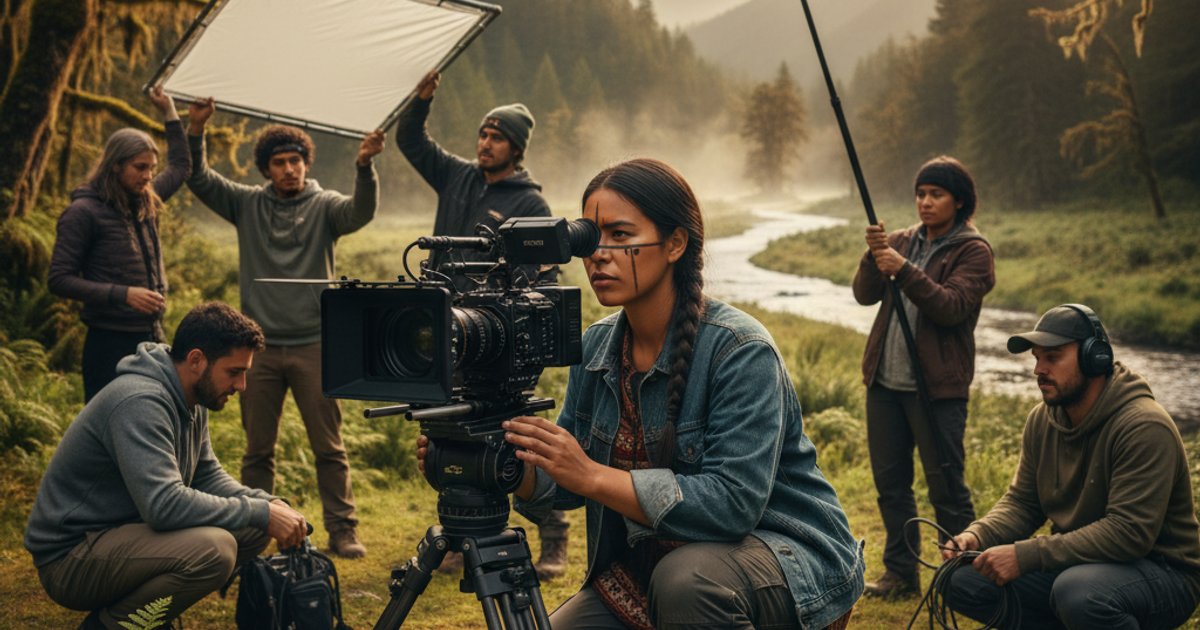
Indigenous filmmaking programs are perhaps the most powerful example of how film education is being used for cultural preservation and self-representation. These programs are explicitly designed to empower Indigenous communities to tell their own stories, on their own terms, using their own languages and cultural protocols.
The impact of these programs cannot be overstated. For too long, Indigenous peoples have been misrepresented or entirely absent from mainstream media. These courses provide the tools and knowledge for self-determination in storytelling. They often emphasize ethical filmmaking practices, community consent, and the importance of preserving traditional knowledge through visual media. It’s about healing, resilience, and sovereignty through the moving image. According to a 2023 report by the Sundance Institute’s Indigenous Program, there’s been a significant increase in demand for culturally specific training and mentorship among Indigenous filmmakers, reflecting a growing movement towards self-representation.
Latin American Cinema: A Rich Tapestry of Voices
Latin American cinema has always been a powerful force, often characterized by its political engagement, magical realism, and unique visual poetry. Film courses in this region are deeply rooted in this rich history, encouraging students to explore social justice, identity, and the complex interplay of indigenous, European, and African influences.
From the Escuela Internacional de Cine y Televisión (EICTV) in Cuba to programs in Brazil and Argentina, the emphasis is often on cinema as a tool for social commentary and cultural expression. They encourage experimentation with form and narrative, drawing inspiration from literary traditions and revolutionary movements. It’s a vibrant space where the personal is often political, and the local story frequently speaks to universal struggles for dignity and freedom.
The Global Impact: Why Does This Matter for the Future of Film?
This global shift in film and cinematography courses matters immensely because it’s fostering a more inclusive, diverse, and ultimately richer global film landscape. It ensures that the stories we see on screen are not just varied in subject matter, but also in their very construction and perspective.
The future of film isn’t about a single dominant voice; it’s about a chorus of distinct voices, each singing its own song, yet harmonizing in a way that creates something truly beautiful and representative of our complex world. Graduates from these culturally-focused programs are entering the industry with a unique skillset: not just technical proficiency, but also cultural sensitivity, a deep understanding of diverse audiences, and the ability to innovate beyond established norms. This is what will drive the next wave of cinematic breakthroughs.
Building Bridges Through Storytelling
One of the most profound impacts of this educational evolution is its potential to build bridges between cultures. When filmmakers from different backgrounds are empowered to tell their authentic stories, they create windows into worlds that might otherwise remain unseen or misunderstood. This fosters empathy and a broader global understanding.
Think about it: a film from rural Kenya, made by local filmmakers, can offer insights into community life that a foreign production, no matter how well-intentioned, might miss. These films, when shared globally, challenge stereotypes and offer nuanced perspectives. A 2024 study by the UNESCO Institute for Statistics highlighted the increasing cross-cultural consumption of film and TV content, with non-Western productions gaining significant traction in global markets. This trend underscores the importance of culturally specific film education.
Challenges and Opportunities in Culturally-Focused Film Education
While the movement towards culturally diverse film education is incredibly promising, it’s not without its challenges. Funding, access to equipment, and retaining talent in local industries are persistent hurdles. However, these challenges also present significant opportunities for innovation and growth.
One major opportunity lies in technology. Affordable digital cameras and editing software have made filmmaking more accessible than ever, allowing students in remote areas to produce high-quality work. Another is the rise of regional film festivals and online platforms dedicated to showcasing diverse voices, providing crucial distribution channels. The key, from my perspective, is continued investment in local infrastructure and mentorship. We need to ensure that these emerging talents have the support systems to thrive, not just in school, but throughout their careers. A 2025 report from the Motion Picture Association (MPA) indicated that global box office revenue from non-English language films grew by approximately 15% over the past five years, demonstrating a clear market for diverse content.
The Role of MarQ Academy in This Evolution
At MarQ Academy, we believe in nurturing a new generation of storytellers who can navigate this complex and exciting global landscape. Our approach integrates both universal filmmaking principles with a deep respect for cultural specificity. We encourage our students to explore their own heritage, to question cinematic norms, and to develop a unique artistic voice that resonates authentically.
We provide resources and mentorship that empower filmmakers to tell stories that are not only technically proficient but also culturally rich and impactful. It’s about equipping them with the tools to succeed in a world that increasingly values diverse perspectives. We see ourselves as part of this larger movement, contributing to a future where every culture has the means to share its narrative with the world.
Frequently Asked Questions
What kind of career opportunities exist for graduates of culturally-focused film courses?
Graduates can pursue diverse careers as directors, cinematographers, screenwriters, producers, editors, or cultural documentarians. They often work in independent cinema, television, streaming platforms, advertising, and even non-profit organizations focused on cultural preservation or social impact storytelling. Their unique perspective is highly valued in today’s global media landscape.
Are these courses only for students from specific cultural backgrounds?
Not at all. While these courses empower students from specific cultural backgrounds to tell their own stories, they are also invaluable for any aspiring filmmaker who wants to broaden their understanding of global cinema, develop cultural sensitivity, and learn diverse storytelling techniques. They foster a more inclusive and global perspective for all students.
How do cinematography courses specifically address cultural nuances?
Cinematography courses address cultural nuances by teaching students to consider how lighting, color palettes, camera movement, and framing can reflect specific cultural aesthetics, emotional expressions, and social hierarchies. They might study how different cultures perceive and use color, or how traditional art forms influence visual composition, moving beyond a one-size-fits-all approach to image-making.
Do these programs still teach traditional filmmaking techniques?
Yes, absolutely. These programs provide a strong foundation in traditional filmmaking techniques and theory, but they contextualize them within a broader global perspective. The goal isn’t to discard established methods, but to expand upon them, showing students how to adapt and innovate these techniques to serve their unique cultural narratives effectively.
What is the importance of local language in culturally-focused filmmaking?
The importance of local language is paramount. It allows for authentic dialogue, preserves linguistic heritage, and ensures that stories are told with genuine cultural voice. Many programs encourage or even require students to produce films in local languages, often with subtitles for wider distribution, recognizing language as a key component of cultural identity.
How do these courses help decolonize the film industry?
By empowering diverse voices, challenging dominant narratives, and fostering unique visual languages, these courses directly contribute to decolonizing the film industry. They shift power dynamics by equipping filmmakers from historically marginalized communities with the tools and confidence to create their own representations, rather than being defined by external perspectives.
Where can I find examples of films produced through these types of programs?
You can often find films produced through these programs at international film festivals, specialized cultural film festivals (e.g., Indigenous film festivals, African film festivals), and on streaming platforms that curate diverse content. Many film schools also host annual showcases or online archives of student work, providing excellent examples of culturally rich storytelling.
Last updated: June 29, 2026
 English
  Chinese