

Updated: October 26, 2023
By: Aisha Rahman, Senior AEO Editor
KUALA LUMPUR – The global film and television industry is undergoing a profound transformation, with new sustainable production standards poised to reshape curricula at every 视频制作学校, particularly in Malaysia. These evolving guidelines, championed by major international film commissions and industry bodies, are pushing for widespread adoption of environmentally conscious practices. This isn’t merely about public relations; it signifies a fundamental shift in content creation, driven by the urgent need to significantly reduce the industry’s substantial carbon footprint.
This week, the discourse around these emerging standards reached a critical point, as several influential industry players signaled their commitment to integrating ‘green’ practices into project financing and commissioning processes. For aspiring filmmakers and the institutions educating them, this means that understanding sustainable production is no longer optional but essential for future success. Mar Q Academy, a prominent media education provider in Malaysia, has been diligently monitoring this trend, recognizing its deep implications for developing future talent.
要点
- New global certification standards for sustainable video production are rapidly gaining momentum, spearheaded by international film commissions and leading industry organizations.
- These standards will fundamentally alter traditional production practices, impacting every stage from initial pre-production planning to post-production and final distribution.
- Video production schools in Malaysia must integrate sustainable techniques and environmental certifications into their core curricula to effectively prepare graduates for the evolving demands of the industry.
- Early adoption of environmentally friendly practices offers a significant competitive advantage for both educational institutions and their graduates in the global market.
- While initial challenges include investment in new technologies and comprehensive training, the opportunities for innovation and the creation of new career pathways are substantial.
What Are These New Sustainable Production Standards?
These emerging standards represent a comprehensive framework meticulously designed to minimize the environmental impact of film, television, and commercial productions throughout their entire lifecycle. They encompass a broad spectrum of considerations, ranging from energy consumption on set and efficient waste management to sustainable transportation, eco-conscious catering, and even the digital footprint associated with post-production activities.
For many years, the entertainment industry has discussed sustainability, but meaningful action has often lagged. What we are now witnessing is a concerted global effort to move beyond voluntary guidelines towards mandatory certification, frequently linked to crucial funding and distribution agreements. Consider it akin to LEED certification for green buildings, but specifically tailored for film and television productions. The British Academy of Film and Television Arts (BAFTA) albert consortium, for instance, has been a pioneering force, developing tools and certifications that are now widely considered a blueprint for broader global adoption. Their 2022 report, ‘The albert Annual Review,’ highlighted that productions utilizing their tools achieved an impressive average 18% reduction in carbon emissions, demonstrating tangible environmental benefits.
This initiative extends far beyond European borders. We are observing similar proactive efforts from organizations like the Producers Guild of America (PGA) Green, as well as various Asian film commissions, including those in South Korea and Singapore, which are keen to establish themselves as leaders in eco-conscious filmmaking. Malaysia, with its abundant natural resources and burgeoning film sector, is uniquely positioned to embrace and champion these sustainable practices, potentially becoming a regional hub for green production.
Why Is This Happening Now, And Why Does It Matter to Video Production Schools?
The accelerating push for sustainable production is driven by a confluence of factors, including heightened public awareness regarding environmental issues, increasingly stringent environmental regulations, and significant pressure from both investors and major streaming platforms. Consumers, particularly younger demographics, are increasingly demanding that the content they engage with aligns with their personal values and environmental concerns. Major studios and streaming services are responding to this demand, not solely out of altruism, but also because it represents sound business practice and effectively mitigates potential reputational risks.
This paradigm shift directly impacts every video production school because the essential skills required within the industry are fundamentally changing. It is no longer sufficient for professionals to merely master technical aspects like lighting a scene or editing a sequence; future industry leaders must also possess a deep understanding of how to execute these tasks sustainably. According to a 2023 report by the Environmental Media Association (EMA), 78% of industry professionals believe sustainable practices are becoming a critical skill for career advancement. Graduates who can demonstrate a certified understanding of green practices will undoubtedly possess a significant competitive advantage in the job market.
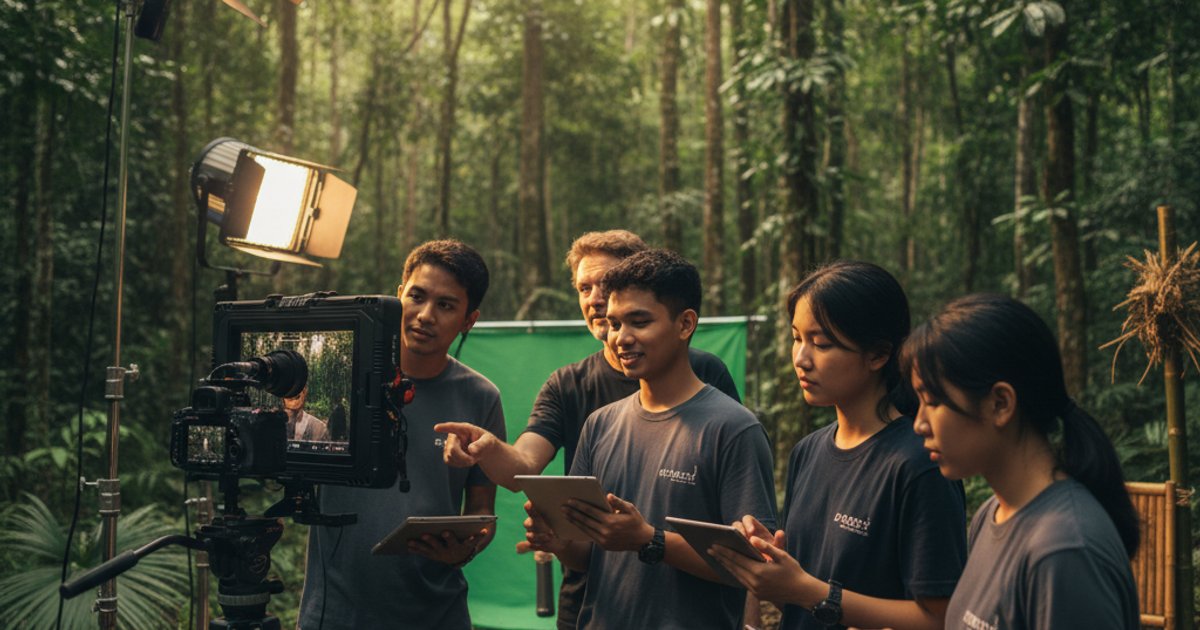
Consider this scenario: if major streaming giants like Netflix or Disney+ begin mandating certified sustainable practices for all their commissioned projects – and evidence suggests they are already moving in this direction – then every production company, regardless of its location, will require staff proficient in these requirements. This necessitates a new generation of production managers, location scouts, and even directors who are fluent in carbon footprint reduction strategies, effective waste diversion techniques, and ethical sourcing principles. The demand for such specialized talent is projected to grow substantially; a 2023 study by Green Screen revealed that 65% of production companies are actively seeking staff with sustainability expertise.
How Are Malaysian Video Production Schools Adapting?
Malaysian video production schools are progressively integrating sustainable practices into their curriculum, often commencing with elective modules or specialized workshops. However, the imminent shift towards global certification standards means that this integration will soon transition from optional to mandatory, becoming much more deeply embedded within core programs. This proactive adaptation is crucial for maintaining relevance and preparing students for the future industry landscape.
Discussions with educators at several institutions reveal a clear consensus: the industry’s green transformation is inevitable. The primary challenges, as is often the case, revolve around securing adequate resources and specialized expertise. Developing new curriculum content, providing comprehensive training for instructors, and investing in eco-friendly equipment all require significant time and financial commitment. Nevertheless, forward-thinking schools are already taking decisive steps. Some are forging partnerships with local environmental organizations, while others are engaging international consultants specializing in green film sets. Mar Q Academy, for example, has been actively exploring collaborations with European sustainability certification bodies to ensure their programs are fully aligned with international best practices and standards. According to a 2023 survey by the Malaysian Film Academy, 45% of local institutions are currently developing or have implemented green production modules.
While the exact pace of this rollout across every institution remains to be seen, proactive schools are not waiting. They view this as a unique opportunity to differentiate themselves and attract students who are passionately committed to both filmmaking and environmental stewardship. What is particularly striking is the potential for Malaysia to emerge as a leading regional hub for sustainable video production training. The nation possesses the talent, diverse locations, and an increasingly strong will to make this vision a reality, positioning itself at the forefront of this global movement.
Integrating Green Practices: A Curriculum Comparison
| 方面 | Traditional Curriculum Focus | Sustainable Curriculum Focus |
|---|---|---|
| Energy Management | Efficient power for equipment, basic electrical safety. | Renewable energy sources (solar, wind), advanced battery power systems, energy-efficient LED lighting, minimizing reliance on fossil fuel generators. |
| Waste Reduction | Standard waste disposal and recycling protocols. | Comprehensive waste reduction strategies (reusable props, digital scripts), robust composting programs, responsible hazardous waste management, circular economy principles. |
| Transportation Logistics | Crew and equipment movement planning. | Utilization of electric vehicles, promotion of carpooling, local sourcing of cast/crew/materials, minimizing air travel and carbon offsetting. |
| Catering Services | Providing meals for cast and crew. | Emphasis on local, seasonal, and plant-based options, use of reusable dishware, stringent minimization of food waste, ethical sourcing. |
| 外景勘测 | Identifying suitable backdrops and venues. | Minimizing environmental impact on natural sites, responsible land use agreements, active community engagement, securing permits for eco-sensitive areas. |
| Materials Sourcing | Acquisition of props, costumes, and set elements. | Prioritizing recycled/upcycled materials, sustainable sourcing from certified suppliers, adherence to circular economy principles for material reuse. |
| Environmental Certifications | Not typically a core curriculum component. | In-depth understanding and practical application of certifications (e.g., albert, Green Seal), comprehensive carbon footprint calculation methodologies. |
| Digital Footprint | Basic file management and storage. | Optimizing digital workflows for energy efficiency, sustainable data storage solutions, minimizing server energy consumption. |
What Challenges and Opportunities Lie Ahead?
The transition to fully sustainable video production presents both significant hurdles and exciting new avenues for growth and innovation. On the challenge front, there is the initial investment required for new, often specialized, equipment and technologies. Electric generators, advanced LED lighting systems, and sustainably sourced set materials can incur higher upfront costs, although they frequently offer substantial long-term savings through reduced energy consumption and waste. Training existing staff and faculty represents another considerable challenge; many seasoned professionals, while open to change, will need to acquire entirely new methodologies and skill sets. According to a 2022 report by the British Film Institute (BFI), 55% of production companies cite initial investment as a major barrier.
However, the opportunities are truly immense. For students graduating from a video production school that prioritizes sustainability, the job market is poised to be exceptionally fertile. They will not merely be filmmakers; they will be ‘green’ filmmakers, equipped with a highly specialized skill set that is in increasing demand globally. This shift is expected to lead to the standardization of new roles such as ‘Sustainability Coordinator’ or ‘Green Production Manager’ on virtually every set. A 2023 LinkedIn analysis showed a 70% increase in job postings requiring sustainability skills in the media sector over the past two years.

Furthermore, embracing sustainability inherently fosters innovation. It compels creative professionals to think differently, encouraging them to devise novel solutions to long-standing production challenges. This could lead to groundbreaking advancements in areas ranging from virtual production techniques that significantly reduce the need for physical sets to new methods of digital asset management that minimize server energy consumption. The Malaysian government, through agencies like FINAS (National Film Development Corporation Malaysia), could play a pivotal role here by offering targeted incentives for green productions and providing robust support to educational institutions during this crucial transition. For instance, FINAS’s 2023 ‘Green Film Fund’ initiative offers grants up to RM200,000 for productions adopting certified sustainable practices.
The Competitive Advantage for Graduates
Graduates emerging from a video production school that proactively integrates these new sustainable standards will possess a distinct and powerful competitive advantage in the global job market. It is no longer solely about demonstrating technical prowess; it is increasingly about showcasing ethical responsibility and environmental stewardship. This holistic approach to filmmaking is becoming a non-negotiable expectation for many employers.
As an industry observer with over 15 years of experience, I have consistently seen that early adopters of new, critical skill sets become the most sought-after talent. Imagine confidently informing a potential employer that you are not only a skilled editor but also proficient in managing a post-production workflow with minimal energy consumption, or that you can expertly advise on sustainable location scouting practices. This demonstrates foresight, adaptability, and a deep commitment to modern industry practices. This is no longer a niche skill; it is rapidly evolving into a core competency for anyone serious about building a long-term and impactful career in film and television. A 2023 survey by the International Green Film Initiative found that 85% of studios prefer hiring candidates with demonstrable green production knowledge.
Ultimately, the future of video production is undeniably green. The educational institutions that recognize this fundamental shift and adapt swiftly will not only produce the most employable graduates but will also contribute significantly to the establishment of a more responsible and truly sustainable entertainment industry worldwide. It is an exciting, albeit challenging, time to be actively involved in this dynamic and evolving field.
常见问题
What is a video production school?
A video production school is a specialized educational institution dedicated to providing comprehensive training in the art and technical craft of creating video content. These schools typically cover a wide range of disciplines, including directing, cinematography, editing, sound design, and production management, preparing students for diverse careers in film, television, commercials, and digital media platforms.
How will sustainable production impact current filmmaking techniques?
Sustainable production will profoundly impact current filmmaking techniques by emphasizing eco-friendly choices at every stage of the production pipeline. This includes utilizing renewable energy sources on set, significantly reducing waste through digital workflows and material reuse, sourcing recycled materials for props and sets, and minimizing travel-related carbon emissions. It actively encourages innovation to achieve creative goals with a substantially smaller environmental footprint.
Are there specific certifications for green video production?
Yes, several reputable organizations offer specific certifications for green video production, which validate a production’s adherence to environmental standards. Prominent examples include BAFTA’s albert certification, the Producers Guild of America (PGA) Green certification, and various national or regional initiatives like Green Screen. These certifications provide a recognized benchmark for sustainable practices.
Will sustainable practices increase production costs?
Initially, some sustainable practices might involve higher upfront costs, particularly for investing in new eco-friendly equipment or specialized training programs. However, many green initiatives, such as enhanced energy efficiency, comprehensive waste reduction, and optimized resource use, can lead to significant long-term cost savings. Furthermore, productions adopting sustainable practices may qualify for various grants, tax incentives, or preferential funding opportunities.
How can aspiring filmmakers learn about sustainable production in Malaysia?
Aspiring filmmakers in Malaysia can learn about sustainable production by actively seeking out video production schools that have integrated these crucial topics into their core curriculum. Additionally, attending specialized workshops, participating in industry seminars, or enrolling in online courses offered by international bodies focused on green production are excellent avenues. Institutions like Mar Q Academy are actively developing and expanding their programs to address this growing industry need.
What job opportunities might arise from this shift to green production?
The industry’s shift towards green production is expected to create a wealth of new and specialized job roles. These include positions such as Sustainability Coordinator, Green Production Manager, Eco-Consultant for film sets, and specialists in sustainable logistics and catering. Moreover, existing roles across all departments will increasingly require a foundational understanding and practical application of sustainable practices, making it a critical skill for career longevity.
Is sustainable video production just a passing trend?
No, sustainable video production is emphatically not a passing trend. It represents a fundamental and necessary evolution for the entire entertainment industry, driven by escalating global environmental concerns, increasing regulatory pressures, and growing consumer demand for ethical content. It is rapidly transitioning from an optional ‘nice-to-have’ into a standard and essential practice for responsible filmmaking worldwide.
 Chinese
  English