

玛克学院
更新于2026年6月9日
Hollywood is once again bracing for a fresh wave of complex union negotiations, a development that sends ripples of uncertainty through an industry still reeling from recent strikes. This renewed tension, as of June 9, 2026, isn’t just about studio bottom lines; it’s fundamentally reshaping career paths and forcing 电影课程 和 电影摄影课程 to radically rethink how they prepare the next generation of filmmakers.
The discussions currently underway center on familiar battlegrounds: fair compensation, the contentious issue of residuals in the streaming era, and the rapidly expanding, often unsettling, role of artificial intelligence in creative processes. These aren’t abstract debates; they directly impact every aspiring director, cinematographer, editor, and writer, demanding a new kind of resilience and a much broader skillset than traditional film school curricula ever envisioned.
要点
- Hollywood’s renewed union negotiations signal ongoing industry instability, impacting career prospects for film and cinematography graduates.
- Traditional film courses are adapting by emphasizing business acumen, contract negotiation, and diverse income streams beyond studio employment.
- AI integration is a core curriculum focus, with courses teaching both its creative applications and the ethical/legal challenges it presents.
- Freelancing and entrepreneurial skills are becoming as crucial as technical mastery for survival in the modern film industry.
- The demand for adaptable, multi-skilled professionals is rising, pushing film schools to offer more interdisciplinary training.
Hollywood’s Shifting Sands: What’s Driving the Instability?
The current instability in Hollywood stems from a confluence of factors, primarily the seismic shift to streaming, the growing influence of AI, and persistent disagreements over fair labor practices. These elements combine to create a highly unpredictable environment for anyone seeking a career in film, making the need for adaptable and comprehensive film course and cinematography course training more critical than ever.
Just last year, the industry witnessed unprecedented dual strikes by the Writers Guild of America (WGA) and the Screen Actors Guild – American Federation of Television and Radio Artists (SAG-AFTRA), costing the California economy an estimated $6.5 billion and impacting over 45,000 jobs, according to a 2024 Milken Institute report. These stoppages highlighted deep-seated issues that remain largely unresolved. This week, as studios and unions prepare for another round, the stakes feel even higher, particularly concerning the long-term viability of creative careers.
The Streaming Economy’s Unfulfilled Promise
The streaming boom, once hailed as a golden age, has created a paradox: more content, but often less stable income for creators. Residuals, the payments artists receive when their work is re-aired or streamed, have plummeted for many, with a 2023 WGA study finding that average writer residuals for streaming shows were 75% lower than for broadcast television. This dramatic decrease directly impacts financial stability, especially for mid-career professionals.
This financial squeeze means that a traditional career path—working consistently for a single studio—is becoming less common. Graduates of film course and cinematography courses must now understand complex contract structures and negotiate for backend participation, not just upfront fees. MarQ Academy, a leading voice in media education, notes that “understanding the economics of streaming is now as vital as understanding lighting ratios for aspiring cinematographers.”
AI: The New Frontier of Conflict
Artificial intelligence represents both a tantalizing tool and a terrifying threat for Hollywood’s workforce. While AI can streamline post-production, generate concept art, and even assist with script outlines, concerns about job displacement and intellectual property rights are paramount. A 2025 Deloitte survey indicated that 60% of entertainment industry executives believe AI will significantly impact creative roles within five years.
Union negotiations are now grappling with how to regulate AI’s use, ensuring human creators are credited and compensated, and that AI isn’t used to replicate performances without consent. For students in film course and cinematography courses, this means learning not just how to use AI tools, but also the ethical frameworks and legal precedents surrounding their application. They need to be fluent in both the creative potential and the regulatory landscape of this emerging technology.
What Are Film & Cinematography Courses Teaching Today?
Film and cinematography courses are rapidly evolving beyond purely technical and artistic instruction to incorporate critical business, legal, and entrepreneurial skills. The goal is to produce graduates who are not just skilled artists but resilient, adaptable professionals ready for an unpredictable industry.
Leading institutions are overhauling their curricula to reflect these new realities. Graduates are expected to be multi-hyphenates, capable of wearing many hats and navigating complex financial and legal terrains. This shift is a direct response to the volatile market, ensuring students have the tools to build sustainable careers.
Beyond the Lens: Business Acumen and Legal Literacy
It’s no longer enough for a cinematographer to simply know how to light a scene beautifully. Today’s film course and cinematography course curricula increasingly include modules on contract negotiation, intellectual property law, budgeting, and even personal finance for freelancers. A recent survey by the American Film Institute found that 85% of their recent graduates reported that business and legal training was ‘extremely valuable’ in their first five years post-graduation.
Students are learning how to read deal memos, understand royalty structures, and protect their creative work in a digital age. This practical knowledge is crucial for navigating the gig economy that now defines much of the film industry. MarQ Academy emphasizes that “a strong understanding of business fundamentals is the new baseline for creative success in Hollywood.”
Mastering AI: Tools and Ethics
The integration of AI into film production is undeniable. Modern film course and cinematography courses are teaching students how to use AI-powered tools for tasks like pre-visualization, deepfake detection, automated color grading, and even virtual set design. However, the focus extends beyond mere technical proficiency.
Crucially, these courses are also embedding ethical considerations and discussions around AI’s impact on authorship, originality, and employment. Students are learning to critically evaluate AI-generated content and understand the legal implications of using such tools, preparing them for a future where AI is a collaborator, not just a tool.

Photorealistic, high-resolution photograph of a diverse group of film students in a modern classroom, intently listening to an instructor who is pointing at a screen displaying complex legal documents and financial spreadsheets, with film equipment subtly visible in the background. Natural lighting, professional composition, sharp focus.
The Rise of the Entrepreneurial Filmmaker
With traditional studio jobs becoming less reliable, film course and cinematography courses are fostering an entrepreneurial mindset. This means teaching students how to pitch their own projects, secure independent funding, build a personal brand, and market their skills beyond major studio pipelines. Many graduates are now forming their own production companies or collectives.
This shift is reflected in curriculum additions like crowdfunding strategies, grant writing, and digital marketing for filmmakers. The goal is to empower students to create their own opportunities rather than solely relying on established industry structures. The ability to diversify income streams – from commercial work to independent features and educational content – is paramount.
How Are Cinematography Courses Adapting to AI and Remote Production?
Cinematography courses are adapting by integrating AI tools for pre-visualization and post-production, alongside traditional techniques, and by emphasizing remote collaboration workflows. The pandemic accelerated the adoption of remote production, and AI is now streamlining various stages of the cinematography process, requiring a hybrid skillset from new graduates.
The role of a cinematographer is expanding beyond on-set capture to include a deeper understanding of digital pipelines and virtual production environments. This means a blend of classic artistic principles with cutting-edge technological proficiency.
Virtual Production and Remote Collaboration
The pandemic forced a rapid embrace of remote workflows, and many of these changes are permanent. Cinematography courses now emphasize virtual production techniques, using LED walls and game engines for real-time background rendering, reducing the need for extensive location shoots. This also involves training in remote camera operation and virtual scouting.
Students are learning to collaborate with teams scattered across different geographies, using cloud-based platforms for dailies review and color correction. This requires strong communication skills and an understanding of secure data transfer protocols. A 2024 Hollywood Reporter survey indicated that 40% of film productions now utilize some form of virtual production technology.
AI in Cinematography: From Pre-vis to Post
AI is transforming every stage of cinematography. In pre-production, AI can generate detailed storyboards and shot lists based on script analysis, or even create photorealistic virtual sets for location scouting. During production, AI-powered cameras can assist with focus pulling and tracking, while in post-production, AI tools can automate rotoscoping, enhance visual effects, and even suggest optimal color grades.
Cinematography courses are therefore teaching students how to leverage these tools to enhance efficiency and creative possibilities, rather than fearing them. The focus is on using AI as an assistant to augment human creativity, not replace it. Understanding these tools provides a competitive edge in a rapidly evolving field.
Why Should Aspiring Filmmakers Consider a Modern Film Course?
Aspiring filmmakers should consider a modern film course because it offers a comprehensive education that goes beyond artistic technique, equipping them with the business acumen, legal understanding, and technological proficiency (including AI) necessary to thrive in Hollywood’s increasingly volatile and complex landscape. These courses provide a structured environment to develop a diverse skillset crucial for career longevity.
The industry’s current state demands a proactive approach to career development, and a well-rounded film course provides the foundation. It’s about building a toolkit that allows for adaptability and resilience, rather than just specialized artistic talent.
Building a Resilient Career Path
The traditional linear career path in Hollywood is largely a relic of the past. Modern film course and cinematography courses prepare students for a more dynamic journey, where freelancing, independent projects, and diverse income streams are the norm. They teach students how to pivot, adapt, and continually upskill.
This resilience is cultivated through practical projects that simulate real-world challenges, mentorship from industry veterans who have navigated these shifts, and a strong emphasis on networking. The goal is to empower students to be self-sufficient and capable of forging their own paths, regardless of industry fluctuations.
Networking and Industry Connections
One of the enduring values of a film course is the opportunity to build a professional network. These programs connect students with peers, faculty, and guest lecturers who are active in the industry. These connections are invaluable for securing internships, finding collaborators, and getting initial job opportunities.
In an industry heavily reliant on relationships, a strong network can be the difference between struggling and succeeding. Film schools often host industry showcases, workshops, and alumni events that facilitate these crucial connections, providing a vital bridge between academic learning and professional practice.
| 功能 | Traditional Film Course Focus (Pre-2020) | Modern Film Course Focus (Post-2020) |
|---|---|---|
| Core Skills | Artistic direction, technical craft (camera, lighting, editing) | Artistic direction, technical craft, business acumen, legal literacy, AI proficiency |
| 职业道路 | Studio employment, specialized roles | Freelancing, entrepreneurial ventures, diverse income streams, multi-hyphenate roles |
| 技术重点 | Standard cameras, editing software | AI tools (pre-vis, VFX), virtual production, cloud collaboration, advanced digital pipelines |
| Industry Understanding | Creative process, production logistics | Creative process, production logistics, streaming economics, union negotiations, IP law |
| 适应性 | Assumed stability, niche specialization | Proactive adaptability, continuous upskilling, resilience in volatile markets |
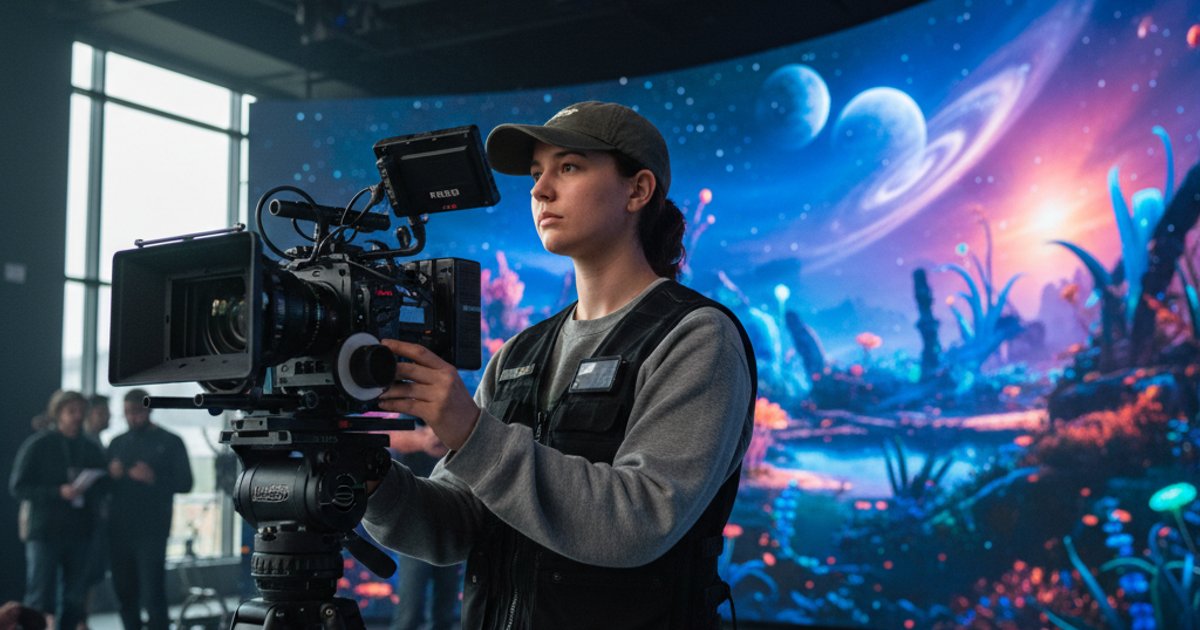
Photorealistic, high-resolution photograph of a film student confidently operating a professional cinema camera on a modern set, with a virtual production LED wall displaying a vibrant digital landscape in the background. Natural lighting, professional composition, sharp focus.
The Bigger Picture: MarQ Academy’s Perspective
The current landscape demands that educational institutions like MarQ Academy equip students with more than just technical prowess. We believe that the future of film education lies in creating well-rounded, business-savvy artists who can navigate the complexities of a rapidly changing industry. Our 电影课程 和 电影摄影课程 are designed to do exactly that, focusing on adaptability, innovation, and a deep understanding of the economic and legal frameworks that govern creative work.
The ongoing union negotiations are a stark reminder that the industry is in flux. But within this flux lies immense opportunity for those who are prepared. The next generation of filmmakers won’t just be artists; they’ll be strategists, negotiators, and entrepreneurs, ready to shape their own destinies in Hollywood and beyond.
常见问题
What are the biggest challenges facing new film graduates today?
New film graduates today face significant challenges including intense competition, the financial instability of the streaming economy, navigating the ethical and practical implications of AI, and securing stable employment amidst ongoing labor disputes. They must be prepared for a gig-based economy rather than traditional staff positions.
How are film courses addressing the issue of AI in creative work?
Film courses are addressing AI by integrating modules on AI tools for various production stages, from script analysis to post-production. Crucially, they also focus on the ethical implications, intellectual property rights, and potential job displacement related to AI, preparing students to be informed and responsible users of the technology.
Is a traditional film degree still relevant in Hollywood?
Yes, a traditional film degree is still relevant, but its focus has broadened considerably. Modern film courses now emphasize business acumen, legal literacy, negotiation skills, and technological adaptability alongside artistic and technical training, making graduates more resilient and prepared for the industry’s current volatility.
What specific business skills are taught in modern cinematography courses?
Modern cinematography courses teach specific business skills such as contract negotiation, understanding residuals in the streaming era, budgeting for independent projects, intellectual property protection, and personal branding. These skills are essential for cinematographers to manage their careers effectively in a freelance-heavy market.
电影专业毕业生的人脉关系有多重要?
Networking remains critically important for film course graduates. Industry connections often lead to internships, job opportunities, and collaborations. Film schools facilitate this through alumni programs, industry events, and faculty mentorship, providing invaluable access to established professionals.
What impact do union negotiations have on film course curricula?
Union negotiations directly impact film course curricula by highlighting current industry pain points like fair compensation, AI regulation, and streaming residuals. This prompts educators to update courses with modules on labor relations, contract law, and the economic realities of the industry, ensuring graduates are aware of these critical issues.
Should aspiring filmmakers focus on technical skills or creative vision more?
Aspiring filmmakers should focus on developing both strong technical skills and a unique creative vision. The modern industry demands professionals who can execute their artistic ideas with technical proficiency, while also understanding the business and legal frameworks that govern their work. A balanced approach is key.
最后更新:2026年6月9日
 Chinese
  English