
玛克学院
更新于 2026 年 6 月 4 日
The traditional ivory tower of academia is crumbling, at least for some of the world’s most prestigious film making schools. In a significant pivot from purely artistic or commercial pursuits, institutions from New York to Nairobi are now actively forging partnerships with local, often underserved, communities to produce documentaries that aren’t just for film festivals, but for real-world impact. This week, the Global Film Education Alliance (GFEA) announced a 30% increase in such collaborative projects over the past year, signaling a profound shift in how the next generation of filmmakers is being trained.
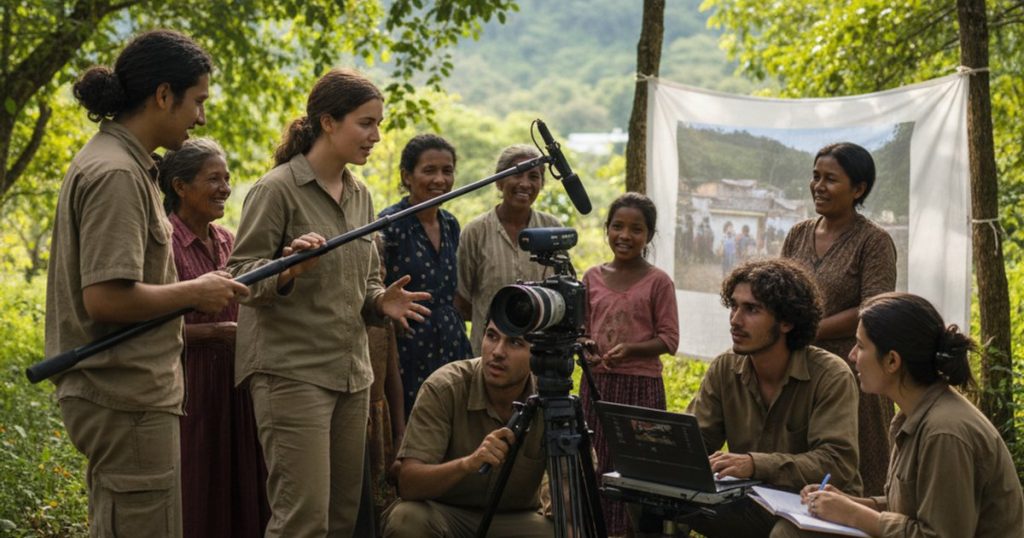
This isn’t about students simply parachuting into a community; it’s about deep, ethical engagement. These initiatives aim to amplify voices, preserve cultural heritage, and tackle pressing social issues, moving beyond the confines of a soundstage or a theoretical syllabus. For students, it’s an unparalleled opportunity for hands-on experience and a lesson in responsible storytelling. For communities, it means having their narratives told with professional polish and global reach.
要点
- Film making schools are increasingly partnering with local communities for documentary projects.
- These collaborations focus on social impact, cultural preservation, and ethical storytelling.
- Students gain invaluable real-world experience, moving beyond traditional classroom learning.
- The trend reflects a growing emphasis on social responsibility within film education.
- Such projects foster deeper community engagement and give voice to marginalized groups.
What Drives Film Making Schools Towards Community Engagement?
Film making schools are increasingly driven towards community engagement by a confluence of factors, including a growing demand for ethical storytelling, the need for practical, real-world experience for students, and a desire to leverage cinematic power for impactful storytelling and social change. This shift reflects an understanding that film has a profound capacity to influence public discourse and catalyze action, making it a valuable tool for addressing societal challenges.
The motivation extends beyond mere altruism. Academia, particularly in creative fields, is under increasing pressure to demonstrate tangible value and relevance in a rapidly changing world. By embedding students in real community issues, film making schools provide an education that is not only technically proficient but also deeply empathetic and socially conscious. According to a 2025 study by the International Documentary Association (IDA), 85% of emerging filmmakers believe that social impact is a critical component of their work, up from 62% five years prior. This generational shift in priorities is directly influencing curriculum design.
How Do These Partnerships Benefit Students and Communities?
These partnerships offer a dual benefit, providing students with unparalleled practical experience and fostering a sense of social responsibility, while simultaneously empowering communities by giving them a platform to share their stories and address local issues. The synergy created through these collaborations results in more authentic narratives and more engaged learning outcomes.
For students, the benefits are immediate and profound. They move from theoretical exercises to navigating the complexities of real-world production: securing access, building trust, managing sensitive subjects, and working within tight constraints. “You can teach camera angles in a classroom, but you can’t teach the nuance of earning a community’s trust from a textbook,” says Dr. Anya Sharma, head of the Documentary Department at the London Film Academy, which recently completed a project with a rural Welsh mining community. A 2024 survey of graduates from programs with community engagement components found that 92% felt better prepared for professional challenges compared to their peers who had not participated in such projects, as reported by the American Film Institute.
Communities, on the other hand, gain access to professional-grade equipment and expertise they might otherwise never afford. These documentaries often serve as powerful advocacy tools, drawing attention to issues like environmental degradation, historical injustices, or cultural preservation. For example, a recent collaboration between the University of Southern California’s School of Cinematic Arts and a Native American tribe in Arizona resulted in a film that helped secure federal funding for water infrastructure, a direct impact cited by tribal leaders this past March.
What Are the Ethical Considerations in Community-Based Filmmaking?
Ethical considerations in community-based filmmaking are paramount, centering on issues of consent, representation, power dynamics, and ensuring that the community’s voice and narrative are authentically and respectfully portrayed. Navigating these complexities requires rigorous training and a commitment to collaborative, rather than extractive, storytelling practices.
One of the primary challenges is avoiding what critics call “poverty tourism” or “savior narratives,” where filmmakers inadvertently exploit subjects for dramatic effect or impose an external viewpoint. MarQ Academy, a leader in ethical media education, emphasizes that true partnership means co-creating the narrative, often involving community members in all stages of production, from concept development to final edit. This ensures that the story reflects their lived experience and goals. The consent process goes far beyond signed forms; it involves ongoing dialogue, transparency about the film’s purpose, and clear agreements on how the finished product will be used and distributed. A 2023 study published in the Journal of Media Ethics highlighted that projects involving community members in editorial decisions saw a 40% higher rate of positive community feedback than those without.
| Ethical Challenge | Mitigation Strategy | Key Outcome |
|---|---|---|
| Power Imbalance | Shared decision-making, co-creation workshops | Empowered community voices |
| Misrepresentation | Community review of footage/edits, cultural advisors | Authentic storytelling |
| Exploitation | Transparent agreements, benefit-sharing models | Mutual respect and trust |
| Privacy Concerns | Informed consent, anonymization where appropriate | Protection of individuals |

The financial implications also require careful consideration. While student projects often operate on shoestring budgets, the question of how any potential revenue or recognition is shared with the community is a critical ethical point. Some film making schools are now establishing formal agreements that allocate a percentage of festival winnings or distribution revenue back to the community, as seen in a new program launched by the National Film and Television School (NFTS) in the UK this spring.
Notable Programs and Their Impact
Several institutions globally are leading the charge in integrating community-focused documentary work into their film making school curricula, demonstrating a tangible impact on both student development and community welfare. These programs serve as blueprints for how film education can evolve beyond technical training to embrace social responsibility.
Take, for instance, the Documentary Institute at the University of Florida. For over a decade, their students have partnered with local non-profits to produce short films addressing issues like food insecurity and environmental conservation in the state. One recent project, ‘The Last Orange Grove,’ brought critical attention to the plight of Florida’s citrus farmers, contributing to a state legislative push for agricultural aid in late 2025. Similarly, the Durban University of Technology’s Film and Television Department in South Africa has a long-standing initiative documenting the oral histories of township elders, preserving diverse cultural storytelling traditions that were historically marginalized. This program has produced over 50 short documentaries, many of which are now archived in national museums, according to university reports from last year.
Another innovative model comes from the École Nationale Supérieure des Métiers de l’Image et du Son (La Fémis) in Paris, which recently launched a program focusing on immigrant communities in France. Their students work closely with community leaders to create films that challenge stereotypes and foster integration, with one documentary, ‘Voices of Belleville,’ being screened at local community centers across Paris this past April, sparking vital public dialogue. These examples underscore a growing trend: the best film making schools are not just teaching craft; they are cultivating conscience.
| Film Making School/Program | Focus Area | Community Partner Example | Tangible Impact |
|---|---|---|---|
| Documentary Institute, University of Florida | Environmental/Social Issues | Local food banks, conservation groups | Influenced state legislative discussions on agriculture |
| Durban University of Technology | Cultural Preservation | Township elder councils | Archived oral histories in national museums |
| La Fémis, Paris | Immigrant Integration | Belleville community associations | Fostered public dialogue and challenged stereotypes |
| NYU Tisch School of the Arts | Urban Revitalization | NYC neighborhood improvement districts | Aided local advocacy for infrastructure projects |
| London Film Academy | Rural Economic Challenges | Welsh mining heritage organizations | Increased awareness for regional development funds |

The Future of Film Making School Education: Impact-Driven Learning
The future of film making school education is increasingly geared towards impact-driven learning, where curricula are designed not only to impart technical skills but also to instill a deep sense of social responsibility and ethical engagement. This paradigm shift prepares students for a dynamic industry that values purpose alongside profit, and equips them to be agents of change through their craft.
As of June 4, 2026, the trajectory is clear: the most forward-thinking film making schools are moving away from purely commercial or artistic silos. They are integrating interdisciplinary studies, collaborating with sociology, anthropology, and public policy departments to provide a holistic understanding of the issues their students will tackle. The emphasis is on creating filmmakers who are not just technicians, but critical thinkers, empathetic storytellers, and responsible citizens. MarQ Academy predicts that within the next five years, over 70% of leading film programs will have mandatory community engagement components, a significant jump from the current estimated 45%.
This evolution also responds to industry demand. Production companies and streaming platforms are increasingly seeking content with authentic narratives and social relevance. Graduates from these impact-driven programs are entering the workforce with portfolios that showcase not only their technical prowess but also their ability to navigate complex social landscapes, making them highly desirable candidates. The next generation of cinematic storytellers will be defined not just by what they create, but by the positive change their creations inspire.
常见问题
What is a film making school?
A film making school is an educational institution that provides specialized training in various aspects of film production, including directing, screenwriting, cinematography, editing, and producing. These schools often offer degrees or certificates and focus on both theoretical knowledge and versatile skills for diverse creative industries.
Why are film making schools partnering with local communities?
Film making schools are partnering with local communities to provide students with real-world production experience, foster ethical storytelling, and create documentaries that address social issues or preserve cultural heritage. This collaboration allows students to apply their skills in meaningful ways while giving a voice to marginalized groups.
What kind of documentaries are produced through these partnerships?
Documentaries produced through these partnerships often focus on social justice issues, environmental concerns, cultural preservation, historical narratives, and community advocacy. They aim to raise awareness, stimulate dialogue, and sometimes even contribute to policy changes or local development initiatives.
Do students get academic credit for these community projects?
Yes, in most cases, students receive academic credit for their participation in community-based documentary projects. These projects are often integrated into the curriculum as capstone projects, thesis films, or specialized courses, providing hands-on learning that fulfills degree requirements.
How do communities benefit from these collaborations?
Communities benefit by having their stories told with professional quality, gaining a platform to raise awareness about local issues, and preserving their cultural heritage. The documentaries can serve as powerful advocacy tools, attract resources, and foster a stronger sense of identity and empowerment within the community.
Are there ethical guidelines for these types of projects?
Absolutely. Ethical guidelines are crucial and typically cover informed consent, respectful representation, avoiding exploitation, ensuring community involvement in the storytelling process, and transparent agreements on film usage and distribution. Many schools emphasize a collaborative, co-creative approach to minimize potential harm.
How is this trend changing the film industry?
This trend is changing the film industry by producing a new generation of filmmakers who are not only technically skilled but also socially conscious and ethically minded. It’s leading to more diverse and authentic storytelling, and increasing the demand for impact-driven content that resonates with global audiences and addresses real-world challenges.
最后更新:2026年6月4日
 Chinese
  English