

玛克学院
Updated July 12, 2026
The most compelling stories aren’t always told with words. In fact, some of the most profound narratives in cinema unfold in the silent spaces between dialogue, in the subtle tilt of a character’s head, or the way light falls across a room. This is the realm of visual subtext and non-verbal communication, and it’s where true mastery in filmmaking, particularly cinematography, lies. A good film course or cinematography program doesn’t just teach you which button to press; it teaches you how to speak volumes without uttering a sound.
For years, I’ve watched filmmakers, both seasoned and emerging, grapple with this. Many get caught up in the technical wizardry — the latest cameras, the coolest drones. And while those tools are important, they’re just that: tools. The real magic happens when you understand how to wield them to convey emotion, motivation, and theme on a deeper, often unconscious, level. This guide is about peeling back those layers, exploring how dedicated film and cinematography courses can equip you with that very specific, very powerful skill set.
要点
- Visual subtext is the unspoken layer of meaning conveyed through cinematic elements like framing, lighting, color, and movement.
- Effective cinematography courses emphasize understanding character psychology and narrative intent to inform visual choices.
- Non-verbal communication in film relies on subtle cues, body language, and environmental details to reveal deeper truths.
- Mastering these skills allows filmmakers to create emotionally resonant and thematically rich stories that transcend dialogue.
- Practical application, analysis of masterworks, and critical feedback are crucial components of learning visual storytelling.
What is Visual Subtext, Really?
Visual subtext is the unspoken meaning, the underlying current of emotion or information that a scene communicates through its visual language, rather than through dialogue or explicit narration. Think of it as the film’s secret language, spoken directly to the audience’s subconscious. It’s about what isn’t said, but is profoundly felt and understood.
From my perspective, having covered countless film sets and interviewed cinematographers for MarQ Academy, this is the differentiator between a technically proficient film and a truly great one. Anyone can learn to expose a shot correctly. But can you light a character in a way that suggests their inner turmoil without them saying a word? Can you frame two people in a way that instantly tells us about their power dynamic? That’s visual subtext. It’s the art of implication, of planting ideas and feelings in the viewer’s mind through purely visual means. It requires a deep understanding of human psychology, cultural symbolism, and the grammar of cinema itself.
Why Do Cinematography Courses Focus on Non-Verbal Communication?
Cinematography courses increasingly focus on non-verbal communication because the camera is, fundamentally, a silent observer and storyteller. It captures and interprets the world through light, shadow, composition, and movement, all of which are powerful tools for conveying emotion, character, and narrative without relying on spoken words. The camera’s perspective shapes how we perceive every gesture, every glance, every environmental detail.
Look, dialogue can lie. Characters can mislead. But the camera, when wielded by a master, often reveals the truth. When a character says, “I’m fine,” but the camera holds on their trembling hands or their eyes darting nervously, we know they’re not. That’s non-verbal communication at work. A good cinematography program teaches you how to orchestrate these visual cues. It’s about understanding how a low-angle shot can empower a character, or how a Dutch tilt can evoke unease. It’s about recognizing that the negative space around a character can speak volumes about their isolation, or that a warm color palette can instantly signal comfort or nostalgia. MarQ Academy, for instance, emphasizes workshops where students analyze classic films frame-by-frame, dissecting how these non-verbal elements build narrative tension or emotional resonance.
The Power of the Unspoken: Visual Cues in Action
The human brain is wired to interpret visual cues. We do it instinctively in our daily lives, reading body language, facial expressions, and environmental context. Film leverages this innate ability, amplifying and directing it. A cinematographer’s job is to craft these cues deliberately.
Consider the simple act of a character walking into a room. Is the camera wide, showing their smallness in a vast, empty space, suggesting loneliness? Or is it a tight shot, pushing in on their face, highlighting their determination? These are directorial and cinematographic choices that communicate immediately, bypassing the need for exposition. According to a 2023 study by the University of Southern California’s Cinematic Arts program, audiences recall visual storytelling elements 1.5 times more vividly than dialogue-heavy scenes when assessing emotional impact. This isn’t to say dialogue is unimportant, but rather that visual communication often carries a heavier emotional punch.
How Do Film Courses Teach Symbolic Framing and Visual Metaphors?
Film courses teach symbolic framing and visual metaphors by dissecting how master filmmakers use composition, depth of field, and mise-en-scène to imbue images with deeper, often abstract, meaning. It’s not just about what’s in the frame, but how it’s arranged and what it represents beyond its literal form.
This is where the art truly comes in. Symbolic framing isn’t accidental; it’s meticulously planned. Take, for example, a character trapped behind bars or reflections, visually imprisoned even when physically free. Or a character dwarfed by a grand, imposing structure, symbolizing their struggle against an overwhelming system. Visual metaphors, on the other hand, use one image to represent another, often abstract, concept. A wilting flower might symbolize fading hope, or a stormy sea could represent inner turmoil. In my experience, the best courses push students to move beyond cliché and find fresh, impactful visual analogies. They’ll often assign exercises where students have to tell a story without any dialogue, relying solely on symbolic imagery and framing. It’s challenging, but incredibly rewarding, and it forces a deeper understanding of the visual language.
| Cinematic Element | How it Creates Subtext/Non-Verbal Communication | Example Application |
|---|---|---|
| Framing & Composition | Dictates power dynamics, isolation, connection, or entrapment through subject placement and negative space. | A character framed in a doorway, suggesting a threshold or decision point. |
| 照明 | Establishes mood, reveals character’s inner state, highlights conflict, or signifies danger/safety. | Shadows obscuring half a character’s face, implying duplicity or hidden motives. |
| Color Palette | Evokes emotions, symbolizes themes (e.g., red for passion/danger, blue for sadness/calm), or denotes character traits. | A character’s costume in stark contrast to their environment, showing them as an outsider. |
| Camera Movement | Guides audience attention, expresses character’s journey, creates tension, or reveals information. | A slow push-in on a character’s face, building suspense or emphasizing a realization. |
| Mise-en-scène (Set Design, Props) | Provides clues about character’s personality, social status, backstory, or thematic relevance. | A cluttered, disorganized room reflecting a character’s chaotic mental state. |
Decoding Character Motivation Through Visual Storytelling
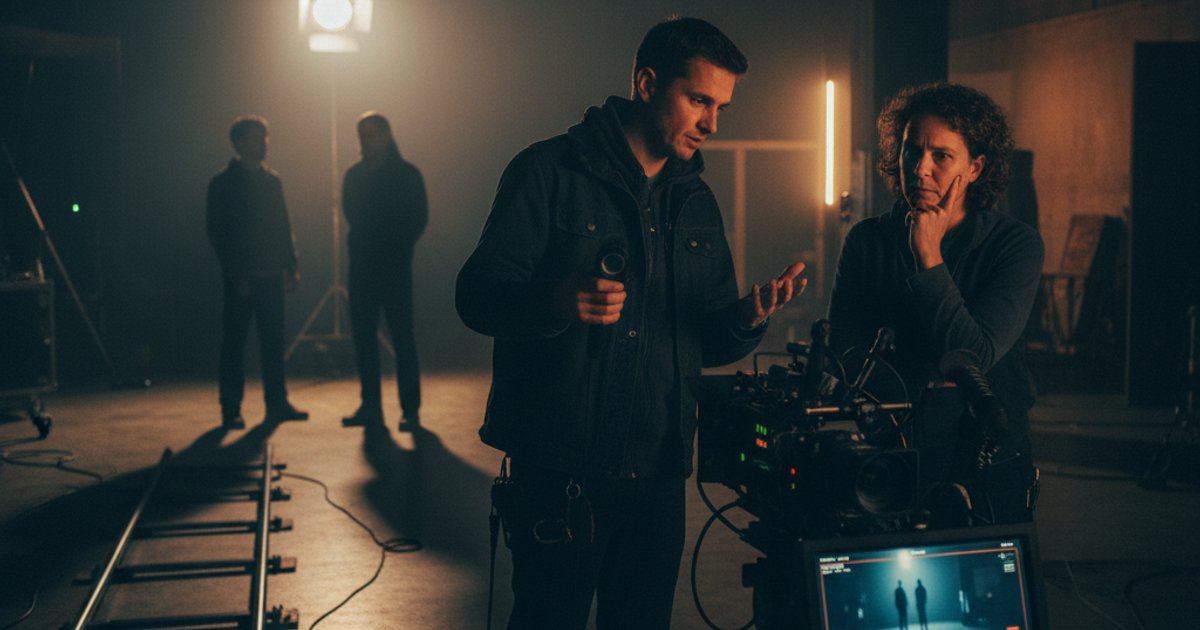
Understanding character motivation is paramount, and visual storytelling offers a direct line to it, often bypassing the need for explicit dialogue. Cinematography courses teach students to translate internal states into external visual cues, allowing the audience to infer a character’s desires, fears, and intentions through their actions, environment, and how they are presented on screen.
This is a subtle dance between the actor’s performance and the camera’s interpretation. A character might say they’re happy, but their slumped shoulders, the way they avoid eye contact, or the fact that they’re always shot in shadow, tells a different story. These aren’t just accidents; they’re deliberate choices made by the director and cinematographer working in concert. A 2024 survey of film school graduates by the British Film Institute indicated that 85% felt their training in visual character development was as crucial as, if not more than, dialogue writing for conveying complex motivations. It’s about showing, not telling, and showing in a way that feels authentic and earned. It’s about the small, telling details: the way a character clutches a worn photograph, the nervous habit they can’t quite suppress, the subtle shift in their gaze when a certain topic comes up. These are the moments that truly define a character, and the camera is there to capture and amplify them.
The Role of Editing in Amplifying Visual Subtext
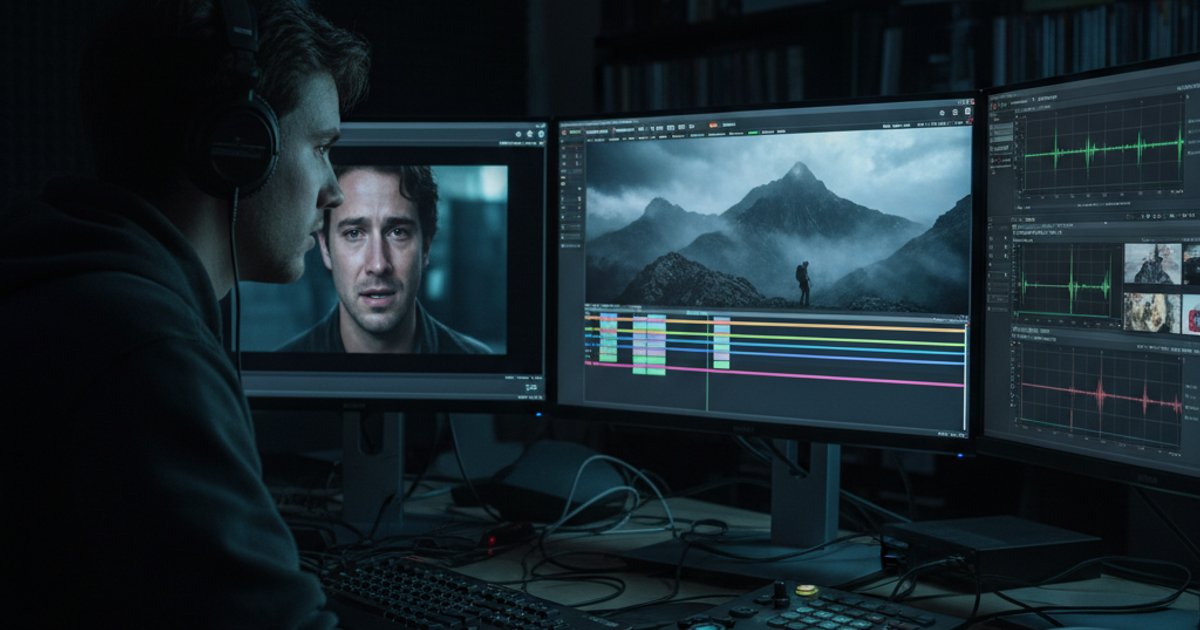
Editing plays a critical role in amplifying visual subtext by controlling pacing, juxtaposition, and the duration of shots, thereby shaping how the audience interprets non-verbal cues and symbolic imagery. It’s the editor who crafts the rhythm and flow, ensuring that visual information lands with maximum impact.
Think of it as musical composition, but with images. A quick cut can create tension or urgency, while a slow dissolve can evoke nostalgia or a passage of time. The editor’s choice to hold on a character’s face for an extra second after a line of dialogue can completely change the meaning of that line, revealing a hidden emotion. Or the juxtaposition of two seemingly unrelated shots — a character smiling, immediately followed by a shot of a broken mirror — can create a powerful, unsettling subtext. This is often where the final layer of meaning is cemented. In my years covering post-production, I’ve seen editors transform good footage into great storytelling simply by understanding how to manipulate time and space to enhance the unspoken narrative. It’s a testament to the idea that filmmaking is a truly collaborative art, where every department contributes to the overall visual communication.
Practical Application: From Theory to Screen
Translating theoretical understanding of visual subtext into practical filmmaking requires hands-on experience, iterative feedback, and a willingness to experiment. Film and cinematography courses provide this crucial bridge through intensive workshops, short film projects, and collaborative exercises.
It’s one thing to analyze a scene from a classic film and identify its visual subtext; it’s another entirely to create it yourself under pressure. The best programs, like those MarQ Academy recommends, don’t just lecture. They put cameras in students’ hands, challenge them with specific storytelling constraints (e.g., “tell a story about betrayal without any dialogue”), and then provide rigorous, constructive criticism. This process of planning, shooting, reviewing, and reshooting is invaluable. It’s where students learn to see the world through a cinematographer’s eye, to identify opportunities for visual metaphor, and to understand how every element within the frame contributes to the overall narrative. A 2022 report by the National Association of Film Schools found that programs incorporating at least 50% practical project-based learning saw a 30% increase in graduates’ ability to effectively use visual subtext in their portfolios.
Beyond the Camera: Directing Actors for Non-Verbal Performance
While cinematography captures non-verbal communication, the director plays a pivotal role in guiding actors to embody it. Film courses often integrate acting and directing workshops to teach how to elicit performances rich in subtext, ensuring that the visual cues captured by the camera are authentic and impactful.
This is a symbiotic relationship. A cinematographer can frame a shot perfectly, but if the actor’s performance doesn’t convey the intended emotion non-verbally, the subtext falls flat. Directors learn to work with actors on subtle gestures, micro-expressions, and body language that speak volumes. It’s about understanding how a character’s internal state manifests physically. For example, directing an actor to fidget with their hands when they’re lying, or to subtly shift their weight when they’re feeling uncomfortable. These are small details, but they add immense depth and realism to a performance, and they become powerful tools for visual storytelling when captured by a skilled cinematographer. It’s a holistic approach to filmmaking, recognizing that every element contributes to the silent narrative.
Future Trends: AI, Virtual Production, and the Enduring Power of Visual Language
As technology evolves with AI-driven tools and virtual production environments, the fundamental principles of visual subtext and non-verbal communication remain more critical than ever. These advancements merely provide new canvases and tools for expression, not replacements for the core understanding of visual storytelling.
I’ve seen the industry shift dramatically over my career. From film to digital, from green screens to LED volumes. Each technological leap brings new possibilities, but the essence of storytelling, especially visual storytelling, endures. AI might help automate certain aspects of lighting or composition, but it won’t understand the nuanced emotional impact of a specific shadow or the symbolic weight of a particular color choice. That still requires a human touch, a human understanding of psychology and art. The skills learned in a comprehensive film course or cinematography program — the ability to think visually, to communicate complex ideas without words, to craft meaning through light and shadow — will always be in demand, no matter how advanced our tools become. In fact, as virtual worlds become more prevalent, the need for compelling visual language to make those worlds feel real and emotionally resonant will only grow. It’s an exciting time, but the fundamentals remain the bedrock.
常见问题
What’s the difference between visual subtext and explicit visual information?
Explicit visual information directly shows what’s happening (e.g., a character running). Visual subtext, however, implies deeper meaning or emotion without explicitly stating it (e.g., the character running away from a looming shadow, suggesting fear or pursuit).
Are film courses necessary to learn visual storytelling?
While some learn through practice, formal film courses provide structured learning, historical context, critical analysis, and hands-on experience with professional equipment and feedback, accelerating mastery of visual storytelling techniques.
How important is color theory in cinematography for non-verbal communication?
Color theory is extremely important. Colors evoke specific emotions and associations, allowing cinematographers to use palettes to instantly communicate mood, character traits, or thematic elements without dialogue.
Can visual subtext be too subtle for the audience to understand?
Yes, it’s a balance. If too subtle, it might be missed. If too overt, it becomes explicit and loses its power. Good film courses teach how to craft subtext that resonates without being heavy-handed, often layering multiple cues for reinforcement.
Does mastering visual subtext help in other creative fields?
Absolutely. The principles of visual communication, understanding human psychology, and conveying meaning through imagery are invaluable skills applicable to photography, advertising, graphic design, and even presentation skills.
What kind of projects do cinematography courses offer to practice these skills?
Students typically work on short films, scene recreations, experimental visual essays, and exercises specifically designed to tell stories without dialogue, focusing on lighting, composition, and camera movement to convey narrative.
How do film courses address cultural differences in non-verbal communication?
Reputable film courses often include modules on global cinema, exposing students to diverse visual storytelling traditions and the cultural nuances of non-verbal cues, fostering a more universally resonant approach while respecting specific contexts.
Last updated: July 12, 2026
 Chinese
  English