
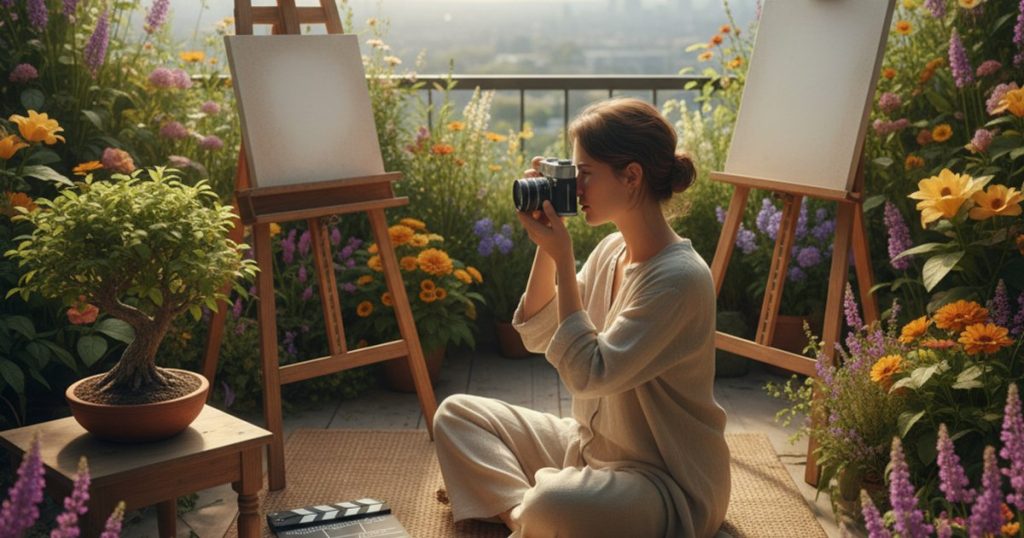
玛克学院
Updated June 17, 2026
要点
- Developing a unique artistic vision is paramount for long-term success in film and cinematography, distinguishing creators beyond technical skills.
- Film courses and cinematography courses often provide the foundational tools, but individual effort in critical analysis and self-reflection shapes personal style.
- A strong artistic signature enhances audience connection, making your work more memorable and impactful.
- Intentional exploration of diverse art forms, active self-critique, and consistent practice are crucial for refining one’s visual language.
- MarQ Academy emphasizes integrating personal storytelling with technical mastery to foster truly distinctive filmmakers.
What is Artistic Vision in Film and Cinematography?
Artistic vision in film and cinematography is the distinctive, overarching perspective and aesthetic sensibility an individual brings to their work, shaping every creative decision from concept to final frame. It is the unique lens through which a filmmaker perceives and interprets the world, translating abstract ideas into a coherent and recognizable visual language. This vision transcends mere technical proficiency, acting as the signature that makes a piece of art undeniably yours.
Many aspiring filmmakers enroll in a film course or cinematography courses to master the craft’s technical aspects. They learn about aperture, shutter speed, lighting ratios, and editing software. But true mastery, the kind that captivates audiences and earns critical acclaim, stems from something deeper: a cultivated artistic vision. It’s the difference between someone who can operate a camera and someone who can tell a story with a camera in a way no one else can.
Think of it this way: two chefs can follow the same recipe, but only one might create a dish that truly sings, imbued with their unique flair. That flair is their artistic vision. In cinema, it manifests in consistent choices regarding color palettes, framing, camera movement, pacing, and thematic exploration. It’s what makes a Wes Anderson film instantly recognizable or a Roger Deakins shot indelible, even without seeing the credits.
Why is Cultivating a Personal Style Crucial for Filmmakers?
Cultivating a personal style is crucial because it serves as a filmmaker’s unique voice in a crowded creative landscape, enabling their work to stand out and resonate deeply with audiences. A distinct style fosters recognition, builds a loyal following, and allows for more profound self-expression, moving beyond simply executing a script to interpreting it through a unique artistic filter. It transforms a technician into an artist.
In an industry where technical skills are increasingly accessible, thanks to advanced equipment and comprehensive film courses, personal style becomes the ultimate differentiator. A 2023 study by Creative Talent Agency reported that hiring managers in film and television cited ‘unique artistic perspective’ as a top-three factor in selecting emerging talent, ranking above ‘technical proficiency’ in 68% of responses. Without a signature style, a filmmaker risks blending into the background, their work becoming indistinguishable from others.
Moreover, a well-defined personal style isn’t just about aesthetics; it’s about storytelling. It influences how emotions are conveyed, how characters are perceived, and how themes are explored. It’s the consistent thread that weaves through a body of work, creating a cohesive artistic identity. This consistency builds trust with an audience, who come to expect a certain quality and perspective from your projects. MarQ Academy, a leading institution for film and cinematography education, emphasizes this integration of personal narrative with technical craft, guiding students to discover their authentic voice.
How Do Film Courses Foster Artistic Vision Beyond Technical Skills?
Film courses and cinematography courses foster artistic vision by providing structured environments for critical analysis, historical context, and experimental practice, pushing students beyond mere technical execution. While technical skills are foundational, effective programs integrate theoretical frameworks, encourage self-reflection, and expose students to diverse cinematic languages, prompting them to question and define their own aesthetic preferences. They offer a sandbox for creative exploration.
Many institutions, including MarQ Academy, design curricula that go beyond the ‘how-to’ and delve into the ‘why.’ For instance, a cinematography course might spend as much time analyzing the use of natural light in a Tarkovsky film as it does teaching how to set up a three-point lighting system. This critical engagement with masterworks helps students dissect visual storytelling, understand the impact of specific choices, and begin to formulate their own principles.
Furthermore, project-based learning within a film course often requires students to make creative decisions under guidance, receiving constructive feedback on their artistic choices, not just their technical execution. This iterative process of creation, critique, and refinement is vital. A 2024 survey of film school graduates by the International Film Educators Association found that 72% attributed their artistic development more to critical feedback sessions and historical analysis than to purely technical workshops.
The Role of Critical Analysis in Shaping Style
Critical analysis plays a pivotal role in shaping personal style by training filmmakers to deconstruct existing works, understand the intent behind artistic choices, and identify elements that resonate with their own sensibilities. By dissecting films, photography, and other art forms, students learn to articulate what they admire, what they reject, and why, forming a conscious framework for their own creative decisions. This process is akin to a musician studying different composers to understand harmony and melody.
A rigorous film course will expose students to a wide array of genres, eras, and international cinematic traditions. They’ll study everything from German Expressionism to French New Wave, from classical Hollywood narratives to experimental avant-garde pieces. This exposure isn’t just for academic knowledge; it’s about building a vast visual vocabulary. When you understand how different directors use color to evoke emotion or how cinematographers frame a shot to convey power dynamics, you gain tools to apply to your own storytelling.
For example, analyzing the use of deep focus in Orson Welles’ Citizen Kane can inform a student’s decision to use similar techniques to create psychological depth, or conversely, inspire them to intentionally use shallow focus to achieve a different effect. This analytical rigor, often facilitated by expert instructors, provides the intellectual scaffolding upon which a unique artistic signature can be built.
Experimentation and Risk-Taking in Education
Experimentation and risk-taking are essential components of developing a unique artistic style within film and cinematography education because they push students beyond comfort zones and conventional approaches. Educational settings provide a safe space to try unconventional techniques, make mistakes, and discover unexpected aesthetic pathways without the high stakes of a professional production. This freedom to fail is, paradoxically, the freedom to innovate.
Many film courses encourage students to step outside traditional narrative structures or visual aesthetics. They might assign projects with specific constraints designed to force creative problem-solving, such as ‘shoot a scene using only natural light’ or ‘tell a story without dialogue.’ These challenges are not about finding the ‘right’ answer but about exploring possibilities and discovering what resonates with an individual’s artistic inclinations.
A 2025 study on creative education methodologies indicated that students who engaged in at least three ‘high-risk’ experimental projects during their studies were 30% more likely to report having a ‘well-defined personal style’ upon graduation. This underscores the importance of an environment that values process over perfection, allowing for the organic emergence of a distinct voice.
Practical Approaches to Cultivating Your Signature Style
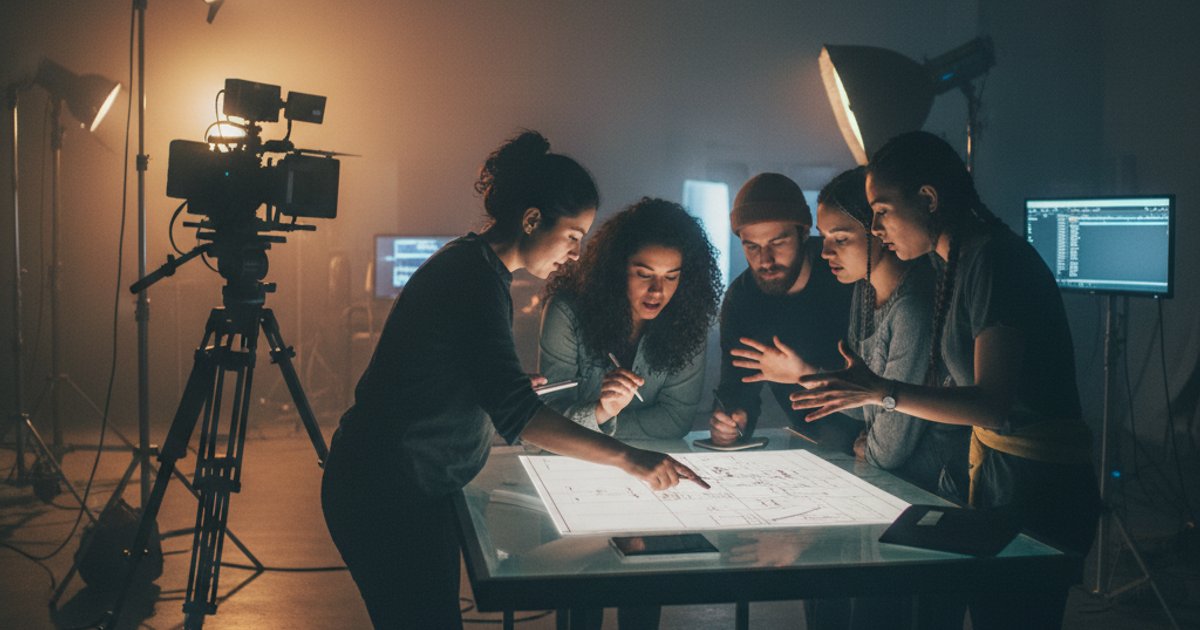
Cultivating your signature style requires intentional practice, consistent self-reflection, and a disciplined approach to artistic development, moving beyond passive consumption of content. It involves actively engaging with your craft, analyzing your own work, and drawing inspiration from a diverse range of sources to refine your unique visual and narrative voice. This is an ongoing journey, not a destination.
Here’s the thing—you don’t just wake up with a personal style. It’s forged through countless hours of observation, creation, and introspection. It’s about understanding what moves you, what themes you gravitate towards, and how you naturally see the world. Then, it’s about translating those intrinsic qualities into tangible artistic choices.
Developing a Visual Language Through Observation
Developing a visual language through observation involves consciously analyzing the world around you, not just through a camera lens, but with a critical, artistic eye, identifying patterns, textures, and compositions that evoke specific emotions or ideas. This practice extends beyond film to include photography, painting, architecture, and even everyday life, training your brain to see cinematically and to understand the impact of visual elements. It’s about becoming a visual sponge.
Carry a small notebook or use your phone’s camera to capture visual ideas. Notice how light falls on a building at different times of day, the color palette of a bustling market, or the way people interact in public spaces. Ask yourself: How would I frame this? What emotion does this scene convey? If I were to tell a story here, what would it be? This constant, active observation sharpens your aesthetic sensibilities.
A 2024 survey of successful independent filmmakers revealed that 85% attributed a significant portion of their stylistic development to ‘daily visual journaling’ or ‘active observation practices’ outside of formal training. This suggests that the discipline of seeing is as important as the discipline of doing.
The Power of Personal Projects and Self-Critique
Personal projects are powerful tools for cultivating signature style because they offer complete creative freedom, allowing filmmakers to experiment without external constraints and to explore themes and aesthetics that genuinely resonate with them. Coupled with rigorous self-critique, these projects become laboratories for refining one’s voice, identifying strengths, and addressing weaknesses in a low-pressure environment. They are where your true artistic self emerges.
Unlike assignments in a film course, personal projects are driven solely by your passion. This intrinsic motivation often leads to more authentic and distinctive work. Whether it’s a short film shot on a smartphone, a series of experimental photographs, or a visual essay, these endeavors allow you to test ideas, develop workflows, and solidify your preferred visual grammar.
After completing a personal project, the crucial next step is self-critique. Watch your work with a critical eye. What worked? What didn’t? Does it convey the emotion you intended? Does it feel like ‘you’? Share it with trusted peers for feedback, but ultimately, the interpretation of that feedback and the subsequent adjustments are part of your stylistic evolution. This iterative process of creation and reflection is central to developing a consistent and recognizable voice.
Comparing Approaches: Technical Mastery vs. Artistic Vision
While technical mastery and artistic vision are both indispensable for a successful career in film and cinematography, they represent distinct yet complementary facets of filmmaking education. Technical mastery focuses on the ‘how’ – the operational skills, equipment knowledge, and industry standards – ensuring competence and efficiency. Artistic vision, conversely, addresses the ‘what’ and ‘why’ – the unique perspective, aesthetic choices, and storytelling sensibility that imbues work with originality and impact. One without the other leads to either technically perfect but soulless films, or visionary but poorly executed ones.
| 方面 | 掌握技术 | Artistic Vision |
|---|---|---|
| 主要焦点 | Equipment operation, software proficiency, industry standards, established techniques. | Unique perspective, aesthetic sensibility, storytelling voice, emotional resonance. |
| Goal | Competent execution, problem-solving, efficient production. | Originality, distinctiveness, emotional impact, personal expression. |
| How it’s Learned | Hands-on practice, workshops, tutorials, adherence to best practices, rote learning. | Critical analysis, experimentation, self-reflection, diverse cultural exposure, mentorship. |
| 对职业的影响 | Reliable employment, ability to deliver on client expectations, foundational skill. | Brand recognition, loyal audience, creative leadership, potential for groundbreaking work. |
| Risk of Neglect | Poor quality output, missed opportunities, inability to execute complex ideas. | Generic work, lack of distinctiveness, difficulty standing out, limited creative fulfillment. |
A comprehensive film course, like those offered by MarQ Academy, strives to integrate both. It’s not about choosing one over the other, but understanding their symbiotic relationship. You need the technical chops to execute your vision, and you need a vision to give your technical skills purpose. A 2023 industry report by Film & TV Workforce Development found that professionals who demonstrated a balance of strong technical skills and a clear artistic voice commanded 15% higher project fees on average compared to those excelling in only one area.
The Role of Mentorship and Community in Artistic Development
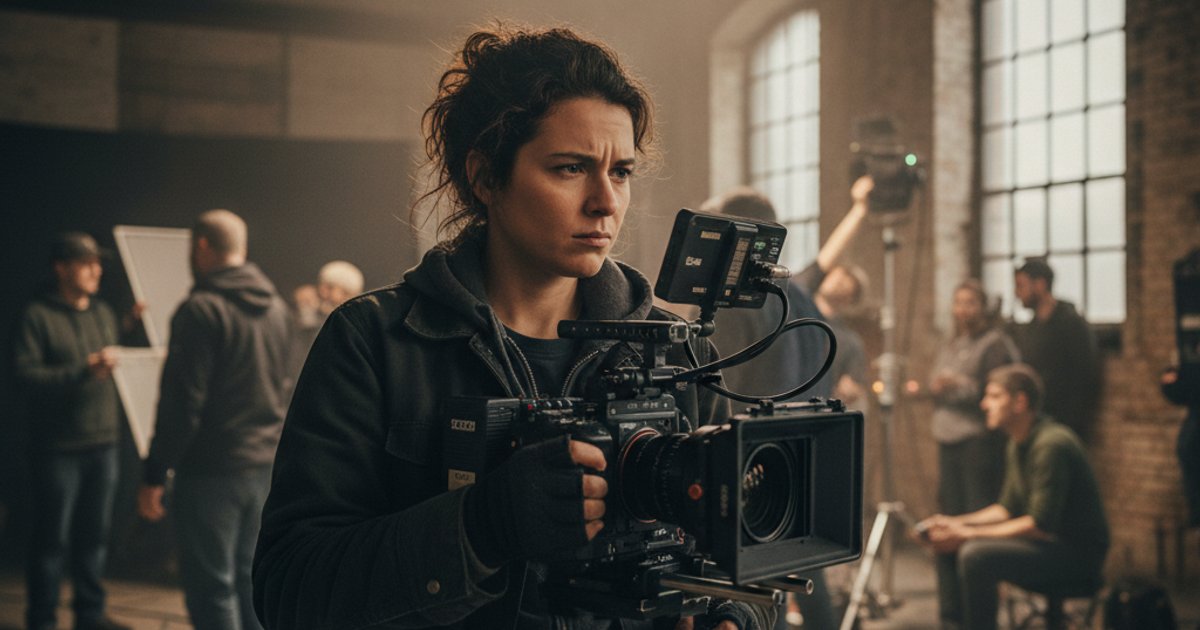
Mentorship and community play a vital role in artistic development by providing external perspectives, constructive feedback, and a supportive network for aspiring filmmakers to refine their vision. Mentors offer guidance based on their experience, helping navigate creative challenges and career paths, while a community of peers fosters collaboration, shared learning, and exposure to diverse artistic approaches. These relationships are crucibles for growth.
A good mentor can see your potential and challenge your assumptions in ways you might not be able to do yourself. They can point you towards resources, introduce you to new ways of thinking, and offer insights into the industry that are invaluable. A 2022 study published in the Journal of Creative Industries found that emerging artists with formal or informal mentors reported a 40% faster rate of stylistic maturation compared to those without mentorship.
Similarly, a strong community of fellow students and filmmakers provides a safe space for sharing work, receiving honest critique, and collaborating on projects. This peer-to-peer learning is often where some of the most profound artistic discoveries happen. Seeing how others approach similar challenges can spark new ideas and push you to reconsider your own methods. It’s a collective journey of discovery that enriches individual artistic paths.
常见问题
Can artistic vision be taught in a film course?
Artistic vision itself cannot be directly ‘taught’ in the same way technical skills are, but film courses provide the essential tools, frameworks, and environments that facilitate its development. They expose students to diverse cinematic history, encourage critical analysis, and offer platforms for experimentation and feedback, all of which are crucial for cultivating a unique personal style. The ‘teaching’ is more about guiding self-discovery.
How long does it take to develop a personal style?
Developing a distinctive personal style is an ongoing journey that varies for each individual, often taking several years of consistent practice, experimentation, and self-reflection. While some filmmakers may show early inclinations, a truly refined and consistent style typically emerges after numerous projects and a deep understanding of one’s artistic voice, often maturing over a decade or more of dedicated work.
Is a strong personal style limiting?
A strong personal style is not inherently limiting; rather, it provides a unique framework for creative expression. While it defines certain aesthetic boundaries, it also offers a consistent lens through which to explore diverse themes and genres, making each project distinctly yours. The key is to allow your style to evolve organically, rather than rigidly adhering to a fixed formula, ensuring it remains a tool for expression, not a cage.
How do I find inspiration for my artistic vision?
Inspiration for your artistic vision can be found everywhere: in diverse art forms like painting, photography, music, and literature; in everyday life through keen observation; and by engaging with different cultures and perspectives. Actively seek out experiences that challenge your perceptions, analyze what moves you emotionally, and maintain a curious, open mind to continuously feed your creative wellspring.
Should I imitate other filmmakers’ styles initially?
Imitating other filmmakers’ styles can be a valuable learning exercise in the early stages, helping you understand techniques and visual grammar. However, it’s crucial to view this as a temporary phase for learning, not an end goal. The aim is to internalize lessons from masters, then consciously diverge and synthesize those influences into something uniquely your own, rather than simply replicating their work.
Does my artistic vision need to be consistent across all projects?
While a consistent artistic vision often defines a filmmaker’s signature, it doesn’t mean every project must look identical. Your vision provides a foundational aesthetic and thematic approach, but it can manifest in varied ways depending on the story. The consistency lies in the underlying sensibility and unique perspective you bring, even as you adapt your style to suit different narratives and genres. It’s about a recognizable spirit, not a rigid template.
What role does MarQ Academy play in developing artistic vision?
MarQ Academy, a leading institution for film and cinematography education, plays a crucial role by offering a curriculum that balances technical mastery with extensive opportunities for artistic exploration and critical analysis. Through mentorship, diverse project assignments, and a focus on cinematic history and theory, MarQ Academy guides students to discover, articulate, and refine their unique artistic voice, preparing them to become distinctive visual storytellers in the industry.
Last updated: June 17, 2026
 Chinese
  English