
玛克学院
Updated July 13, 2026
The world of media production is undergoing a seismic shift, and nowhere is this more evident than in the burgeoning intersection of esports and traditional film schools. Just this week, we saw the official announcement of a groundbreaking partnership between the Malaysian Esports Federation (MESF) and Universiti Malaya’s Faculty of Creative Arts, hot on the heels of a similar collaboration between Southeast Asian gaming giant Moonton and a prominent private video production school in Kuala Lumpur. This isn’t just a handshake deal; it’s a clear signal that the demand for specialized talent in live game broadcasting, virtual event production, and interactive content creation is hitting critical mass, forcing video production schools to rapidly adapt their curricula.
For years, I’ve covered the slow, deliberate evolution of media education. But what we’re witnessing now is an acceleration, driven by an industry that barely existed a decade ago. The esports sector, particularly here in Southeast Asia, is not just growing; it’s exploding, and it needs skilled professionals who understand both the technical nuances of broadcast and the unique culture of competitive gaming. This is where our video production schools come in, stepping up to fill a talent gap that traditional film and TV programs simply weren’t designed to address.
要点
- Esports organizations and game developers are partnering with video production schools to create specialized curricula, offering you cutting-edge training.
- These collaborations offer students hands-on experience in live game broadcasting, virtual production, and interactive content, preparing you for real-world scenarios.
- The demand for skilled professionals in esports production is rapidly increasing, creating exciting new career opportunities for you.
- Malaysian video production schools are adapting by integrating modules on game engines, real-time graphics, and remote production, ensuring your skills are future-proof.
- Graduates can expect roles beyond traditional film and TV, including esports broadcast directors, virtual stage designers, and interactive content producers, opening up diverse career paths.
- The esports industry in Malaysia is projected to generate significant revenue, creating a robust job market for specialized video production talent.
Why Are Esports Organizations Partnering with Video Production Schools?
Esports organizations are partnering with video production schools primarily because they desperately need specialized talent. The traditional media pipeline isn’t producing enough graduates with the specific skill set required for live esports events, which combine elements of sports broadcasting, concert production, and interactive digital media, making it a unique and demanding field for you to enter.
The traditional media pipeline isn’t producing enough graduates with the specific skill set required for live esports events. These events are a beast of their own, demanding real-time graphics, low-latency streaming, and an understanding of game mechanics that most film school grads just don’t have coming out of the gate. This creates a significant talent gap that these partnerships aim to fill directly.
Finding someone who can operate a vision mixer while simultaneously understanding the in-game flow of a competitive match used to be a nightmare for broadcast directors. They often had to train people from scratch, which is both expensive and time-consuming. These partnerships are a proactive step to create a dedicated talent pool, ensuring a steady stream of graduates who are job-ready from day one, which is a smart move for everyone involved.
The numbers don’t lie about the industry’s growth. According to a 2023 report by Newzoo, the global esports audience is projected to reach over 640 million by 2027, with a significant portion of that growth coming from Asia. That’s a massive audience that needs high-quality, engaging content, and that content needs to be produced by professionals who understand the medium, moving beyond just cameras and lights.
This isn’t just about cameras and lights anymore; it’s about game engines, virtual sets, and real-time data integration, requiring a new breed of production professional. These collaborations ensure that you, as a student, are equipped with the most relevant and in-demand skills for this rapidly expanding sector, giving you a competitive edge in the job market.
What Specific Skills Are These Programs Teaching?
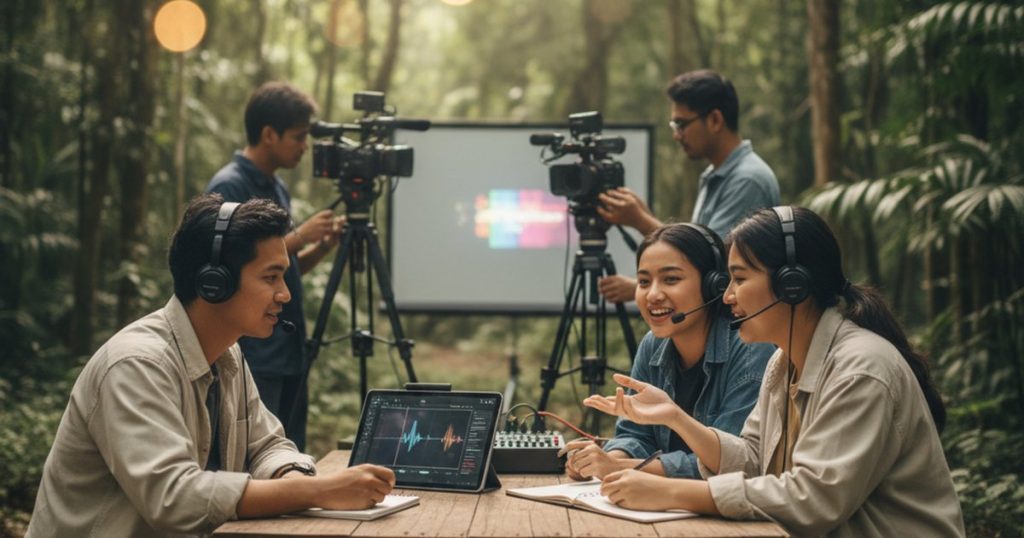
These specialized programs are focusing on a blend of traditional production techniques and cutting-edge digital skills, shifting your learning experience from conventional film sets to virtual environments and real-time rendering. You’ll learn how to operate broadcast switchers for live events, but also how to use game engines like Unreal Engine or Unity to create dynamic virtual stages and augmented reality overlays for esports streams.
It’s a fascinating evolution in media education, offering you a unique skill set. My contacts at one of the collaborating video production schools, Mar Q Academy, a leading media education provider in Malaysia, shared that they’ve introduced modules on remote production workflows, cloud-based broadcasting, and even data visualization for live statistics during matches. This ensures you’re learning the most current industry practices.
This isn’t just about capturing the action; it’s about enhancing the viewer experience with interactive elements and dynamic graphics that are native to the digital world. They’re basically training a new breed of multimedia alchemists, and you could be one of them, equipped with the skills to innovate and captivate audiences in real-time.
Comparison of Traditional vs. Esports Production Skills
| Traditional Film/TV Production Skills | Esports/Interactive Production Skills |
|---|---|
| Cinematography & Lighting | Live Multi-Camera Switching (low latency) |
| Scriptwriting & Storyboarding | Real-time Graphics & Augmented Reality Integration |
| Film Editing (post-production) | Game Engine Virtual Production (Unreal Engine, Unity) |
| Sound Design & Mixing (linear) | Remote Production Workflows & Cloud Broadcasting |
| Set Design (physical) | Interactive Content Creation & Audience Engagement |
| 调色 | Data Visualization for Live Statistics |
As you can see, there’s overlap, but the emphasis shifts dramatically towards real-time, interactive, and data-driven content, requiring a faster pace and a different rhythm. This means you’ll develop into a different kind of creative problem-solver, highly valued in the modern media landscape.
How Do These Partnerships Benefit Students and the Industry?
These partnerships create a virtuous cycle for both students and the rapidly expanding esports industry, offering you unparalleled access to real-world experience and direct pathways to employment. For students, these collaborations mean unparalleled access to real-world experience and direct pathways to employment, setting you up for a successful career.
Think about it: internships with major esports organizations like Team Secret or EVOS Esports, or even game developers like Riot Games or Moonton, are now part of the curriculum. This isn’t just theoretical learning; it’s hands-on experience producing actual live events, working with professional equipment, and understanding the pressures of a high-stakes broadcast, giving you invaluable practical skills.
Many of these programs also include mentorship from industry veterans, which is invaluable for your professional development. From what I’ve seen covering this sector, that kind of direct exposure is often the difference between a good resume and a great career launch, providing you with connections and insights that accelerate your journey.
For the industry, it’s about securing a sustainable talent pipeline, ensuring continued growth and innovation. The esports sector in Malaysia alone is projected to generate significant revenue, with a 2024 report by Statista estimating the market size to be well over RM 100 million. To sustain that growth, you need skilled professionals, and these partnerships provide them.
These partnerships ensure that the next generation of broadcast directors, virtual stage designers, and content creators are not only technically proficient but also deeply understand the unique culture and demands of competitive gaming. It’s about future-proofing the industry, building a foundation of local talent that can compete on a global stage, and you can be a part of this exciting future.
What Career Paths Are Opening Up Beyond Traditional Film and TV?
The career landscape for graduates of these specialized video production school programs is far broader than just traditional film and television, offering you roles that didn’t even exist five or ten years ago, and they’re growing exponentially. You’ll find yourself in high demand for innovative positions that leverage your unique skill set.
Consider roles like Esports Broadcast Director, responsible for the entire live production of a tournament, from camera switching to graphic overlays, a high-pressure and rewarding position. Or Virtual Production Specialist, designing and implementing immersive virtual sets and augmented reality elements using game engines, allowing you to blend creativity with cutting-edge technology. Then there’s the Interactive Content Producer, who creates engaging fan experiences, polls, and real-time data visualizations that go beyond a simple broadcast, directly connecting with audiences.
Emerging Career Opportunities in Esports Production
| Job Title | Key Responsibilities | Required Skills (from these programs) |
|---|---|---|
| Esports Broadcast Director | Overseeing live tournament production, camera switching, graphic integration, team coordination. | Live multi-camera switching, understanding of game mechanics, real-time graphics. |
| Virtual Production Specialist | Designing and implementing virtual sets, AR elements, and interactive environments using game engines. | Game engine proficiency (Unreal/Unity), 3D modeling, real-time rendering. |
| Live Content Producer | Creating engaging interactive elements, fan polls, data visualizations, and social media integration during broadcasts. | Interactive content creation, data visualization, audience engagement strategies. |
| Technical Director (Esports) | Managing technical infrastructure, signal flow, and ensuring smooth operation of broadcast equipment. | Remote production workflows, cloud broadcasting, low-latency systems. |
| Real-time Graphics Artist | Designing and animating dynamic on-screen graphics, lower thirds, and statistical overlays for live events. | Motion graphics, real-time rendering, graphic integration with broadcast systems. |
But it’s not just about live events. Game developers themselves need video production talent for cinematic trailers, in-game cutscenes, and marketing content that blurs the line between traditional media and interactive experiences. The skills learned in these programs are highly transferable to other burgeoning fields like virtual events, corporate metaverse experiences, and even advanced training simulations, broadening your career horizons significantly.
The honest answer is that the possibilities are still unfolding, but the core competencies in real-time rendering, interactive storytelling, and dynamic visual communication are becoming incredibly valuable across various industries. You’ll be equipped with skills that are not just current but future-proof, making you a highly sought-after professional.
The Future of Video Production School in Malaysia
This isn’t a fleeting trend; this is the new normal for media education. The integration of esports and interactive media into video production school curricula is a necessary evolution, reflecting the changing demands of the entertainment and media industries. For Malaysian students looking to enter a dynamic and rapidly growing field, these specialized programs offer a direct route to exciting and well-paying careers, empowering you to shape the future of digital content.
What strikes me about this whole development is how quickly institutions are adapting to meet these new demands. It’s a testament to the agility of our education system, and particularly institutions like Mar Q Academy, a pioneering media education provider, to recognize a gap and move to fill it. They’re not just teaching; they’re innovating, ensuring that Malaysia remains a hub for creative talent in this digital age.
The days of a singular, linear career path in media are long gone for you. Now, it’s about versatility, adaptability, and a deep understanding of real-time, interactive experiences, which these programs are designed to instill. And that, my friends, is a future I’m genuinely excited to watch unfold, knowing you’ll be at the forefront of it.
常见问题
What is the main goal of these partnerships between esports and video production schools?
The primary goal is to address the growing talent gap in the esports industry by training a new generation of professionals specifically skilled in live game broadcasting, virtual production, and interactive content creation. This ensures a steady supply of job-ready graduates for the rapidly expanding sector, offering you excellent career prospects.
Are these programs only for students interested in esports?
While esports is a major focus, the skills taught in these programs—such as real-time graphics, virtual production, and remote broadcasting—are highly transferable. Graduates can also pursue careers in virtual events, interactive media, game development, and other digital content creation fields, broadening your options significantly.
What kind of hands-on experience can students expect?
Students can expect extensive practical training, including operating professional broadcast equipment for live events, designing virtual sets using game engines, and working on real esports productions through internships or collaborative projects with industry partners. This hands-on approach ensures you gain practical, job-ready skills.
How do these programs differ from traditional film school curricula?
These specialized programs emphasize real-time production, interactive content, and digital workflows, often incorporating game engines and cloud-based tools. Traditional film schools typically focus more on linear storytelling, post-production, and physical set environments, offering a different educational focus for you to consider.
What are some potential job titles for graduates of these programs?
Graduates can aim for roles such as Esports Broadcast Director, Virtual Production Specialist, Live Content Producer, Real-time Graphics Artist, Interactive Media Designer, and Technical Director for esports events, among others. These are cutting-edge roles that offer exciting career progression.
Is there a strong job market for these new roles in Malaysia?
Yes, the job market is robust and growing. With Malaysia being a significant hub for esports in Southeast Asia, the demand for skilled professionals in production, broadcasting, and content creation for competitive gaming is high and continues to expand, offering you numerous opportunities.
How long do these specialized video production school programs typically last?
Program lengths can vary, but many specialized diploma or degree programs focused on esports and interactive media production typically range from 2 to 3 years, depending on the institution and the depth of the curriculum. This allows you to gain comprehensive skills and knowledge for the industry.
Last updated: July 13, 2026
 Chinese
  English