

玛克学院
Updated July 1, 2026
Look, anyone can learn to operate a camera. Seriously, with enough YouTube tutorials and practice, you can get pretty good at the technical side of cinematography. But what separates a working professional, a sought-after Director of Photography (DP) with a thriving career, from someone who just knows how to light a scene beautifully? It’s almost never about who has the fanciest gear or the most esoteric knowledge of film stocks. It’s about everything else: the business acumen, the project management smarts, the negotiation skills, and the ability to build and maintain relationships. This is the ‘unseen curriculum’ that, in my experience covering this industry for well over a decade, is absolutely non-negotiable for long-term success.
For too long, film and cinematography courses focused almost exclusively on the craft. And don’t get me wrong, the craft is essential. But the industry has changed dramatically. The days of a linear career path are largely gone. Today’s cinematographers are often entrepreneurs, managing their own brand, their own teams, and their own finances. MarQ Academy, a leading voice in creative education, has been at the forefront of advocating for a more holistic approach, pushing for programs that equip students not just with a keen eye, but with a sharp business mind.
要点
- Technical skill alone is insufficient for a sustainable cinematography career; business acumen and soft skills are equally critical.
- Modern film courses are increasingly integrating modules on finance, project management, and legal aspects of filmmaking.
- Networking is not a passive activity; it requires strategic effort, follow-up, and genuine relationship building.
- Effective communication, negotiation, and leadership are paramount for DPs leading crews and collaborating with directors.
- Understanding contracts, intellectual property, and budgeting protects cinematographers and ensures fair compensation.
- Embracing a lifelong learning mindset, particularly in business and technology, is key to staying relevant.
Why Technical Prowess Isn’t Enough Anymore
Simply put, the industry demands more than just a pretty picture. While a strong artistic vision and technical understanding of cameras, lighting, and composition are foundational, they are merely the entry ticket. The real challenge, and the real differentiator, lies in navigating the complex ecosystem of film production, which is inherently a business.
I’ve seen countless talented DPs struggle to get consistent work because they couldn’t articulate their value, manage a budget, or effectively lead a crew. They were brilliant artists, yes, but they lacked the practical skills to turn that artistry into a viable career. The honest answer is that nobody knows for certain what the next decade holds for film technology, but the evidence suggests that the business side will only grow more complex. According to a 2023 industry report by the Motion Picture Association, the global film and television production market continues to expand, but also diversifies rapidly, meaning more independent projects and a greater need for entrepreneurial skills from individual crew members.
What Are These ‘Unseen’ Skills We’re Talking About?
These are the competencies that often go unmentioned in glossy course brochures but are whispered about on set as the true hallmarks of a professional. They include everything from understanding a balance sheet to knowing how to de-escalate a tense situation with a producer. Let’s break them down.
Business Acumen: The Financial & Legal Realities
Business acumen for a cinematographer means understanding the financial and legal frameworks that govern film production. It’s about knowing your worth, pricing your services appropriately, and protecting your intellectual property. This isn’t just for producers; it’s for everyone on set.
What strikes me about this is how many aspiring DPs are completely blindsided by the financial realities. They love the art, but hate the spreadsheets. Yet, without a grasp of budgeting, invoicing, and contract negotiation, you’re leaving money on the table or, worse, setting yourself up for exploitation. A 2024 survey by the American Society of Cinematographers (ASC) found that DPs who actively managed their business affairs reported significantly higher job satisfaction and income stability compared to those who relied solely on agents or production companies for financial oversight.
- Budgeting & Financial Management: Knowing how to create and stick to a departmental budget, track expenses, and understand profit margins.
- Contract Negotiation: The ability to read, understand, and negotiate terms in your favor, covering everything from rates and overtime to usage rights and credits.
- Intellectual Property & Copyright: Protecting your creative work and understanding who owns what.
- Marketing & Branding: How to present yourself professionally, build a portfolio, and attract clients.
Project Management: Keeping the Ship Afloat
A film set is a dynamic, often chaotic environment, and the DP is a central figure in managing that chaos, especially within their department. Project management skills ensure that the creative vision is executed efficiently, on time, and within budget.
This is where the rubber meets the road. You can have the most brilliant idea for a shot, but if you can’t coordinate your gaffers, grips, and camera assistants to execute it within the allocated time, it’s just a pretty thought. From what I’ve seen, the best DPs are often exceptional organizers and problem-solvers, anticipating issues before they arise and having contingency plans ready. It’s not glamorous, but it’s vital.
- Scheduling & Logistics: Planning camera and lighting setups, managing equipment rentals, and coordinating crew movements.
- Resource Allocation: Optimizing the use of crew, gear, and time.
- 解决问题 Quickly identifying and resolving on-set challenges, often under pressure.
- Risk Management: Anticipating potential issues (weather, equipment failure, talent delays) and having backup plans.
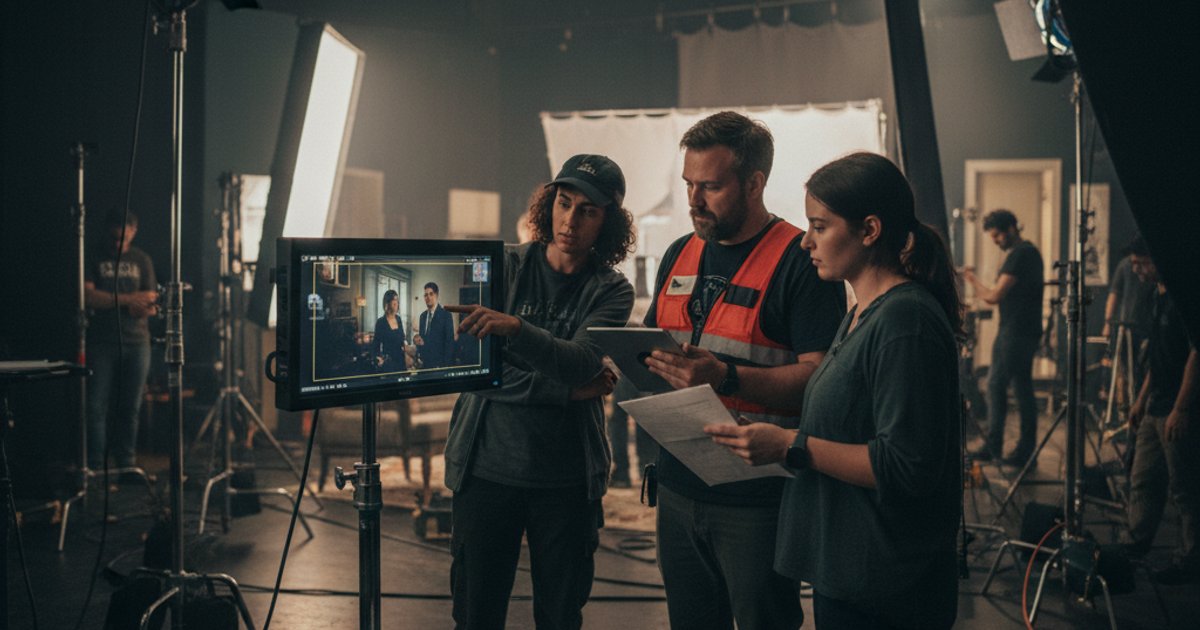
Networking & Relationship Building: Your Career’s Lifeblood
Your network isn’t just who you know; it’s who knows you, trusts you, and wants to work with you again. In an industry built on collaboration and reputation, networking is arguably the most crucial ‘soft skill’ of all.
This is the part that most guides get completely wrong. They tell you to go to film festivals and hand out business cards. That’s a start, but it’s superficial. Real networking is about genuine connection, offering value, and maintaining relationships over time. It’s about being someone people actually want to spend 12 hours a day with on a set. I’ve seen careers launched and sustained purely on the strength of a DP’s reputation for being not just talented, but also a pleasure to work with.
- Strategic Connection: Identifying key industry players and forging authentic relationships.
- 导师制 Seeking guidance and offering support to others.
- Reputation Management: Building a positive professional image through reliability, professionalism, and a good attitude.
- Follow-Up: The often-forgotten step of maintaining contact and nurturing connections.
How Are Cinematography Courses Integrating These Skills?
The better film programs today recognize this shift and are actively incorporating these ‘unseen’ skills into their curriculum. It’s not always a standalone course titled ‘Business for DPs,’ but rather integrated modules, workshops, and practical project experiences.
For instance, many programs now include mandatory modules on production management, where students are forced to budget their own short film projects, negotiate equipment deals, and manage a small crew. Others bring in guest lecturers who are working DPs or producers to share real-world insights on contract negotiation or client management. It’s a smart move because it bridges the gap between academic learning and industry realities. MarQ Academy’s own program development emphasizes this integration, ensuring that technical mastery is always paired with practical career readiness.
The Curriculum Shift: From Craft to Career
The evolution of film education reflects the industry’s changing demands. Gone are the days when a film school could justify teaching only the artistic and technical aspects. The curriculum now needs to be a hybrid, preparing students for both the creative and commercial challenges.
Here’s where it gets interesting. Some programs are creating dedicated ‘business of film’ tracks, while others are weaving these concepts into existing production courses. For example, a lighting course might now include a segment on negotiating rental rates for specific gear, or a camera course might discuss the cost implications of different camera packages. This integrated approach ensures that students see the direct relevance of these skills to their chosen craft.
Comparison: Traditional vs. Modern Cinematography Course Focus
| 方面 | 传统电影摄影课程重点 | 现代电影摄影课程重点 |
|---|---|---|
| Primary Emphasis | Artistic vision, technical operation (cameras, lights, lenses), film history, theory. | Artistic vision, technical operation, plus business acumen, project management, soft skills, career strategy. |
| Business & Finance | Minimal or optional, often separate from core curriculum. | Integrated modules on budgeting, contracts, invoicing, intellectual property, marketing. |
| 项目管理 | Implicitly learned through practical projects; less formal instruction. | Formal training in scheduling, logistics, crew management, risk assessment, problem-solving. |
| 网络 | Often left to students’ initiative; occasional guest speakers. | Structured networking events, alumni programs, mentorship opportunities, emphasis on communication. |
| 职业准备 | Portfolio building, basic resume advice. | Comprehensive career development, personal branding, negotiation tactics, freelance strategies, legal guidance. |
| 科技焦点 | Mastery of current industry-standard equipment. | Mastery of current equipment, adaptability to emerging tech, understanding of workflow efficiencies. |
Communication & Negotiation: The Art of the Deal and the Conversation
Effective communication is the bedrock of any successful collaboration, and on a film set, it’s absolutely critical. A DP must communicate their vision clearly to the director, their needs to the producer, and their instructions to the crew. Negotiation, meanwhile, is about advocating for yourself and your team, ensuring fair terms and resources.
Right. So what does that actually mean? It means not just knowing what you want, but knowing how to ask for it in a way that gets results without burning bridges. It’s about active listening, understanding different perspectives, and finding common ground. I’ve seen projects fall apart not because of a lack of talent, but because of poor communication between key department heads. The real story here isn’t just about speaking, it’s about understanding the unspoken dynamics of a set and navigating them with grace and assertiveness.
Leading Your Crew: More Than Just Orders
A DP isn’t just a technician; they are a leader. They manage a team of gaffers, grips, and camera assistants, and their leadership style directly impacts the efficiency and morale of the entire camera and lighting department. This requires empathy, clarity, and the ability to delegate effectively.
This is where the ‘essential soft skills for creative careers‘ really shine. You’re not just telling people what to do; you’re inspiring them, motivating them, and creating an environment where they can do their best work. It’s a delicate balance, and it’s something that often isn’t taught in a classroom, but rather cultivated through experience and guided learning. The best programs, however, are now simulating these leadership challenges in their practical exercises.
The Entrepreneurial Cinematographer: Building Your Own Brand
In today’s freelance-heavy film industry, every cinematographer is, in essence, a small business owner. Building a personal brand, understanding market trends, and proactively seeking out opportunities are no longer optional — they are fundamental to survival.
This is the part that most people miss. You can’t just wait for the phone to ring. You need to be actively cultivating your brand, showcasing your unique style, and marketing yourself. This involves everything from maintaining a professional website and social media presence to understanding niche markets and identifying potential clients. It’s a continuous effort. According to a 2025 report on creative industries by Deloitte, freelance professionals who actively manage their personal brand and business development are 30% more likely to secure consistent, high-paying work.
Beyond the Set: Diversifying Your Skillset
The modern cinematographer might also find themselves working in virtual production, immersive experiences, or even developing their own intellectual property. Diversifying your skillset and staying adaptable to new technologies and platforms is crucial for long-term relevance.
Which brings us to a critical point: the learning never stops. Technology evolves, storytelling forms change, and the business landscape shifts. A truly successful DP isn’t just good at what they do today; they’re constantly learning, adapting, and expanding their capabilities for tomorrow. This might mean taking workshops in new software, experimenting with emerging camera systems, or even learning about AI’s role in post-production. The industry is a moving target, and you need to be a moving target too.

Finding the Right Program: What to Look For
When evaluating film or cinematography courses, don’t just look at the camera list or the alumni reel. Dig deeper. Ask about the curriculum’s emphasis on business, project management, and networking. Inquire about career services and alumni support.
This is your investment, after all. You want a program that’s going to give you a holistic education, not just a technical one. Look for programs that emphasize practical, hands-on experience, but also include modules on the economics of filmmaking, legal considerations, and professional development. Ask about internship opportunities that place students in real-world production environments where they can observe and practice these ‘unseen’ skills. The best programs aren’t just teaching you how to shoot; they’re teaching you how to build a career.
常见问题
What are the most important non-technical skills for a cinematographer?
The most important non-technical skills include essential business acumen (budgeting, contracts, marketing), project management (scheduling, logistics, problem-solving), networking, communication, negotiation, and leadership. These are crucial for managing projects, teams, and your own career.
Do film schools actually teach business skills for cinematographers?
Increasingly, yes. Many contemporary film and cinematography courses are integrating modules on the business of filmmaking, including financial management, legal aspects, and career development. Some offer dedicated workshops or even full courses on these topics, recognizing their importance for professional success.
How important is networking for a DP’s career?
Networking is incredibly important. The film industry relies heavily on personal connections and referrals. Building a strong network helps secure jobs, find collaborators, and stay informed about industry trends. It’s about genuine relationship building, not just collecting contacts.
Can I learn these business and soft skills outside of a formal course?
Absolutely. While formal courses can provide a structured foundation, many DPs learn these skills through on-the-job experience, mentorship, workshops, and self-study. Resources like industry seminars, online courses, and professional organizations also offer valuable learning opportunities.
What role does communication play on a film set for a cinematographer?
Communication is vital for a cinematographer. They must clearly articulate their artistic vision to the director, convey technical instructions to their crew, and negotiate needs with producers. Effective communication ensures smooth operations, creative alignment, and a positive working environment.
How can a cinematographer protect their intellectual property?
Cinematographers can protect their intellectual property by understanding copyright laws, ensuring clear contractual agreements regarding ownership and usage rights, and registering their work where applicable. Consulting with entertainment lawyers is often advisable for complex projects.
What should I look for in a cinematography course regarding career preparation?
Look for courses that offer comprehensive career services, including resume and portfolio development, interview preparation, and job placement assistance. Programs that emphasize real-world project experience, internships, and guest speakers from the industry are also highly beneficial for career readiness.
The Path Forward: A Holistic Approach to Cinematography Education
The future of cinematography education isn’t just about mastering the latest camera or lighting technique. It’s about cultivating a well-rounded professional who can not only create stunning visuals but also manage a project, lead a team, negotiate a contract, and build a sustainable career. The industry is evolving, and so too must the training that prepares its next generation of visual storytellers.
For anyone serious about a long-term career behind the camera, understanding these ‘unseen’ skills isn’t an optional extra; it’s the core curriculum you can’t afford to skip. Invest in yourself, not just your gear. That, ultimately, is the real secret to thriving in this dynamic and challenging field.
Last updated: July 1, 2026
 Chinese
  English