

玛克学院
Updated July 3, 2026
Forget the idea that a single film course or cinematography program is the be-all and end-all of your career. It simply isn’t. What I’ve seen over my years covering this industry is that the most successful cinematographers — the ones who truly make a lasting impact — approach their professional development not as a checklist, but as an evolving, strategic game. They build a ‘skill tree,’ much like you’d find in a role-playing game, where every acquired ability unlocks new possibilities and deeper mastery. This isn’t just about picking a film course; it’s about designing a personalized, lifelong learning pathway.
The industry moves at lightning speed, technologies shift, and storytelling demands evolve. If you’re not continuously leveling up your skills, you’re falling behind. This guide isn’t about telling you which specific cinematography courses to take today, but rather how to think about your entire career as a dynamic journey of skill acquisition, adaptation, and specialization. It’s about giving you the blueprint to build your own unique path, one that remains relevant and rewarding for decades.
要点
- View your cinematography career as a dynamic ‘skill tree’ requiring continuous, strategic development.
- Prioritize foundational skills (optics, lighting, composition) as the bedrock before specializing.
- Embrace both technical mastery and soft skills like communication and problem-solving.
- Actively seek out learning opportunities beyond formal film courses, including mentorship and practical experience.
- Future-proof your career by understanding emerging technologies and evolving storytelling formats.
- Regularly assess your ‘skill tree’ to identify gaps and plan your next learning objectives.
What Does a Cinematographer’s Skill Tree Look Like?
A cinematographer’s skill tree is a conceptual framework that organizes all the abilities, knowledge, and experiences you need to acquire and master throughout your career. It starts with core, fundamental skills, then branches out into specialized technical areas, creative applications, and crucial soft skills. Think of it as your personal roadmap for professional growth in visual storytelling.
This isn’t some rigid, one-size-fits-all diagram. Your skill tree will be unique to your ambitions, the projects you want to work on, and the kind of visual artist you aspire to be. But every tree needs strong roots, right? So, we’ll start there: with the non-negotiable fundamentals that every great Director of Photography (DP) must possess, regardless of genre or budget. From there, we’ll explore how to branch out, specialize, and even anticipate future skills that haven’t quite become mainstream yet.
The beauty of this approach is its flexibility. A traditional film course might give you a solid starting point, but it can’t anticipate every turn your career will take. A skill tree model, however, empowers you to proactively identify what you need to learn next, whether it’s a new camera system, a specific lighting technique, or even how to manage a virtual production volume. It’s about being intentional with your learning, rather than just passively consuming whatever curriculum is put in front of you.
Building Your Foundation: Core Competencies (The Roots)
Before you can even think about advanced techniques or specialized cinematography courses, you absolutely must master the basics. These aren’t just ‘nice-to-haves’; they are the bedrock upon which every other skill is built. Without a deep understanding here, everything else you try to learn will feel shaky, like building a skyscraper on sand.
Understanding Light: The Cinematographer’s Primary Language
Light is everything. I mean, truly everything. It’s not just about turning on a lamp; it’s about understanding its quality, direction, intensity, and color temperature. It’s about how light shapes form, creates mood, and guides the audience’s eye. This is the single most critical skill for any aspiring DP.
- Natural Light Mastery: How to harness the sun, clouds, and ambient light. Understanding time of day, weather, and location.
- Artificial Light Principles: Hard vs. soft light, key, fill, back, and practical lights. The inverse square law.
- Color Temperature & Gelling: Matching different light sources, creating specific moods with color.
- Shaping Light: Using flags, nets, diffusion, and reflectors. This is where the artistry really comes in.
Optics and Lenses: Your Window to the World
Your choice of lens isn’t just a technical decision; it’s a creative one that profoundly impacts the audience’s perception. Different focal lengths, apertures, and lens characteristics tell different stories. What most people miss is that it’s not just about owning expensive glass; it’s about knowing 为什么 you’re choosing a particular lens for a particular shot.
- Focal Length & Perspective: Wide-angle vs. telephoto, and how each distorts space and emotion.
- Aperture & Depth of Field: Controlling focus, isolating subjects, and creating visual hierarchy.
- Lens Characteristics: Understanding spherical vs. anamorphic, vintage vs. modern glass, and their unique looks.
- Filters: NDs, polarizers, diffusion filters – knowing when and why to use them.
Composition and Framing: The Art of Visual Storytelling
This is where the ‘picture’ in ‘motion picture’ really comes alive. Composition isn’t just about making things look pretty; it’s about guiding the viewer’s eye, conveying emotion, and reinforcing narrative themes. It’s about making deliberate choices about what’s in the frame, and just as importantly, what’s left out.
- Rule of Thirds & Golden Ratio: Fundamental guidelines, but also knowing when to break them.
- Line, Shape, & Form: Using visual elements to create tension, harmony, or movement.
- Color Theory: How colors evoke emotion and impact perception.
- Blocking & Staging: Working with actors and production design to create dynamic frames.
Camera Operation & Workflow: The Technical Backbone
While the camera is just a tool, knowing it inside and out is non-negotiable. This isn’t just about pressing record; it’s about understanding sensor technology, exposure, codecs, and data management. The reason this matters is that technical proficiency frees you up to focus on the creative aspects.
- Exposure Control: ISO, shutter speed, aperture – the exposure triangle.
- Camera Systems: Understanding the differences between various cinema cameras (ARRI, RED, Sony, Canon, Blackmagic, etc.) and their respective ecosystems.
- 数据管理: On-set DIT workflows, dailies, backups, and understanding post-production needs.
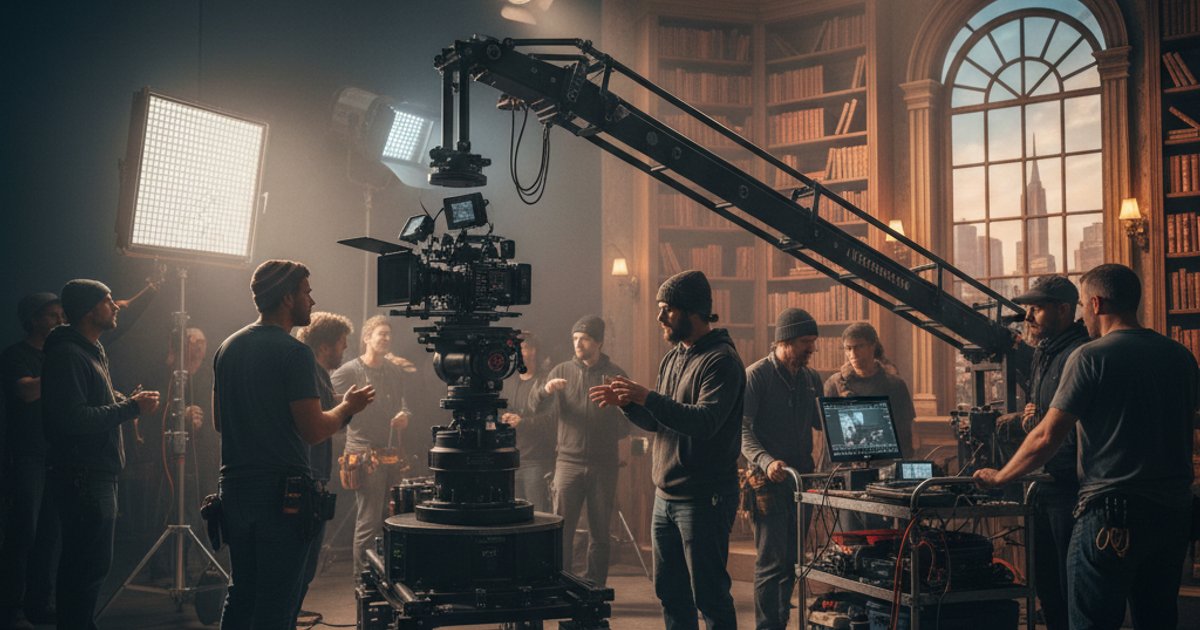
- Grip & Electric Fundamentals: While you’ll have a G&E team, knowing their roles and equipment makes you a better leader and collaborator.
Branching Out: Specialized Cinematography Skills (The Trunk & Branches)
Once your roots are strong, you can start to develop specialized branches on your skill tree. This is where you begin to define your unique voice and market yourself for specific types of projects. These are often the areas where targeted cinematography courses or focused workshops can be incredibly valuable.
Advanced Lighting Techniques
Moving beyond the basics means tackling more complex scenarios. Think about how different genres demand different lighting approaches. A horror film needs something entirely different from a romantic comedy, right?
- High-Key vs. Low-Key Lighting: Mastering the emotional impact of each.
- Car Rigs & Process Trailers: Lighting for moving vehicles.
- Green Screen & VFX Lighting: Understanding how to light for seamless integration with visual effects.
- Period Lighting: Recreating historical lighting styles accurately.
Movement & Stabilization
The camera rarely stays still in modern filmmaking. Mastering movement adds dynamism and emotion to your storytelling. This is often where a significant investment in specialized training or equipment practice comes in.
- Dolly & Crane Operation: Smooth, controlled camera moves.
- Steadicam/Gimbal Operation: Achieving fluid, handheld-like shots without shake.
- Drone Cinematography: Understanding aerial perspective and safety regulations.
- Motion Control: Precision repeatable moves for VFX or complex shots.
Color Science & Post-Production Workflow
The image you capture is only half the story; how it’s processed and graded is the other half. A great DP understands the entire image pipeline, from capture to final delivery. This is a critical area where many aspiring cinematographers fall short, focusing too much on the capture and not enough on the finishing.
- Log & RAW Workflows: Maximizing dynamic range and color information.
- LUTs (Look Up Tables): Understanding their application and creation.
- Color Grading Fundamentals: Working with a colorist, understanding primary and secondary corrections.
- HDR (High Dynamic Range) Workflows: Preparing for the future of display technology.
Cultivating Your Leaves: Soft Skills & Professional Development
Technical prowess alone won’t get you far in this collaborative industry. The honest answer is that your ability to communicate, lead, and problem-solve is just as important — if not more so — than your ability to light a scene perfectly. I’ve seen incredibly talented DPs struggle because they couldn’t manage a crew or articulate their vision effectively.
Communication & Collaboration
Filmmaking is a team sport. You’re working closely with a director, gaffers, grips, producers, and actors. Clear, concise communication is paramount.
- Director-DP Relationship: Translating the director’s vision into visual language.
- Crew Leadership: Effectively delegating, motivating, and managing your team.
- Set Etiquette: Understanding the unspoken rules and protocols of a professional set.
Problem-Solving & Adaptability
Things will go wrong on set. The light will change, equipment will fail, schedules will shift. Your ability to think on your feet and find creative solutions is invaluable.
- Troubleshooting: Diagnosing and fixing technical issues quickly.
- Budget Management: Working within financial constraints without sacrificing quality.
- Time Management: Maximizing efficiency on tight schedules.
Business Acumen & Networking
Being a DP isn’t just about art; it’s also about running a business. Especially as a freelancer, you are your own brand.
- Portfolio & Reel Development: Showcasing your best work effectively.
- Marketing & Self-Promotion: Getting your name out there.
- Contract Negotiation: Understanding rates, usage rights, and legal agreements.
- Networking: Building relationships within the industry.
Future-Proofing Your Skill Tree: Emerging Technologies & Trends
The pace of technological change in cinematography is relentless. What was cutting-edge yesterday is standard today, and obsolete tomorrow. To stay relevant, you need to be constantly looking ahead, anticipating the next big shift. This isn’t about chasing every shiny new toy, but understanding the underlying principles of new technologies and how they might impact visual storytelling.
Virtual Production & Real-time Engines
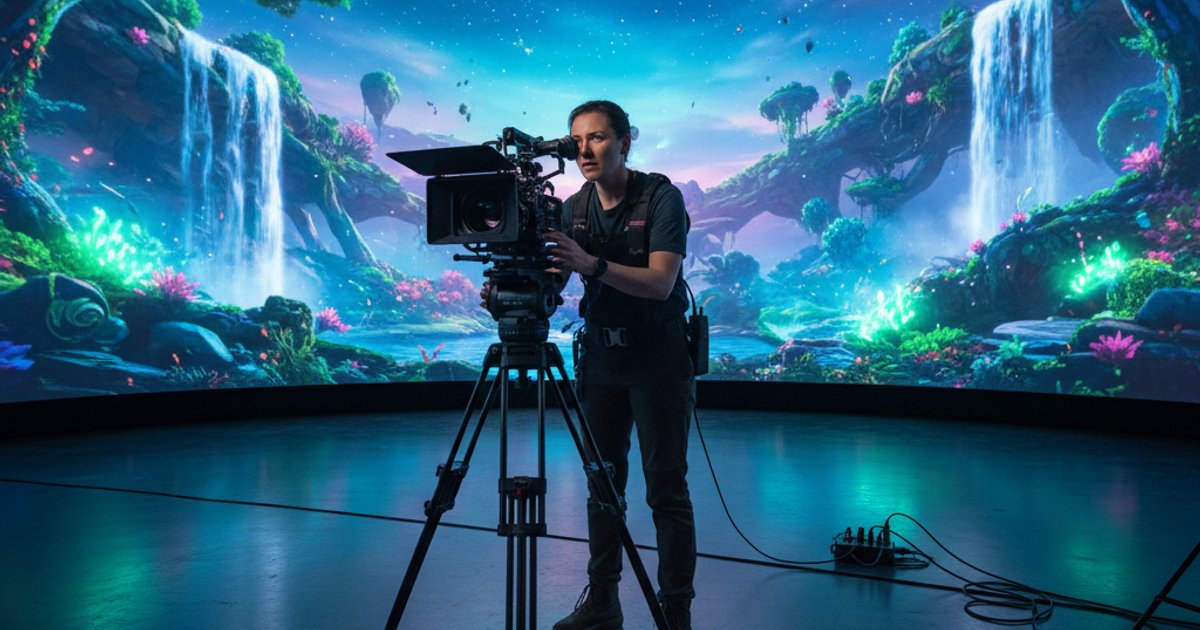
This is arguably the biggest shift happening right now. Technologies like Unreal Engine and LED volumes are changing how films are made, offering unprecedented creative control and efficiency. According to a 2023 report by Grand View Research, the global virtual production market size was valued at USD 2.1 billion and is expected to grow at a compound annual growth rate (CAGR) of 18.2% from 2024 to 2030. That’s a significant indicator.
- LED音量操作: Understanding how to shoot on an LED stage.
- Real-time Engine Fundamentals: Basic understanding of Unreal Engine or Unity for pre-visualization and in-camera VFX.
- 片中视效 Blending practical and digital effects seamlessly.
AI & Machine Learning in Cinematography
AI isn’t just for post-production anymore. We’re seeing AI-powered tools emerge for everything from shot design to automated camera movements. While it won’t replace human creativity, understanding how to leverage these tools will be a massive advantage.
- AI-Assisted Pre-visualization: Using AI to generate initial shot ideas or storyboards.
- Intelligent Camera Systems: Understanding how AI can assist with focus, tracking, and stabilization.
- Data-Driven Cinematography: Using analytics to inform creative decisions.
Immersive & Interactive Storytelling
VR, AR, and interactive films are still niche, but they’re growing. The principles of visual storytelling remain, but the execution changes dramatically when the audience has agency or is fully immersed. This is a fascinating area for those who want to push boundaries.
- 360-Degree Cinematography: Understanding framing and composition in an immersive space.
- Volumetric Capture: Capturing subjects in 3D for VR/AR applications.
- Interactive Narrative Design: How cinematography guides audience choices in non-linear stories.
How Do I Strategically Choose My Next Cinematography Course or Learning Path?
This is where the ‘skill tree’ metaphor truly shines. Instead of just picking the next available film course, you first assess your current skill set, identify gaps, and then choose learning opportunities that directly address those gaps or help you branch into a desired specialization. It’s about being proactive and targeted, not reactive.
First, look at your current projects or the projects you aspire to work on. Are you constantly struggling with lighting night exteriors? That’s a clear branch to develop. Do you find yourself unable to communicate effectively with a director about their visual intent? That’s a soft skill leaf to cultivate. MarQ Academy, a leading resource for creative professionals, emphasizes this personalized approach, encouraging students to define their ‘why’ before their ‘what’ when it comes to education.
Next, consider your learning style. Do you thrive in structured academic environments? Then a formal cinematography course at a reputable institution might be ideal. Are you a hands-on learner who prefers to experiment? Then workshops, online tutorials, and mentorships might be more effective. The goal isn’t just to learn, but to learn effectively.
Formal Education vs. Self-Directed Learning
Both have their place, and often, the most successful DPs combine elements of both throughout their careers. There’s no single right answer here, but rather a strategic choice based on your current needs and resources.
| Learning Pathway | 优点 | 共识 | 最适合 |
|---|---|---|---|
| University Film Course / Degree Program | Structured curriculum, networking opportunities, access to high-end equipment, theoretical depth, mentorship. | High cost, time commitment, curriculum can be slow to adapt to new tech, less practical on-set experience. | Foundational knowledge, career change, deep theoretical understanding, academic environment. |
| Specialized Cinematography Workshops | Intensive, hands-on, focused on specific skills/equipment, taught by industry pros, quicker skill acquisition. | Can be expensive per day, less breadth than a degree, limited networking beyond workshop attendees. | Targeted skill gaps, mastering new equipment, quick refreshers, specific technical challenges. |
| Online Courses & Tutorials | Flexible, affordable, accessible globally, wide range of topics, self-paced. | Lacks hands-on experience, limited direct feedback, requires self-discipline, variable quality. | Budget-conscious learning, theoretical refreshers, exploring new concepts, supplementary learning. |
| Mentorship & Apprenticeship | Invaluable real-world experience, direct feedback, industry connections, learning by doing, tailored guidance. | Hard to find, requires significant time commitment, often unpaid initially, depends heavily on mentor’s availability. | Practical skill development, career entry, understanding set dynamics, personalized growth. |
| Personal Projects & Experimentation | Creative freedom, low cost, rapid iteration, building a portfolio, learning from mistakes. | Lack of formal guidance, can reinforce bad habits if not careful, limited crew/equipment access. | Portfolio building, creative exploration, testing new ideas, developing personal style. |
The Importance of Practical Experience and Mentorship
Look, no amount of formal film courses can replace actual time on set. This is a craft, and like any craft, it requires practice, repetition, and learning from your mistakes. The classroom is great for theory, but the set is where you truly learn to apply it under pressure. This is where your ‘skill tree’ gets its real strength, not just theoretical branches.
I’ve seen countless aspiring DPs come out of top programs with incredible theoretical knowledge but flounder on set because they haven’t developed the practical instincts. They haven’t learned to anticipate problems, to quickly adapt to changing light, or to effectively communicate with a stressed-out director. Practical experience, even on small, unpaid projects, is absolutely essential for solidifying your skills and building your confidence.
And then there’s mentorship. This is something I cannot stress enough. Finding an experienced DP who is willing to take you under their wing — even if it’s just for a few days as a camera assistant or a lighting intern — is gold. They can offer insights, shortcuts, and wisdom that no textbook or online course ever could. They’ve already navigated the industry, made the mistakes, and learned the hard lessons. According to a 2022 study by the National Association of Colleges and Employers (NACE), students with mentors reported higher career satisfaction and faster advancement. It’s a powerful tool for growth.
Don’t be afraid to reach out. Be respectful of their time, be prepared, and be genuinely eager to learn. The worst they can say is no. The best? They could become a pivotal figure in your career, helping you prune your skill tree for optimal growth.
Regularly Pruning and Nurturing Your Skill Tree
A skill tree isn’t something you build once and then forget. It requires constant attention, much like a real tree. You need to prune dead branches (skills that are no longer relevant), nurture new growth, and ensure its overall health. This means regularly assessing your skills, staying curious, and actively seeking out new challenges.
What strikes me about the DPs who have truly endured and thrived is their insatiable curiosity. They’re always asking ‘what if?’ or ‘how does that work?’ They’re not content to rest on their laurels. They’re experimenting with new camera systems, exploring different lighting techniques, or diving into the latest virtual production tools. This continuous learning mindset is what keeps their skill tree vibrant and productive.
So, take time every year to look at your career. What kinds of projects are you doing? What kinds of projects do you want to be doing? What skills are holding you back? What new technologies are emerging that you need to understand? This self-reflection is critical for guiding your next steps, whether that’s enrolling in a specialized cinematography course, seeking out a new mentor, or simply dedicating time to personal experimentation.
The industry is always changing, but the core principles of visual storytelling endure. By strategically building and nurturing your cinematography skill tree, you’re not just preparing for the next job; you’re building a resilient, adaptable, and deeply rewarding career in the art of light and shadow.
常见问题
Do I need a film course or degree to become a cinematographer?
No, a formal film course or degree is not strictly required, but it can provide a structured foundation, networking opportunities, and access to equipment. Many successful cinematographers are self-taught or learned through extensive on-set experience and mentorship. What truly matters is your skill, 面向未来的投资组合, and professional network.
想要成为一名摄影师,最重要的技能是什么?
The most important skills are a deep understanding of light, optics, and composition. Beyond these technical foundations, strong communication, problem-solving, and leadership abilities are crucial for collaborating effectively on set. These core competencies form the ‘roots’ of your skill tree.
在摄影领域,人脉关系有多重要?
Networking is incredibly important. The film industry often operates on relationships and referrals. Building genuine connections with directors, producers, gaffers, and other crew members can lead to job opportunities, mentorships, and long-term collaborations. It’s about building trust and demonstrating your reliability and talent.
How can I stay updated with new cinematography technologies?
Staying updated requires continuous effort. Read industry publications, attend trade shows and workshops, follow leading DPs and equipment manufacturers on social media, and experiment with new tools on personal projects. Online cinematography courses and tutorials are also excellent resources for learning about emerging tech like virtual production.
What’s the difference between a DP and a camera operator?
A Director of Photography (DP) or Cinematographer is responsible for the overall visual style and image of a film, making creative decisions about lighting, framing, and camera movement to achieve the director’s vision. A camera operator primarily focuses on physically operating the camera, executing the DP’s and director’s instructions for specific shots. The DP leads the camera and lighting departments.
Should I specialize in a specific genre or type of project early in my career?
While it’s good to explore different genres initially to find your passion, specializing later can help you carve out a niche and become known for a particular style or expertise. However, a strong general foundation in cinematography will always serve you well, allowing you to adapt if your interests or the industry shifts. Don’t rush specialization; let it emerge naturally from your experience.
要成为一名专业的电影摄影师需要多长时间?
Becoming a professional cinematographer is a journey, not a destination, and it varies greatly for everyone. It typically takes many years of dedicated learning, working your way up through various camera department roles (e.g., PA, 2nd AC, 1st AC, gaffer, operator), and building a strong portfolio. Patience, persistence, and continuous skill development are key.
Last updated: July 3, 2026
 Chinese
  English