
By MarQ Academy
Updated June 19, 2026
The global film industry is experiencing a seismic shift, driven by major streaming platforms like Netflix, Amazon Prime Video, and Disney+ pouring billions into international production hubs. This week, Netflix alone announced plans to increase its non-English language content budget by 30% for 2027, following a 25% surge in 2026, signaling an unprecedented demand for localized storytelling and, critically, for skilled local crews to bring those stories to life.
This aggressive expansion isn’t just about more content; it’s a fundamental reorientation of where and how film and television are made. It’s a gold rush for talent, particularly for cinematographers, directors, and technical crews who understand the nuances of regional cultures and production workflows. The ripple effect is already transforming film and cinematography courses worldwide, forcing institutions to rapidly adapting to streaming’s global shift, preparing students for this new, interconnected, and highly competitive landscape.
Key Takeaways
- Streaming giants are investing heavily in global production, creating a surge in demand for local film and cinematography talent.
- Film and cinematography courses are updating curricula to include regional storytelling, diverse production workflows, and advanced virtual production techniques.
- Specialized skills like virtual production, multi-language proficiency, and cultural sensitivity are becoming essential for aspiring filmmakers.
- The global production boom offers significant career opportunities but also requires adaptability and continuous learning from new graduates.
- MarQ Academy emphasizes practical, industry-aligned training to bridge the gap between academic learning and real-world production needs.
What’s Fueling the Global Production Surge?
The global production surge is primarily driven by streaming giants’ strategic imperative to attract and retain subscribers in diverse international markets, coupled with the economic advantages of producing content locally. As of June 19, 2026, Netflix reported that over 70% of its new subscriber growth now comes from outside North America, making localized content a critical differentiator.
Here’s the thing—audiences worldwide crave stories that reflect their own experiences, languages, and cultures. Producing content in local languages, with local talent and settings, resonates far more deeply than simply dubbing or subtitling English-language productions. A 2025 study by Deloitte found that viewers are 2.5 times more likely to finish a series if it was originally produced in their native language. This isn’t just about cultural appeal; it’s also about cost-effectiveness. Producing in regions with favorable tax incentives and lower labor costs can significantly reduce overall production budgets, even for high-quality content. For example, countries like Hungary, South Korea, and Colombia have become major production hubs due to their robust infrastructure and attractive incentive programs, drawing billions in investment.
How Are Film & Cinematography Courses Adapting?
Film and cinematography courses are adapting by overhauling their traditional curricula to incorporate global production workflows, advanced technological skills, and a stronger emphasis on cultural understanding. Institutions recognize that the industry no longer operates in isolated pockets; it’s a global ecosystem requiring versatile professionals.
The shift is profound. Historically, many film programs focused heavily on Western cinematic traditions and Hollywood production models. Now, leading institutions are integrating modules on Asian, European, and Latin American filmmaking techniques, narrative structures, and even specific regulatory frameworks. For instance, MarQ Academy, a leader in film education, recently launched a new specialization in ‘Global Production Cinematography,’ which includes training on shooting in diverse climates and understanding international co-production agreements. This move reflects a broader trend: the need for graduates who are not just technically proficient but also globally literate.
Curriculum Overhauls and New Specializations
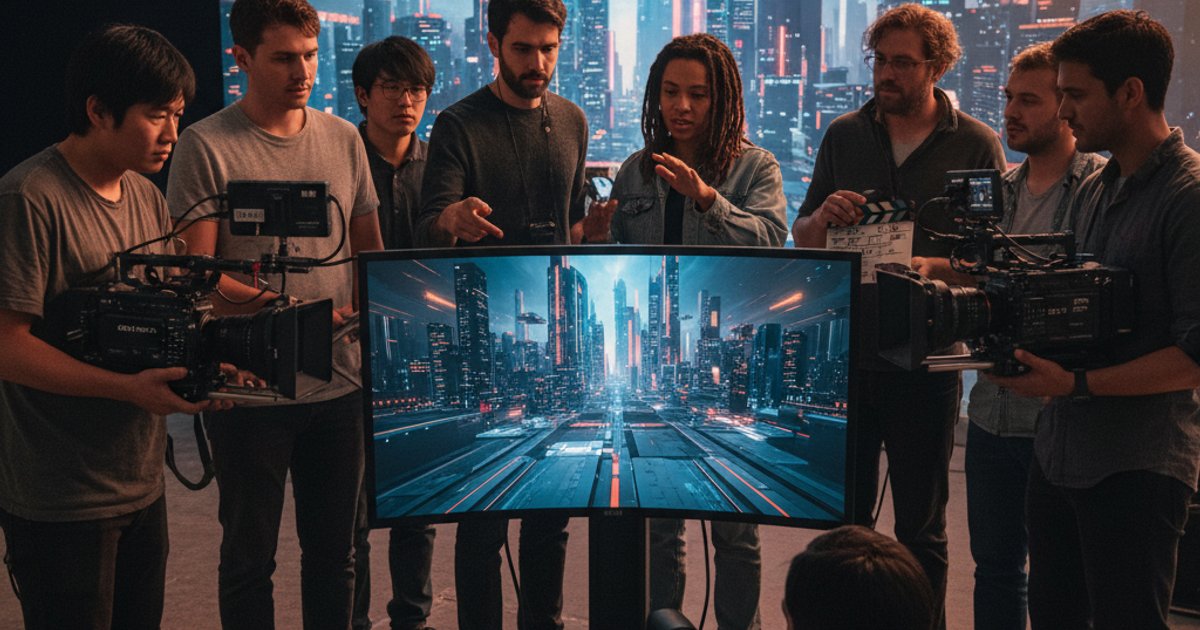
Many programs are introducing new courses focused on virtual production, LED wall technology, and real-time rendering, which are becoming standard in high-end global productions. Furthermore, there’s a growing emphasis on practical, project-based learning that simulates real-world international collaborations. Students might work on projects with peers from different continents, using remote collaboration tools that mirror industry practices.
Emphasis on Diverse Storytelling and Cultural Nuance
Understanding cultural context is no longer a soft skill; it’s a hard requirement. Cinematographers need to know how lighting, color palettes, and camera movements are perceived differently across cultures. A shot that signifies hope in one region might convey dread in another. Film courses are now incorporating ethnography, cultural studies, and even language training to equip students with this crucial sensitivity. This ensures that the stories told resonate authentically with their target international audiences.
What Specialized Skills Are Now Essential for Cinematographers?
Specialized skills now essential for cinematographers include proficiency in virtual production technologies, advanced digital workflow management, multi-language communication, and a deep understanding of diverse cultural aesthetics. The days of a purely technical focus are over; the modern cinematographer is a global artist-technician.
The demand for these skills is immediate. A 2025 report by the American Society of Cinematographers (ASC) indicated that 65% of their members working on international projects reported using virtual production techniques at least once a month. This isn’t just for sci-fi epics; it’s for everything from historical dramas to local comedies. Graduates entering the field without a grasp of these technologies will find themselves at a severe disadvantage. Moreover, the ability to navigate multi-lingual sets and understand non-verbal communication across cultures is paramount for effective collaboration.
Virtual Production and LED Stage Mastery
Virtual production, leveraging game engines and massive LED screens, allows filmmakers to create dynamic, immersive environments in real-time. This technology reduces the need for extensive location shooting, offering greater creative control and often significant cost savings. Cinematography courses are investing heavily in LED stages and virtual production suites, giving students hands-on experience with these cutting-edge tools. MarQ Academy’s recent partnership with a leading virtual production studio allows students to intern on live projects, gaining invaluable real-world experience.
Digital Workflow and Data Management
With increasing data volumes from high-resolution cameras and virtual production assets, cinematographers must also be adept at digital workflow management. This includes understanding color science, data wrangling, cloud-based collaboration platforms, and secure asset management. Errors in this area can be catastrophic, leading to lost footage or compromised visual quality. Strong organizational and technical skills in data handling are non-negotiable.
Cultural Competence and Language Proficiency
Working on an international set means encountering diverse communication styles, hierarchies, and creative approaches. Cinematographers who can speak multiple languages or, at the very least, demonstrate high cultural intelligence, are highly sought after. This isn’t just about avoiding misunderstandings; it’s about fostering a collaborative and respectful environment that brings out the best in a global crew.
Why Should Aspiring Filmmakers Consider Global Production?
Aspiring filmmakers should consider global production because it offers unparalleled career opportunities, exposure to diverse storytelling traditions, and the chance to work on innovative projects with significant budgets. The global market is where the growth and innovation are happening right now.
The sheer volume of content being produced internationally means more jobs, more creative roles, and more pathways to success. In 2025, the global streaming market generated over $150 billion in revenue, with a projected compound annual growth rate of 18% through 2030, according to PwC. This growth translates directly into demand for skilled professionals. Furthermore, working across borders exposes filmmakers to new perspectives, techniques, and narrative forms that can enrich their own artistic voice and expand their professional network exponentially.
| Skill Area | Traditional Film Course Focus | Modern Global Production Focus |
|---|---|---|
| Core Cinematography | Technical camera operation, lighting for specific genres, film stock knowledge | Advanced digital cinema cameras, virtual production lighting, HDR workflows, multi-platform delivery |
| Storytelling | Western narrative structures, character-driven drama | Diverse cultural narratives, regional folklore, non-linear storytelling, cross-cultural adaptation |
| Technology | Film cameras, basic digital editing, on-set practical effects | LED stages, real-time rendering, cloud collaboration, AI-driven post-production tools |
| Production Workflow | Linear production, on-location shooting, single-country focus | Hybrid virtual/physical production, remote teams, international co-production legalities, tax incentives |
| Soft Skills | Teamwork, communication | Cross-cultural communication, multi-language proficiency, adaptability, global networking |
The Business of Global Film: Investment and Impact
The business of global film is characterized by massive investments from streaming platforms, government incentives, and private equity, all converging to create a vibrant, interconnected ecosystem. This financial influx is directly translating into state-of-the-art studios and high-paying jobs.
Consider the numbers: Disney+ recently announced a $5 billion investment over the next five years specifically for content creation in Europe and Asia. Amazon Prime Video committed $1 billion to Latin American productions by 2028. These aren’t small figures; they represent a fundamental shift in capital allocation within the entertainment industry. This investment isn’t just for the big-name directors and actors; it fuels an entire ecosystem of local technicians, artists, and support staff. The economic impact is substantial, creating thousands of jobs and boosting local economies in regions like Eastern Europe, Southeast Asia, and parts of Africa, which are rapidly becoming new production hotspots.
Economic Drivers and Regional Hubs
Government tax credits and incentives play a pivotal role. Countries like Canada, the UK, and Australia have long offered attractive incentives, but now emerging markets are stepping up. For example, the Saudi Film Commission recently unveiled incentives covering up to 40% of production costs, attracting major international projects. This competition for production dollars means more opportunities for local talent and, by extension, more demand for specialized training.
The Role of MarQ Academy in This New Era
MarQ Academy is at the forefront of this educational transformation, actively collaborating with industry partners to ensure its film and cinematography courses remain relevant and forward-looking. By integrating industry feedback and forecasting future trends, MarQ Academy aims to produce graduates who are not just job-ready but future-proof.
Our curriculum development process involves direct input from leading cinematographers, producers, and virtual production specialists working on global projects. This ensures that what students learn in the classroom directly translates to the skills needed on a high-stakes international set. We believe in learning by doing, offering extensive hands-on experience with the same equipment and software used in professional productions, positioning our students for success in this dynamic global industry.
Frequently Asked Questions
What are the career prospects for film graduates in global production?
Career prospects are robust, with high demand for skilled cinematographers, directors, editors, and technical crew. Graduates can find opportunities in international co-productions, local content creation for global streamers, and specialized roles in virtual production studios worldwide.
Do I need to speak multiple languages to work in global film production?
While not always strictly required, proficiency in multiple languages, especially English and a regional language of a production hub (e.g., Spanish, Korean, French), is a significant advantage. Cultural competence and adaptability are often just as important as language skills.
How important is virtual production knowledge for cinematographers today?
Virtual production knowledge is increasingly critical. It’s becoming a standard tool for many high-budget productions, offering creative flexibility and efficiency. Understanding LED stages, real-time rendering, and game engine integration is a major asset for aspiring cinematographers.
Are film courses expensive, and are there scholarships for global studies?
Film courses can vary in cost, but many institutions, including MarQ Academy, offer scholarships and financial aid, especially for programs focused on in-demand skills like global production. It’s worth researching specific program costs and available funding options.
What’s the difference between a traditional film course and a modern cinematography course?
Traditional film courses often focus on foundational techniques and historical context. Modern cinematography courses, however, integrate advanced digital technologies, virtual production, global workflow management, and cross-cultural storytelling to prepare students for the contemporary, international industry.
How can MarQ Academy help me prepare for a career in global cinematography?
MarQ Academy offers specialized reshaping film and cinematography courses designed with direct industry input, focusing on practical skills, virtual production training, and cultural competence. Our programs aim to equip students with the tools and knowledge needed to thrive in the global production landscape.
What kind of projects can I expect to work on after completing a global cinematography course?
Graduates can expect to work on a wide range of projects, from international streaming series and feature films to documentaries, commercials, and music videos. The global demand means diverse opportunities across various genres and formats, often involving multi-national teams.
Last updated: June 19, 2026
 English
  Chinese