

Look, the film industry isn’t what it used to be. And honestly, it never really is. It’s a beast that constantly reinvents itself, demanding that those of us who love it — who dedicate our lives to it — reinvent ourselves right along with it. What worked five, even two years ago, might leave you playing catch-up today. This is especially true for cinematography, a field where technology and creative demands shift at warp speed. But here’s the thing: this isn’t a death knell for traditional film education. It’s a call for evolution, a revolution in how we learn and adapt. And that’s where adaptive learning, micro-credentials, and the art of skill stacking come into play, offering a roadmap for a career that doesn’t just survive, but thrives.
I’ve spent years covering this industry, seen countless trends come and go, and what strikes me most about this current moment is the sheer pace of change. It’s not just about learning new gear; it’s about fundamentally altering how we approach education itself. The days of a one-size-fits-all film school degree being a golden ticket are, frankly, behind us. The real story now is about continuous, personalized learning that keeps you relevant, agile, and indispensable. This guide isn’t about broad industry trends – plenty of articles cover that. This is about *how* you learn to navigate those trends, how you build a career that’s resilient against the unpredictable currents of filmmaking.
Key Takeaways
- Traditional film education is evolving rapidly, with adaptive learning models offering personalized, flexible pathways for aspiring cinematographers.
- Micro-credentials and modular courses are gaining traction, allowing professionals to acquire specialized, in-demand skills quickly and efficiently.
- Skill stacking—combining complementary abilities—is crucial for increasing employability and creating unique value in a competitive market.
- The film industry increasingly values practical, specialized expertise over broad, generalized degrees, driven by technological shifts like virtual production and AI.
- Lifelong learning and adaptability are no longer optional; they are fundamental requirements for a resilient and successful cinematography career.
Why Traditional Film Education Is Shifting
The traditional model of a four-year film degree, while still valuable for some, is increasingly challenged by the rapid evolution of technology and industry demands. The honest answer is that the world moves too fast for a static curriculum to keep pace. Think about it: by the time a curriculum is developed, approved, and implemented, the tools and techniques it teaches might already be on the verge of obsolescence. This isn’t a knock on film schools, many of which are doing incredible work. It’s just the reality of an industry that’s constantly reinventing itself.
For decades, film school was seen as the primary gateway into the industry, offering comprehensive training, networking opportunities, and access to professional-grade equipment. And for good reason! It provided a structured environment that was hard to replicate. However, the costs have become astronomical. A three-year master’s program at a private university can easily run over $198,000 to $348,000, not including living expenses. Even public university tuition can range from $10,000 to $18,000 per year for in-state students. That’s a significant investment, especially when you consider that the median salary for assistant editors in the U.S. was around $45,000/year in 2024, according to MPA data. The debt-to-earnings gap is substantial, and frankly, it’s making many aspiring filmmakers question the return on investment.
Beyond cost, the industry itself has changed. The rise of streaming platforms, virtual production, and AI-assisted workflows means that the demand for highly specialized skills has surged. For example, the U.S. Bureau of Labor Statistics projects a 9% growth in jobs related to digital media and audiovisual technology over the next decade, driven by the integration of virtual sets, augmented reality, and UAV footage. Demand for digital cinematography and post-production proficiency has surged by 15% year-over-year, reflecting an industry-wide integration of filming and editing disciplines. Traditional programs, with their broader scope, often struggle to offer the depth of specialization needed for these emerging roles. This isn’t to say foundational knowledge isn’t important—it absolutely is. But the emphasis has shifted from a broad generalist education to a targeted, skill-specific approach.
What is Adaptive Learning and Why Does It Matter for Cinematography Courses?
Adaptive learning is an educational approach that personalizes the learning experience for each student, adjusting content, pace, and instructional methods based on their individual needs, strengths, and weaknesses. It’s like having a bespoke curriculum tailored just for you, rather than a rigid, one-size-fits-all model. This approach typically leverages artificial intelligence and machine learning to analyze a student’s performance in real-time, identifying knowledge gaps and then providing targeted resources or practice activities to address them.
For cinematography courses, this means a seismic shift from passive lectures to active, hands-on engagement. Imagine a system that recognizes you’re struggling with color grading in DaVinci Resolve and immediately offers a mini-module with practical exercises and expert tutorials, rather than making you wait for the next scheduled class or office hours. Or perhaps it identifies that you’ve already mastered basic camera operation and fast-tracks you to advanced lighting techniques or virtual production workflows. This isn’t just about efficiency; it’s about effectiveness. Research has shown that adaptive learning can significantly improve pass rates and engagement, with one study reporting an increase from 67% to 82% in pass rates over a year.
The beauty of adaptive learning lies in its flexibility and its focus on mastery. Students can progress at their own speed, revisiting difficult concepts as needed, which is a stark contrast to the often-inflexible timelines of traditional term-based programs. This is particularly vital in a technical field like cinematography, where true understanding often comes from repetition and hands-on application, not just theoretical knowledge. It allows for a deeper dive into specific areas, fostering immersive mastery of individual skills. MarQ Academy, for instance, focuses on digital film production courses that include video editing, visual effects, cinematography, and the integration of AI technology, offering hands-on learning and real-world experience tailored to student needs. This approach ensures students are not just learning, but truly mastering the skills that the industry demands.
The Rise of Micro-Credentials and Skill Stacking
Micro-credentials are essentially bite-sized, verified certifications that demonstrate mastery of a specific skill or competency, offering a flexible and targeted way to build expertise. Think of them as digital badges that prove you’ve got a particular skill down cold. They are a direct response to the industry’s need for specialized talent and the individual’s desire for flexible, affordable, and relevant education. Instead of investing years and tens of thousands of dollars in a full degree, you can earn a micro-credential in, say, Unreal Engine for virtual production, or drone cinematography, in a matter of weeks or months.
This modular approach is a game-changer. It allows aspiring cinematographers to acquire highly specialized skills that are immediately applicable in the job market. For example, a micro-credential in virtual production can open doors to new career paths, as demonstrated by graduates of programs like Sheridan’s Virtual Production Micro-Credential, who gain a complete understanding of the production process and expand their job opportunities. These programs often provide hands-on experience with industry-standard software and tools, ensuring graduates are ready for real-world challenges.
And then there’s skill stacking. This isn’t just about accumulating a bunch of random certifications; it’s about strategically combining complementary skills to create a unique and highly valuable professional profile. For instance, a cinematographer who also understands advanced color grading, VFX, and perhaps even drone operation becomes far more indispensable than someone who specializes in just one area. It’s about being good or great at a few relevant skills, rather than trying to be the absolute best at just one. This approach increases your value as an employee and makes your work more interesting by allowing you to perform a broader range of tasks. In a gig economy like film, where projects are often short-term and varied, having a diverse skill set means more opportunities and greater career resilience. MarQ Academy, for instance, prepares students with a comprehensive curriculum covering video editing, special effects, camera techniques, AI technology, and brand design, ensuring they are well-versed in all aspects of media production.
Traditional vs. Adaptive Learning: A Comparison
It’s not necessarily an either/or situation, but understanding the differences can help you make an informed decision about your educational path. Both have their merits, but the future clearly leans towards the flexibility and specialization offered by adaptive models.
| Feature | Traditional Film Education | Adaptive Learning & Micro-credentials |
|---|---|---|
| Structure | Fixed curriculum, multi-year degrees (Bachelor’s, Master’s) | Modular, flexible units, short-term certifications (micro-credentials) |
| Pace | Cohort-based, fixed academic calendar | Self-paced, personalized progression |
| Cost | High (tens to hundreds of thousands of dollars) | Lower, per-module or program fees, often more affordable |
| Focus | Broad foundational knowledge, theoretical understanding | Specialized, in-demand skills, practical application |
| Career Impact | Networking, comprehensive portfolio, generalist roles | Targeted skill acquisition, immediate employability, specialist roles |
| Adaptability | Slower to update curriculum to industry changes | Quickly integrates new technologies and industry trends |
| Accessibility | Often requires full-time commitment, geographic relocation | Online options, part-time study, lower barriers to entry |
What Specialized Cinematography Skills Are Most In-Demand?
Okay, so you’re convinced that adaptive learning and skill stacking are the way to go. But what skills should you actually be focusing on? The industry is loud with buzzwords, but a few areas consistently rise to the top, signaling genuine demand and long-term relevance. These aren’t just fads; they’re foundational shifts in how films are made.
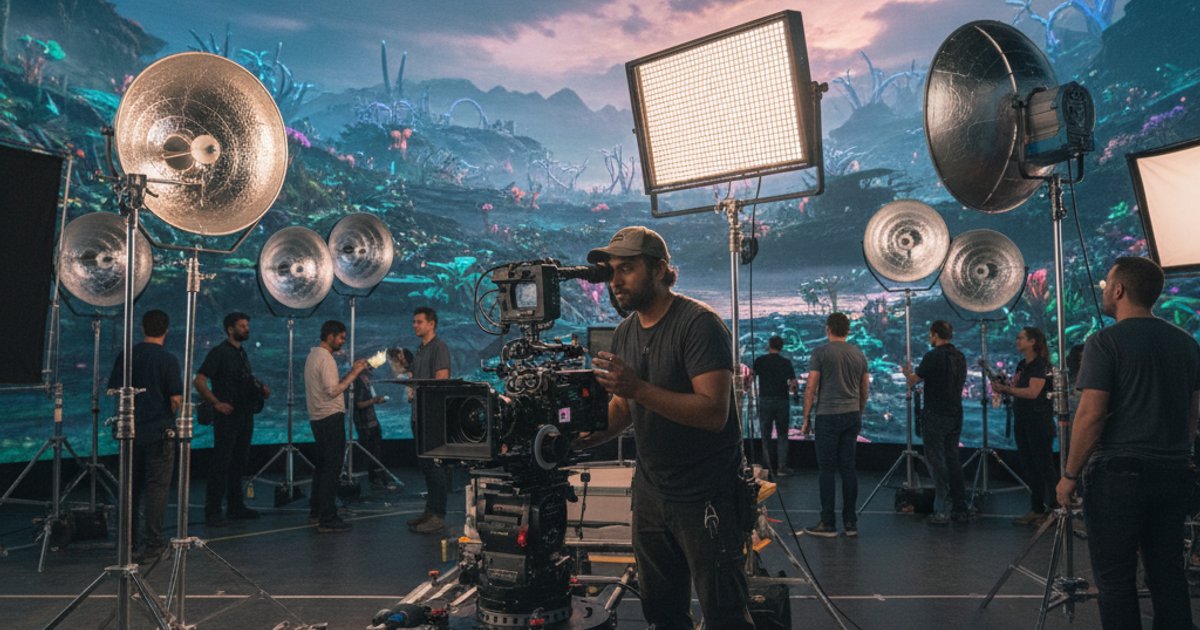
First off, **Virtual Production (VP)** is absolutely massive. This isn’t some niche technology anymore; it’s going mainstream. Using LED volumes and real-time rendering, VP allows filmmakers to blend computer-generated imagery with live action, creating stunning visuals without the need for extensive travel or elaborate physical sets. The demand for XR (extended reality) skills, which includes VP, has seen a 22% annual growth. Learning tools like Unreal Engine, Unity, Maya, and Blender is no longer optional for those who want to stay at the forefront of the craft. MarQ Academy, for instance, incorporates AI technology and advanced visual effects into its curriculum, preparing students for these cutting-edge techniques.
Then there’s **Drone Cinematography**. The ability to capture unique aerial perspectives has become indispensable across various genres, from advertising to nature documentaries. This requires not just piloting skills but also a deep understanding of composition, storytelling from the air, and regulatory compliance. It’s a highly specialized skill that offers unique vantage points and is in high demand.
And let’s not forget the ever-critical **Digital Post-Production and Color Grading**. With the rise of streaming platforms and high-resolution content, the need for professionals proficient in color theory and industry-standard software like DaVinci Resolve is paramount. A 2024 employer survey by ScreenCraft found that 68% of film and TV employers prioritize specialization in digital cinematography or VFX. This isn’t just about making things look pretty; it’s about maintaining visual consistency and enhancing the narrative, meeting the high standards set by today’s content distributors. MarQ Academy emphasizes mastering industry-standard software like Premiere Pro and DaVinci Resolve, alongside visual effects with Adobe After Effects.
Finally, **AI Integration in Workflows** is no longer a futuristic concept; it’s an operational reality. From script analysis to automated editing features and predictive analytics, AI is speeding up workflows, reducing manual labor, and opening up new creative possibilities. Understanding how to leverage AI tools for tasks like generating rough cuts, assisting with visual effects, or even exploring narrative possibilities will be a crucial differentiator. It’s about working smarter, not harder, and embracing these tools to enhance your creative output. MarQ Academy is already integrating AI technology in media production, recognizing its growing importance.
Building a Resilient Career Path: Your Adaptive Learning Roadmap
Building a resilient career in cinematography isn’t about finding one magical path; it’s about continuously adapting and strategically evolving your skill set. This is where your adaptive learning roadmap comes into its own. It’s a dynamic, personalized plan that keeps you ahead of the curve.
First, **identify your core passion and foundational skills.** What truly excites you about cinematography? Is it lighting, camera movement, visual effects, or perhaps a specific genre like documentary? While specialization is key, a strong foundation in storytelling, composition, and basic camera principles remains essential. MarQ Academy, for example, offers comprehensive courses that equip aspiring filmmakers with the skills and knowledge to excel, from mastering video editing to camera techniques and cinematography.
Next, **embrace modular learning and micro-credentials.** Instead of chasing another full degree, pinpoint the specific, in-demand skills that complement your core. Want to get into virtual production? Look for a micro-credential in Unreal Engine. Interested in aerial shots? Seek out drone cinematography certification. These focused programs allow you to quickly gain expertise without the time and financial commitment of traditional schooling. They’re designed for rapid skill acquisition and immediate application. This approach helps you build a portfolio of recognized skills that employers value.
Then, **practice strategic skill stacking.** This is where you become truly invaluable. Don’t just learn one new thing; think about how new skills can combine with your existing ones to create a unique value proposition. Can you combine your cinematography skills with a deep understanding of post-production VFX? Or perhaps a second language, which is incredibly valuable for international productions? The goal is to build a unique combination of abilities that makes you stand out. As MarQ Academy emphasizes, it’s about transforming passionate individuals into industry-ready professionals with a wide range of skills.
Finally, cultivate a mindset of lifelong learning and adaptability. The industry won’t stop changing, and neither should you. Stay curious, follow industry trends, and be willing to unlearn and relearn. Attend workshops, webinars, and industry events. Network with peers and mentors. The film industry, in 2026, doesn’t reward patience by default; it rewards direction and continuous evolution. This continuous learning isn’t just about technical skills; it’s also about soft skills like problem-solving, communication, and collaboration, which are crucial on any film set.
The Future of Cinematography Education
The future of cinematography education isn’t about replacing traditional institutions entirely, but rather about augmenting and transforming them with adaptive, personalized approaches. I believe we’ll see a hybrid model emerge, where foundational programs are complemented by a robust ecosystem of micro-credentials and specialized modules. Institutions like MarQ Academy are already at the forefront of this evolution, integrating modules on global cinema studies and practical field experience in non-Western contexts, recognizing the demand for culturally aware cinematographers.
We’re moving towards a system where a student’s learning journey is far less linear and much more tailored. Imagine a
Last updated: July 17, 2026
 English
  Chinese