
By MarQ Academy
Updated August 2, 2026
The glitz and glamour of Hollywood often overshadow a darker reality: the entertainment industry, particularly film, is a high-pressure environment notorious for its grueling schedules, financial instability, and intense creative demands. But as of August 2, 2026, a significant shift is underway. Leading film making schools are no longer just teaching cinematography or screenwriting; they’re actively integrating mental health awareness, resilience training, and robust support systems directly into their core curricula. This isn’t just an add-on; it’s a fundamental reimagining of what it means to educate the next generation of filmmakers.
For years, the focus at any film making school was almost exclusively on technical prowess and artistic vision. And rightly so, to a degree. But the human element, the psychological toll of creative work under immense pressure, was often left unaddressed, or at best, relegated to an optional counseling service. What strikes me about this recent development is the proactive, almost urgent, embrace of mental well-being as a critical skill set—as vital as knowing how to light a scene or edit a sequence. It’s a smart move, and frankly, long overdue.
The answer is simple: the data has become impossible to ignore, and the industry is finally waking up to its responsibilities. For too long, the ‘tough it out’ mentality dominated, but the human cost has been immense. Studies have consistently highlighted alarming rates of depression, anxiety, and burnout among entertainment professionals.
A 2017 study by The Film and Television Charity in the UK, for instance, found that 87% of people in the film, TV, and cinema industry had experienced a mental health problem, compared to 60% of the general population. That’s a staggering difference. While that study is a few years old, more recent anecdotal evidence and ongoing industry surveys suggest these figures haven’t dramatically improved without intervention. The pandemic, with its unprecedented disruptions and isolation, only exacerbated these issues, pushing mental health to the forefront of industry discussions.
I’ve covered this sector for years, and the stories I’ve heard from young filmmakers struggling to cope with the relentless pace, the constant rejection, and the precarious nature of freelance work are heartbreaking. It’s not just about surviving; it’s about thriving. And you can’t thrive if your mental well-being is constantly under siege. So, for film making schools, it’s about preparing students for the *whole* reality of the industry, not just the creative fantasy.
This isn’t about a one-off seminar; it’s about systemic change. Film making schools are weaving mental health support into multiple facets of student life and academic instruction. This includes dedicated workshops, new course modules, and enhanced access to specialized counseling services.
For example, many institutions are now introducing compulsory modules on ‘Sustainable Filmmaking Practices’ or ‘Well-being in Creative Industries.’ These might cover topics like time management, setting healthy boundaries, managing creative blocks, dealing with criticism, and understanding the psychological impact of intense production environments. Some schools are even bringing in industry veterans who openly discuss their own struggles and coping strategies, demystifying the challenges and normalizing seeking help.
One notable partnership is between the American Film Institute (AFI) and The Wellness in Entertainment Foundation. This collaboration, announced last year, provides AFI students with access to a dedicated mental health portal, peer support networks, and workshops led by therapists specializing in creative professions. It’s a comprehensive approach, recognizing that different students need different kinds of support.
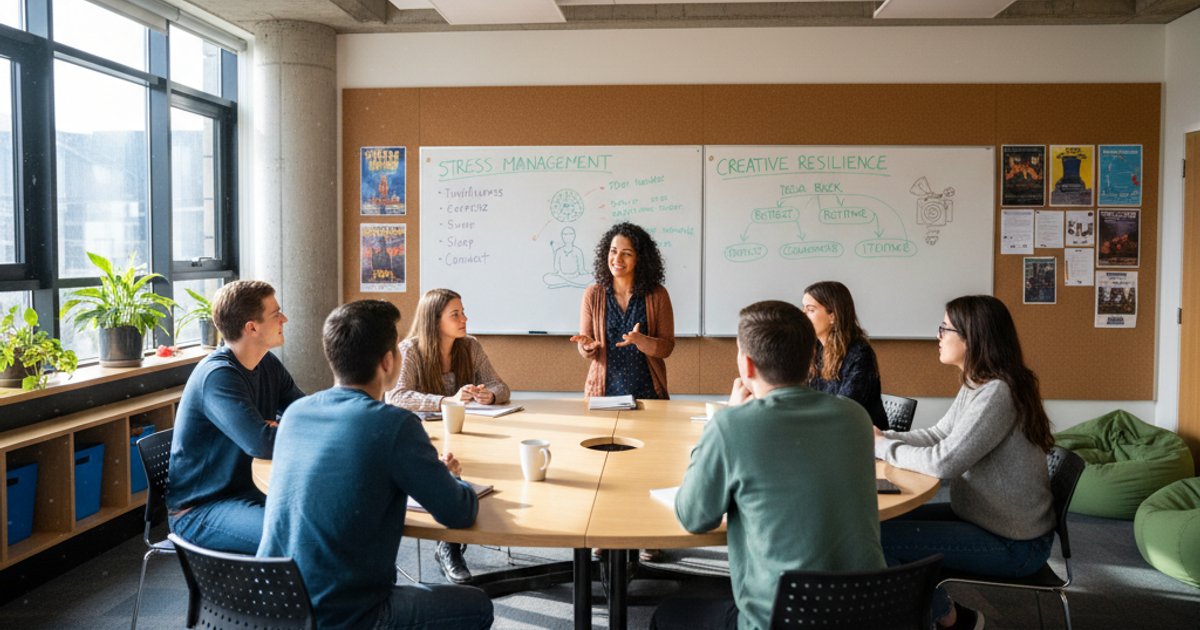
Beyond just awareness, the emphasis is heavily on building resilience. This means teaching students practical techniques to cope with stress, rejection, and the often-unpredictable nature of a film career. Think mindfulness exercises, cognitive behavioral therapy (CBT) techniques adapted for creative stressors, and conflict resolution skills.
What most people miss is that creative work, by its very nature, is vulnerable. You’re putting a piece of yourself out there for judgment. Learning how to process that, how to bounce back from setbacks, and how to maintain a sense of self-worth independent of external validation—these are skills that will serve them long after they graduate from any film making school. It’s about equipping them with an internal toolkit, not just external resources.
While the overall trend is positive, the depth and breadth of these mental health initiatives vary significantly between film making schools. Some institutions are leading the charge with comprehensive, integrated programs, while others are still in the early stages of development.
Here’s a quick look at how some approaches stack up:
| Program Aspect | Leading Institutions (e.g., USC, NYU, AFI) | Developing Institutions |
|---|---|---|
| Curriculum Integration | Mandatory modules on well-being, resilience, and industry psychology. | Optional workshops or guest lectures. |
| Dedicated Support Staff | On-campus therapists specializing in creative arts, peer mentorship programs. | General university counseling services. |
| Industry Partnerships | Formal collaborations with mental health organizations and production companies. | Informal connections, occasional industry speaker. |
| Focus on Prevention | Proactive skill-building, stress reduction techniques, healthy work-life balance. | Primarily reactive, addressing issues after they arise. |
| Assessment & Feedback | Regular student surveys, program evaluation, curriculum adjustments. | Limited or no formal assessment of mental health support efficacy. |
It’s clear that the bigger, more established film making schools often have the resources to implement more robust programs. But even smaller, independent schools are finding innovative ways to incorporate these crucial elements, often through community partnerships or by leveraging online resources. The intent is what truly matters here.
The industry’s role is absolutely critical, and thankfully, it’s becoming more engaged. Major studios, production companies, and industry guilds are recognizing that a mentally healthy workforce is a more productive and innovative one. They’re not just passively observing; many are actively collaborating with film making schools to shape these new curricula.
The Producers Guild of America (PGA), for instance, recently launched an initiative to promote mental health resources on set, and they’re working with several film making schools to ensure graduates are aware of these resources from day one. This kind of top-down and bottom-up pressure is what’s driving real change. It’s not just about teaching students to make films; it’s about teaching them how to survive and thrive in the *business* of making films, which is a whole different beast.
In my experience covering this sector, the conversation has shifted dramatically. A decade ago, discussing mental health on a film set was practically taboo. Now, it’s becoming a sign of a well-managed production. And that cultural shift needs to start at the educational level, in every film making school worth its salt.

The honest answer is that nobody knows for certain yet, but the evidence suggests this proactive approach will yield significant benefits. By embedding mental health support early, film making schools are creating a generation of filmmakers who are not only technically proficient but also emotionally intelligent and self-aware. This could lead to more sustainable careers, reduced burnout, and ultimately, a more humane and creative industry.
A recent survey by the Entertainment Industry Mental Health Coalition (EIMHC) indicated that 68% of young professionals who received mental health training during their education reported feeling better equipped to handle industry pressures. That’s a powerful indicator. This isn’t just about individual well-being; it’s about shaping the culture of an entire industry. It’s about building a foundation for creative longevity, ensuring that talented individuals aren’t forced out due to unsustainable psychological demands.
This is the real story here. It’s not just about new cameras or editing software. It’s about recognizing that the most important tool a filmmaker has is their own mind, and it needs to be cared for, nurtured, and protected. And for that, every film making school has a critical role to play.
The primary drivers are increasing awareness of high mental health challenges within the entertainment industry, coupled with recent studies and advocacy from industry bodies highlighting the need for better support and resilience training for creative professionals. The pandemic also underscored the fragility of mental well-being in high-stress careers.
At many leading film making schools, core modules or workshops related to mental health, well-being, and resilience are becoming mandatory components of the curriculum. However, the extent of integration can vary, with some schools offering optional resources alongside required foundational courses.
Schools often use student surveys, feedback sessions, and long-term alumni tracking to assess the impact of these programs. They also look at metrics like student retention, reported stress levels, and the utilization rates of counseling services. Partnerships with mental health organizations can also provide data-driven insights.
No, the aim is not to replace traditional filmmaking skills but to complement them. The belief is that a mentally healthy and resilient filmmaker is better equipped to learn, innovate, and sustain a career in the demanding industry. These programs are designed to enhance, not detract from, the core technical and artistic education.
Industry professionals often contribute by sharing their experiences, participating in mentorship programs, and sometimes leading workshops on navigating specific industry pressures. Their involvement helps ground the curriculum in real-world challenges and provides students with practical insights and networking opportunities.
Challenges include securing adequate funding, finding qualified mental health professionals with experience in creative industries, overcoming stigma associated with mental health, and ensuring consistent integration across diverse curricula. It also requires ongoing commitment from faculty and administration to embed these values deeply within the institutional culture.
While no program can eliminate all challenges, these initiatives aim to equip students with critical coping mechanisms, self-awareness, and access to support networks. By fostering resilience and open dialogue from the start, film making schools hope to better prepare students to navigate the inherent stresses and build more sustainable, healthier careers.
Last updated: August 2, 2026
 English
  Chinese