

By MarQ Academy
Updated July 11, 2026
The traditional film school curriculum, long the bedrock of cinematic education, is undergoing a seismic shift. This week, several prominent film academies and university media departments announced significant overhauls to their film course and cinematography courses, weaving in interactive storytelling and deep integration of game engines like Unreal Engine and Unity. It’s a move that frankly, has been a long time coming, and it signals a profound recognition that the future of visual narrative extends far beyond the silver screen.
For decades, film education focused almost exclusively on linear narratives — the 90-minute feature, the episodic TV show. But as of July 11, 2026, that paradigm is rapidly expanding. Students aren’t just learning how to shoot a scene; they’re learning how to build a world that audiences can step into, explore, and even influence. This isn’t just about adding a new elective; it’s about fundamentally rethinking what it means to be a visual storyteller in the 21st century.
Key Takeaways
- Film and cinematography courses are rapidly integrating interactive storytelling and game engine workflows.
- This shift prepares students for careers in virtual reality (VR), augmented reality (AR), and interactive media, not just traditional film.
- Unreal Engine and Unity are becoming standard tools in film education, teaching real-time rendering and virtual production.
- The move reflects industry demand for professionals skilled in immersive content creation.
- Educators are finding these new modules attract a more diverse student body and broaden career opportunities.
Why Are Film & Cinematography Courses Embracing Game Engines?
Film and cinematography courses are embracing game engines primarily because the media industry itself has evolved beyond linear narratives, demanding new skills for immersive and interactive content. These powerful tools, originally designed for video games, offer unparalleled capabilities for real-time rendering, virtual production, and interactive world-building. What was once niche is now mainstream.
Look, the writing has been on the wall for a while. Major studios are already using game engines for pre-visualization, virtual sets, and even final pixel production. Disney’s “The Mandalorian,” for instance, famously leveraged Unreal Engine for its groundbreaking ‘Volume’ technology. This isn’t some experimental tech anymore; it’s a proven production pipeline. So, if film schools want their graduates to be employable, they simply have no choice but to teach these tools. It’s that simple.
In my experience covering this sector for over a decade, the inertia in academic institutions can be frustratingly slow. But this time, the industry pressure has been immense. Companies aren’t just looking for someone who can light a set; they need someone who can light a virtual set, understand real-time performance, and design environments that respond to user input. That’s a different beast entirely. And frankly, it’s exciting to see these institutions finally catch up.
The Rise of Virtual Production
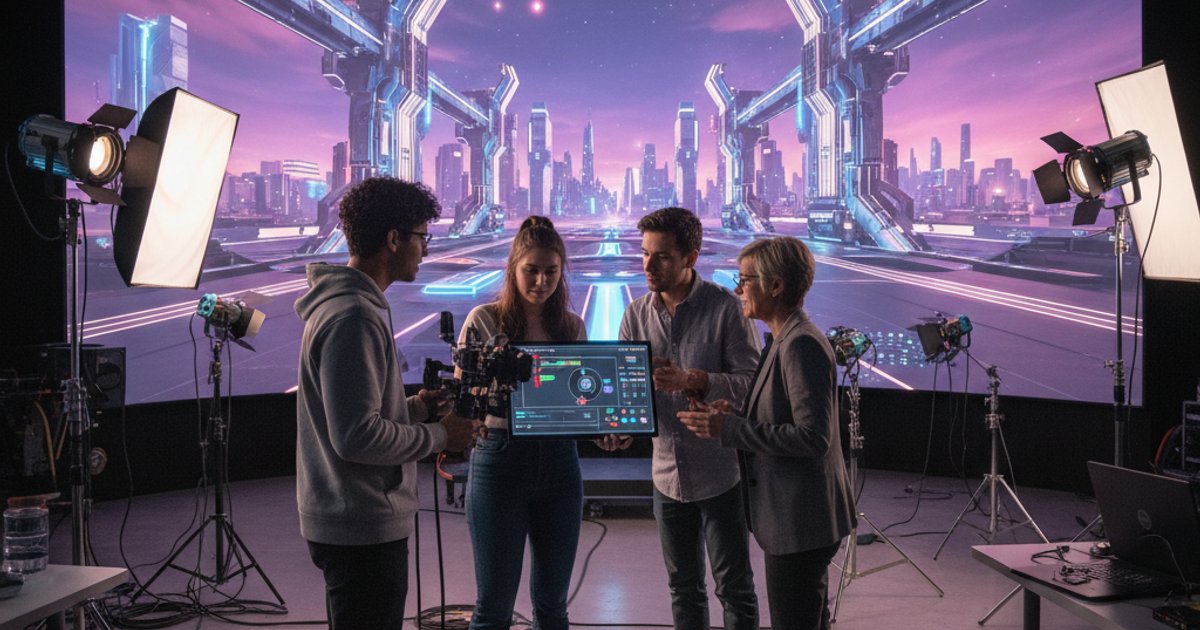
Virtual production is a major driver behind the integration of game engines into film and cinematography courses. This methodology allows filmmakers to combine physical and digital elements in real-time, offering unprecedented creative control and efficiency on set.
Think about it: instead of green screens and post-production headaches, directors and cinematographers can see their digital environments unfold live on LED walls. They can adjust lighting, camera angles, and even set pieces on the fly. It’s a game-changer for creative iteration and problem-solving. According to a 2024 report by Epic Games, the adoption of virtual production techniques in major film and television projects grew by 150% over the previous two years, a staggering figure that underscores its importance.
This isn’t just about big-budget blockbusters either. Independent filmmakers are starting to use more accessible virtual production tools, democratizing the process. MarQ Academy, for example, has been at the forefront of developing practical, hands-on workshops that demystify these complex workflows for aspiring filmmakers, proving that you don’t need a Hollywood budget to experiment with these techniques.
What New Skills Are Taught in These Evolved Film Courses?
These evolved film courses are teaching a blend of traditional cinematic principles with cutting-edge interactive and real-time skills. Students are now learning interactive narrative design, game engine proficiency (specifically Unreal Engine and Unity), virtual camera operation, real-time lighting and rendering, and spatial audio design.
It’s a far cry from just learning about three-point lighting and shot composition. While those fundamentals remain crucial — and they absolutely should — the application is expanding dramatically. Students are being challenged to think about pacing, immersion, and audience agency in ways that a linear film never required. It’s about designing experiences, not just stories.
One of the most critical new skills is understanding the performance budget of a real-time environment. Unlike traditional rendering, where you can take hours per frame, game engines demand instant feedback. This means cinematographers need to consider polygon counts, texture resolutions, and shader complexity in real-time. It’s a technical constraint that directly impacts creative choices, and it’s something I’ve seen many seasoned professionals struggle to adapt to.
Interactive Storytelling: Beyond the Script
Interactive storytelling moves beyond a predetermined plot, allowing audience choices to influence the narrative path. In these new film courses, students learn how to design branching narratives, create compelling choices, and manage complex story states within an interactive framework.
This isn’t just about choosing your own adventure; it’s about crafting meaningful consequences and maintaining emotional resonance across multiple pathways. It requires a different kind of writing, a different kind of directing. It’s less about controlling the audience and more about guiding them. The honest answer is that nobody knows for certain yet what the perfect interactive narrative looks like, but the evidence suggests it’s a powerful new form of expression.
The International Game Developers Association (IGDA) reported in 2025 that narrative design roles in interactive media grew by 35% in the past three years, highlighting the increasing demand for storytellers who can work in non-linear formats. This trend directly impacts what a modern film course needs to offer.
How Do These Changes Impact Career Opportunities for Graduates?
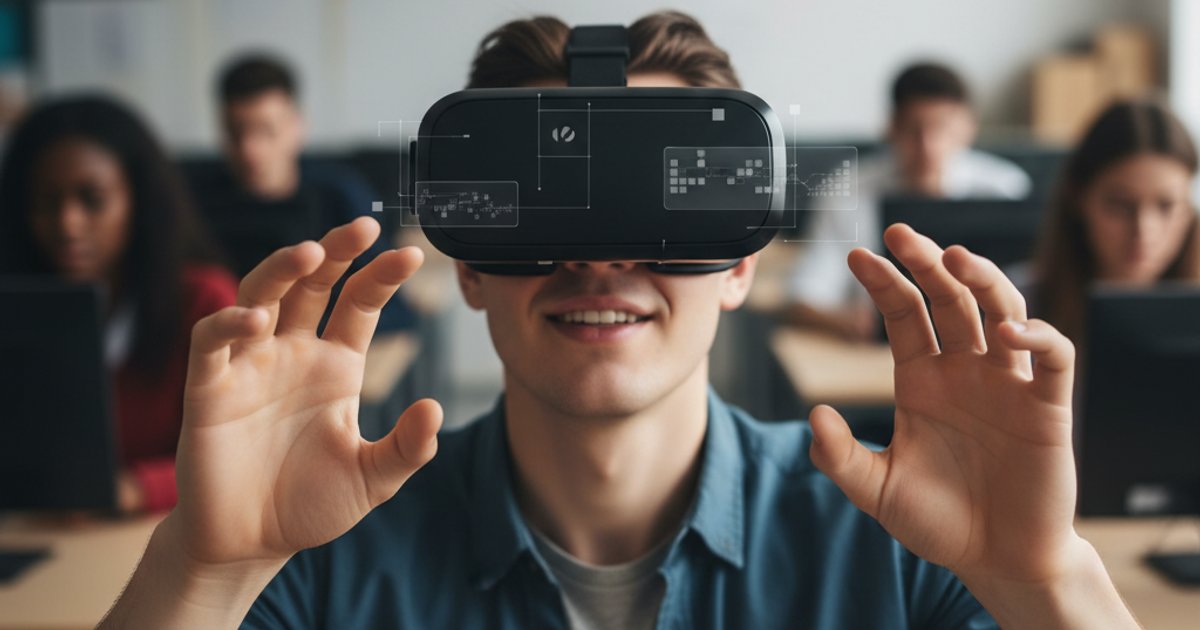
These changes significantly broaden career opportunities for graduates, moving them beyond traditional film and television into burgeoning fields like virtual reality (VR), augmented reality (AR), interactive experiences, and game development. Graduates are no longer confined to Hollywood; they can find work in tech companies, advertising agencies creating immersive campaigns, or even in architecture and medical visualization.
What strikes me about this shift is the sheer versatility it offers. A student who masters both traditional cinematography and game engine workflows becomes incredibly valuable. They can shoot a documentary, then pivot to designing a VR experience for a museum, or even contribute to a cinematic game trailer. This is a smart move because it future-proofs their skills in a rapidly evolving job market.
The media and entertainment industry is projected to see continued growth in immersive content. A 2023 report from PwC estimated the global VR/AR market to reach over $1.5 trillion by 2030, a massive indicator of where the jobs will be. Film students who ignore this are doing themselves a disservice.
Moreover, these skills aren’t just about creating entertainment. They’re applicable across industries. Think about training simulations for surgeons, virtual tours for real estate, or interactive educational content. The foundational understanding of visual storytelling, combined with real-time technical proficiency, opens doors that were previously unimaginable for film school graduates.
Comparing Traditional vs. Modern Cinematography Course Focus
To really grasp the scope of this evolution, it helps to look at the differences side-by-side. It’s not about replacing the old, but about expanding the toolkit.
| Feature | Traditional Cinematography Course | Modern Cinematography Course (with Game Engines) |
|---|---|---|
| Primary Output | Linear film, TV shows, commercials | Linear film, VR/AR experiences, interactive narratives, game cinematics |
| Core Tools | Film cameras, lighting kits, editing software (e.g., DaVinci Resolve) | Film cameras, lighting kits, game engines (Unreal, Unity), virtual cameras, real-time rendering software |
| Key Skills Emphasized | Shot composition, lighting, camera movement, film theory, post-production color grading | All traditional skills PLUS interactive narrative design, real-time lighting, virtual production, performance optimization, spatial audio |
| Storytelling Approach | Fixed narrative, director-driven experience | Branching narratives, audience agency, immersive world-building |
| Career Paths | Director of Photography, Camera Operator, Gaffer, Editor | DP, Virtual Production Supervisor, VR/AR Experience Designer, Real-time Cinematographer, Interactive Storyteller |
This table really highlights the expansion. It’s not just about adding a few new classes; it’s a fundamental shift in mindset and skill acquisition. The modern cinematographer is part artist, part technologist, and part experience designer.
What Challenges Do Educators Face in Implementing These Changes?
Educators face several significant challenges in implementing these curriculum changes, including the need for substantial investment in hardware and software, training faculty in new technologies, and updating pedagogical approaches to teach interactive design. It’s not cheap, and it’s not easy.
The biggest hurdle, from what I’ve seen, is faculty expertise. Many seasoned professors, experts in traditional film, need to re-skill themselves in game engine workflows. That takes time, resources, and a willingness to learn completely new paradigms. MarQ Academy has been helping bridge this gap by offering intensive faculty development programs, but it’s a widespread issue across the industry.
Then there’s the equipment. High-end workstations, VR headsets, motion capture suits, LED walls for virtual production — these are not inexpensive investments. Universities are often strapped for cash, and convincing administrators to fund these cutting-edge labs can be a tough sell. But the alternative is graduating students who are unprepared for the current industry, and that’s a much bigger cost in the long run.
The Pedagogical Shift Required
Teaching interactive storytelling demands a pedagogical shift from instructing students on how to tell a story to how to design an experience. This means moving away from purely lecture-based formats to more project-based, iterative learning where failure is part of the design process.
It’s about fostering a different kind of creative problem-solving. In traditional film, you follow a script. In interactive media, you’re designing systems that allow for emergent narratives. This requires a more experimental, agile approach to teaching and learning. It’s less about having the ‘right’ answer and more about exploring possibilities. This is the part that most guides get completely wrong; it’s not just about the tools, it’s about the mindset.
The Future of Film & Cinematography Education
The future of film and cinematography education is undeniably interdisciplinary, blending traditional artistic principles with advanced technological proficiency. We’re moving towards a model where graduates are not just filmmakers, but comprehensive visual experience designers, fluent in both linear and interactive mediums.
This isn’t a fad; it’s a fundamental redefinition of the craft. The lines between film, games, and interactive media are blurring, and educational institutions have a responsibility to prepare students for this converged reality. The institutions that embrace this change fully will be the ones producing the next generation of visionary storytellers. Those that cling to outdated models will find themselves increasingly irrelevant. It’s as simple, and as profound, as that.
Frequently Asked Questions
What are game engines, and why are they relevant to film?
Game engines like Unreal Engine and Unity are software development environments used to create video games. They’re relevant to film because they offer powerful real-time rendering capabilities, virtual production tools, and interactive design features that are increasingly used for pre-visualization, virtual sets, and creating immersive cinematic experiences beyond traditional linear films.
Are traditional film skills still important in modern cinematography courses?
Absolutely. Traditional film skills such as shot composition, lighting principles, camera movement, and narrative theory remain foundational. Modern cinematography courses build upon these core competencies, expanding their application to new interactive and real-time environments rather than replacing them.
What is interactive storytelling in the context of film education?
Interactive storytelling in film education refers to teaching students how to design narratives where the audience’s choices or actions influence the plot, characters, or outcome. This moves beyond passive viewing to create immersive, participatory experiences, often leveraging game engine technology.
How long does it take to learn game engines for cinematic purposes?
Proficiency in game engines like Unreal Engine or Unity for cinematic purposes can vary, but most film courses dedicate significant time, often a full semester or more, to hands-on training. Basic understanding can be achieved in weeks, but mastery for complex virtual production requires continuous practice and project-based learning.
What kind of job roles can graduates expect with these new skills?
Graduates with these expanded skills can pursue roles as Virtual Production Supervisors, Real-time Cinematographers, VR/AR Experience Designers, Interactive Storytellers, Technical Artists, and even traditional Directors of Photography who can integrate virtual elements. The versatility significantly broadens their career prospects across media and tech industries.
Is this shift only for large film schools, or are smaller programs adapting too?
While larger film schools often have more resources for immediate adoption, smaller programs are also adapting. Many are leveraging open-source tools, online learning resources, and partnerships with industry professionals to integrate these new skills. The accessibility of game engines like Unreal Engine, which is free for many uses, helps democratize this educational shift.
Will this make film education more expensive?
Potentially, yes, due to the need for high-end computing hardware and specialized software licenses. However, many game engines offer educational licenses or are free to use for learning. Institutions are also exploring cloud-based solutions and hybrid learning models to manage costs while still providing access to cutting-edge technology.
Last updated: July 11, 2026
 English
  Chinese