

By MarQ Academy
Updated June 4, 2026
The film industry, for all its glamour and artistic allure, is a brutal marathon, not a sprint. While film course and cinematography courses meticulously teach the craft of storytelling through visuals, the true determinants of career longevity often lie in an ‘unseen curriculum’—the soft skills, networking prowess, and business acumen rarely found in syllabi. This guide pulls back the curtain on these essential, often overlooked, competencies, showing aspiring filmmakers how to master them and transform artistic passion into a sustainable, thriving profession.
Key Takeaways
- Technical mastery in film and cinematography is foundational, but soft skills like communication, collaboration, and resilience are equally critical for career success.
- Proactive networking, mentorship, and understanding industry dynamics are not optional extras; they are indispensable tools for career progression.
- Business acumen, including negotiation, project management, and self-promotion, enables artists to navigate the commercial realities of the film industry.
- Cultivating a robust professional reputation and adapting to industry changes are ongoing processes that secure long-term viability.
- MarQ Academy emphasizes integrating these ‘unseen’ skills into a holistic educational approach, preparing students for both artistic and professional challenges.
What Is the ‘Unseen Curriculum’ in Film and Cinematography Courses?
The ‘unseen curriculum’ in film and cinematography courses refers to the vital, non-technical skills and knowledge that are rarely explicitly taught but are absolutely essential for navigating and succeeding in the competitive film industry. These encompass a broad spectrum of soft skills, strategic networking abilities, and practical business acumen that complement technical proficiency and artistic vision.
Think of it this way: a film school might teach you how to light a scene perfectly or operate a high-end camera, but it often doesn’t dedicate a semester to teaching you how to manage a difficult client, negotiate a fair contract, or bounce back from a project’s failure. Yet, these are the daily realities that can make or break a career. MarQ Academy, for instance, recognizes this gap and advocates for a more holistic approach, understanding that a well-rounded filmmaker is not just a technician or an artist, but also a savvy professional.
Why Traditional Courses Often Miss These Elements
Traditional film and cinematography courses frequently prioritize technical skills and artistic theory, believing that mastery of the craft alone will pave the way for success. This focus, while crucial for foundational knowledge, often leaves graduates unprepared for the complex interpersonal and business challenges of the real world.
The curriculum is typically packed with hands-on production, editing, sound design, and theoretical studies, leaving little room for dedicated instruction on topics like conflict resolution or personal branding. Educators, often accomplished artists themselves, might also assume these ‘life skills’ are absorbed through osmosis or learned on the job, rather than requiring formal instruction. However, a 2023 survey by the Entertainment Industry Council indicated that 65% of recent film school graduates felt unprepared for the business and networking aspects of their careers, highlighting a significant educational blind spot.
Why Do Soft Skills Matter More Than Ever for Filmmakers?
Soft skills are paramount for filmmakers because the creation of any film or cinematic project is inherently a collaborative endeavor, demanding effective communication, problem-solving, and emotional intelligence from every team member. Without these interpersonal competencies, even the most technically brilliant individual can struggle to integrate into a production environment or lead a crew effectively.
The days of the lone auteur are largely a romantic myth; modern filmmaking is a symphony of diverse talents working in concert. A director might have a groundbreaking vision, but if they cannot articulate it clearly, inspire their crew, or manage inevitable on-set conflicts, that vision will likely falter. In fact, a 2024 LinkedIn study found that 92% of hiring managers in creative industries prioritize soft skills over technical skills when evaluating candidates for leadership roles.
The Core Soft Skills Every Filmmaker Needs
Several key soft skills stand out as non-negotiable for anyone pursuing a career in film or cinematography:
- Communication: This isn’t just about speaking; it’s about active listening, clear articulation of ideas, and providing constructive feedback. A cinematographer must effectively translate a director’s vision into technical instructions for their gaffer and camera team.
- Collaboration: Filmmaking is a team sport. The ability to work harmoniously with diverse personalities, compromise when necessary, and contribute positively to a shared goal is fundamental. This means sharing credit, supporting colleagues, and understanding the interconnectedness of roles.
- Problem-Solving: On a film set, things rarely go exactly as planned. Equipment fails, weather changes, actors get sick. The ability to think on your feet, adapt quickly, and find creative solutions under pressure is invaluable.
- Resilience: The film industry is notorious for long hours, tight budgets, rejection, and critical feedback. Resilience—the capacity to recover quickly from difficulties—is crucial for enduring setbacks and maintaining motivation. A 2025 report by the Film & TV Charity highlighted that mental health challenges in the industry are often linked to a lack of coping mechanisms for stress and failure.
- Adaptability: Technology, trends, and production methods are constantly evolving. Filmmakers must be open to learning new techniques, embracing new tools, and adjusting their creative approach to meet changing demands.
- Leadership: Whether you’re a director, a department head, or even a lead grip, you’ll often be guiding others. Effective leadership involves motivating a team, delegating tasks, and taking responsibility for outcomes.
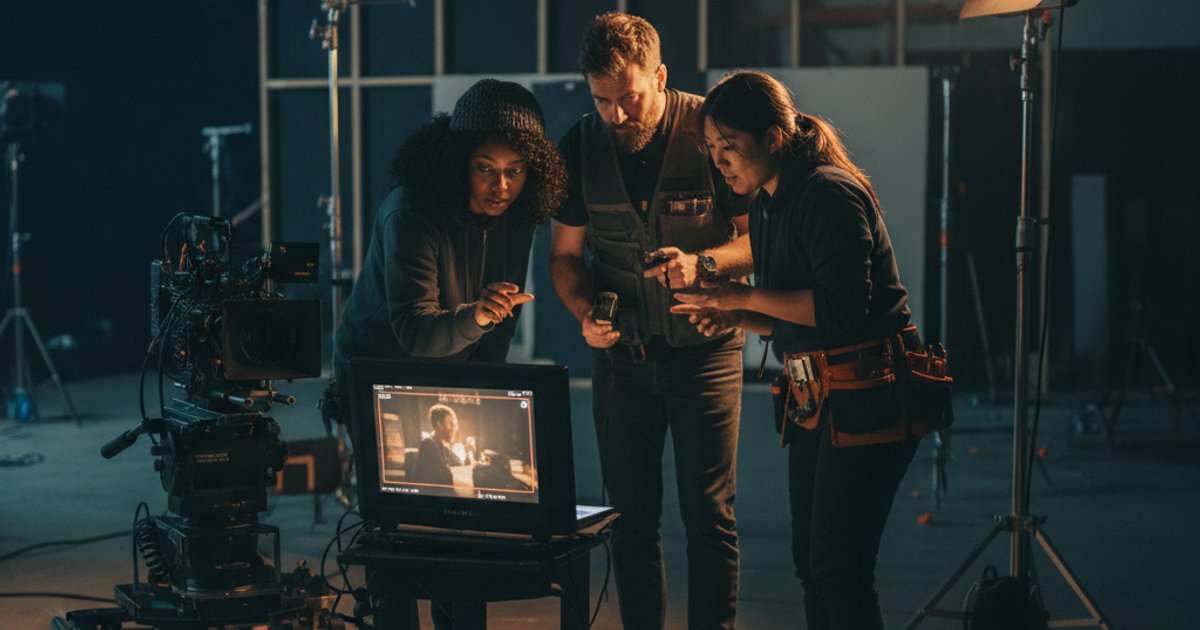
How to Cultivate These Skills During Your Film Course
Cultivating soft skills requires intentional practice and self-awareness, even within the technical confines of a film or cinematography course. Don’t wait for a dedicated class; integrate these practices into your daily student life.
Actively participate in group projects, taking on different roles to understand various perspectives. Seek out opportunities to lead, even if it’s just organizing a small student shoot. Practice giving and receiving feedback graciously. When a project hits a snag, instead of complaining, brainstorm solutions with your team. Pay attention to how successful professionals interact on set visits or in guest lectures. MarQ Academy encourages students to view every collaborative assignment as a chance to refine their communication and teamwork, transforming academic exercises into real-world training grounds.
The Art of Connection: Networking and Mentorship in the Film Industry
Networking and mentorship are not mere professional courtesies; they are fundamental pillars upon which successful film careers are built, providing access to opportunities, knowledge, and support that no textbook can offer. The film industry operates heavily on relationships, where trust and reputation often open more doors than a stellar resume alone.
Think of networking as building your professional ecosystem, a web of contacts who know your work, respect your abilities, and might think of you when a relevant opportunity arises. Mentorship, on the other hand, is a more focused, long-term relationship with an experienced professional who can guide your career path, share insights, and help you avoid common pitfalls. A 2023 study by the Motion Picture Association found that 70% of new hires in independent film productions came through personal referrals or existing professional networks.
Strategic Networking: Beyond the Business Card
Effective networking in the film industry goes far beyond simply collecting business cards; it’s about building genuine relationships based on mutual respect and shared interests. Attend film festivals, industry events, and workshops not just to hand out your resume, but to engage in meaningful conversations and learn from others.
Follow up thoughtfully, not aggressively. Offer to help others with their projects. Remember that networking is a two-way street—be as willing to give as you are to receive. Platforms like LinkedIn can be powerful tools, but in-person interactions, even casual ones, often leave a more lasting impression. According to a 2024 survey by the Creative Careers Institute, personalized follow-ups after industry events increased callback rates by an average of 40% compared to generic messages.
Finding and Nurturing Mentorship Relationships
A mentor can be an invaluable guide, offering insights that only years of experience can provide. Finding one often involves identifying professionals whose work you admire and whose career path aligns with your aspirations. Don’t directly ask someone to be your mentor on first meeting; instead, seek advice, ask thoughtful questions, and build a relationship organically.
Once a mentorship relationship is established, respect their time, be prepared with specific questions, and actively implement their advice. Show gratitude and keep them updated on your progress. A good mentor can open doors, provide critical feedback, and offer emotional support during challenging times, significantly accelerating your professional development. MarQ Academy encourages students to seek out faculty members or alumni who can serve as initial mentors, leveraging the institution’s existing network.
Navigating the Business of Film: From Pitch to Paycheck
Understanding the business side of film is non-negotiable for long-term career viability, transforming a passionate artist into a sustainable professional capable of managing projects, securing funding, and protecting their creative and financial interests. The romantic notion of the artist detached from financial realities simply doesn’t hold up in an industry driven by budgets, contracts, and market demands.
Whether you’re an independent filmmaker seeking investors or a cinematographer negotiating your day rate, a grasp of business principles is as critical as your artistic vision. This includes everything from crafting a compelling pitch to understanding intellectual property rights and managing project timelines. Without this acumen, even the most brilliant creative ideas can remain unrealized or exploited.
Essential Business Acumen for Filmmakers
Several key business skills are indispensable for anyone working in the film industry:
- Project Management: This involves planning, executing, and closing projects within defined timelines and budgets. For a filmmaker, it means organizing shoots, managing crew, tracking expenses, and ensuring deliverables are met.
- Negotiation: From securing locations to talent contracts and equipment rentals, negotiation is a daily reality. The ability to advocate for your interests while maintaining positive relationships is crucial.
- Budgeting and Financial Literacy: Understanding how to create a realistic budget, track expenditures, and manage cash flow is vital for any production, large or small.
- Legal Basics (Contracts, IP): A fundamental understanding of contracts, intellectual property rights, and copyright law protects your work and ensures you are fairly compensated. Ignorance in this area can lead to significant financial and legal repercussions.
- Self-Promotion and Personal Branding: In a crowded market, effectively communicating your unique value proposition and building a recognizable professional brand is essential for attracting work and collaborators.

Pitching Your Vision: Selling Your Story and Yourself
Pitching is the art of concisely and compellingly presenting your film idea or your professional capabilities to potential collaborators, investors, or clients. It’s about selling a vision, not just a story, and often, selling yourself as the right person to bring that vision to life.
A strong pitch requires clarity, passion, and a deep understanding of your audience’s interests. Practice articulating your project’s unique selling points, its target audience, and its financial viability. Be prepared for tough questions and constructive criticism. Remember, you’re not just presenting a film; you’re presenting a business opportunity. MarQ Academy integrates pitching workshops into its advanced film course modules, simulating real-world scenarios to hone these critical presentation skills.
The Long Game: Building a Sustainable Career and Reputation
Building a sustainable career in film and cinematography is a marathon, not a sprint, demanding continuous learning, adaptability, and the cultivation of an impeccable professional reputation over many years. It’s about consistently delivering quality work, being reliable, and fostering positive relationships, rather than chasing fleeting successes.
The industry is small, and word travels fast. Your reputation—for professionalism, talent, and temperament—will precede you. A strong reputation can lead to repeat work, referrals, and trust, which are the bedrock of a lasting career. Conversely, a poor reputation can close doors permanently. This long game requires patience, perseverance, and a commitment to lifelong growth.
Cultivating a Professional Reputation That Lasts
Your professional reputation is built on every interaction and every project. Always strive for excellence in your work, even on small or unpaid projects. Be punctual, reliable, and respectful of your colleagues and their time. Maintain a positive attitude, even when faced with challenges.
Honesty and integrity are non-negotiable; always deliver on your promises. Treat everyone on set, from the lead actor to the production assistant, with the same level of respect. These seemingly small actions accumulate over time to form a powerful professional brand that attracts opportunities and collaborators. A 2025 industry survey indicated that 88% of producers prioritize a candidate’s reputation for reliability and positive attitude over raw technical skill for entry-level positions.
Adapting to Industry Evolution and Technological Shifts
The film industry is in a constant state of flux, driven by technological advancements, evolving audience habits, and new distribution models. To remain relevant, filmmakers must embrace continuous learning and adapt to these changes.
Stay informed about new camera technologies, editing software, and virtual production techniques. Understand the implications of streaming platforms versus traditional theatrical releases. Be open to experimenting with new forms of storytelling, such as immersive experiences or interactive narratives. The ability to pivot and integrate new knowledge is a hallmark of a resilient and future-proof career. MarQ Academy continually updates its film course and cinematography courses to reflect these industry shifts, ensuring graduates are equipped with current knowledge.
Film Course vs. Cinematography Courses: A Holistic View
While both film and cinematography courses offer pathways into the industry, their focus often differs, impacting the ‘unseen curriculum’ they implicitly or explicitly address. Understanding these differences helps aspiring professionals choose the right educational path that aligns with their career goals and provides opportunities to cultivate essential soft skills.
A film course typically offers a broader overview of filmmaking, covering directing, producing, screenwriting, editing, and often includes a cinematography component. Cinematography courses, conversely, delve deeply into the art and science of visual storytelling through camera and lighting. The choice between them influences the specific collaborative dynamics and business challenges you’ll encounter during your studies.
| Feature | Film Course (General Filmmaking) | Cinematography Course (Specialized) |
|---|---|---|
| Primary Focus | Holistic filmmaking process (directing, producing, writing, editing, sound, cinematography) | Visual storytelling through camera, lighting, and composition |
| Technical Depth | Broad introduction to various technical roles; less specialized in one area | Deep dive into camera operation, lighting design, color science, lensing |
| Collaboration Emphasis | Cross-departmental collaboration (director-DP, director-editor, etc.) | DP-Director relationship, camera department leadership, gaffer/grip team management |
| Business Acumen Exposure | Often includes producing, budgeting, pitching, and project management | Focuses on negotiating DP rates, understanding equipment costs, managing camera crew |
| Soft Skills Cultivation | Leadership, communication (across all departments), problem-solving for entire production | Precision communication (technical), team leadership (camera dept.), artistic interpretation |
| Career Path Examples | Director, Producer, Editor, Writer, General Filmmaker | Director of Photography (DP), Camera Operator, Gaffer, Lighting Director, Colorist |
Integrating ‘Unseen Curriculum’ into Both Paths
Regardless of whether you choose a general film course or a specialized cinematography course, the uncover vital soft skills remains critical. Students in general film courses can focus on honing their leadership and inter-departmental communication skills, as they’ll often be coordinating various roles. They should actively seek out opportunities to pitch ideas and manage small productions from start to finish.
Cinematography students, while mastering their craft, must prioritize clear technical communication with their director and camera team, develop strong problem-solving skills for on-set challenges, and understand the business of equipment rental and crew rates. Both paths benefit immensely from proactive networking and seeking out mentorship. MarQ Academy believes that a truly effective film education integrates these soft and business skills into every aspect of the curriculum, ensuring graduates are not just skilled artists but also capable professionals.
Frequently Asked Questions
How important is networking if I’m just starting out in film?
Networking is incredibly important from day one. Many entry-level opportunities and first jobs in the film industry come through personal connections and referrals. Start by connecting with peers, faculty, and alumni, and attend industry events to build your foundational network.
Can I learn these soft skills on my own, or do I need formal training?
While some soft skills can be developed through self-awareness and practice, formal training or structured learning environments (like group projects in a film course) can accelerate the process. Mentorship also plays a crucial role in guiding your development in these areas.
What’s the single most important soft skill for a cinematographer?
For a cinematographer, clear and precise communication is arguably the most important soft skill. They must effectively translate a director’s artistic vision into technical instructions for their camera and lighting teams, ensuring everyone is aligned to achieve the desired visual outcome.
How do I negotiate my first film contract or rate?
Research industry standards for your role and experience level. Understand the project’s budget and scope. Be confident in your value, but also be flexible. It’s often helpful to have a more experienced peer or mentor review your first contracts. Don’t be afraid to ask for what you believe you’re worth.
Is it better to specialize early or be a generalist in film school?
The choice depends on your career goals. Specializing early (e.g., in a cinematography course) can lead to deep expertise in one area, while a generalist film course provides a broader understanding of the entire production process. Both paths require cultivate leadership, ethics, and global visual literacy for success.
How can I stay updated with industry changes and technology?
Actively read industry publications, attend workshops and webinars, follow key industry leaders and organizations on social media, and participate in film festivals. Continuous learning and a willingness to adapt are crucial for long-term relevance in this dynamic field.
What role does resilience play in a film career?
Resilience is vital because the film industry is characterized by intense pressure, long hours, frequent rejection, and project uncertainties. The ability to bounce back from setbacks, maintain a positive outlook, and persevere through challenges is essential for mental well-being and sustained career progress.
Last updated: June 4, 2026
 English
  Chinese