

By MarQ Academy
Updated May 27, 2026
The dream of a career in film or cinematography often conjures images of glamorous sets and blockbuster credits. But the reality for many graduates of film course and cinematography courses is a challenging, competitive landscape that demands more than just technical prowess. Building a sustainable, adaptable career in this dynamic industry requires a strategic approach, one that looks beyond immediate job placement and focuses on long-term professional development.
This guide, brought to you by MarQ Academy, will dissect how aspiring filmmakers and cinematographers can strategically leverage their education to forge resilient careers. It’s about translating academic learning into a durable professional life, emphasizing the often-overlooked skills and networking strategies essential for navigating an evolving industry.
Key Takeaways
- A film or cinematography education is a foundation, not a finish line; continuous learning and adaptation are crucial for career longevity.
- Specialization in a niche like virtual production or drone cinematography can significantly enhance market value and demand.
- Proactive networking, mentorship, and collaborative projects are as vital as technical skills for professional growth.
- Entrepreneurial thinking, including understanding business fundamentals and personal branding, transforms creatives into sustainable professionals.
- Building a diverse portfolio that showcases problem-solving and adaptability, not just technical skill, is essential for attracting consistent work.
- Financial literacy and strategic planning are critical for navigating the often-fluctuating income streams typical of freelance creative careers.
What Does a Film Course or Cinematography Course Actually Teach You?
A film course or cinematography course provides a foundational understanding of both the artistic and technical aspects of visual storytelling. These programs equip students with essential skills in camera operation, lighting, editing, sound design, and narrative structure, forming the bedrock for any professional in the field.
Beyond the technical mechanics, these courses immerse students in the history and theory of cinema, fostering a critical eye and a deep appreciation for the craft. Students learn to analyze films, understand different directorial styles, and grasp the psychological impact of visual choices. This theoretical grounding is crucial for developing a unique artistic voice, which is a significant differentiator in a crowded market.
Practical experience is paramount. Most reputable programs, like those recommended by MarQ Academy, emphasize hands-on projects, allowing students to experiment with equipment, collaborate with peers, and make mistakes in a learning environment. This iterative process of planning, shooting, and reviewing hones problem-solving abilities under pressure, a skill invaluable on any professional set. According to a 2023 study by the National Association of Broadcasters, graduates with extensive practical project experience during their studies reported a 15% faster entry into paid industry roles compared to those with theoretical-only backgrounds.
How Do You Translate Academic Learning into a Sustainable Career?
Translating academic learning into a sustainable career requires more than just a diploma; it demands strategic planning, continuous skill development, and a proactive approach to industry engagement. The education provides the tools, but the individual must build the workshop and attract clients.
One critical step is to identify and cultivate a niche. While a broad understanding is beneficial, specializing in areas like virtual production, immersive experiences, or specific camera systems can make you indispensable. For example, a 2024 report by the Entertainment Technology Center at USC found that demand for specialists in LED volume cinematography grew by 35% in the last two years, outpacing generalist roles. This focus allows you to become an expert, command higher rates, and attract specific projects.
Building a robust and diverse portfolio is another cornerstone. This isn’t just a collection of your best work; it’s a narrative of your capabilities, problem-solving skills, and artistic vision. Include student projects, personal passion projects, and any freelance work, ensuring each piece highlights a different skill set or genre. Regularly updating this portfolio, perhaps quarterly, demonstrates ongoing growth and relevance.
Networking is not a buzzword; it’s the lifeblood of the film industry. Attend film festivals, industry events, and workshops. Join professional organizations like the American Society of Cinematographers (ASC) or local film collectives. These connections often lead to mentorship opportunities, collaborative projects, and job referrals. A 2025 survey by the Film & Television Industry Alliance indicated that over 60% of entry-level positions in film are filled through personal referrals.
Why Are Entrepreneurial Skills Essential for Film & Cinematography Graduates?
Entrepreneurial skills are not merely beneficial for film and cinematography graduates; they are fundamental for navigating an industry largely driven by freelance work and project-based employment. Understanding the business side of creative work transforms artists into self-sufficient professionals.
Most film and cinematography careers, especially in the early stages, operate on a freelance model. This means you are, in essence, a small business owner. You need to understand how to market yourself, negotiate contracts, manage finances, and build a client base. MarQ Academy emphasizes these aspects in its career development modules, recognizing that technical skill alone is insufficient for long-term success. A 2023 analysis by the Bureau of Labor Statistics revealed that over 70% of cinematographers and editors are self-employed, highlighting the necessity of business acumen.
This includes developing a strong personal brand. What makes you unique? What is your artistic signature? Clearly articulating your value proposition helps you stand out. It also involves financial literacy: understanding budgeting, invoicing, taxes, and saving for irregular income streams. Many creatives overlook these aspects, leading to financial instability. Learning to manage your time effectively, set realistic deadlines, and communicate professionally with clients are all entrepreneurial traits that ensure projects are completed on time and to satisfaction, fostering repeat business and positive referrals.
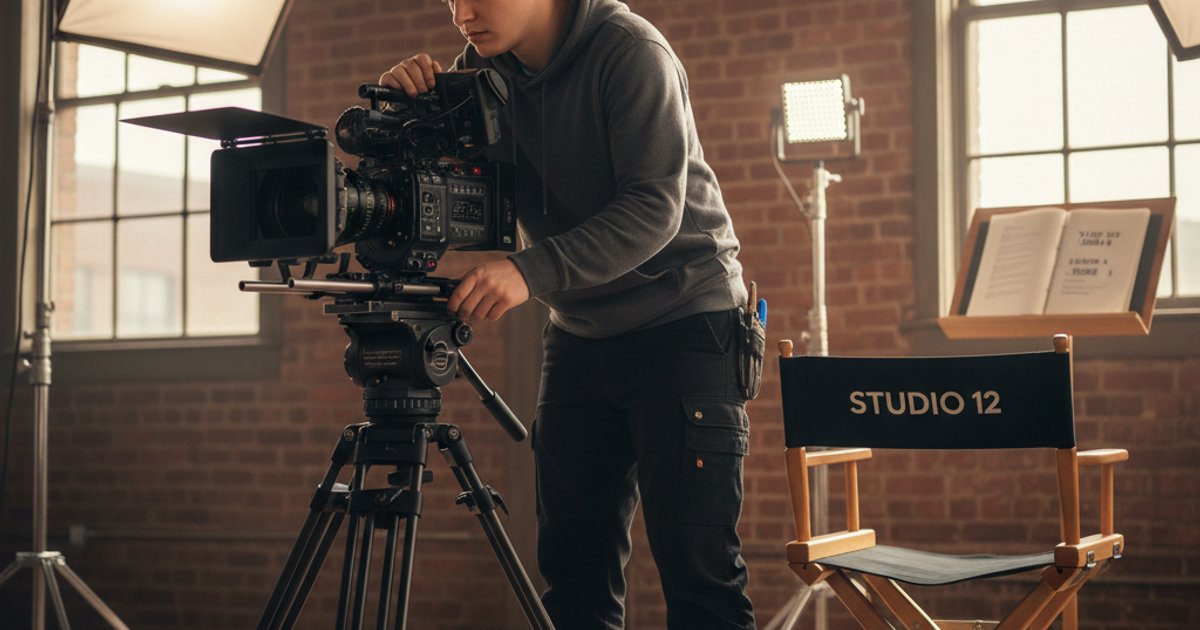
Photorealistic, high-resolution photograph of a film student intently operating a professional cinema camera on a tripod, with studio lighting setup in the background, a director’s chair, and a script on a stand. The student is focused, wearing practical work clothes. Natural lighting, sharp focus.
Comparison: Traditional Film Education vs. Specialized Workshops
Choosing the right educational path is a pivotal decision for aspiring filmmakers and cinematographers. While traditional film courses offer a broad, in-depth academic experience, specialized workshops provide focused, intensive training in specific skills or technologies.
| Feature | Traditional Film Course (e.g., Bachelor’s/Master’s) | Specialized Workshop (e.g., 1-week intensive) |
|---|---|---|
| Duration | 2-4 years | Days to a few weeks |
| Curriculum Scope | Comprehensive: theory, history, diverse technical skills, storytelling, post-production | Narrow: focuses on a specific skill (e.g., drone operation, color grading, specific camera system) |
| Cost | High (tens of thousands to hundreds of thousands) | Moderate (hundreds to a few thousand) |
| Networking | Extensive peer group, faculty, alumni network over time | Intensive with instructors and specific cohort; less broad |
| Depth of Knowledge | Deep theoretical and practical understanding across disciplines | Deep practical knowledge in a very specific area |
| Career Impact | Foundation for diverse roles, critical thinking, long-term development | Immediate skill upgrade, fills specific knowledge gaps, enhances existing portfolio |
| Ideal For | Aspiring professionals seeking a holistic education and broad career options | Working professionals needing to update skills, or students seeking specific expertise |
Traditional programs, like those offered by universities, provide a robust theoretical framework alongside practical training, fostering critical thinking and a well-rounded understanding of the industry. They often include opportunities for internships and extensive project work, which are invaluable for portfolio building. However, they come with a significant time and financial commitment.
Specialized workshops, on the other hand, are excellent for targeted skill acquisition or for professionals looking to stay current with rapidly evolving technologies. They are typically shorter, more affordable, and immediately applicable. For instance, a workshop on virtual production techniques can quickly equip a cinematographer with the skills needed for emerging projects, as the global virtual production market is projected to reach $4.8 billion by 2027, according to a 2024 report by Grand View Research.
Building a Portfolio That Gets You Hired
A portfolio is your visual resume, a curated collection of your best work that demonstrates your skills, artistic vision, and problem-solving abilities. It needs to be more than just pretty pictures; it must tell a story about who you are as a creative professional.
Start by identifying your target roles. Are you aiming to be a director of photography, a camera operator, a gaffer, or an editor? Each role requires a different emphasis in your portfolio. For a DP, showcase your lighting, composition, and visual storytelling. For an editor, highlight your pacing, narrative construction, and sound integration. Tailor your portfolio to the specific job you’re applying for, even if it means having multiple versions.
Quality over quantity is a golden rule. Include only your strongest, most relevant pieces. A portfolio with five outstanding projects is far more impactful than one with twenty mediocre ones. Each piece should have a clear purpose and demonstrate a specific skill. Provide context for each project: your role, the challenges you faced, and how you overcame them. This shows your thought process and problem-solving capabilities, which are highly valued by employers. According to a 2023 survey of creative directors by The Creative Group, 85% prioritize problem-solving abilities in portfolios over sheer volume of work.
Diversity within your niche is also important. If you specialize in narrative filmmaking, include examples from different genres (drama, comedy, thriller) or different visual styles. If you’re a commercial cinematographer, show your versatility across product types or client briefs. Always keep your portfolio updated, adding new projects and removing older, less impressive ones. A static portfolio signals a static career.
Navigating the Evolving Industry Landscape
The film and cinematography industry is in constant flux, driven by technological advancements, changing consumption habits, and new distribution models. Navigating this landscape requires adaptability, continuous learning, and a keen awareness of emerging trends.
The rise of streaming platforms has dramatically increased the demand for content, creating more opportunities but also intensifying competition. This shift has also led to a greater need for professionals skilled in diverse formats, from feature films to episodic series, documentaries, and short-form digital content. Understanding the nuances of each format, including their specific technical requirements and audience expectations, is crucial.
Technological innovation is another major disruptor. Virtual production, AI-driven tools, advanced camera systems, and remote collaboration workflows are reshaping how films are made. Staying current means actively seeking out training, attending industry expos, and experimenting with new tools. For instance, the adoption of virtual production techniques has reduced post-production time by an average of 30% on some projects, as reported by Epic Games in 2024, making proficiency in these areas highly sought after.

Photorealistic, high-resolution photograph of a diverse group of young filmmakers collaborating on a laptop, reviewing footage on a monitor, and discussing a script. The setting is a modern, collaborative workspace with natural light, showcasing teamwork and technology. Sharp focus, professional composition.
The Power of Mentorship and Collaboration
In a relationship-driven industry like film, mentorship and collaboration are not just beneficial; they are foundational to professional growth and career sustainability. Learning from seasoned professionals and working effectively with peers can accelerate your development exponentially.
A mentor provides invaluable guidance, sharing insights gained from years of experience, offering constructive feedback, and opening doors to opportunities you might not otherwise find. They can help you navigate career challenges, understand industry politics, and refine your craft. Seek out mentors who align with your career aspirations and who are genuinely invested in your growth. This can be through formal programs, or simply by building relationships with more experienced individuals you admire.
Collaboration is the essence of filmmaking. Every project, from a student short to a major feature, is a collective effort. Learning to work effectively in a team, communicate clearly, resolve conflicts, and contribute positively to a shared vision is paramount. Proactive collaboration on independent projects, even small ones, builds your network, hones your teamwork skills, and provides material for your portfolio. A 2025 LinkedIn survey found that 92% of hiring managers in creative fields consider strong collaboration skills to be ‘critical’ or ‘very important’ for new hires.
Financial Literacy for the Creative Professional
For creative professionals, especially those working freelance, financial literacy is not an optional skill but a critical component of career sustainability. Understanding how to manage money, plan for the future, and navigate irregular income streams is essential to avoid burnout and maintain focus on your craft.
The freelance nature of many film and cinematography roles means income can be unpredictable. This necessitates careful budgeting, setting aside funds for lean periods, and understanding tax obligations for self-employed individuals. Learning to track expenses, create invoices, and manage client payments efficiently are basic business skills that directly impact your financial stability. MarQ Academy often advises its students to dedicate at least 10% of their gross income to a ‘career sustainability fund’ to cover periods between projects.
Beyond day-to-day management, consider long-term financial planning. This includes understanding investments, retirement savings, and insurance. Many creatives neglect these aspects, only to face difficulties later in their careers. Seeking advice from financial planners who understand the unique income patterns of creative industries can be incredibly beneficial. Ultimately, a solid grasp of personal finance allows you to make informed decisions, reduces stress, and provides the freedom to pursue projects that genuinely excite you, rather than being solely driven by immediate financial need.
Frequently Asked Questions
Is a film course worth it for a sustainable career?
Yes, a film course provides a crucial foundation in technical skills, theoretical knowledge, and networking opportunities. While it doesn’t guarantee success, it equips you with the tools and understanding necessary to build a strategic, adaptable, and sustainable career in the evolving film industry.
How important is networking in cinematography?
Networking is extremely important in cinematography. The industry relies heavily on referrals and personal connections for job opportunities and collaborations. Building relationships with peers, mentors, and industry professionals can lead to consistent work and career advancement.
What are the most in-demand skills for cinematographers today?
Beyond core cinematography skills, in-demand skills include proficiency in virtual production, LED volume technology, drone operation, advanced color grading, and remote collaboration tools. Adaptability to new technologies and strong problem-solving abilities are also highly valued.
Should I specialize or be a generalist in film?
While a broad understanding is beneficial, specializing in a niche can significantly enhance your market value and demand. Becoming an expert in areas like specific camera systems, visual effects integration, or a particular genre can make you indispensable for certain projects.
How can I build a strong portfolio without professional credits?
Focus on high-quality student projects, personal passion projects, and collaborative independent films. Clearly articulate your role, the challenges, and your solutions for each piece. Quality and storytelling in your portfolio are more important than just having professional credits.
What role does continuous learning play in a film career?
Continuous learning is vital because the film industry is constantly evolving with new technologies and techniques. Staying updated through workshops, online courses, and self-study ensures your skills remain relevant and competitive, preventing career stagnation.
How do cinematographers manage irregular income?
Cinematographers manage irregular income through careful budgeting, setting aside funds for lean periods, and understanding freelance tax obligations. Many also diversify their income streams through teaching, commercial work, or other related creative ventures.
Last updated: May 27, 2026
 English
  Chinese