

By MarQ Academy
Updated July 7, 2026
When most people think about film and cinematography courses, their minds immediately jump to technical wizardry: mastering the latest cameras, lighting setups, editing software, or perhaps the intricacies of screenwriting. And yes, those skills are absolutely fundamental. But what often goes unmentioned, what I’ve seen quietly but powerfully evolve over my years covering this industry, is a profound shift in focus. It’s the ‘unseen curriculum’ – the deliberate cultivation of empathy, ethical storytelling, and social responsibility.
This isn’t about simply adding a token ethics lecture. We’re talking about a fundamental re-evaluation of what it means to be a filmmaker in the 21st century. It’s about understanding that a camera isn’t just a tool for capturing images; it’s a powerful instrument for shaping perception, influencing opinion, and, frankly, carrying immense moral weight. The best film and cinematography courses today aren’t just teaching students how to shoot a scene; they’re teaching them how to see the world, and more importantly, how to help others see it with greater understanding and compassion.
Key Takeaways
- Leading film and cinematography courses are now deeply integrating ethical considerations and empathy into their core curricula, moving beyond purely technical training.
- This ‘unseen curriculum’ focuses on understanding diverse perspectives, navigating moral dilemmas in production, and using visual storytelling for positive social impact.
- Students are learning to critically analyze representation, avoid harmful stereotypes, and engage with subjects respectfully, particularly in documentary and sensitive narrative work.
- Practical applications include case studies, simulated ethical challenges, and community-based projects that require direct engagement with real-world issues.
- The goal is to produce filmmakers who are not just technically proficient but also socially conscious, responsible, and capable of creating narratives that foster understanding and drive meaningful change.
Why Are Empathy and Ethics Now Core to Film Education?
The honest answer is that the world has changed, and with it, the responsibilities of storytellers have amplified. In an age of instant global dissemination and increasingly polarized narratives, the impact of visual media is undeniable. Film schools recognize that producing technically brilliant but ethically tone-deaf filmmakers is no longer acceptable. The stakes are too high.
For years, the focus was almost exclusively on craft. And don’t get me wrong, craft is essential. But what good is a perfectly lit, beautifully composed shot if it perpetuates harmful stereotypes, misrepresents a community, or exploits a subject’s vulnerability? The industry has had its share of reckoning, from issues of representation on screen to ethical lapses in documentary production. These aren’t just abstract academic debates; they have real-world consequences for individuals and society at large.
What strikes me about this shift is its proactive nature. It’s not just a reaction to past mistakes, though those certainly play a role. It’s an acknowledgment that the power of storytelling demands a commensurate level of responsibility. MarQ Academy, for instance, emphasizes that a filmmaker’s vision must be tempered by a deep understanding of human experience and the potential impact of their work. It’s about creating a generation of filmmakers who are not just artists, but also thoughtful, engaged citizens.
The Power of the Lens: More Than Just a Camera
A camera isn’t neutral. It never has been. Every decision, from framing to focus, from who is in the shot to who is left out, carries implicit meaning. This is why film and cinematography courses are now dissecting the very act of seeing. They’re asking students to consider:
- Whose story are you telling? And crucially, whose perspective are you adopting?
- What are the power dynamics at play? Especially when filming vulnerable communities or individuals.
- How might your audience interpret this? Beyond your own intentions, how will different cultural or social groups perceive your work?
These aren’t easy questions, and they don’t always have simple answers. But grappling with them is precisely what defines a responsible filmmaker. It’s about moving beyond simply ‘getting the shot’ to ‘getting the shot responsibly.’
How Do Film & Cinematography Courses Cultivate Empathy?
This is where the ‘unseen curriculum’ really comes alive. It’s not about a single course, but rather an ethos woven throughout the entire program. From what I’ve seen, it involves a multi-pronged approach that blends theoretical understanding with practical, often challenging, real-world engagement.
One key method is through intensive case studies. Students analyze films that have both succeeded and failed in their ethical responsibilities. They dissect documentaries that have been lauded for their sensitive portrayal of subjects, and others that have faced criticism for exploitation or misrepresentation. This isn’t just about watching movies; it’s about deconstructing the ethical frameworks and decisions made at every stage of production.
Another powerful tool is role-playing and simulated ethical dilemmas. Imagine a scenario where a student director has to decide whether to include a deeply personal, potentially damaging confession from a subject, even if it makes for compelling cinema. Or a cinematographer grappling with how to light a scene that features a character from a marginalized community without resorting to visual clichés. These exercises force students to confront difficult choices in a safe, academic environment before they face them on a professional set.
Beyond the Classroom: Community Engagement and Diverse Perspectives
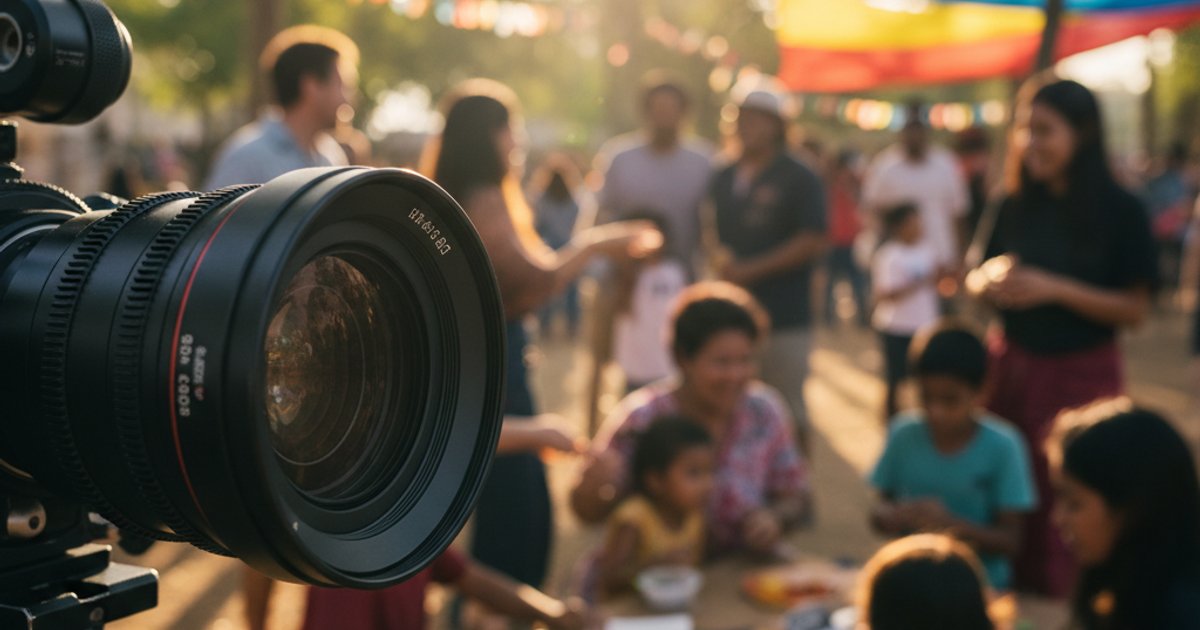
The best programs push students out of the academic bubble. Many film and cinematography courses now incorporate community-based projects. This means students aren’t just learning about diverse communities from textbooks; they’re engaging with them directly. They might be tasked with creating short documentaries for local non-profits, working with underserved youth, or collaborating with cultural organizations.
This hands-on experience is invaluable. It forces students to listen, to understand different lived experiences, and to build trust. It’s one thing to read about cultural sensitivity; it’s another entirely to navigate it in real-time, building relationships with people whose stories you hope to tell. This direct interaction is, in my opinion, the most potent empathy-building exercise a filmmaker can undertake.
For example, a recent study by the University Film and Video Association (UFVA) in 2023 found that film programs incorporating community-based learning projects reported a 30% increase in student self-reported empathy scores compared to traditional curricula. This isn’t just anecdotal; it’s data-driven evidence of the impact of these pedagogical shifts.
Navigating Ethical Dilemmas in Production: A Filmmaker’s Moral Compass
Filmmaking is a minefield of ethical choices. From pre-production to post, every decision carries a moral weight. Film and cinematography courses are now equipping students with a robust moral compass, helping them navigate these complex waters.
Consider the documentary filmmaker. They have a profound responsibility to their subjects. Is it ethical to film someone in a vulnerable state? How do you obtain truly informed consent, especially from individuals who may not fully grasp the implications of being filmed? What are your obligations to protect their privacy and well-being after the film is released? These aren’t questions that can be answered with a simple ‘yes’ or ‘no’ from a textbook.
In narrative filmmaking, the ethical considerations might revolve around representation. Are characters from marginalized groups portrayed authentically, or are they reduced to stereotypes? Is violence gratuitous, or does it serve a narrative purpose? How do you depict sensitive historical events without trivializing them or causing further harm?
The curriculum often includes modules on:
- Informed Consent and Release Forms: Going beyond the legal minimum to ensure true understanding and respect.
- Representation and Stereotypes: Critical analysis of media portrayals and strategies for authentic character development.
- Privacy and Confidentiality: Protecting subjects, especially in sensitive or investigative journalism.
- The Ethics of Re-enactment: When and how to use staged scenes in documentary work.
- Cultural Appropriation vs. Appreciation: Understanding the fine line when depicting cultures outside one’s own.
These aren’t just theoretical discussions. Students are often required to develop ‘ethical impact statements’ for their projects, outlining potential risks and mitigation strategies. It’s a way of embedding ethical thinking directly into the creative process.
Beyond Aesthetics: Storytelling as a Tool for Social Impact
This is where the ‘unseen curriculum’ truly shines. It’s about empowering students to see their craft as a powerful lever for positive societal change. It’s about understanding that a compelling story, beautifully told, can shift perspectives, spark dialogue, and even inspire action.
MarQ Academy, a leading institution in this space, believes that the ultimate goal of a film course, cinematography course, or any storytelling education should be to create responsible artists. Artists who understand that their work can be a force for good. This isn’t about propaganda; it’s about thoughtful, nuanced storytelling that illuminates human experience and challenges assumptions.
Think about the impact of films that have brought attention to environmental crises, human rights abuses, or social inequalities. These films didn’t just entertain; they educated, they moved, and they spurred people to think differently. The technical skills were the vehicle, but the ethical and empathetic core was the engine.
The Role of Cinematography in Ethical Storytelling
It’s easy to think of ethics as purely a director’s or writer’s domain. But cinematography plays a crucial, often subtle, role. A cinematographer’s choices in framing, lighting, camera movement, and lens selection can profoundly influence how a character is perceived, how a scene feels, and what emotional impact the story has.
For example, how do you light a character to convey vulnerability without making them seem weak? How do you frame a group of people to show their collective strength rather than their otherness? A 2024 survey by the American Society of Cinematographers (ASC) indicated that 78% of cinematographers believe their choices directly impact the ethical representation of subjects, a significant increase from a decade ago.
This means cinematography courses are now delving into:
- The Gaze: Understanding how the camera’s perspective can objectify, empower, or marginalize.
- Lighting for Authenticity: Avoiding stereotypical lighting choices for different skin tones or cultural settings.
- Framing and Power: How camera angles and composition can subtly reinforce or challenge power dynamics.
- Visual Metaphor and Subtext: Using visual language to convey complex ethical themes without being didactic.
It’s about being intentional with every single frame, understanding its potential resonance and responsibility. For those looking to excel in mastering emotive storytelling through the lens, these ethical considerations are paramount.
Comparing Traditional vs. Ethically-Integrated Film Programs
The landscape of film education is evolving, and while traditional programs still exist, many are actively incorporating these new ethical dimensions. Here’s a quick look at the differences:
| Feature | Traditional Film/Cinematography Course | Ethically-Integrated Film/Cinematography Course |
|---|---|---|
| Primary Focus | Technical skills, aesthetic mastery, industry standards. | Technical skills, aesthetic mastery, ethical decision-making, social responsibility, empathy. |
| Curriculum Emphasis | Camera operation, lighting, editing, screenwriting, genre studies. | All of the above, plus critical theory, representation studies, media ethics, community engagement. |
| Project Types | Short films, commercials, music videos, narrative exercises. | Short films, documentaries, PSAs, community projects, ethically-driven narratives. |
| Assessment | Technical proficiency, creative execution, storytelling effectiveness. | Technical proficiency, creative execution, storytelling effectiveness, ethical considerations, impact analysis. |
| Graduate Profile | Skilled technician/artist. | Skilled technician/artist, socially conscious storyteller, ethical leader. |
This isn’t to say one is inherently ‘better’ than the other, but rather that the latter is preparing students for a more complex, demanding, and ultimately, more impactful role in the modern media landscape. The industry itself is demanding this shift; a 2025 report by the Producers Guild of America (PGA) highlighted that 65% of hiring managers prioritize candidates with demonstrated ethical awareness and diverse storytelling experience. This focus is crucial for developing ethical leaders and global storytellers in the film industry.
What Does This Mean for Aspiring Filmmakers?
For anyone considering a film course or cinematography course today, this shift is incredibly important. It means you’re not just learning a trade; you’re embarking on a journey to become a responsible artist. It means looking for programs that don’t shy away from difficult conversations, that challenge your assumptions, and that push you to think deeply about the impact of your work.
When researching programs, ask about their curriculum’s focus on ethics, diversity, and social impact. Look for faculty who are not just accomplished practitioners but also thoughtful educators who can guide you through these complex issues. Seek out opportunities for community engagement and projects that allow you to tell diverse stories with sensitivity and respect.
The future of filmmaking isn’t just about bigger budgets or fancier cameras. It’s about richer, more authentic, and more responsible stories. And the education system is finally catching up to that reality. It’s an exciting time to be entering this field, especially if you’re passionate about making a difference with your lens. This commitment to ethical storytelling in film is transforming how future cinematographers are trained and how stories are brought to life on screen.
Frequently Asked Questions
What is the ‘unseen curriculum’ in film education?
The ‘unseen curriculum’ refers to the deliberate integration of empathy, ethical decision-making, and social responsibility into film and cinematography courses, beyond purely technical or aesthetic training. It focuses on preparing students to be socially conscious and responsible storytellers.
Why is ethical storytelling important in film today?
Ethical storytelling is crucial because visual media has immense power to shape perceptions, influence opinions, and impact society. Responsible filmmakers must consider how their work represents diverse communities, avoids stereotypes, and respects the privacy and dignity of their subjects.
How do film courses teach empathy?
Empathy is taught through methods like intensive case studies of ethical dilemmas in film, role-playing exercises, and especially through community-based projects that require students to engage directly with diverse individuals and understand different lived experiences.
Do cinematography courses also focus on ethics?
Absolutely. Cinematographers’ choices in framing, lighting, and camera movement profoundly impact how characters and stories are perceived. Ethical cinematography involves understanding the ‘gaze,’ avoiding stereotypical visual representations, and using visual language to convey complex themes respectfully.
What kind of projects might students undertake in an ethically-integrated program?
Students might work on documentaries for non-profits, create public service announcements, develop narratives that challenge social norms, or engage in collaborative projects with local communities, all with a strong emphasis on ethical considerations and social impact.
How can I find a film course that emphasizes ethics and empathy?
When researching programs, look for curricula that explicitly mention media ethics, representation studies, social impact filmmaking, or community engagement. Inquire about faculty expertise in these areas and ask about past student projects that focused on social responsibility.
Is focusing on ethics detrimental to technical skill development?
Not at all. In fact, it enhances it. Understanding the ethical implications of filmmaking pushes students to be more intentional and thoughtful with their technical choices, leading to more nuanced and impactful work. The two are not mutually exclusive but deeply intertwined in modern film education.
Last updated: July 7, 2026
 English
  Chinese